A Short Guide to Alberobello | Puglia's Trulli Town
Looking for the best things to do in Alberobello Puglia, where to stay, how to get there - or just trying to work out whether it's somewhere you'd like to visit on your Puglia road trip? Then this guide to Alberobello (and a brief history of its famous trulli) should have you covered.
Updated June 2025
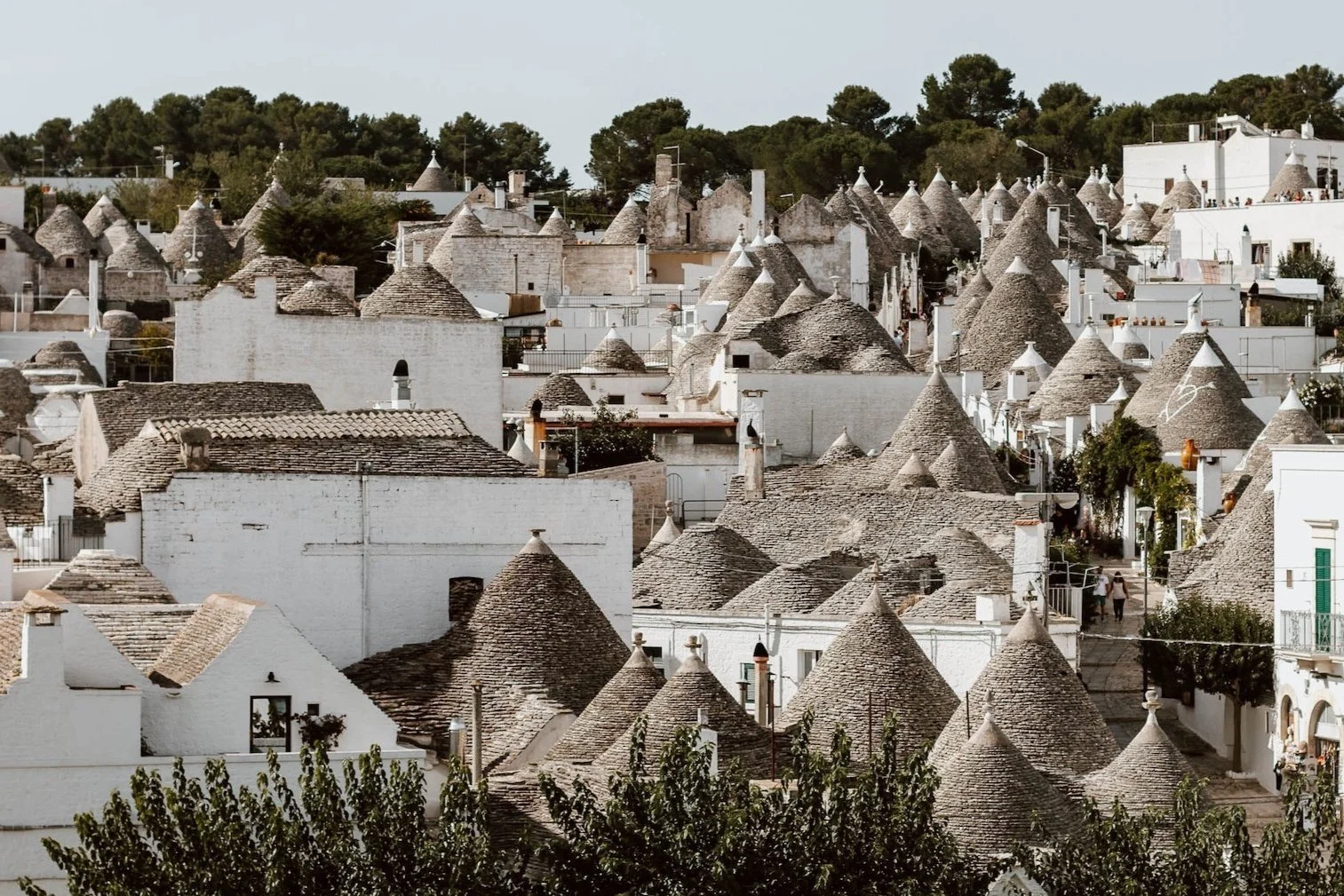
Speak to others of your plans to visit Puglia, and one of the first things they’re likely to mention are the trulli.
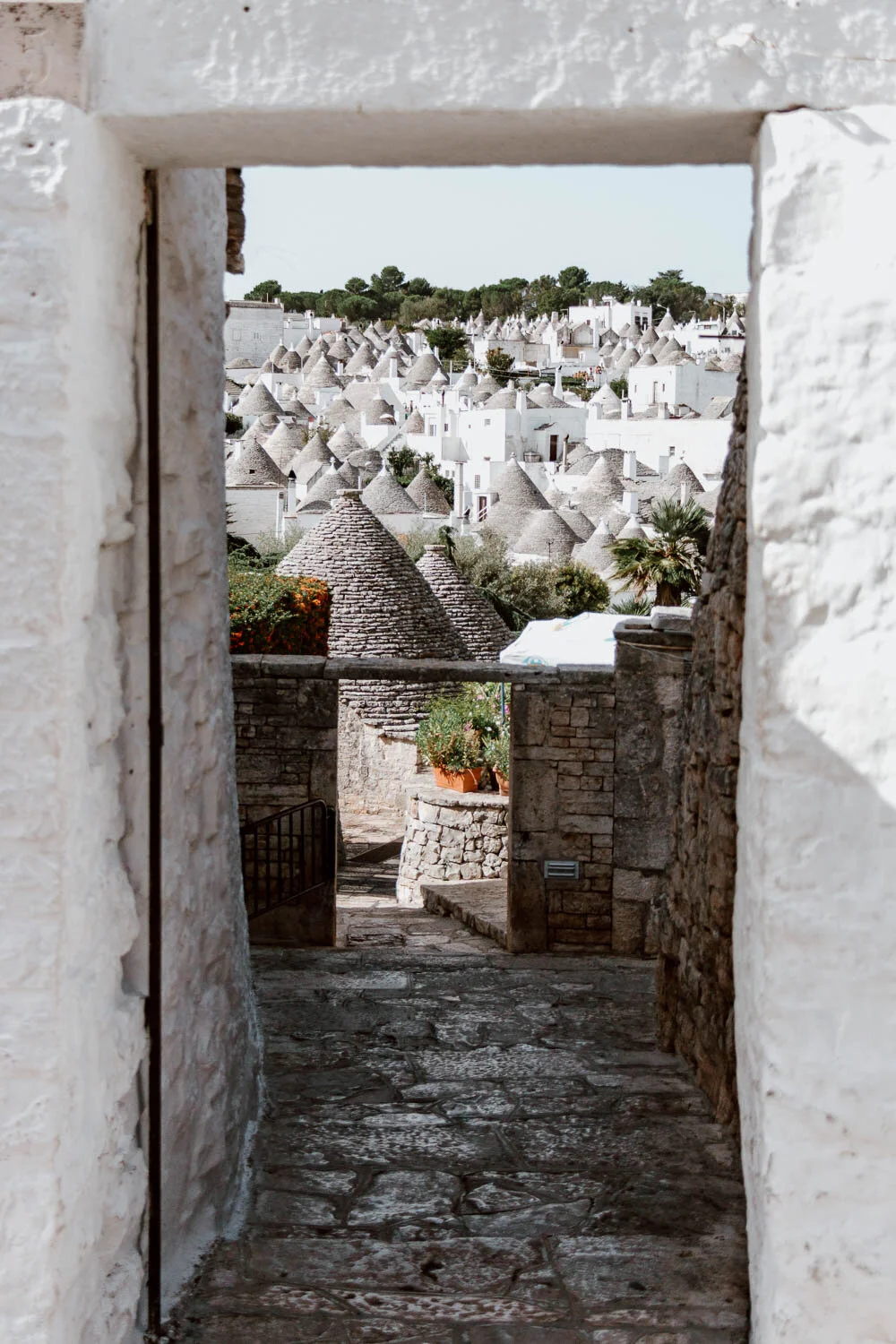
These curious conical-roofed whitewashed structures, clustered in pockets of Puglia like wild fungi, are an icon of the region. In fact, this peaceful part of southern Italy is the only place they have ever existed.
It is to view Puglia's finest and largest concentration of trulli which brings people to Alberobello, a town of just over 10,000 people. As one of the ‘must do’ items on everyone’s itinerary, the town has inevitably become a little overcrowded with daytrippers and tour groups, but it can still be enjoyed if you visit early and with your expectations managed.
Here’s our guide on how to get the most out of your time, including the best things to do in Alberobello, things to see, where to park and where to stay if you want to visit for more than a day trip.
Alberobello Essentials
What / Small village famous for its trulli houses
Know / Super busy but Rione Aia Piccola is much less commercialised
Tip / To escape the crowds visit early in the morning, or alternatively spend the night in your own trullo - this one is really beautiful.
Learn / About the Alberobello at Trullo Sovrano
Join / A popular walking tour like this one
Vistas / Take in the amazing views around the village
Eat / Amazing gelato at Arte Freda, a Pasqualino or go on a popular food tour to try lots more!
Cook / Dine at a local’s house in this cooking class
Stay / Splurge at Astra, opt for the super popular Grandi Trulli Bed & Breakfast, Trulli in Corte or B&B Trulli Miriva’, or stay in our favourite Airbnb, Hermanas Relais.
A Brief History of The Trulli
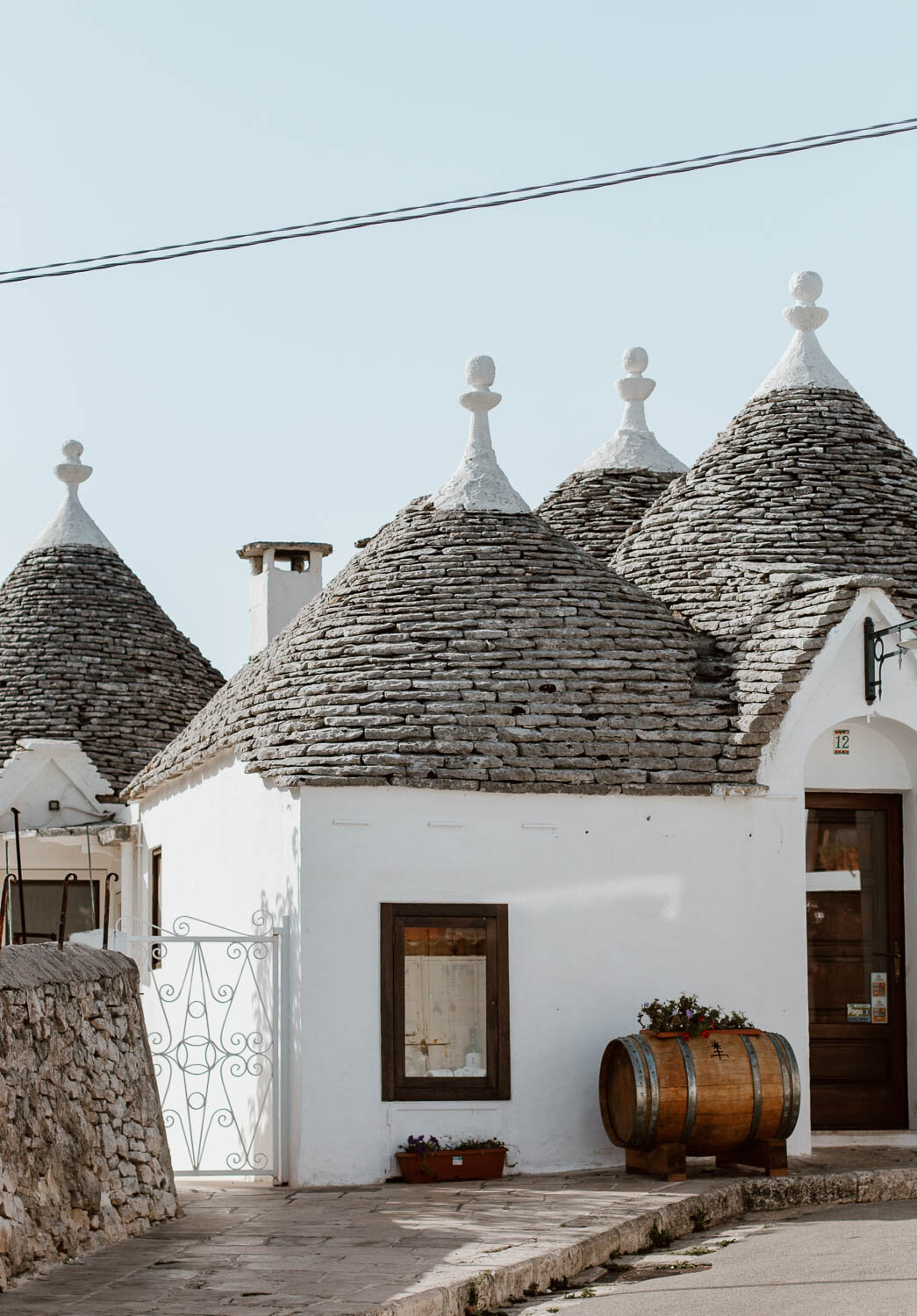
In the words of Unesco, which declared Alberobello a World Heritage site in 1996, the easily recognisable trulli (the singular form is trullo) are:
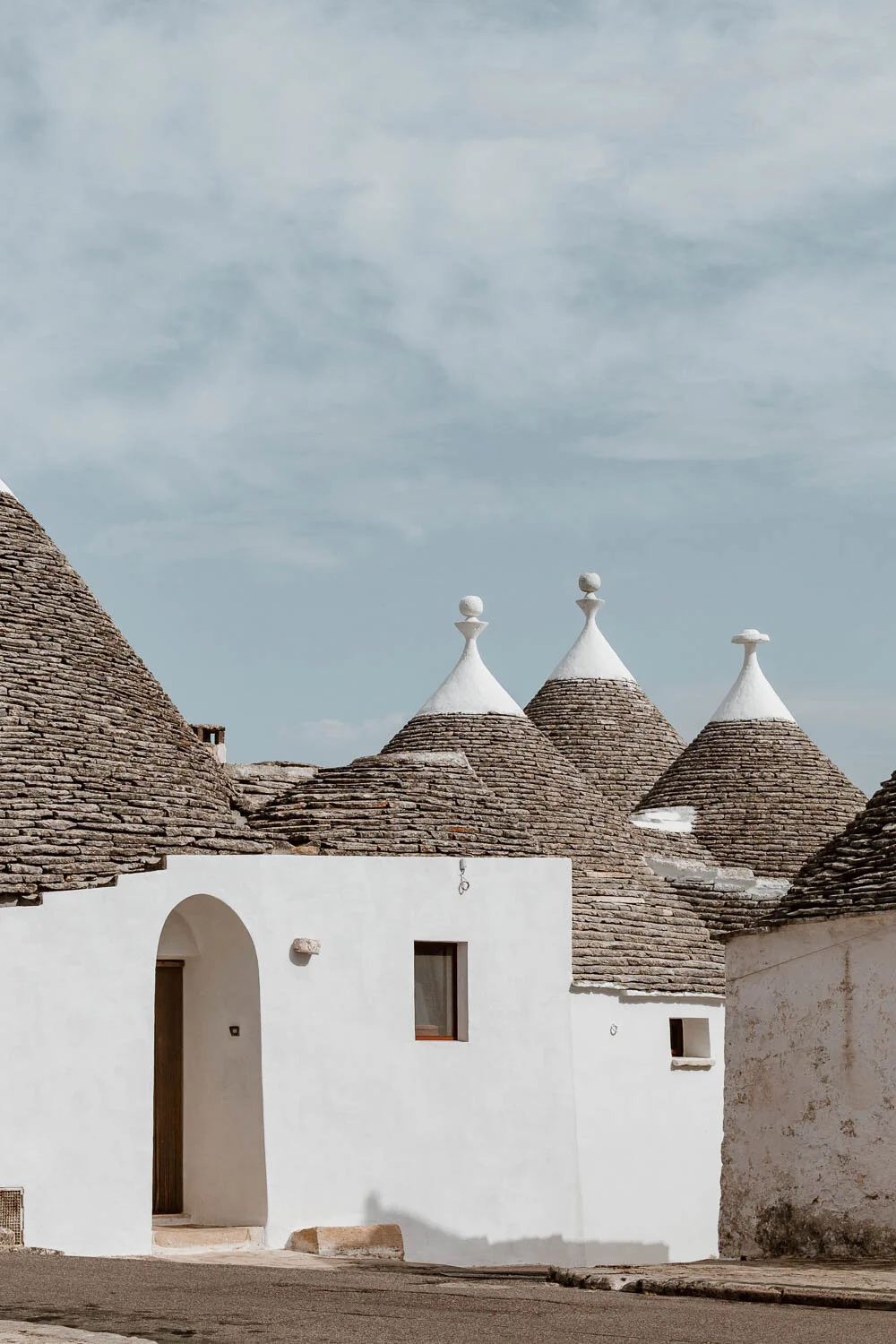
“remarkable examples of drywall (mortarless) construction, a prehistoric building technique still in use in this region. The trulli are made of roughly worked limestone boulders collected from neighbouring fields. Characteristically, they feature pyramidal, domed or conical roofs built up of corbelled limestone slabs.”
But, how did these unique buildings come to be in Puglia? Well, as with many pivotal moments in history, it’s all to do with tax and money.
In the 1500's, the Acquaviva family, the local rulers within the feudal system, wanted to avoid paying property taxes to the King. They ordered local peasants to build their houses and dwellings without mortar so that, in the event of a royal inspection, the structures could quickly and easily be taken down, and the tax bill would remain low. Using local limestone and some ingenious building techniques, the local population created the trulli, many of which remain standing today (a double achievement given their purpose was to be easy to dismantle!).
So far, so good - for the ruling family that is.
You can imagine how Puglian peasants, who had to tear their house down whenever an inspection was on the horizon, were less happy with the situation. Fast forward to the 1700s and, after several petitions from discontented citizens about the ongoing treatment and rule by the Acquaviva family, the King granted their wish to become a ‘royal’ town, and therefore free from the whims (and tax-dodging preferences) of their feudal lords.
After this decree, unsurprisingly, there was less reason for trulli to be built. However, they stand today as a testament to the lengths the powerful will go to keep their wealth, and the perseverance and resourcefulness of the powerless to make the best of their situation.
These days the majority of Alberobello’s residents don’t reside in trulli. Instead, the the town's 1,500+ wonderfully preserved and restored trulli ihave evolved into souvenir shops, restaurants and, of course, accommodation for visitors looking for a unique experience.
You can also take a two-hour walking tour in town to discover more about the history and important of the trulli.
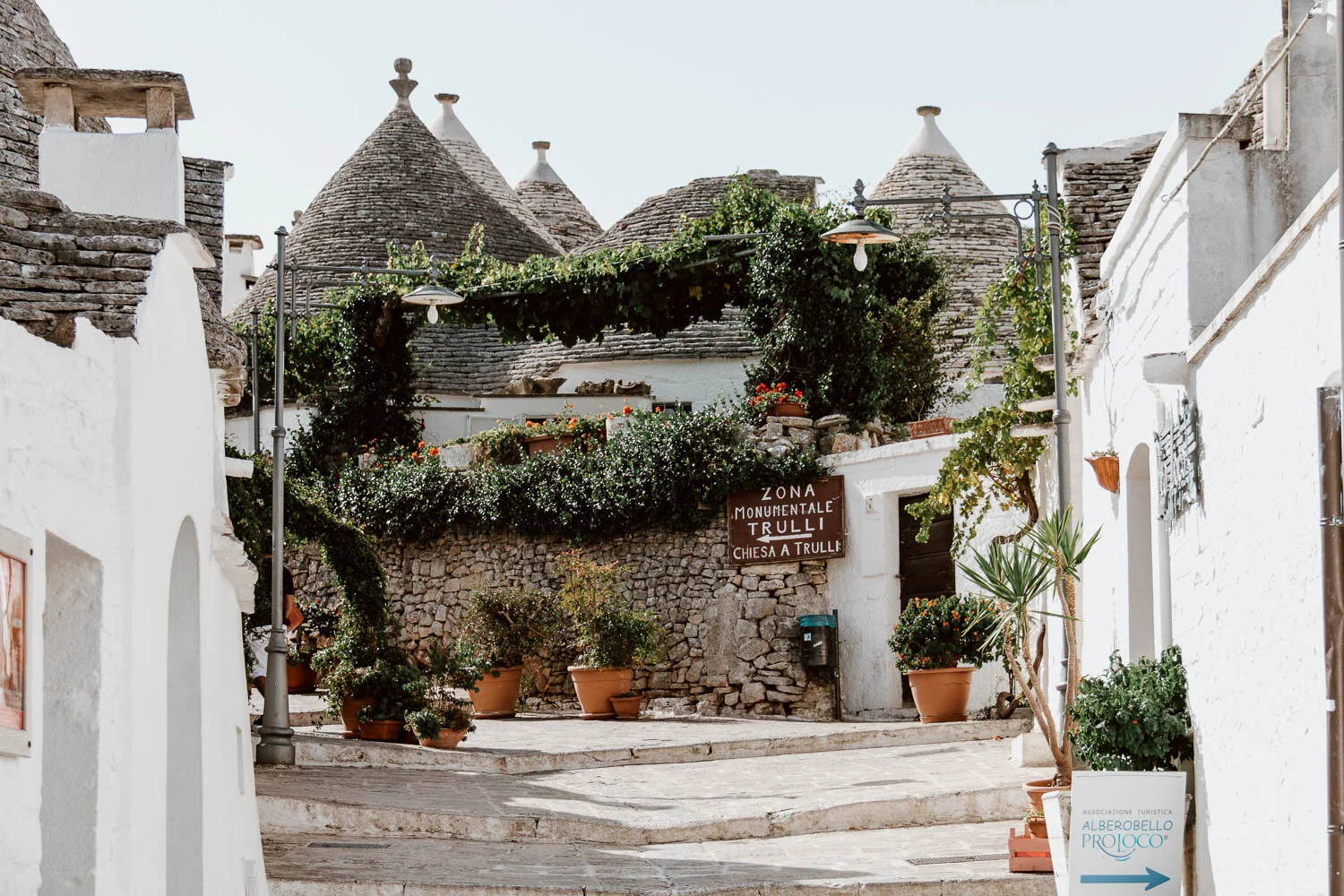
Our Favourite Things To Do In Alberobello
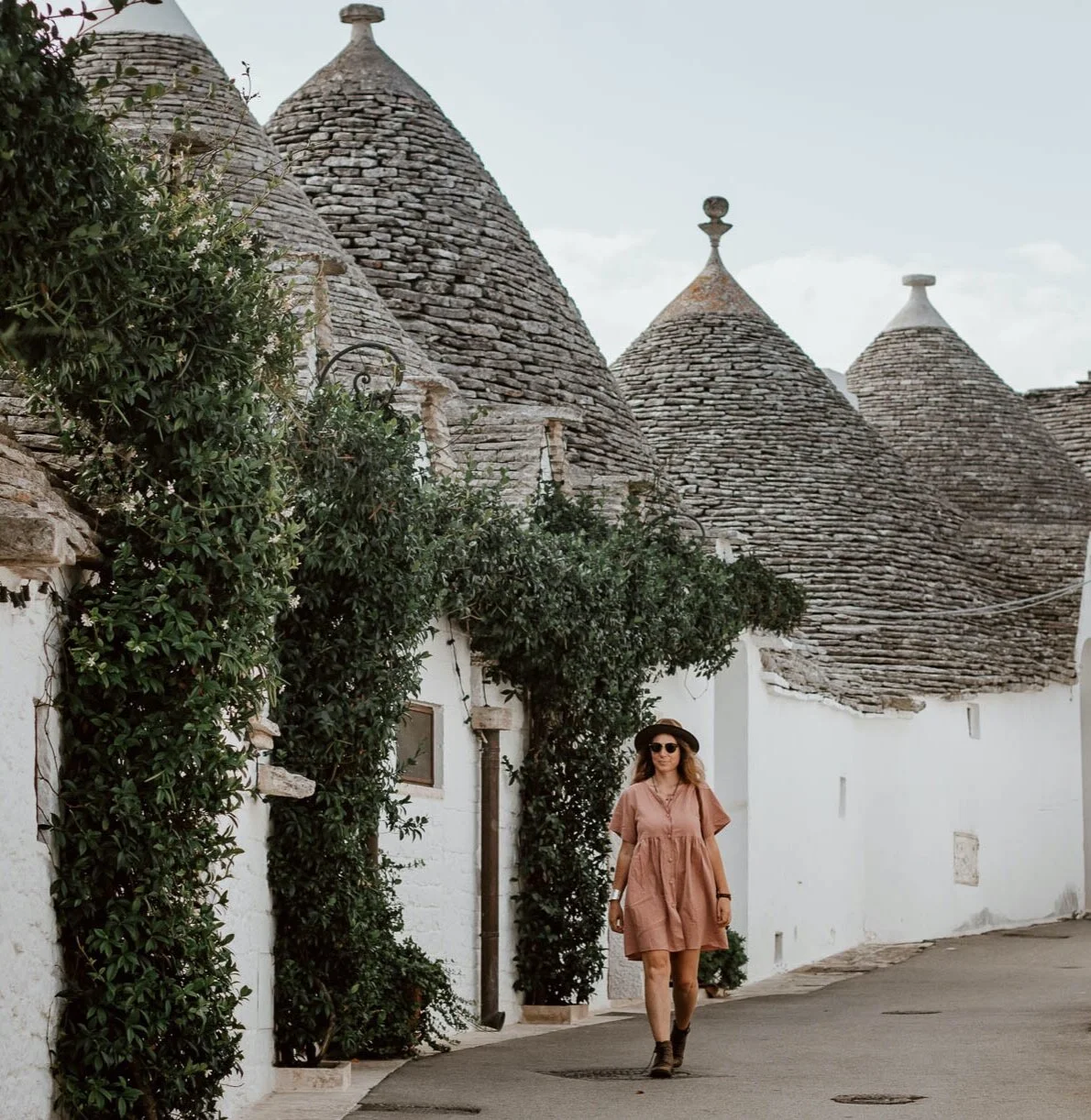
Undoubtedly, the sole reason most people come to Alberobello is to wander the trulli-lined streets; there is after all no other place like this in the world.
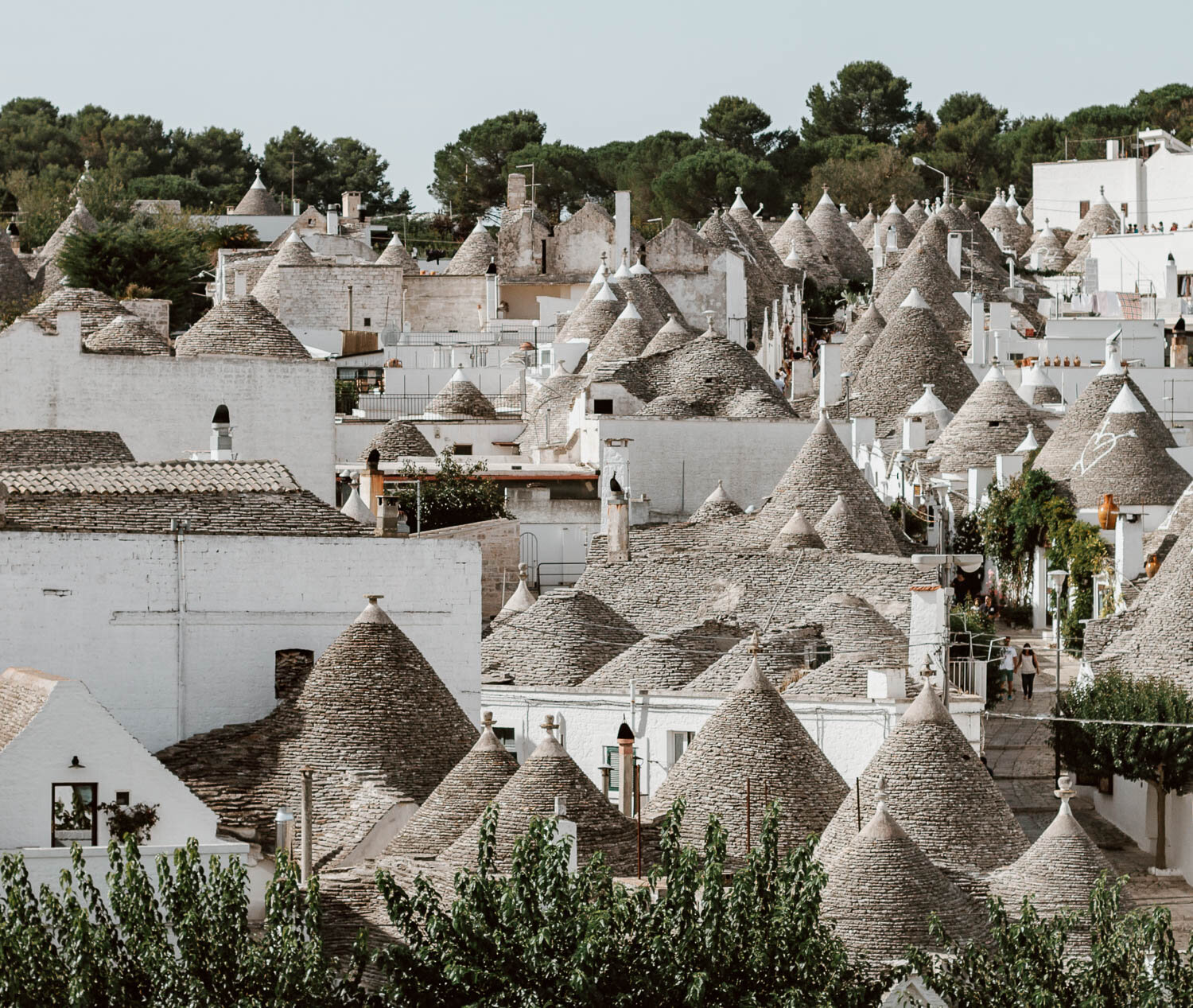
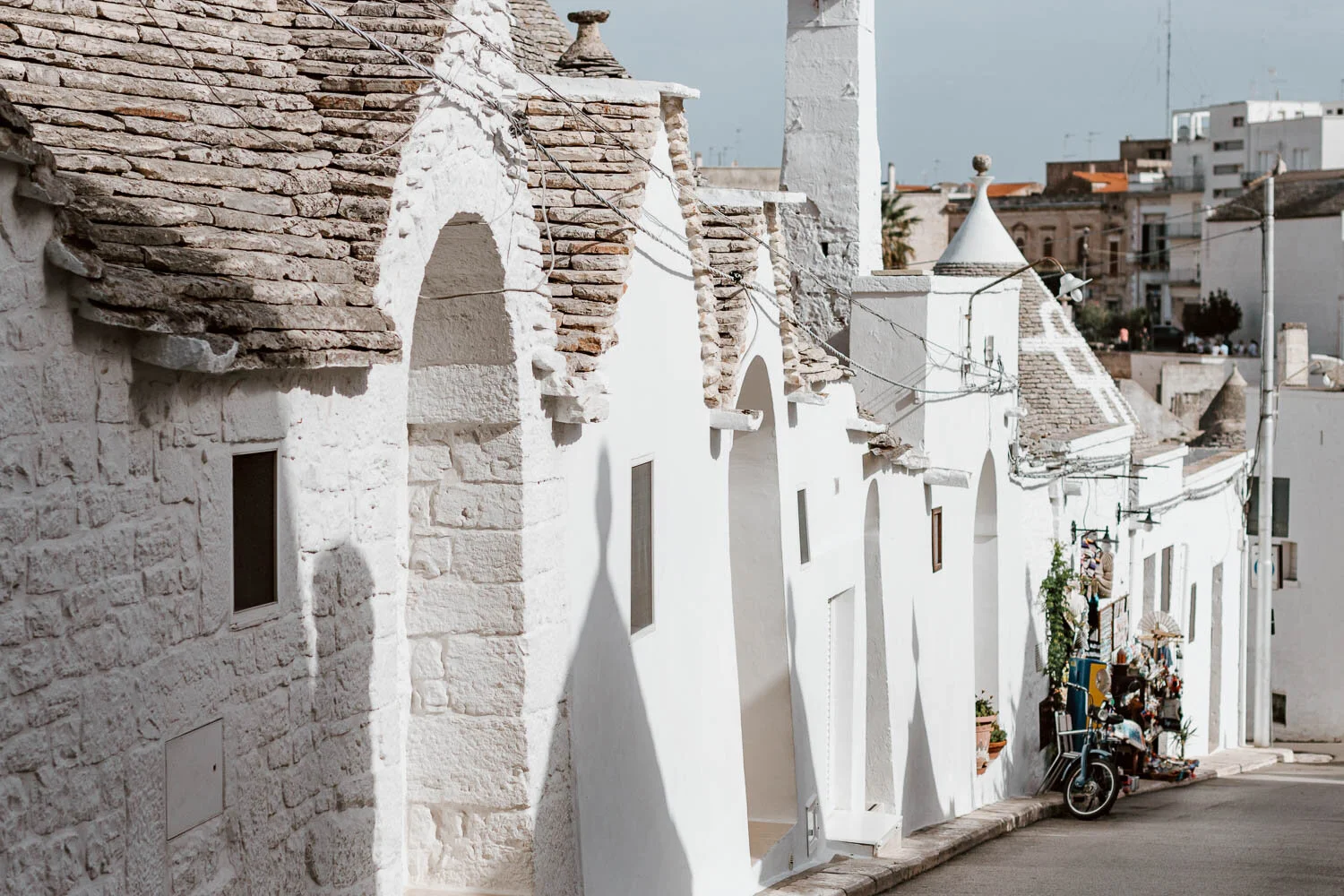
Once you arrive in the town’s centre, it’s immediately clear where to head - the Rione Monti quarter within the 'trulli zone'. Up a slight hill, it contains over 1,000 trulli and almost no other type of building style. It is touristy, with gift shops on every other door way, but it is also very very pretty.
If, like us, you’re short, then walking amongst the trulli here will also make you feel like a giant! The best plan is to have no plan, and simply meander and wander to your heart’s content, finding the odd quiet street or ridiculously photogenic nook off the main thoroughfare.
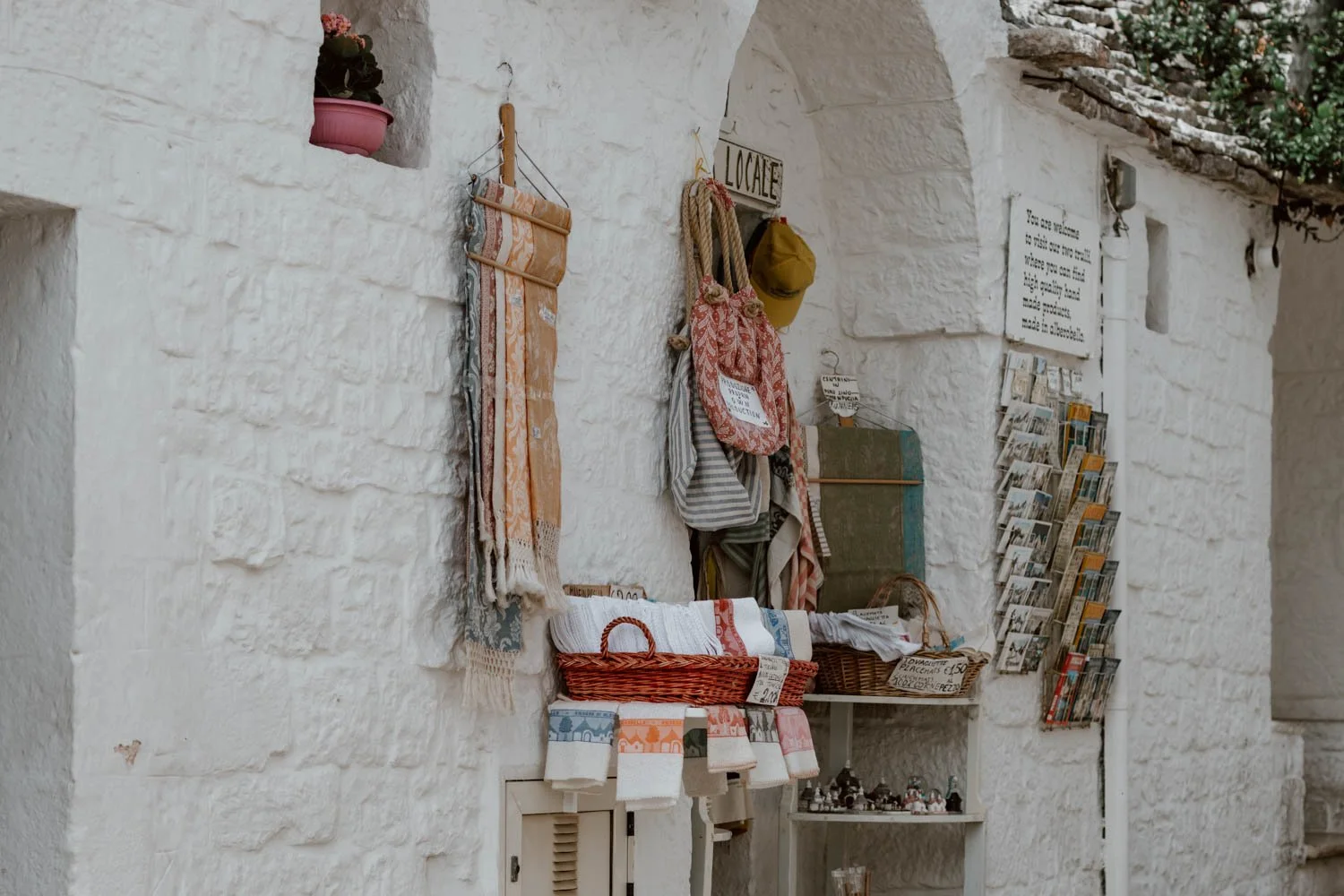
When in Rione Monti, shop-owners will sit or stand outside in the sunshine and try to tempt you inside for a look around - there’s obviously a hope that you may buy something, but there isn’t a hard sell, and it offers an opporunity to see how these buildings are structured inside. Tourism is clearly the lifeblood of the economy in Alberobello, so do try to contribute if you find something you like or want a souvenir.
Top Tip // Don’t miss il trullo più piccolo (that’s the smallest trullo for those of you who don’t speak Italian). Now a souvenir shop, you can find it here on Google Maps.
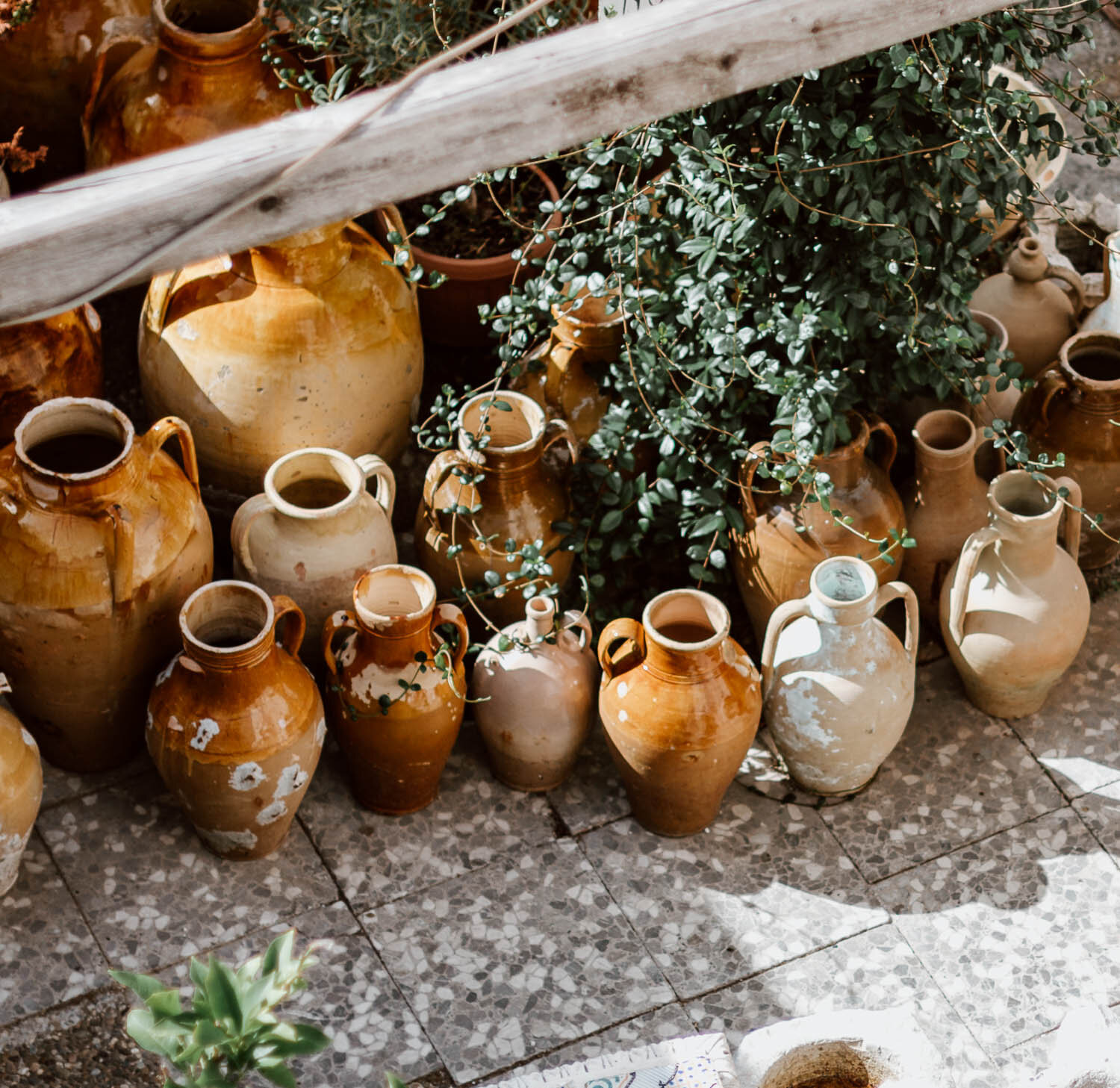
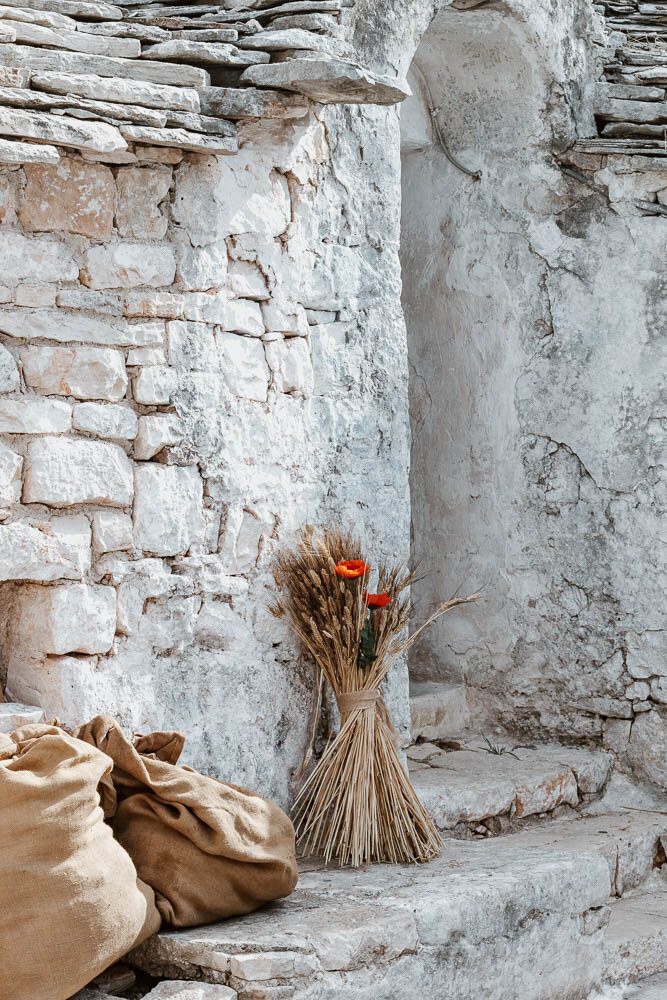
For a more authentic sense of what it means to live amongst the trulli, head across to the Rione Aia Piccola district, which has 500 or so trulli and is less commercialised. It was here where we enjoyed our time most, catching a glimpse of locals who still call these gnome-sized buildings home and elderly groups of Italian men out for a stroll in the streets that were theirs long before the tourists arrived. It also affords you the best views over the clustered trulli patches of Alberobello.
If you’re keen to understand a little more history behind Alberobello and trulli in particular, we’d recommend taking a tour - this two-hour walking tour of the two neighbourhoods mentioned above is incredibly highly rated and really good value for money.
Other places of interest within Alberobello include:
Trullo Sovrano (maps) |The only trullo in the village with two floors, it now functions as a small town heritage museum which exhibits the history of Alberobello and the surrounding area. museum. The museum is open 10 am - 12.30 pm & 3.30 - 6.30 pm (closes at 6 p.m. November - March) and entry is €2 per adult or €1.50 for concessions. Find further details on the official website.
Sant'Antonio Church (maps) | Constructed in 1927, this is Aberobello town’s church which, you guessed it, is built in the inimitable style (the only trullo church in the world!).
Casa d’Amore (maps) | Built in 1797 by Francesco d’Amore - one of the those responsible for the local uprising against the Acquaviva family tyranny - using mortar, as opposed to the traditional trulli method, Casa d’Amore has come to signify the end of the feudal period in Alberobello and so is of historical importance.
Grab a Gelato | If, like us, you believe that every day in Italy should involve at least one gelato, we’d recommend making a beeline to one of the town’s best gelaterias. That, unequivocally used to be Arte Freda, but we note that reviews have gone down hill a fair bit over the last year or so. The best spot in town now seems to be La Bottega del Gelato - find it here.
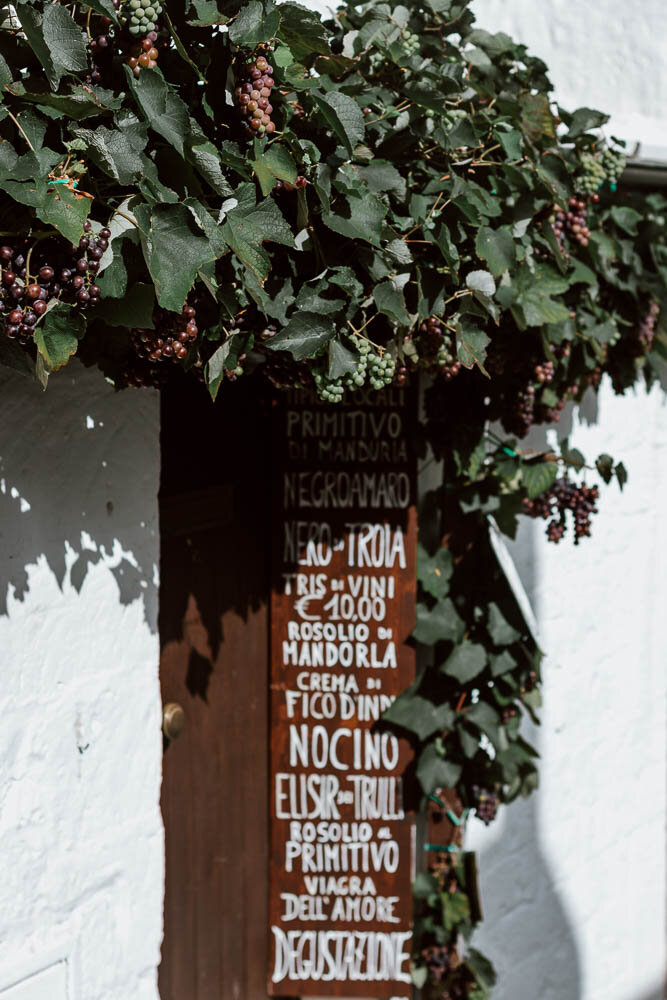
Try a Pasqualino | Since 1966, Alberobello has had its own sandwich, invented by Pasquale Dell'Erba, a local shop owner. With a curious combination of rosetta or turtle bread and, precisely in this order: tuna fish, capers, salami and cheese it’s obviously not one for the veggies, but if you’re a meat eater, it would be rude to visit the town of trullis and not give it a go. As vegetarians, we have no personal recommendations, but some popular spots to sample a Pasqualino include Focacceria "la Lira", La Pagnottella, Negozio Franco Girolamo Alimentari and Gusto Salumi & Formaggi.
Join a Food Tour | This popular two-hour food tour gives you the opportunity to learn about the village as well as sample some of her culinary delights including primitivo wine, cured meat, and local cheeses.
Take a Cooking Class | Join a local in her home and learn how to create a traditional 4-course meal - and then get to enjoy it after!
Santuario di Santi Medici Cosma e Damiano| Located outside of the tourist-focussed trulli district (here on Google Maps), is the impressive dedicated to the Saints Medici Cosma and Damiano. Inside you’ll find relics of both - the reason that to this day there is an annula pilgrimage to the church.
Trullo Siamese | Located on Via Monte Nero is the only trullo that has two adjoined domes and two entrances; hence the name Trullo Siamese. Like many trulli in Alberobello, it’s now a souvenir shop. Find it here.
There is also a street market along Via Barsento on Thursday mornings, from 7.30am to 12.30pm.
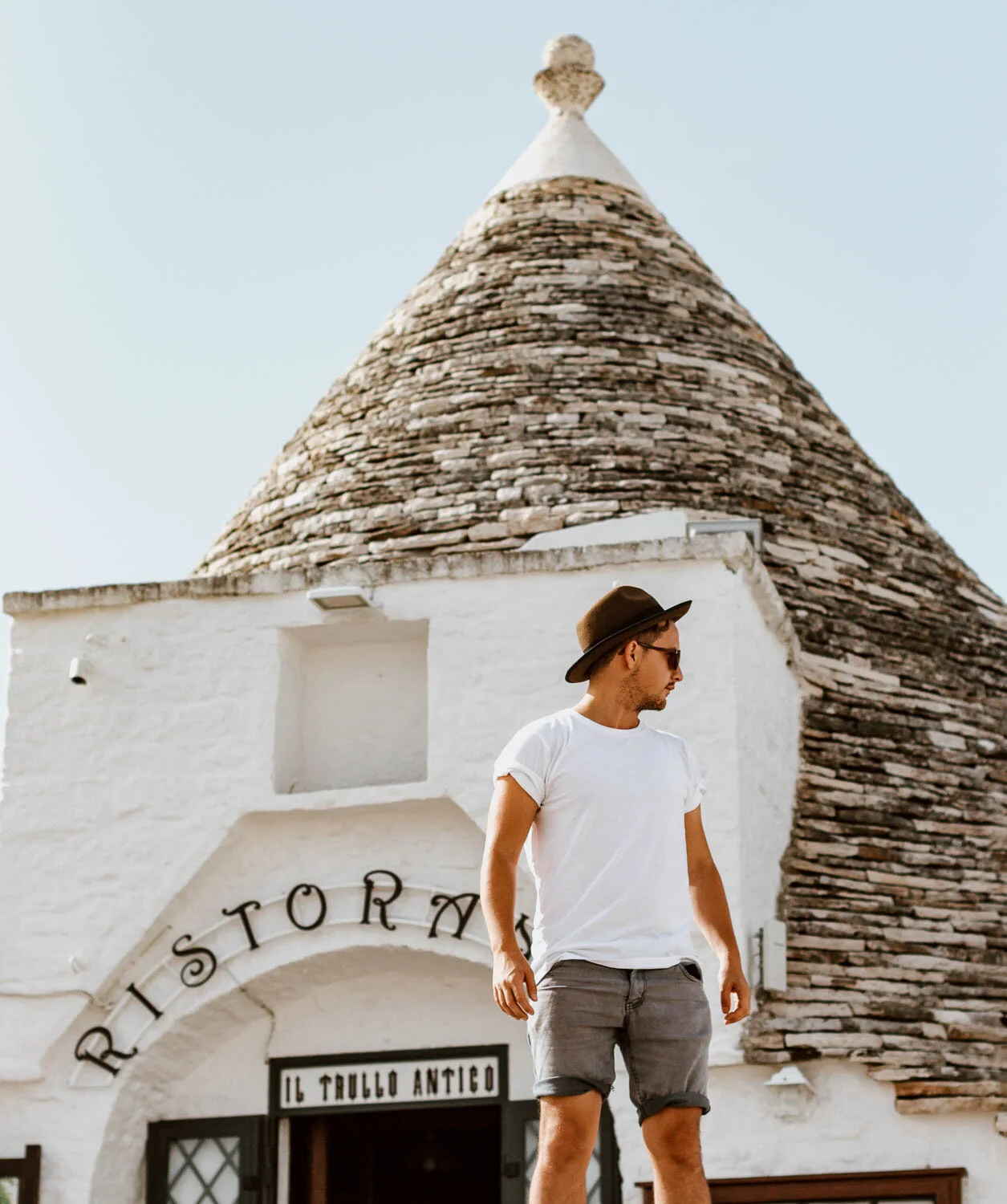
Find Alberobello’s Best Viewpoints
As famous as the small streets of Alberobello have become, many of the iconic photos you’ve likely seen will be from various viewpoints dotted across the town; some you will likely discover on your own meanderings, but there are a few you shouldn’t miss:
Villa Comunale Belvedere | A small tree-lined with places to sit and the most incredible view out over the Trulli. Find it here on Google Maps.
Belvedere Santa Lucia | Located adjacent to Chiesa di Santa Lucia, this popular spot is the best place to get a panoramic view of the Rione Monte area. If you have the choice, try to head there in the morning so you can get photos without gazing into the sun - alternatively, it does make an excellent sunset spot! Find it here on Google Maps.
Bar Rione Monti | If you prefer to combine your views with a cold beer or golden hour aperitivo, head to this bar with views over Rione Monti - find it here.
Casolare Panoramica | If you see a sign outside of any of the Trulli souvenir shops saying casolare panoramica, this means that if you purchase something from them (it doesn’t have to be expensive), you’ll be able to access a viewpoint from the top of their building for free! There are lots of these dotted around the village
Travel Tip // Some of the accommodations available in Alberobello have their own secret rooftop terrace with incredible views out over the trulli, including the hilghly-rated Terrazza Sui Trulli.
Is Alberobello Worth a Visit?
We won’t lie to you, we were slightly underwhelmed by our time in Alberobello.
We knew that it would be one of the more tourist-dense towns in Puglia, and so our expectations were already suitably managed prior to arrival. However, within the first ten minutes, it was clear that this was a town where tourism is now at the core of much and, unfortunately, whenever and wherever this happens in the world it begins to change the character of a place.
We wandered for a few hours, we visited some shops, we took photographs, and then had a late breakfast at one of the cute pavement coffee shops. However, we were both content to get back on the road and visit some of the other beautifully named nearby towns - such as Locorotondo - particularly as we saw more and more buses of large escorted groups arrive after 10 am.
That is not to say you should not visit Alberobello; as we’ve said, this place is unique, contains a very important story and we have zero regrets about having visited. Perhaps it was because we arrived here after several days in Puglia’s lesser-known west and south on our own road trip that a couple of hours felt enough.
Our advice to you is to try and arrive here before 9 am to have a glimpse of Alberobello before the crowds arrive, or in the later afternoon once the majority have departed (or have a night in the town or nearby).
Where To Stay In Alberobello
An alternative way to escape the crowds in Alberobello is to stay overnight'; and if you’re doing that, then it has to be in a cute and cosy traditional trullo. Here are our favourites:
Guest Houses / B&Bs
Budget | From £78 per night during the summer months, the Trullieu Guesthouse offers one of the the most affordable opportunities to stay in a trullo. Clean and tastefully decorated, it's a great option for couples or families looking for a quiet location close to the tourist area.
Alternatively, if you don’t mind not staying in a trullo, the modern and contemporarily decorated rooms at Dimore Dalle Zie are a fantastic, central option (with free parking).
Casa Turi and Mamapulia Home are two other great option with rooms less than £100 in high season.
Mid-range | The Grandi Trulli Bed & Breakfast is one a fantastic option if you want a base for a few nights, alongside a unique trulli experience. A two-minute walk from the church, it is over two floors, with a gorgeous en-suite bedroom within its conical roof, a lovely outdoor terrace and breakfast included.
Delightfully combining traditional Puglian architecture with contemporary flare, Trulli in Corte is located steps from the ‘trulli zone’ of Alberobello, the rooms are fabulous, and the rooms are set around a gorgeous garden.
B&B Trulli Miriva’ is moreso a little self-contained trullo that provides breakfast than a true B&B but don’t hold that against it - it’s wonderfully charming, sympathetically refurbished (whilst adding an extra level of comfort) and super popular.
Other fantastic mid-range options inlcude Trullo Monte Santo 50, Palazzo Scotto, Trulli Selva e Natura Gio' and B&B Il Brigante.
Luxury | There are a handful of properties in Alberobello which fall into the ‘luxury’ price bracket. First is Astra, is a 16th century trullo set in a wonderfully peaceful and romantic location and run by Giuseppe & Anna-Maria. It's a perfect choice for couples or honeymooners.
Resort La Corte Dell'Astore is a gorgeous new boutique property (but built in the traditional trulli style) located in a peaceful setting a few minutes walk from the centre. They offer a variety of different rooms - some including luxurious spa baths - all of which are furnished to a high standard. The resort also benefits from a pool.
Trulli Resort is perhaps the most luxurious option in Alberobello, and is a great option for those that want to combine a trulli experience with excellent hotel facilities.
Airbnbs, Self-Catering Trulli & Holiday Homes
There are a number of trulli available on Airbnb, both in Alberobello and the surrounding area. We’ve picked four within the village to cover all budgets.
Hermanas Relais | By far the most luxurious option in the centre of Alberobello, property this has been beautifully restored to a high standard a boutique hotel feel.
Another option, around a simliar price-point is the stunning Trullo Naiira.
Il Trullo della Massaia | Surprisingly large for, this 400 year old trullo is the perfect combination of new and old. Full of original features, it has been exceptionally well updated to provide the needs of a modern traveller.
Trullo Syrah | This Airbnb is teeny-tiny, but beautifully furnished and decorated and with a peaceful garden - would suit a couple or solo traveller.
Other mid-range propertioes that caught our eye include Trullo Arboris, The Olive Tree Trullo, EnjoyTrulli B&B, Trulli Magheía and Il trullo del Guelfo.
La Casetta di Paco and Dimora Aia Piccola are both excellent, affordable options.
If you’re travelling with children or friends and need a little extra space, despite space being very much at a premium in a trullo, there are some decent two bed option. Our favourite is Chiancole Trulli Experience but Trullo Antica Bellezza and Trullo Alfieri are also worth checking out.
How to Get to Alberobello
By Car | If you are visiting Alberobello as part of a larger Puglia trip, by far the easiest way to get around is with your own vehicle. We have visited the region three times, and have hired a car on each and every occasion. Whilst it’s certainly possible to negotiate the region with public transport, without a hire car we wouldn’t have been able to access some of the smaller, more off-the-beaten-track locations, nor easily visited more than one place in a single day - like combining a trip to Alberobello with other towns and villages in the Val d’Itria.
If you are renting a car and doing a road trip in Puglia, then you will find two paid parking lots (€6 per day) near Rione Monti - just follow the signs once you enter Alberobello or head to this spot on Google Maps. Note that these were completely empty when we arrived just before 9 am, but full by 11 am.
If there are no spaces, then there are plenty other parking options a few minutes' walk away.
Top Tip // We don’t stick with one car hire company when we rent our road trip vehicles, however we always look, compare and book via a big aggregator like AutoEurope or RentalCars - this often provides greater availability, and allows us to source the best vehicle for us, at the best rate. We have used both these companies exclusively for all our road trips and highly recommend them.
For more advice on reducing the stress and costs of car hire, read these posts: 9 Essential Car Rental Tips for Travellers, our road trip itinerary and our post on driving advice for Puglia.
By Train | If you are unable to rent a vehicle in Puglia, or would prefer not to, the good news is that Alberobello is accessible by public transport.
To reach Alberobello from Bari, you’ll need to change the train in Putignano. Take the train from Bari Centrale which runs every two hours and change to a direct train to Alberobello. This takes just over two hours, meaning the regular direct bus between thee two (journey time of around an hour) may be more efficient.
The easiest places to access Alberobello from by train are the neighbouring pretty towns of Martina Franca and Locorotondo which have regular trains, and take 10 - 20 minutes.
Check trains here on the official Trenitalia website.
By Bus | There is a direct bus from Bari to Alberobello. This departs regularly from a station within the new town.
By Tour | There are now plenty of tours from popular cities and towns all over Puglia that visit Alberobello as part of a tour:
· Ostuni / Visit Alberobello, Locorotondo (and have brunch there plus and olive oil tasting), before returning to Ostuni for a guided tour.
· Brindisi / Visit Alberobello (plus enjoy a local food tasting), then Locorotondo before continuing on to Ostuni. A guided tour but with free time also.
· Lecce / This is a driver-only tour with free time in Alberobello, Locorotondo, & Ostuni (plus a food tasting and aperitif).
· Bari / There are several highly-rated and popular tours that depart from Bari and include time in Alberobello - this one which also visits Matera, this one that includes time in Polignano a Mare and this one which focusses on the pretty towns and villages of the Val' d’Itria.

Travel Better in Puglia
Whether you’ll be visiting on a day trip, or spending the night, hopefully this guide has let you know the best things to do in Alberobello as well as some useful tips for planning your time there. Be sure to check out all our other Puglia guides!
14 Things to Know Before a Puglia Road Trip
Our Puglia Road Trip Itinerary
8 Reasons to Fall in Love With Puglia
A Short Guide to Bari | Your Gateway to Puglia
A Short Guide to Polignano a Mare | Puglia’s Most Famous Beach
A Short Guide to Ostuni | The White City
A Short Guide to Locorotondo | Puglia’s Prettiest Little Town
17 Really Useful Things to Know Before Visiting Puglia
13 Wonderful Things to Do in Lecce | The Florence of the South