The 6 Best Day Trips From Quito
Discover the best day trips from Quito in this complete guide.
Updated August 2024

Although it’s possible to spend weeks exploring all the towns, villages, hiking trails and lakes surrounding Quito, the capital of Ecuador, we appreciate that many people will have a limited time in this part of the world. Thankfully, many of the very best things to do in the region are easily accessible on a day trip from the city.
Within this guide we’ve covered what we consider to be the best day trip trips from Quito, including information on how to access them independently as well as our pick of the best organised to tours to each of the popular destinations.

Best Day Trips From Quito
Mindo / Do it independently using our guide or with a tour
Otavalo / If you only want to see the market, opt for the bus but if you’d like to combine it with other activities in the area, consider a tour like this one
Mitad del Mundo / Super easy to visit independently (and much cheaper) but this tour is the best option of you’d prefer
Termas Papallacta / Visit by yourself or on a private tour
Quilotoa Lake / For a day trip a tour is advisable - this one has hundreds of excellent reviews
Cotopaxi / Visiting independently is a little challenging (& limiting) so tour is best - this hike & bike tour was lots of fun!
Termas Papallacta / Best way to ease sore legs, possible with a tour but it’s pretty overpriced so take the bus instead
First, A Word of Warning About Buses…
Before we move on to the best day trips from Quito, given that many of you reading this will choose to access these places via the public bus system, we felt we needed to bring a couple of things to your attention. Namely, that a lot of robberies happen on buses in Ecuador*, specifically buses which depart from Quito’s bus stations.
The good news is that these robberies are always (or at least as far as we are aware), non-violent, and usually of the bag-slash kind; in fact, you probably wouldn’t even notice you’ve been a victim until you arrive at your stop or get off the bus. The bad news is that the thieves which prey upon backpackers are very, very good at what they do!
To avoid becoming a target
Keep your daypack (the one with all your valuables) on your lap at all times.
Never, ever put it below or above your seat. Ever.
If someone tells that you must put your bag elsewhere, politely decline, no matter how insistent they are or whether they’re wearing a uniform (crooks have been known to dress up in the outfits of a bus driver).
* This isn’t broad-brush scaremongering; we’ve travelled several times in Ecuador and it’s an issue specific to buses there. We have more advice in ‘10 Things To Know Before You Visit Quito’.
The Cloud Forests of Mindo
We spent three days here in Mindo, muddy boots permanently on our feet, and a perpetual smile on our faces (due not in small part to the friendly troupe of dogs that roam the streets). Mornings spent tracing trails through the forest in search of birds, waterfalls, and wonderful views and afternoons indulging in some of the world’s best chocolate whilst watching the rain fall - as it tends to, every day, no matter what the guide books say.
We honestly feel that Mindo deserves more than just a day trip, but appreciate that if you don’t have weeks to explore Ecuador, you will want to squeeze in as much as possible.
The good news is that it’s absolutely possible to tick off at least a couple of Mindo’s biggest attractions on a day trip.
Do it Yourself
Nice and early, head to Terminal La Ofelia (here on Google Maps, $7-10 for a taxi from the city centre) and seek out the ticket office for a bus company called ‘Flore de Valle’ - this is the only company that services the route between Quito and Mindo.
The first bus departs at 8am, after which there are departures at 9am, 11am and 4pm; for a day trip, you really want to be catching the 8am bus. The journey takes approx two hours - traffic dependent - and costs $4 per person. You will get dropped off in the centre of Mindo.
If you’re visiting independently, we’d recommend setting off with a firm plan about which activities you’d like to do to maximise the amount of time you have - take a look at our guide to Mindo to plan your visit.
Be aware that the last bus from Mindo back to Quito leaves at around 5pm depending on the day of the week (be sure to confirm this before departing for Mindo, and take a photo of the schedule).
Alternatively, you can find some options for private transport on Bookaway but be aware that they will cost you significantly more than with the local bus network so are only an option if travelling in a group, or very much not on a budget.
Take a Tour
Whilst it is very easy to get to Mindo with public transport, the benefit to going on an organised tour is that they often include certain activities or visits to touristic sights within the price and/or timetable. This means you don’t run the risk of getting to Mindo and wasting time sorting yourself out.
This highly-rated full-day tour includes a visit to the hummingbird garden, a guided walk through the cloud forest and the opportunity to try out zip lining or repelling (for an extra cost). Alternatively, this option is a fair bit cheaper up front (and still very popular), but you have to add-on your activities separately.
If you’d prefer a private tour that can cater to your specific interests, consider taking a look at this one.

The Market of Otavalo
The traditional market town of Otavalo, two hours north of Quito, is a hugely popular stop on any travellers Ecuador itinerary, and whilst we chose to spend a few days here, you can get a really good sense of the place on a day trip - just make sure it’s on a Saturday so you get to enjoy the huge market that takes over the town every week (the largest indigenous market in South America and best place for a proper souvenir!).
Other things to do in Otavalo include:
· Watching rescued condors fly at the Condor Park
· Take a wander to Peguche Waterfall (around a 40 minute walk from the centre of Otavalo)
· Visit Museo Fabrica Imbabura to understand more about Ecuadorean traditional dress and weaving
We’re putting together an entire guide to Otavalo, some for more ideas on what to do during your visit, head over there once it’s published.
Do It Yourself
First of all, you’ll need to make your way to Terminal Carcelén (maps). Depending upon where you’re staying and your budget you can either opt for a taxi or Uber which should cost $5-8 USD or the ‘C5 ‘trolébus’.
Note that the bus is significantly cheaper (just $0.35 USD) but the journey can take a really, really long time if there’s bad traffic.
Once you arrive at the Terminal, you’ll need to find a booth with a sign for ‘Otavalo’ and purchase your ticket. The buses leave very regularly throughout the day and cost between $2.50 and $3 per person depending which company you choose, plus a $0.20 terminal fee. Journey time is two hours and you’ll be dropped off at Otavalo bus station (maps).
Take a Tour
As getting to Otavalo is so straight forward, we really don’t think that you need to take a tour. However, if you’re keen to see a little more of the region, there are several excellent tours to consider (all with fantastic reviews):
· This full-day tour includes Otavalo Market, the town of Cotacahi and Cuicocha Lake
· In addition to a guided visit of Otavalo, this super popular private tour also includes a stop in Cayambe, San Pablo Del Lago, and Cascada de Peguche.
· This full-day tour combines La Mitad Del Mundo, Otavalo Market, Peguche waterfall, visits to two workshops - first a traditional weaving atelier, and then to an indigenous instrument maker and a stop to see San Pablo lagoon. A similar tour is also available on Get Your Guide.

Mitad del Mundo
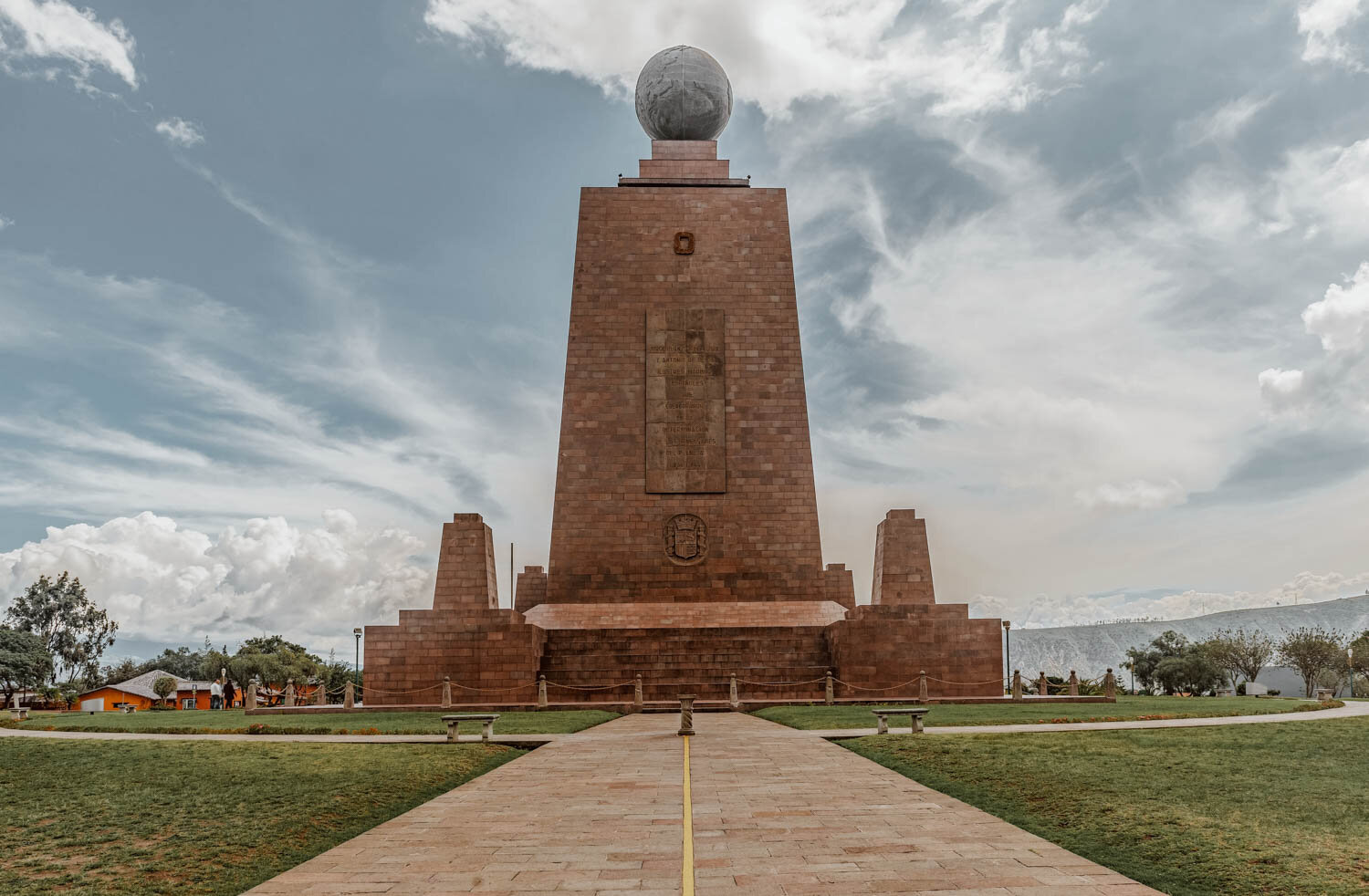
Whilst recent technological advancements have proven the measurements to be a little off (the very large monument erected is actually 300m in the wrong direction), the designation of the equatorial line, and its position just 22 km north of Quito has created quite the tourist attraction - and a very popular day trip for locals and tourists alike.
So you’d think perhaps that after two trips to Quito that we probably would have made it there…yeah, no. We know that this was perhaps an oversight on our part and promise to try harder when we return (in part because of fun little activities like being able to balance an egg on a nail, and flushing sinks on either side of the equator to test the theory that the water runs in opposite directions!)
Unlike every other destination in this list, as its relatively close to the capital, it’s a very easy place to visit if you’ve only got a few hours spare.
Entry to the park costs $5 for adults, $2.50 for children and includes all museums etc. It’s open every day of the year, 9am - 5pm Monday to Friday and until 6pm at the weekend.
Do It Yourself
Visiting the landmark by yourself is very straightforward - if a little slow.
Simply take a bus to Terminal Ofelia (approximately $0.35, find the bus station here), then connect on to the clearly marked Mitad del Mundo bus for $0.25. The second leg takes approx one hour each way, and can get incredibly crowded (so watch those bags).
Whilst the distance from central Quito to Mitad del Mundo is really not that far, if you get caught in bad traffic on the way to the Terminal Ofelia, and then again heading out to the site, what should be a relatively short excursion has the potential to take an entire day - especially once you throw in the return journey.
For this reason, if budget will allow, you may wish to jump in a taxi or Uber instead. This should cost between $15-$20 USD which is reasonable if there’s a group of you.
Take a Tour
If you’d prefer to to visit Mitad del Mundo as part of a tour and with a guide that can provide more information, this one (entry included) comes highly recommended.
However, if you’re able-bodied and speak some Spanish, we honestly don’t think a tour is necessary and they’re pretty pricey for what’s actually included.
The Stunning Quilotoa Lake
Hiking the entire route to the Quilotoa Loop remains one of our absolute favourite experiences in Ecuador, however we understand that not everyone visiting the country has the luxury of setting aside four or five days for the independent hike or indeed is capable - or keen - to hike that far.
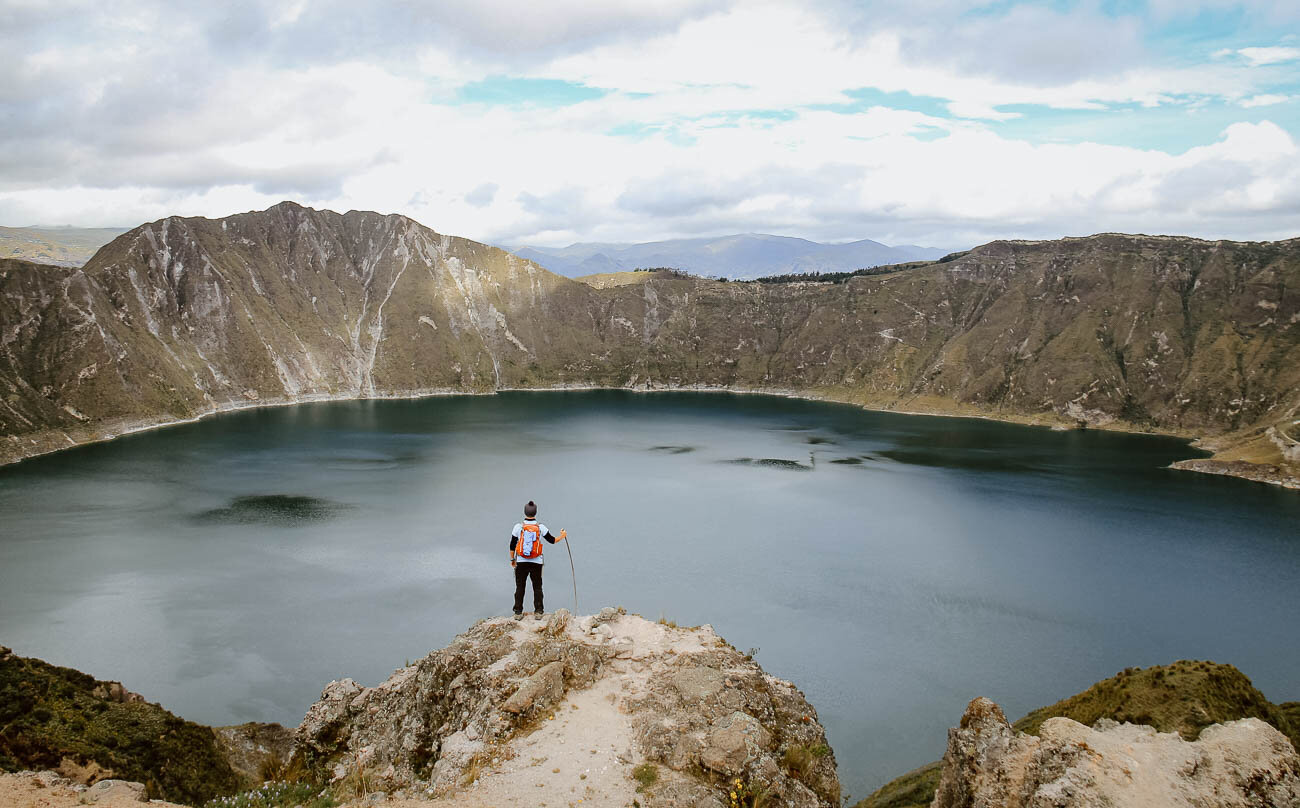
So, if you have dreams of seeing the deep blues of this incredible crater lake, of kayaking the 3 km across its still waters and experiencing life in this small Andean village but are on a tight schedule, you’ll be pleased to know that it’s possible to visit on a day trip from Quito.
For more information on completing the multi-day hike, read our guide, ‘10 Things to Know Before Hiking the Quilotoa Loop’.
Do it Yourself
While it is theoretically possible to visit Quilotoa as an independent day trip from Quito, it would make for a very early day start, a super late finish and several transport connections, as described below:
- From Terminal Quitimbe in south Quito, hop on an early bus to Latacunga. There are several companies travelling this route (including Cooperative Latacunga, Expreso Bolivariano, and Ciro Cotopaxi) with frequent departures. Expect to pay between $3-5 USD for the two hour trip. Find the bus station here on Google Maps.
- The bus will drop you off on highway from where you need to either walk 8 blocks or take a short taxi ride to central Latacunga. Taxis will be waiting, expect to pay around $1.50.
- Take a bus from Latacunga to Quilotoa. Two options for this: the first is a direct bus all the way to Quilotoa ($4-5 USD, just over two hours) but if you’ve just missed one, consider taking the much more frequent bus to Zumbahua followed by a shared taxi / pick-up to Quilotoa ($5-8 USD for entire car/van).
Alternative | To save some time on the way back, you could consider hiring a private taxi to drive you all the way from Quilotoa to Latacunga once you’re done with your hike.
The other option - if you’re comfortable driving in Ecuador - is to hire a car.
Take a Tour
As discussed above, given there is no direct public bus from Quito to Quilotoa; if you’d like to experience the lake on a day trip, taking a tour makes the most sense.
There are plenty of companies offering outings to the Quilotoa Lake, especially in the Old Town of Quito, but if you’d prefer to book in advance, then this small group, full-day tour with plenty of free time to explore comes highly rated and includes entrances (also available here).
Do note that there are a handful of surprisingly popular tours offering combined day trips to Laguna Quilotoa and other touristic destinations nearby - like this one that includes Cotopaxi - but as the lake is so beautiful and there’s plenty to occupy you for hours, we’d encourage you to book a tour that only visits the lake.
If you’d prefer a private tour, this is a good option.
Climb Cotopaxi Volcano
At 5,897m, Volcan Cotopaxi is the second highest peak in all of Ecuador (Chimborazo takes the top slot), and provides ample opportunity for all sorts of out door activities including mountain biking, hard-core mountaineering and high-altitude hiking. Closed for a couple of years following a particularly active period, it’s now very much open to the public, and a fantastic day trip for the more active traveller.
Do It Yourself
It is perfectly possible to visit Cotopaxi independently, but note that you will be limited to hiking up to the start of the glacier only.
Public Bus | First off, you’ll need to take a bus from Terminal Quitumbe in the south of Quito, heading towards Latacunga. The bus doesn’t actually go in to the national park, but if you let the driver know where you’re headed, they'll let you off at the junction for the entrance (Control Caspi).
Unfortunately, this is nowhere near the actual park entrance, so you have the option to hitch-hike (only really possible on a weekend) or jump in one of the waiting taxi-trucks.
The going rate is $25 per person for a return journey, but expect to barter over price. The driver will stop at the control point in order for you to sign in, and continue up to the car park. From there you can hike up first to the refuge (definitely have a hot chocolate!) and then on to the foot of the glacier.
There is also the possibility to rent a bike from the taxi drivers ($10 per bike), to cycle to the entrance where they will meet you and drop you back off at the highway from where you should flag a passing bus.
Taxi | You’ll need to do a little bartering with a local taxi driver for this one, but could be a good option if there’s a group of you. Expect to pay between $50 and $70 USD for the return journey.
There used to be a very useful transport-only shuttle bus that transferred tourists from Quito to Cotopaxi National Park but it seems to have ceased running. Hopefully it’s just temporarily, so we’ll add the option back in if it returns.
Keep Reading // Be sure to check out our experience of visiting Volcan Cotopaxi.
Take a Tour
Despite our preference for doing most day trips independently when we can, we chose to experience Cotopaxi as part of a tour. There were a couple of reasons for this, but the most important being that we wanted to do the crazy cycle back down the volcano, and at the time this wasn’t offered by entrepreneurial taxi drivers!
As with all tours, the best prices can be found on the ground in Quito, but if you need to book in advance we can recommend this excellent option which combines hiking, biking, and lunch.
Alternatively, if you’re not keen on the two-wheel option, this incredibly popular and highly-rated full-day tour which focuses a little more on flora, fauna, and a hike up to the volcanoes refuge, plus includes all entrance fees.

Papallacta Hot Springs
For those seeking a little more relaxation rather than adventure, we can recommend taking a wee day trip to Termas Papallacta, a series of natural hot springs nestled high in the Ecuadorian Andes, around 40 miles east of Quito.
Technically part of the Termas Papallacta Resort, there is a large thermal bath open to the general public (6 am - 9 pm, costs $10.50 USD per adult, $5.35 for children) but it’s also possible pay a higher entrance fee of $24 to gain access to the private pools and jacuzzis, as well as indulge in all sorts of additional beauty and relaxation therapies.
If you’re feeling particularly fancy, or want a little longer to relax, consider spending the night as well! Check prices, availability and find out more here.
Do It Yourself
There is a direct bus from Quito’s Terminal Quitumbe to the town of Papallacta (it’ll have its final stop in Baeza, Tena or Puyo), just let the driver know that you’re heading to ‘Las Termas’.
They leave every 30 minutes and cost around $3. Although at 40 km it’s a relatively short distance from Quito, the winding mountain roads lead to a journey time of around 1.5 - 2 hours.
The bus will drop you off at the beginning of the town, from which you have three options to reach the hot springs:
Grab a taxi - expect to pay around $2
A small path heading uphill that follows the route of the river. Allow around 30 minutes for this.
The 17 km Virgen de Papallacta trail. This route will take you around 5-6 hours to reach the springs therefore it’s imperative that you leave enough time and likely isn’t a viable option for most people.
Alternatively, it’s also possible to hire a car from Quito airport for around $30 a day - check prices and book on RentalCars - or grab a taxi/Uber for $60-80 round trip (even if there’s several of you in the car, we’re aware that this is a pretty expensive option and not a feasible option for most backpackers!.
To return by bus, just wait on the side of the road for one heading towards Quito.
Take a Tour
If you’d really like the visit the Papallacta but are on your own or don’t feel like negotiating Ecuador’s bus system, there are a couple of tour options, just be aware that this doesn’t appear to be a popular group tour, with almost every option being private (and therefore charging quite large amounts).
This private tour has excellent reviews and includes your entry into the hot springs.
Alternatively, if you’re keen to pack more into one of your sight-seeing days, this tour includes time at the Guango Lodge for a birdwatching experience after you’re done with the springs.