The Best Things to Do in Theth, Albania | Gateway to the Accursed Mountains

The little village of Theth sits deep in the Albanian Alps, in a valley so steep and dramatic that for much of the year, it was once completely cut off.
Until recently, reaching it required a foolhardy soul and a 4x4 bumping along an unpaved mountain road, past loose rockfalls and hairpin bends, with no guarantee of getting in or out on time.
These days though, things are much easier.
The notorious road is now (mostly) tarmac and smooth, literally opening up remote Theth and its surrounding mountain peaks to much more tourism.
It’s the kind of place where the mountains fill every window, where paths lead from your guesthouse to waterfalls and rivers in under an hour, and where even a lazy day doing very little feels like time well spent. Most people come here for the Valbonë Pass hike (it’s the main reason the village made it on to our itinerary), but there’s enough to keep you in the valley for longer - from wild swimming spots to simple, home-cooked food and epic views that change with the light.
This guide shares everything you need to plan your time in Theth, including advice on its most famous hikes, tips on where to stay & eat, and all the places you shouldn’t leave without seeing.
The Theth Essentials
Know / Best to visit mid-June to September
Arrive / The drive in by car is spectacular, but there’s also a daily shuttle service - find out more here
Tour / Possible to visit on day tour (or longer hiking adventure)
Hike / The incredible Valbone Pass
Dip / Into the frigid waters of the Blue Eye
Visit / The Grunas Waterfall
See / The famous Theth Church
Relax / Amongst the epic mountain views
Stay / We stayed at Bujtina Miqesia, but would likely opt for Molla Guest House or Valter & Drita’s Guesthouse if we were to return.
Best Time to Visit Theth
Theth’s wild beauty changes dramatically with the seasons up here in the wonderfully named Accursed Mountains, so timing your visit makes all the difference.
Due to the mountain setting and heavy, lingering snowfall, it’s somewhere that simply isn’t accessible or feasible year-round and therefore has a shorter tourism window than anywhere else in the Albania: it’s probably not even worth considering it for your itinerary before May.
The village and nature spring back to life in May and early June, but snow often still lingers on the higher trails like the Valbonë Pass, making any mountain hikes impenetrable and incredibly unsafe to attempt. The fact the snow is still there in May/early June can take travellers by surprise - like in Italy’s Dolomites - but it’s an important factor for your planning.
If you’re not too fussed about those mountain hikes and just want to experience Theth, then May is definitely still feasible and it will be much less busy.
Generally speaking though, the best time to visit Theth is between mid-June and late September, when the weather is warm, mountain trails are open, and guesthouses are fully operational. This window is perfect for hiking, reaching the Blue Eye, and enjoying the outdoors without weather-related risks. July and August bring the warmest days, long daylight hours, and a friendly buzz in the village - just be prepared for more foot traffic on popular trails and increased prices.
If your heart is set on the Valbone Pass hike, we recommend leaving your arrival to as late as possible in June in order to optimise your chances that the snow has cleared and the trails are officially open (exact dates vary each year and we’ve never been able to find a single reliable source on annual openings).
By early October, autumn colours start to creep in, and the valley takes on a golden hue; beautiful for photography and shorter hikes, but some services may start to wind down.
As mentioned, winter (November to April) is not a viable time for most travellers. The road into Theth closes due to heavy snowfall, and the village becomes inaccessible except on foot or by special arrangement. Most guesthouses shut, and there are no services for visitors.
The Best Things to Do in Theth
Enjoy the Epic Mountain Drive
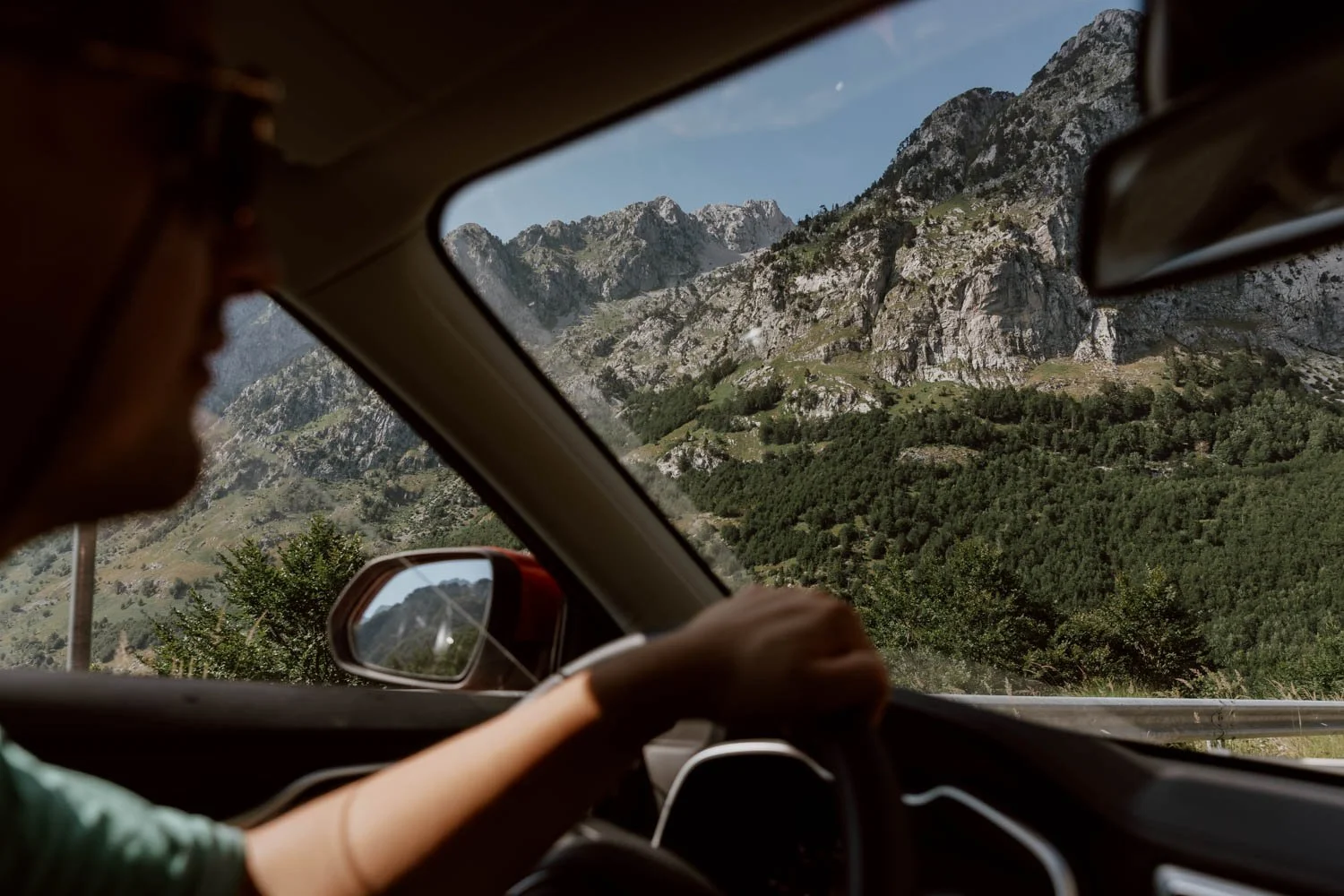
Part of the magic of visiting Theth is the journey itself.
The road from Shkodër into the Albanian Alps is one of the most scenic drives in the Balkans - a serpentine stretch of tarmac that climbs steadily through pine forest, wrapping its way around jagged cliffs and sheer drop-offs before cresting the spectacular Thore Pass (Qafa e Thorës) at 1,630 metres. Beyond that, the road drops dramatically into the valley, following tight hairpin bends as it weaves its way into one of the most isolated corners of the country.
Just a few years ago, this was a journey reserved for off-road vehicles and hardy drivers; an all-day affair over bumpy gravel tracks and dusty switchbacks, with entire sections impassable after heavy rain. Today, the road is fully paved all the way from Shkodër to Theth, and although it’s still narrow, steep, and occasionally nerve-wracking in places, it’s no longer the daunting expedition it once was.
Most standard cars can now make the journey in 2.5 to 3 hours, depending on traffic and confidence with mountain driving.
The real highlight though, is the view from the top of the pass. As you reach the high point and pull over at one of the small lay-bys, the panorama suddenly opens up - a dramatic sweep of limestone peaks, valleys folding into each other, and the tiny ribbon of road tracing its way far below.
That said, the road up and down to Theth still demands care. The bends are tight, the edges unguarded in places, and in wet or icy conditions, things can get tricky fast. It’s best to avoid driving at night, and always check the forecast if you’re heading up in the shoulder season as snow can linger well into May, arrive in late autumn, and conditions can change rapidly.
Important to Know // Andrew is an excellent and experienced driver, but we still had a couple of squeaky-bum moments - this really isn’t a drive we’d recommend for those who are very nervous or inexperienced.
If you’re uncomfortable driving, consider taking the minibus shuttle or hiring a local driver from Shkodër. Organised shuttles run each morning in tourist season, while there are also single and multi-day tours with all transport included.
Hike the Valbone Pass
We may have gone to Albania for its golden beaches, but we left our hearts in these silver mountains.
The Theth to Valbonë hike was one of the highlights of our trip to the country, and it added so much more depth to our experience there - a landscape so vast, so unexpectedly beautiful, that it took us completely by surprise. The sharp peaks, the quiet cafés in the hills, the steady rhythm of the climb through forest and rock… it’s a day we still talk about.
And although a few mistakes along the way made it a little more challenging than expected, it certainly ranks among the most beautiful trails we’ve ever done.
As we discuss in our Valbona Pass guide, due to the logistical difficulties of hiking the entire 17km trail whilst also hiring a car, we opted for a more unconventional route - one that required us to hike from Theth to Valbona, spend the night in a guest house, and then do the entire thing in reverse the following day.
Yes, we appreciate that to the non-hikers reading this, that may sound insanse but it remains one of our favourite travel experiences of the last few years.
If you’re in a similar situation, and aren’t intimidated by two full-on days in the mountains, we strongly recommend heading over to our guide for all the details.
The good news however, is that if you don’t want to do the full point-to-point hike, there is an alternative - and popular option - that allows you to start and finish in Theth, and see the best views without moving accommodation. This is sometimes called the ‘half hike’ and still covers the most scenic stretch of the trail.
The Half-Hike | At a glance…
· Distance / 14 km (8 miles)
· Time / 6 to 7 hours (inlcuding breaks)
· Elevation gain / 1,000 m from Theth to the pass (Qafa e Valbonës, 1,795 m)
· Trail conditions / Well-marked (red and white), gravel, forest trail, and rocky zigzags
· Difficulty / It’s a moderately challenging hike - not technical, but long and steep in places, especially the gravelly sections near the pass. If you’re fit and used to hiking, you’ll be fine without a guide in summer.
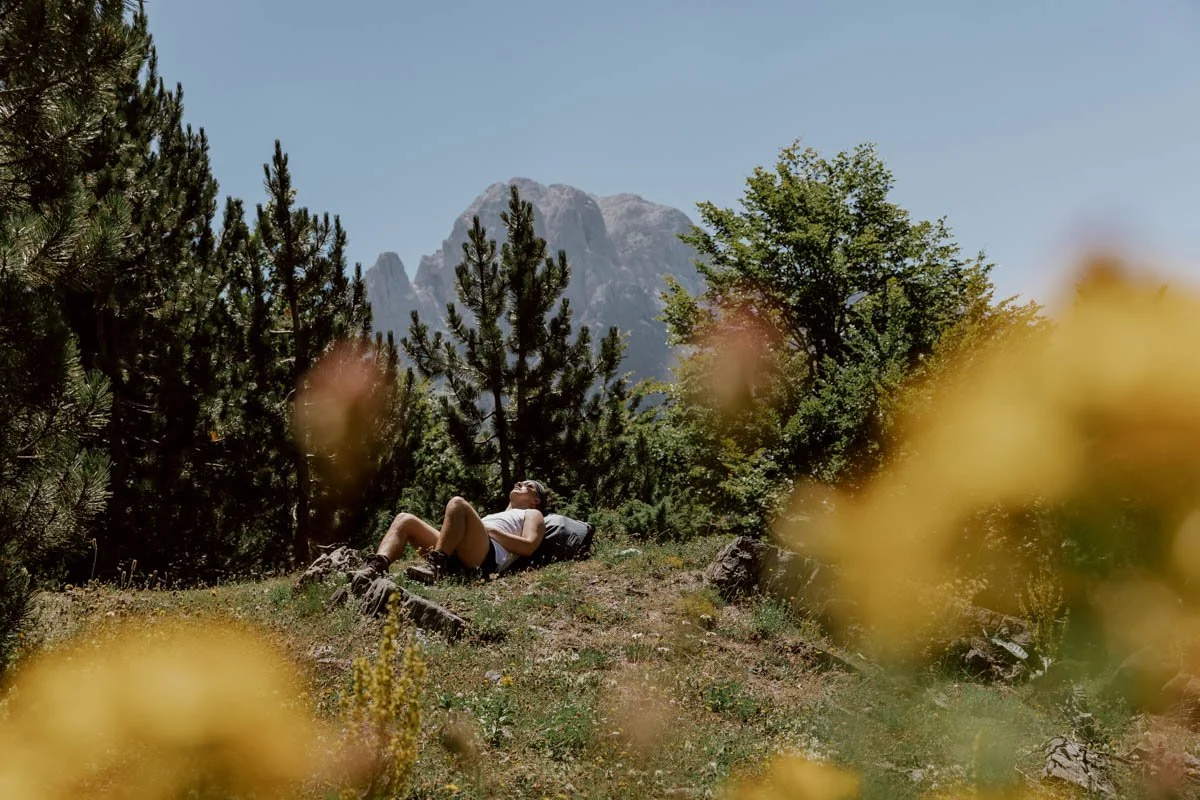
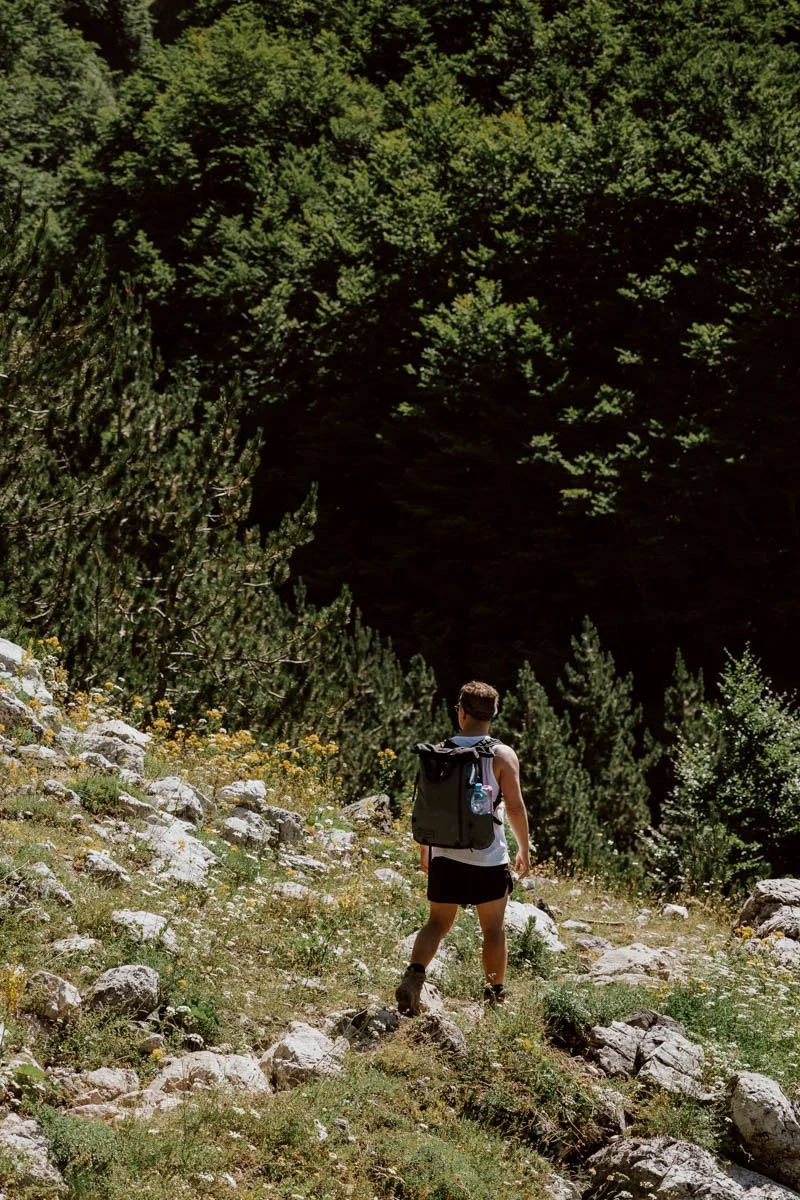
The Route | Setting out from Theth, the trail climbs steadily through beech and pine forest before giving way to alpine pasture and bare rock. On the Theth side, you’ll pass two simple cafés around the 1 hour and 2 hour marks, each serving cold drinks, coffee, and fresh spring water - don’t forget to carry some cash in lek.
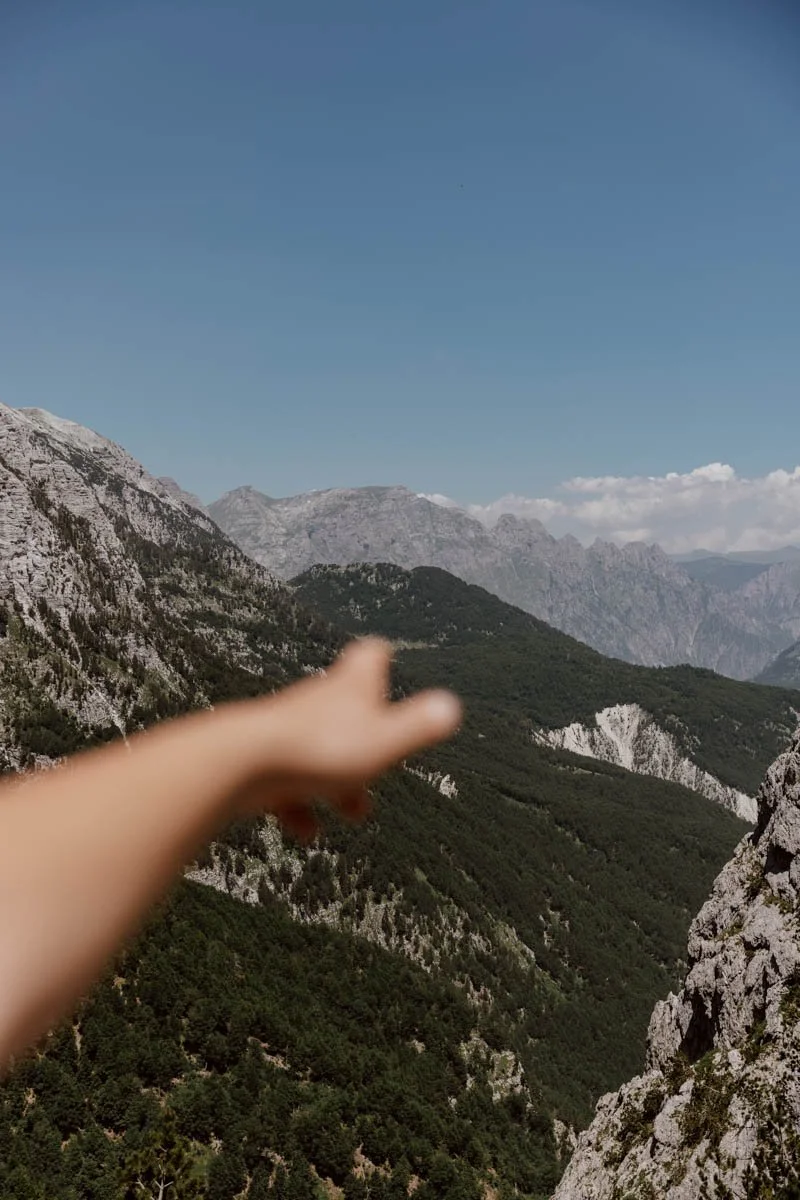
As you climb, the views open up: jagged limestone peaks to your left, glimpses of the Theth valley falling away behind you. After a few long zigzags and a final push over scree, you’ll reach the summit of the Valbonë Pass, marked with cairns and tattered prayer flags. It’s a natural saddle between national parks, with both valleys stretched out in each direction - a proper high point in every sense.
It’s worth pausing here to soak it in. You can even make a short detour up a nearby ridge to get an even better panorama with views of both valleys at once and the endless peaks of the Accursed Mountains all around.
To return, simply follow the same route back down.
Know | The Valbonë Pass is only hikeable in summer and early autumn - roughly from mid-June to early October.
Do not attempt it in spring or after heavy snow, especially without proper alpine gear. Snow lingers late in the shaded gullies, and tragic accidents have occurred when hikers underestimated the risk. In recent years, there have been multiple fatalities in late May; a stark reminder that this trail is beautiful, but not to be taken lightly.
Always check with your guesthouse in Theth about current trail conditions before starting out.
An Alternative | If you’re travelling throughout Albania with public transport, there’s a possibility you may reach Theth from Valbona, hiking the full trail in the opposite direction. From personal experience, we actually preferred this route.
Yes, the section up to the peak is bloody hardcore, your legs will scream and your lungs will hurt but the views from this perspective more than make up for it. Additionally, the route back down to Theth from the peak is infinitely easier in reverse, so much so that we actually ran most of the way.
Looking for accommodation in Valbona? We thoroughly enjoyed our stay at this lovely little family guesthouse.
Keep Reading // We’ve written an entire guide to this incredible hike and highly recommend checking it out - especially if you’ve got some questions about whether you can hike it in reverse, or hike the entire thing without having to do both way (like we did). It’s a confusing situation so we know it’s important to try and clarify a few things before you plan your itinerary!
Follow the Trail to the Blue Eye
Chances are that you’ve heard of the Blue Eye in the south of Albania, but did you know that Theth has its very own bright blue natural spring?
It’s smaller, wilder, and - if you ask us - just as eye-catching (sorry).
Due to its location in the north and the effort to access, it’s also far less crowded.
Fed by an underground stream that bursts from the rocks, the water glows with those same impossible shades of turquoise and deep blue, even on the cloudiest of days, but its location high in the mountains mean it’s also bloody freezing - so unless you’re braver than we are, this is more of a place to dangle your feet than take a swim.
How to Get There | The Blue Eye is located here and can be reached via a dusty trail, or if you don’t have the time or inclination for a long hike, you can opt to take a 4x4 part of the way.
· If you're walking from the centre of Theth, the route is around 11km return, and takes roughly 2 to 2.5 hours each way depending on pace. The first part follows a gravel track through the valley, crossing small rivers and passing simple houses, before reaching Nderlysaj (Google Maps), a small settlement with a few cafés and natural river pools where you’ll often find people swimming.
From Nderlysaj, the trail climbs more steeply into forest. It’s well-marked (look out for red and white paint blazes), but uneven underfoot - narrow, rocky, and exposed in some sections. The final ascent takes 45 minutes to 1 hour when you’ll reach a wooden bridge crossing a brilliant blue river.
As tempting as it is to linger there - we lost a good hour before we realised this wasn’t in fact the main event and we needed to continue on - you should carry on along a trail through a field until you reach a café and viewing platform above and around the Blue Eye.
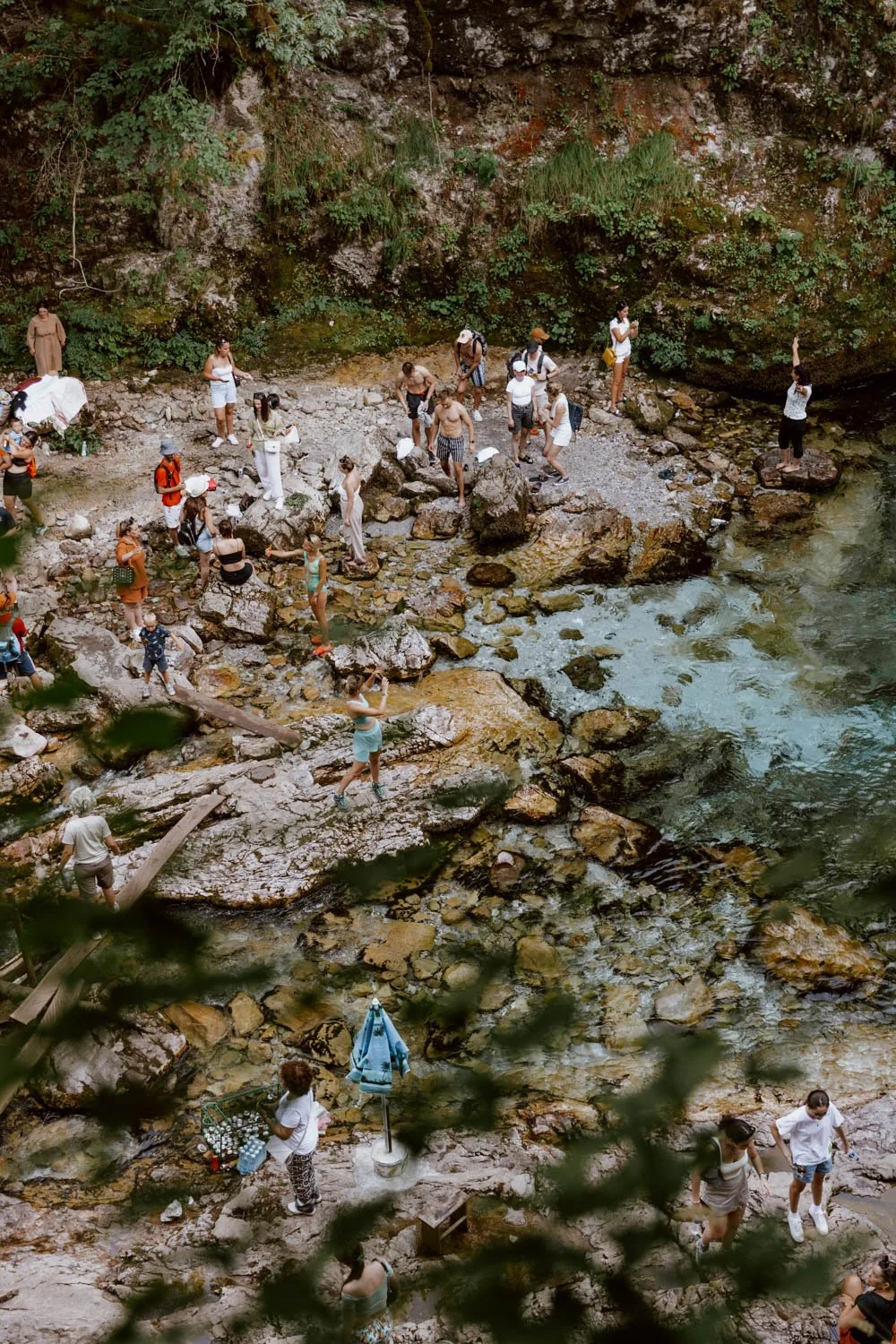
It’s a rewarding walk, and a good way to make a full day out of the hike, especially if you make time for a sunbathing and a swim in the river or at Nderlysaj on the way back.
· To shorten the route, you can arrange a 4x4 ride to Nderlysaj, usually through your guesthouse. Most charge €5 per person one way (you don’t have to take it both ways), or around €60 - 70 for a private vehicle. The drive takes about 25 - 30 minutes each way.
Too tired to walk back from Nderlysaj to Theth
If you’ve driven to Theth, you can also drive your car to Nderlysaj, where there’s a good-sized carpark that charges a flat-rate of 200 lek. This is what we did.
This shorter option cuts out the flatter, less scenic first section and leaves you with the final uphill hike of around 1.5 to 2 hours return. You’ll still pass through forest and reach the pool on foot, but with far less time on the trail. If you’re short on time or energy, it’s a very worthwhile alternative.
Make sure to agree a pick-up time in advance for the return, as phone signal is unreliable in the valley.
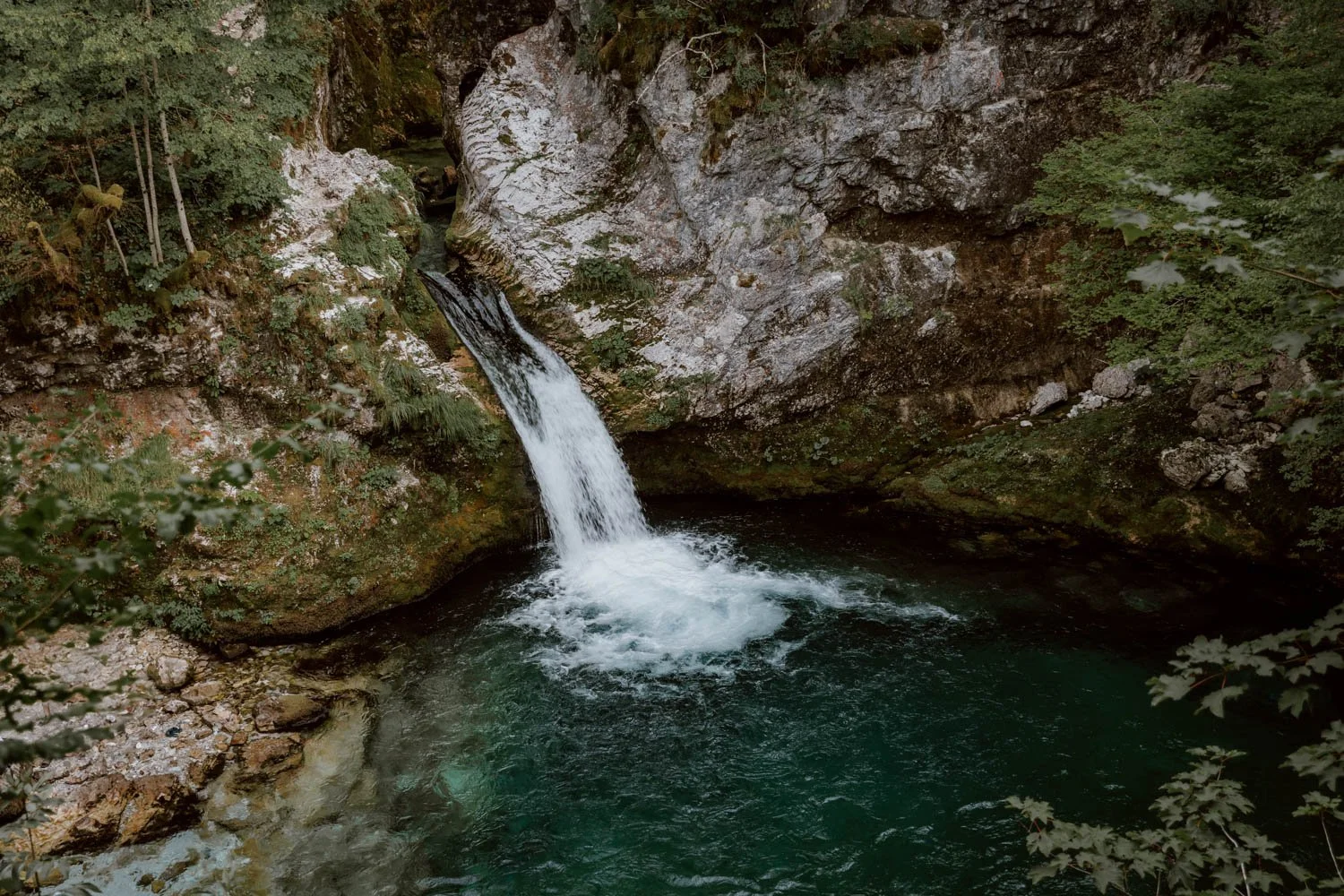
Best Time to Visit | The Blue Eye is best visited between late May and early October, when the trail is dry, the cafés are open, and the river is low enough to wade through comfortably if needed.
To avoid the biggest crowds, aim to arrive before 11am as by early afternoon, especially in high summer, the pool and platform can be quite busy. Weekdays tend to be quieter than weekends, and even in peak season, it’s still possible to find moments of calm if you start early.
We visited in the late afternoon as this was our first activity after driving from Shkoder. Whilst this meant the crowds had dissipated somewhat, the low sun meant that the pools were mostly in shade. It was still beautiful, but we didn’t experience the vibrant hues that we saw at the other Blue Eye.
Note that in late spring or after rain, the trail can be muddy and slippery, and access to the pool may be trickier, though the colours are often at their brightest thanks to the volume of spring water flowing in.
Facilities | There’s a small somewhat ramshackle cafe at the Blue Eye
What to Wear | Hiking boots or sturdy trail shoes are highly recommended as the last part of the path is rocky and uneven, with some short steep sections. If you’re hiking in summer, don’t forget sunscreen, a bathing suit, a towel, and plenty of water.
Travel Tip // If you’re heading to the Blue Eye on foot from Theth, it’s easy to add a short detour to Grunas Waterfall, another of the valley’s most popular natural sights. If we’d had more time on that first afternoon, we absolutely would have included it in our Blue Eye hike.
Just after crossing the red bridge on leaving the village, and before the trail begins its steeper ascent, a signed path leads right towards the waterfall (here on Google Maps). It’s around 30 minutes each way from the centre of Theth and apparently well worth the extra effort, especially early in the day before the crowds arrive.
Once you’ve seen it, simply retrace your steps and rejoin the main trail to Ndërlysaj and the Blue Eye.
Visit Theth Church
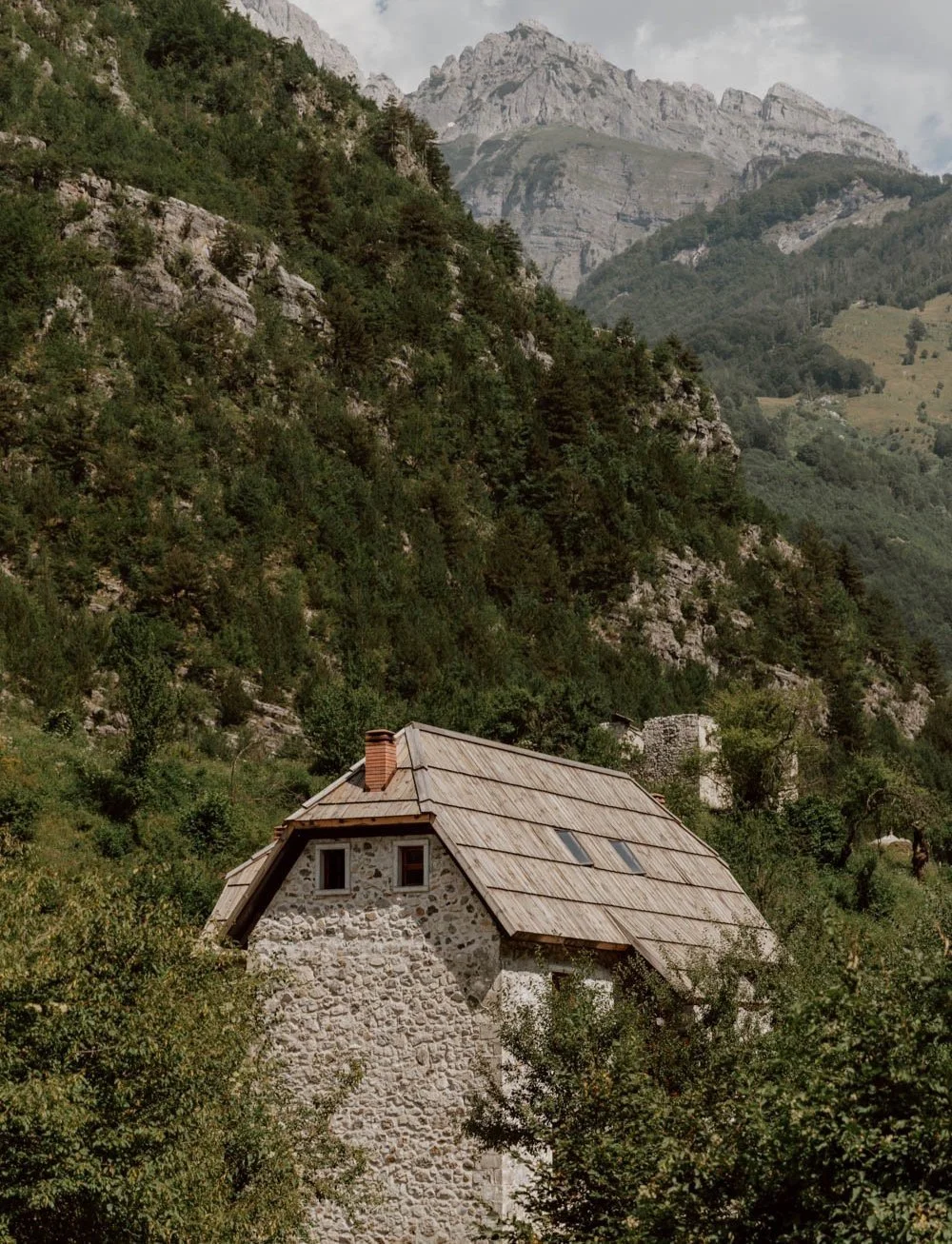
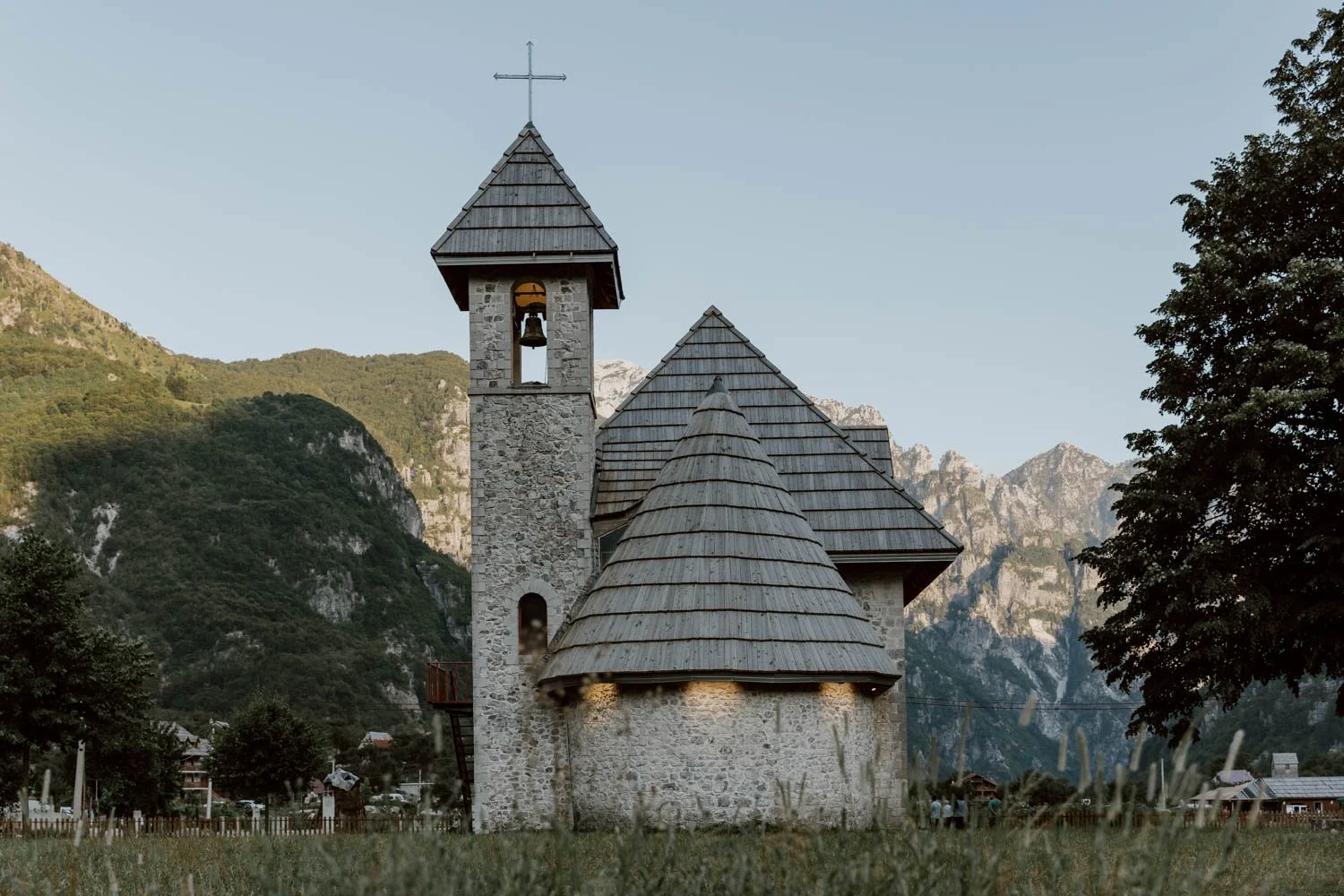
There are more dramatic landmarks in the Albanian Alps, but few feel as quietly iconic as the little stone church in Theth. Standing alone in a field beneath the mountains, with its bare stone walls and steep shingled roof, the church is one of the most photographed - and most recognisable - buildings in the country.
Originally built in 1892, it has stood through decades of harsh winters and deep snow, serving as a place of worship, a school, and - during the Communist era, when religion was banned - a local maternity clinic for the valley (up until a few years ago, most residents of Theth had been born there!).
Today, it’s still active in the summer months, and you may hear the bell echoing through the valley on Sunday mornings. But most visitors come to admire the setting: the mountains towering behind, the wooden fence skirting the meadow, the wildflowers pushing up through the grass.
It’s especially beautiful at golden hour, when the last light hits the peaks and the whole valley begins to glow.
The Details | The church is located just off the main road through the village, a short and easy walk from most guesthouses - here on Google Maps.
There are no specific visiting times to head inside but you can enter if it’s open (usually in the mornings or during services). Entry is free, but be respectful if a service is in progress.
Enjoy the Views & Explore the Village
No one really comes to Theth for the village itself - not in the way you might visit a quaint Tuscan town or a cobbled Andalusian hillside settlement - but it’s impossible not to be charmed once you arrive.
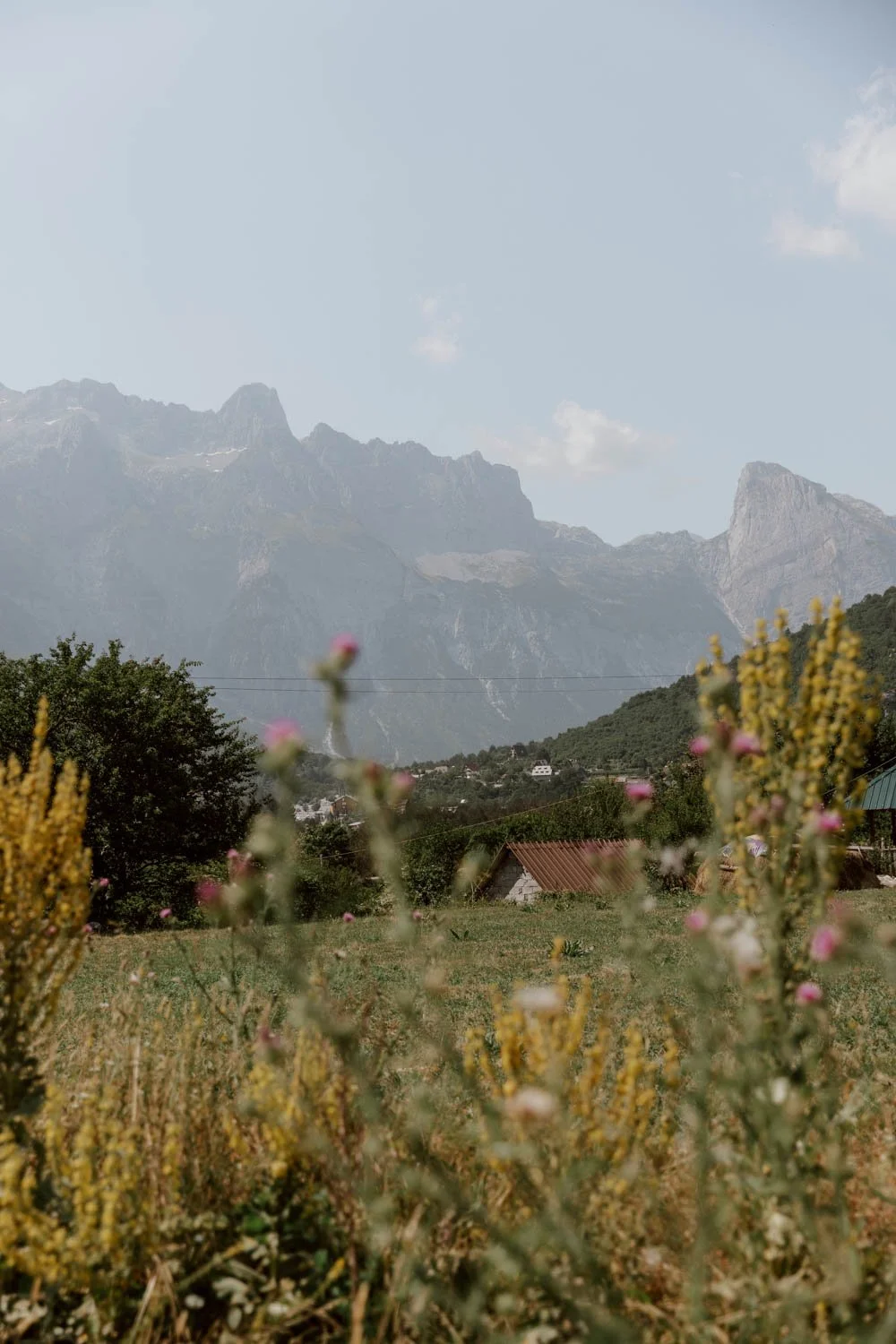
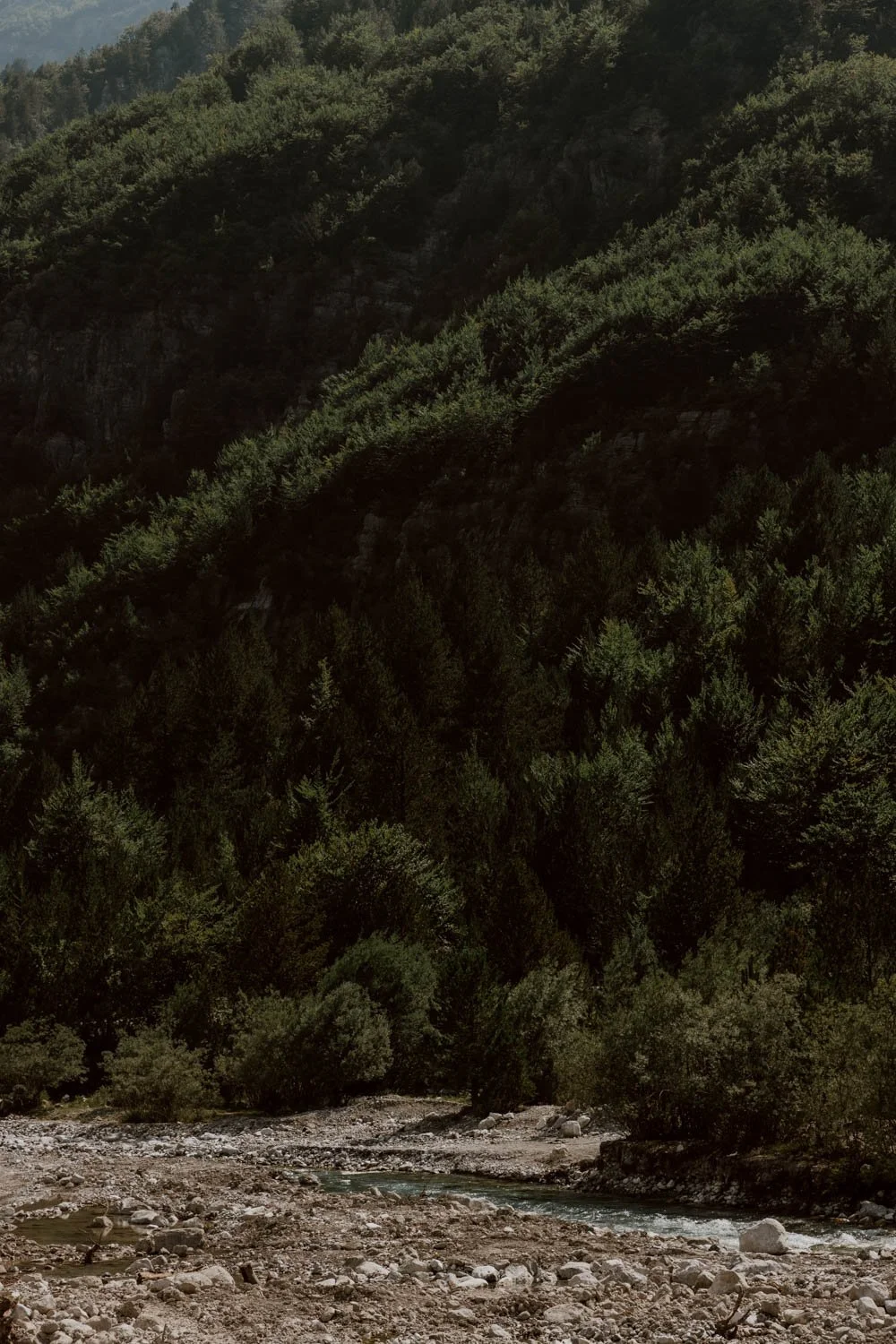
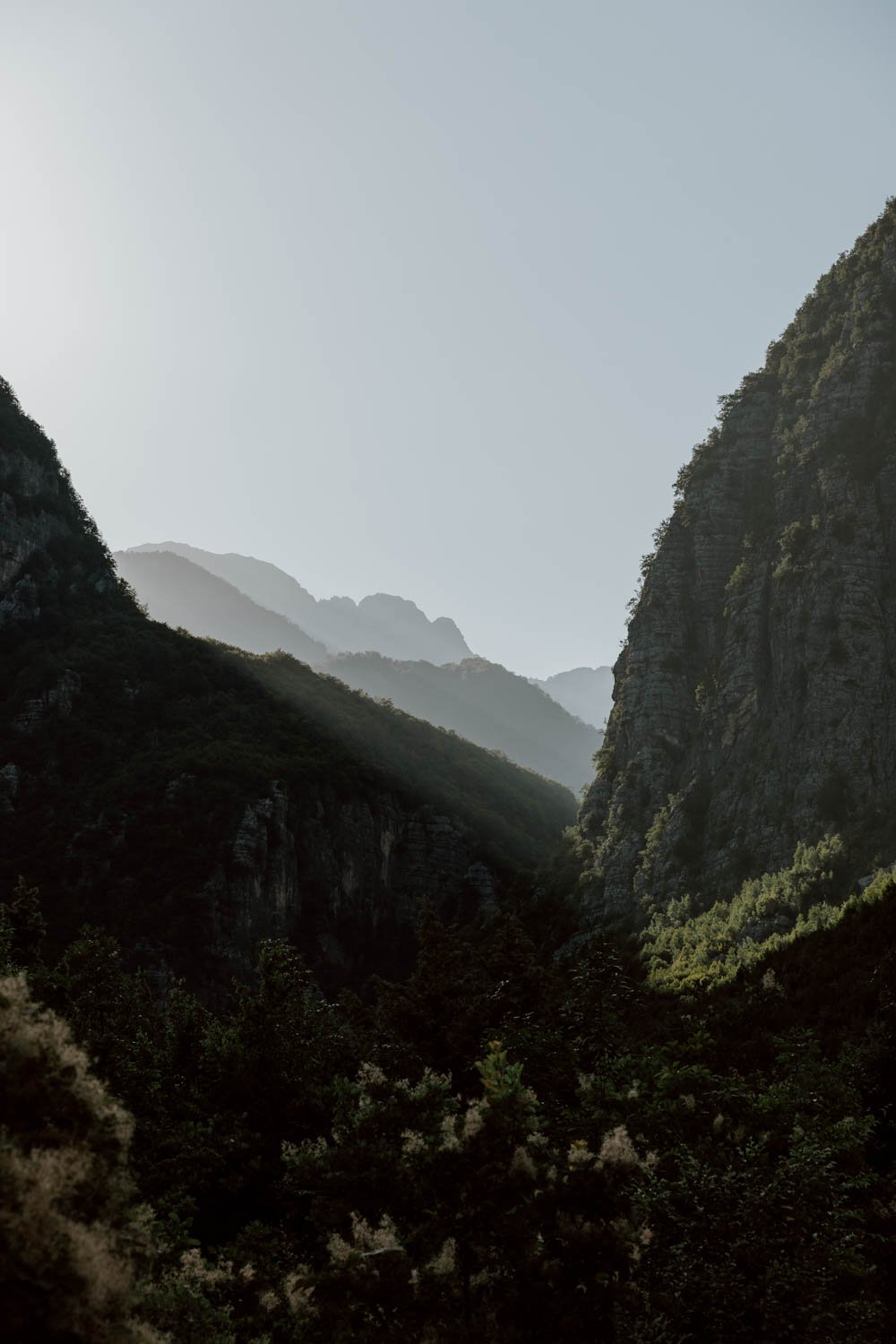
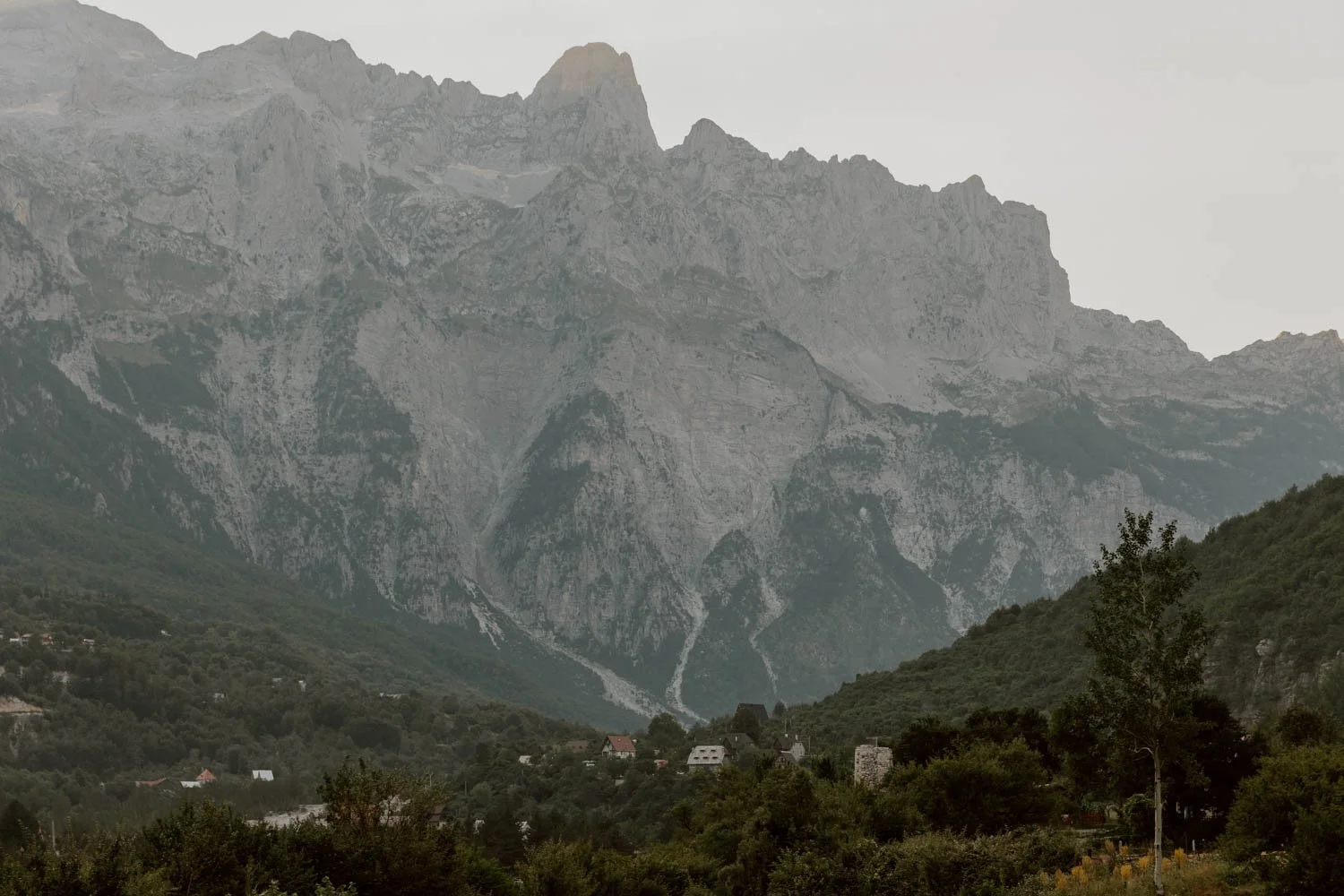
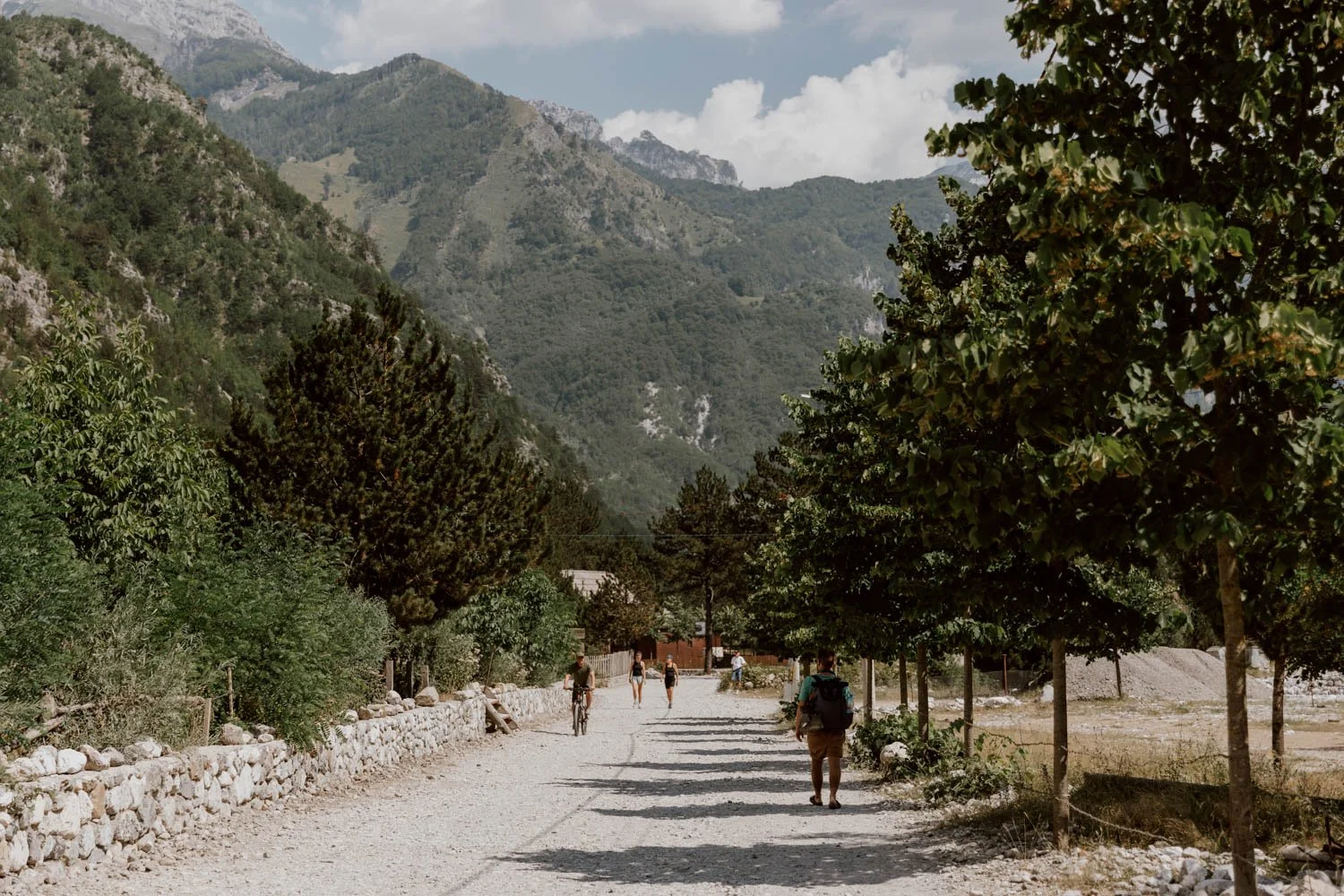
The scattered hamlets spill gently across the valley floor, a patchwork of stone houses, wooden fences, and wildflower fields set beneath the jagged peaks of the Albanian Alps. There’s no real centre to the village and much remains undeveloped; no main square or strip of cafés, just a winding road that loosely connects one cluster of homes to the next, and a handful of gravel paths branching off into the trees.
For views, it doesn’t really matter where you stand. The whole valley is dramatic and beautiful, hemmed in on all sides by steep cliffs and silver-grey peaks. But there are a few favourite spots:
· The bridge over the Theth River, just east of the church, makes a great photo stop
· The short walk up behind Villa Gjeçaj or Bujtina Polia gives a stunning vantage over the rooftops and down the valley
· Or simply head out in the direction of Grunas or Ndërlysa and pause anywhere that looks inviting - there are no bad views here.
Step Inside the Lock-In Tower
A five-minute walk from the church brings you to Theth’s Lock-In Tower (maps). Also known as Reconcilliation Tower, this small stone building with thick walls and a heavy wooden door was once used during blood feuds, a centuries-old tradition rooted in northern Albania’s strict code of honour.
According to the Kanun - the customary legal code - a serious offence, like a murder, could trigger a gjakmarrja (blood-taking), obliging one family to seek revenge against another. These feuds could stretch on for generations, unless a peaceful settlement was reached.
In Theth, when a man’s life was at risk due to a blood feud, it was within the Tower that he could take refuge, effectively placing himself in protective custody while community elders tried to broker a resolution. Some stayed days, others years.
Today the only men (and indeed women) who enter the tower are visitors who pay the €1.50 entrance fee in the hopes of learning a little more about this dark and fascinating chapter of local history (although there is very little information on display).
You can find the tower here.
Good to Know // Theth used to have a small ethnographic museum (maps), housed in one of the oldest stone houses in the valley, however it appears that it’s currently shut. It is located quite a walk from the centre of Theth but if anybody should visit and discover it open please do let us know in the comments.
Where to Stay in Theth
Accommodation options are increasing quite rapidly in Theth, with guest houses catering to all budgets and travel styles.
One important thing to note is to be certain of the location of your accommodation before booking - particularly if you don’t have your own vehicle. We had to give a lift to two very tired and hot backpackers who had picked a guesthouse on to the west of the river, and quite far up a hill. It was apparently lovely, but they didn’t enjoy having to traipse back and forward from the village each day.
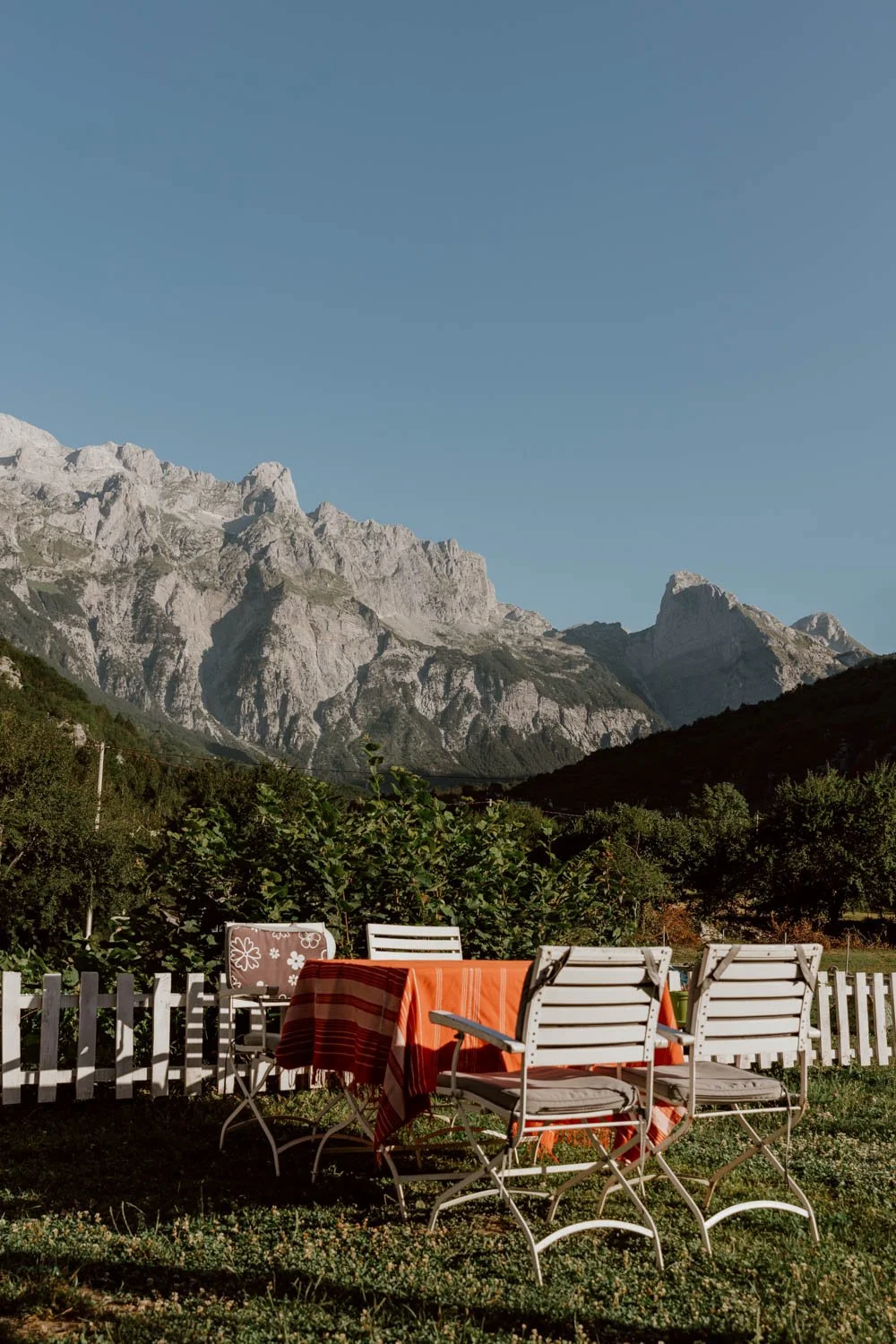
Mountain Vista Guesthouse Shkafi | Built into the hillside above the village, Mountain Vista offers expansive views down the valley. Rooms are clean and straightforward, each with a private bathroom, and the family who runs it serves home-cooked meals and fresh breakfasts each morning. The terrace is the best bit - a quiet spot to sit with a drink and watch the mountains change colour as the day fades. You’re a 10-minute walk above the main road, so be prepared for a bit of an uphill stroll back from dinner.
Gjin Thana Guesthouse | One of the older guesthouses in the village, this place combines a traditional build with a relaxed, no-fuss atmosphere. It’s just a short walk from the church and the Lock-in Tower, so everything’s within easy reach. Inside, rooms are neat and warm, with wooden details, private bathrooms, and the price includes a great breakfast.
Shpella Guesthouse | Set near the centre of Theth, this stone guesthouse is one of the more convenient options for anyone arriving without a car. Rooms are simple, with parquet floors and en-suite bathrooms, and there’s a small restaurant and terrace downstairs. Don’t expect much in the way of frills - this is a simple, practical place to base yourself, especially if you want to be within walking distance of the church, the shop, and the start of the Blue Eye trail.
Molla Guest House | Sitting a short walk above the village, this small, family-run place strikes a nice balance between privacy and friendliness. The rooms are modernised with several more contemporary touches but still feel in keeping with the setting - clean, functional, and often with valley views. Guests rave about the excellent breakfasts and mountain views, with the garden offering a lovely place to sit with a cold drink. Definitely one of our top picks!
Valter & Drita’s Guesthouse | Tucked just off the main trail through Theth (it’s a bit of an uphill climb on foot but worth it), Valter & Drita’s feels quietly confident without showing off. Inside, you’ll find parquet floors, exposed stone walls, and vaulted wooden ceilings; subtle details that speak of care, not luxury. Many of the large rooms include fireplaces and balconies that frame real mountain views. Delicious homecooked meals are the norm, and breakfast is served on a gorgeous terrace overlooking the valley and the owners will go out of their way to help guests.
The hosts, setting and breakfast at Bujtina Miqesia were excellent, but our room had a misleadingly advertised ‘view’ of the mountains - it was actually mostly of their neighbour’s concrete wall. This was a real shame as we’d splurged on it for Andrew’s birthday but we did get a bit of a refund and bottle of wine as an apology. The guesthouse is still a good option if you get a room at the back of the house with unobstructed mountain views, but we can’t give a whole-hearted recommendation.
There’s also a large camper van area in the centre of the village. Unforatunately we don’t know the price per night.
Where to Eat in Theth
Fast Food Pizzeri Jezerca | This popular spot was where we collapsed after making it back to Theth from Valbone, and my goodness was it appreciated. The pizza itself was fairly average but nothing tastes better after a hike than cold beers and cheese-loaded carbs. It also offers an alternative to the traditional fare served elsewhere in Theth.
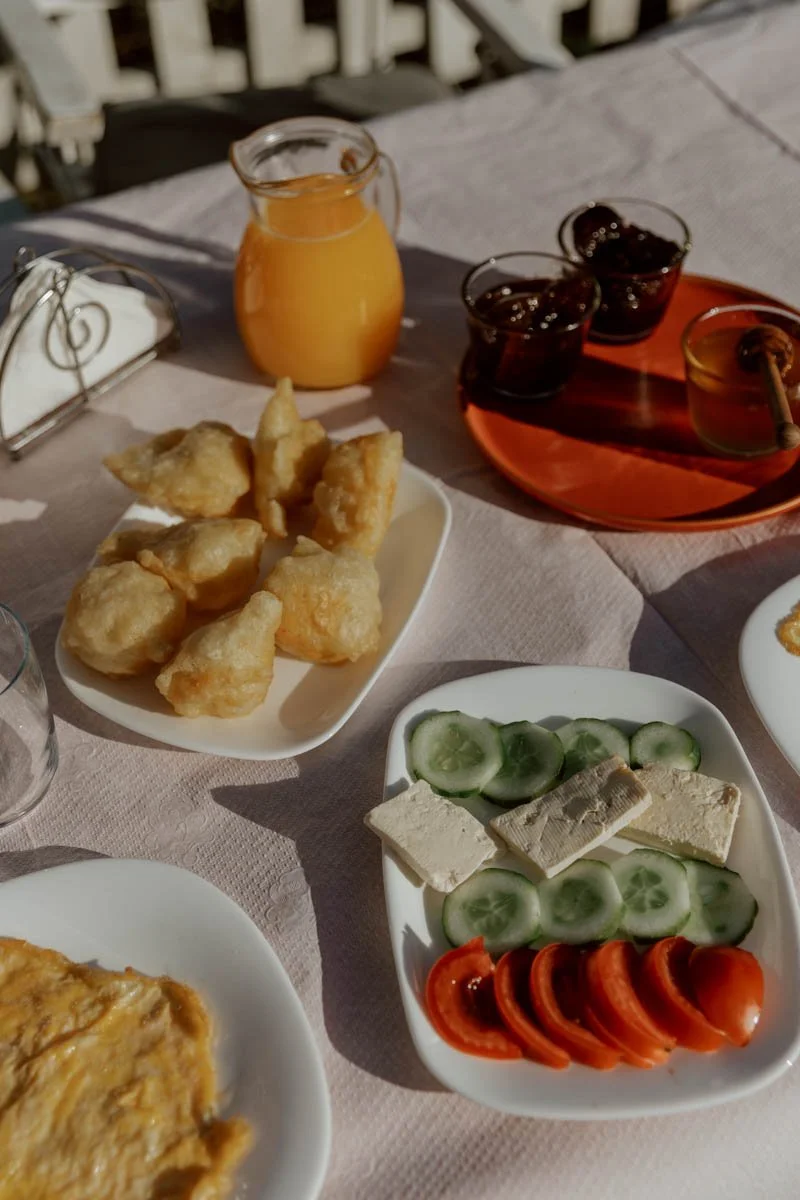
Villa Gjeçaj Restaurant | Housed within a popular guesthouse, the highly-regarded Villa Gjeçaj serves simple, traditional dishes cooked with care - think slow-simmered stews, fresh bread, and garden-grown vegetables. The mountain views from the terrace are as much a part of the meal as the food itself.
Gurra Family Restaurant | One of the more popular places to eat in Theth, largely owing to its central location and large garden that’s perfect on warm summer evenings. As is standard here, the menu is fairly traditional but delicious and there were a decent number of veggie options - although the fired local river fish was particularly good!
How to Get to Theth
For a village as remote as Theth, it’s become surprisingly accessible in recent years - at least during the summer months. The once-notorious mountain road from Shkodër is now sealed all the way to the valley, which means you no longer need a 4x4 to make the journey. Still, the road is narrow, winding, and prone to weather-related issues, so a bit of planning is essential.
From Shkodër
Theth is most commonly reached from Shkodër, the gateway city to the Albanian Alps. During the summer season (roughly mid-May to early October), daily shared minibuses run the route in both directions. There used to only be one per day, but they’ve increased frequency quite a bit in the last year or two.
· Departures at 6.20am, 7am and 1.30pm
· Typically cost around 1,500 lek / €15 per person
· Previously only available to book via accommodation or tour agencies but can now be easily booked online
· Take around three hours depending on stops, weather, and road conditions
If you’re travelling from Shkoder to Theth outside peak season, organised transport becomes harder to find. Your best bet is to arrange a private transfer through your guesthouse - expect to pay around €70 to 100 per vehicle, depending on group size and availability. Alternatively, this option is available on GetYourGuide.
By Tour
Given the potential logistical nightmares of visiting this part of Albania, it’s become increasingly popular to visit Theth as part of an organised tour.
Day Tours | If you’re based in Shkoder, this is our top pick for a day tour, but this option that departs from Tirana may suit some better (just be aware that you’ll spend more time in the bus if setting off from the capital) . Both are highly-rated.
Multi-Day Tours | As we’ve said earlier, the main reason to head this far north is for the incredible hiking, therefore - if you’re able - we’d hihgly recommend picking a muti-day tour which folds in a few hiking trail. This five-day option brings you to Komani Lake and the Shala River, then heads to Valbona before hiking to Theth. You then have a day to enjoy the surrounding attractions before transferring back to Shkoder.
Alternatively, this three-day option also has excellent reviews, and would suit those with a little less time to spare.
Driving
As we covered earlier, the drive to Theth is one of the real highlights of visiting the Accursed Mountains and if it fits in with your Albania road trip itinerary, is something we highly recomemmend (unless you’re a really nervous or inexperienced driver).
The road over Qafa e Thores (Thore Pass) is sealed but still steep and narrow, with hairpin bends and sheer drop-offs - not a drive to attempt in bad weather or poor visibility. Don’t be worried about honking gently on blind curves, don’t panic if you have to reverse to let an oncoming vehicle pass, and do try to pull in at some point if there’s a convoy of traffic forming behind you.
Find all our tips for driving in Albania in this post.
Note that the road to Theth is closed in winter due to heavy snowfall, and it’s best to check local updates on conditions in spring or late autumn, as opening/closing dates vary with the weather.
Parking in Theth is limited to small gravel lay-bys and informal spaces unless your guesthouse offers private parking, so do check ahead before arriving.
Top Tip // We recommend looking + booking your car hire in Albania via two aggregators that we use for all our road trips: Rentalcars.com and AutoEurope. It’s a good idea to check prices and availability on both to make sure you’re getting the best deal possible for your dates.
From Valbonë (via the hike)
Many travellers arrive in Theth by completing the Valbonë Pass hike. As mentioned, this one-way trek connects the two valleys, and this route typically involves:
Travelling from Shkodër to Komani Lake by minibus
Taking the Komani ferry across the lake
Continuing by road to Valbonë
Hiking over the pass to Theth (usually after a night in Valbonë)
It’s a highlight of many people’s Albania itinerary and we’ve written a complete guide to the hike, which includes all the information you need to plan for this route and the hike from Valbonë.