13 Wonderful Things To Do in Venice | The City of Canals
Plan for the perfect first visit to the floating city with our curated guide to the best things to do in Venice.
Updated February 2025
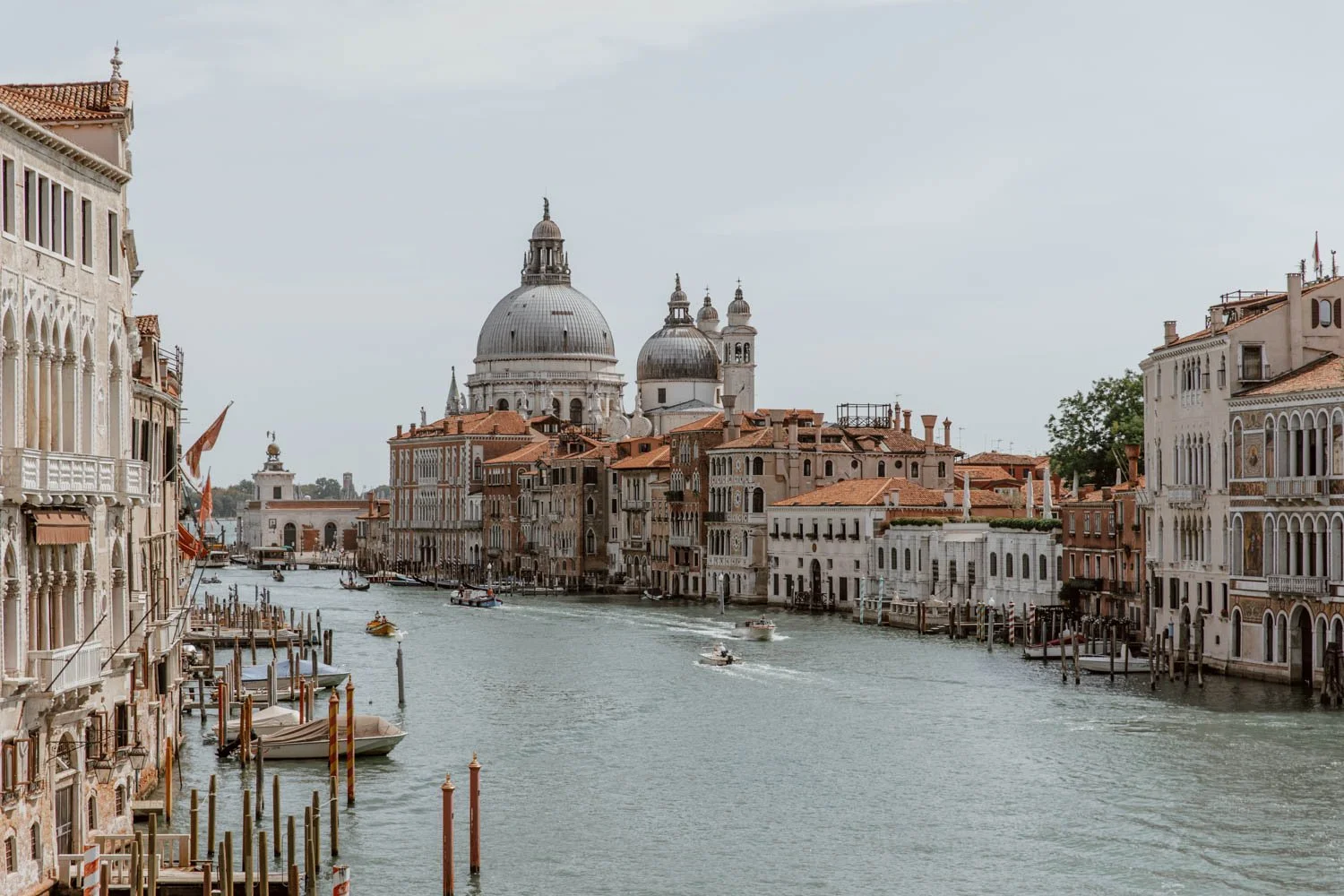
“Day after day one is drawn from terraferma to float in the lagoon, to watch the sunset, or to go gently past the palaces seeing their images reflected in the canal. The reflections are like paintings more beautiful than any painted by the greatest masters. […] If anything can rival Venice in its beauty, it must be its reflection at sunset in the Grand Canal.”
Since the day it was born, Venice has been sinking.
Whether it was arrogance, circumstance, desperation, ambition, ingenuity, madness, magic - or an alchemist's brew of all seven - it's hard to fathom how exactly Venice came to be. Yet, upon marshland, silt, and sediment, this treasure chest masterpiece of an island city was conjured.
And how it thrived.
In the mid-medieval epoch, the Venetian Republic was unrivalled as a commercial and maritime powerhouse whilst much of Europe was splintered and politically parochial; backwaters to little La Serenissima in the lagoon. Its stable institutions, innovations, and strategically fortuitous positioning allowed it to play off and parley other powers either side of the seas, preserving and enhancing its own rich position as a trading hub monopoly. For a few centuries, it could be claimed that the beating heart of the modern world was here on Venice, this city of islands with a golden winged lion its calling card.
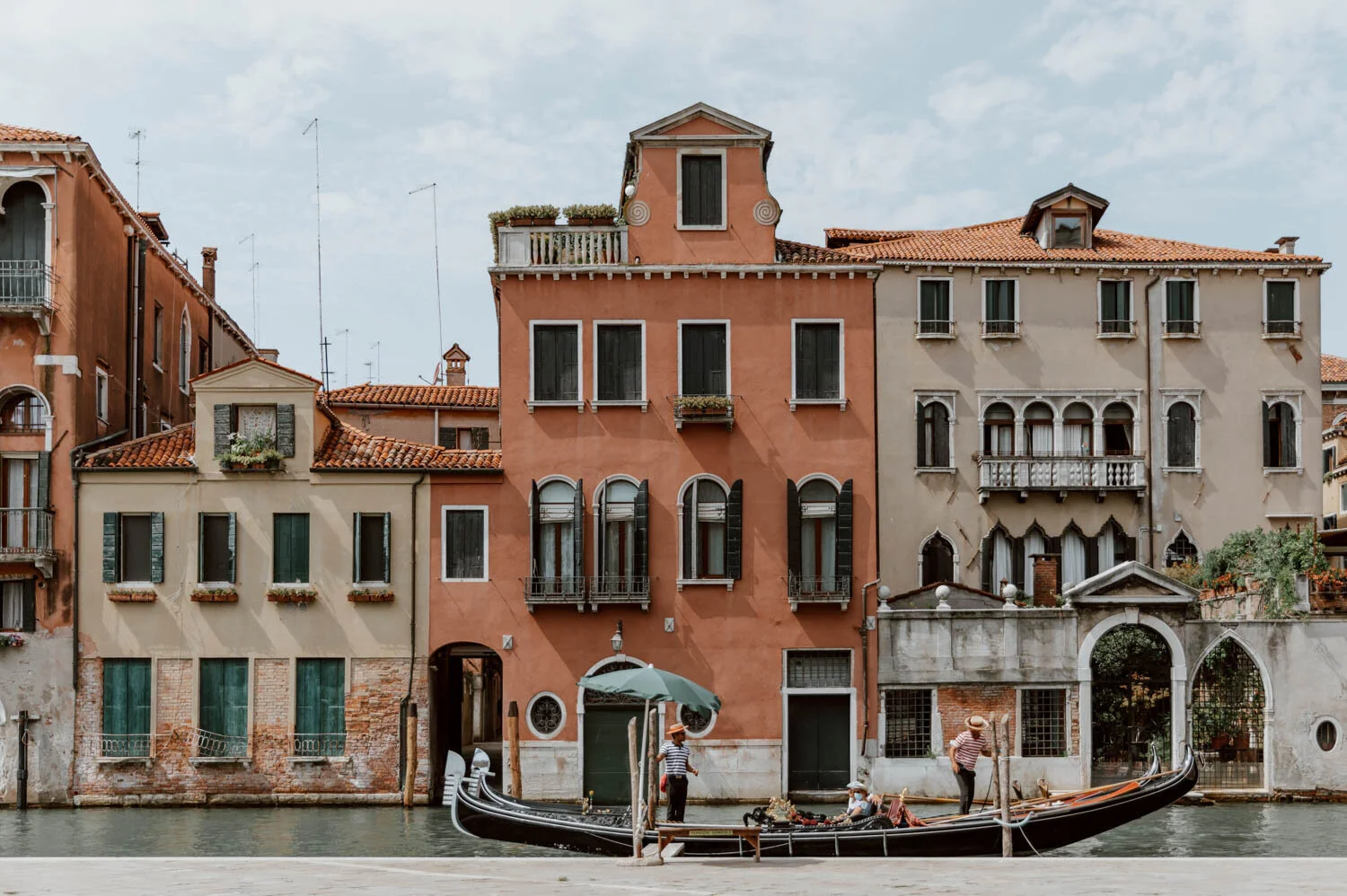
In the Middle Ages, the Republic’s ruler would venture out to sea as part of the Sposalizio del Mare (Marriage to the Sea) ceremony, to offer prayers and throw a ring to her. And, like most marriages, Venice’s relationship with the water - upon which it floats, depends, and sits at the mercy of - has always been one of give and take. The canals and the sea gave the Republic its fortunes, yet every winter, during the Acqua Alta, the streets and stores of Venice are reclaimed by burst banks. Slowly, imperceptibly, the balance of power shifts as sea lives rise and ancient walls dissolve. Recent studies say that Venice subsides by 1-2 mm each year, perhaps inevitable given its construction was based upon man conquering nature, yet ironically the subsidence is exacerbated each year by man-made influences such as gargantuan cruise ships being permitted entry into the Grand Canal.
The marriage is more fraught than ever, and this living, breathing, mesmerising treasure chest of a city may one day be buried for good by the very thing which gave it the world.
For the traveller, curating a long weekend or a week in Venice (Venezia in Italian) can be challenging - from the sheer depth and breadth of museums, the centuries of culture and history, the crowds, and the idiosyncratic layout of it - and there is simply no way that you can see and do everything Venice has to offer in that amount of time. You can't 'do' Venice, but merely experience and savour what you can in the time you have. That's why it's best to curate and pare down your itinerary so that it offers much of what you love, a lot of what you simply have to do whilst here, with a smidge of space allowed for serendipity.
After our own six day visit to Venice this summer, we've done some of the hard work for you - here are 13 wonderful things to do in Venice.
Top Tip // If your trip to Venice is coming up and you’re wondering how to get around the city of canals, we’d highly recommend buying a ticket that allows for unlimited use of the vaporetto (that’s the water bus service that ferries passengers around). You can buy tickets in advance here, and then collect your ticket from any of vaporetto stops without having to queue for the ticket offices. Find out more here.
The Best Things To Do In Venice
Explore The Canals & Bridges
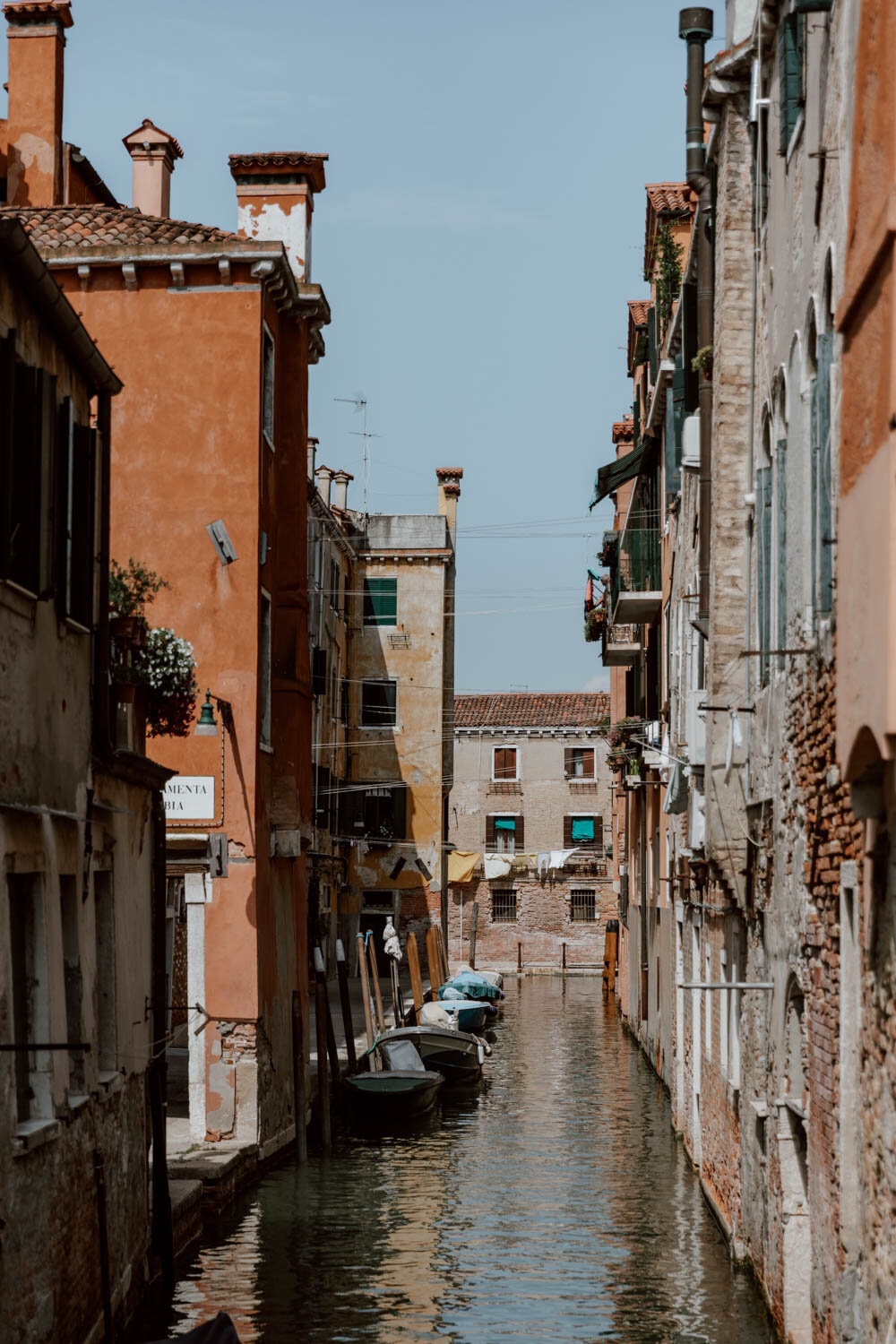
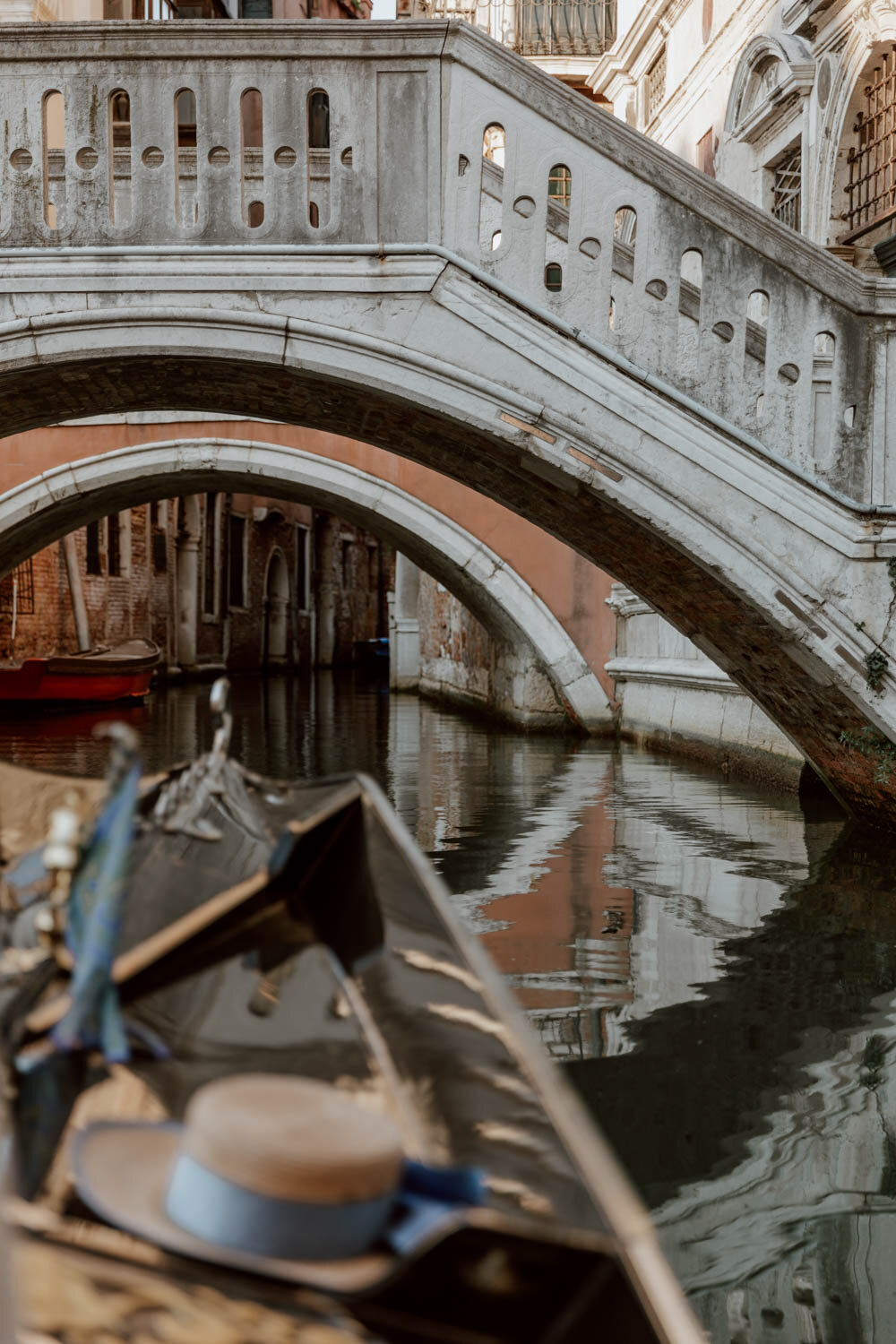
Shaped, literally and metaphorically, by its canals and stitched together by its bridges short and long, the waterways remain the roads of Venice - its main channels of transportation and navigation - with the famous Grand Canal the central highway for all boat traffic. On a first visit, it can actually take a while to appreciate that there are no vehicles anywhere in Venice’s streets, and bicycles are rare as hen’s teeth!
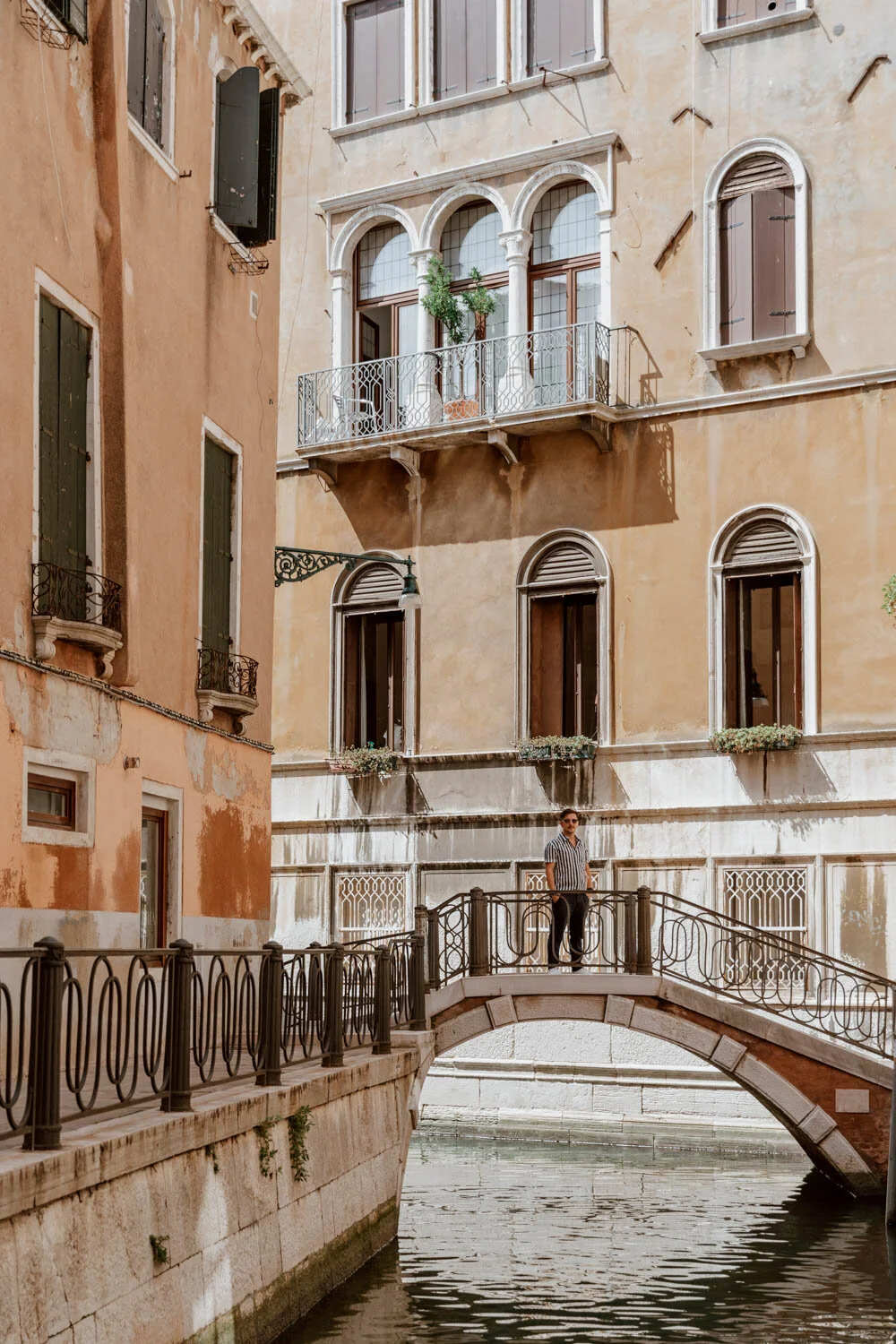
The majority of the city’s approximate 400 bridges are cute short stone ones, whilst a few wood or iron ones remain. Surprisingly, the Grand Canal only has four bridges spanning its four kilometre length, which is why there continue to be gondoliers specifically crossing certain points between the islands for residents and visitors.
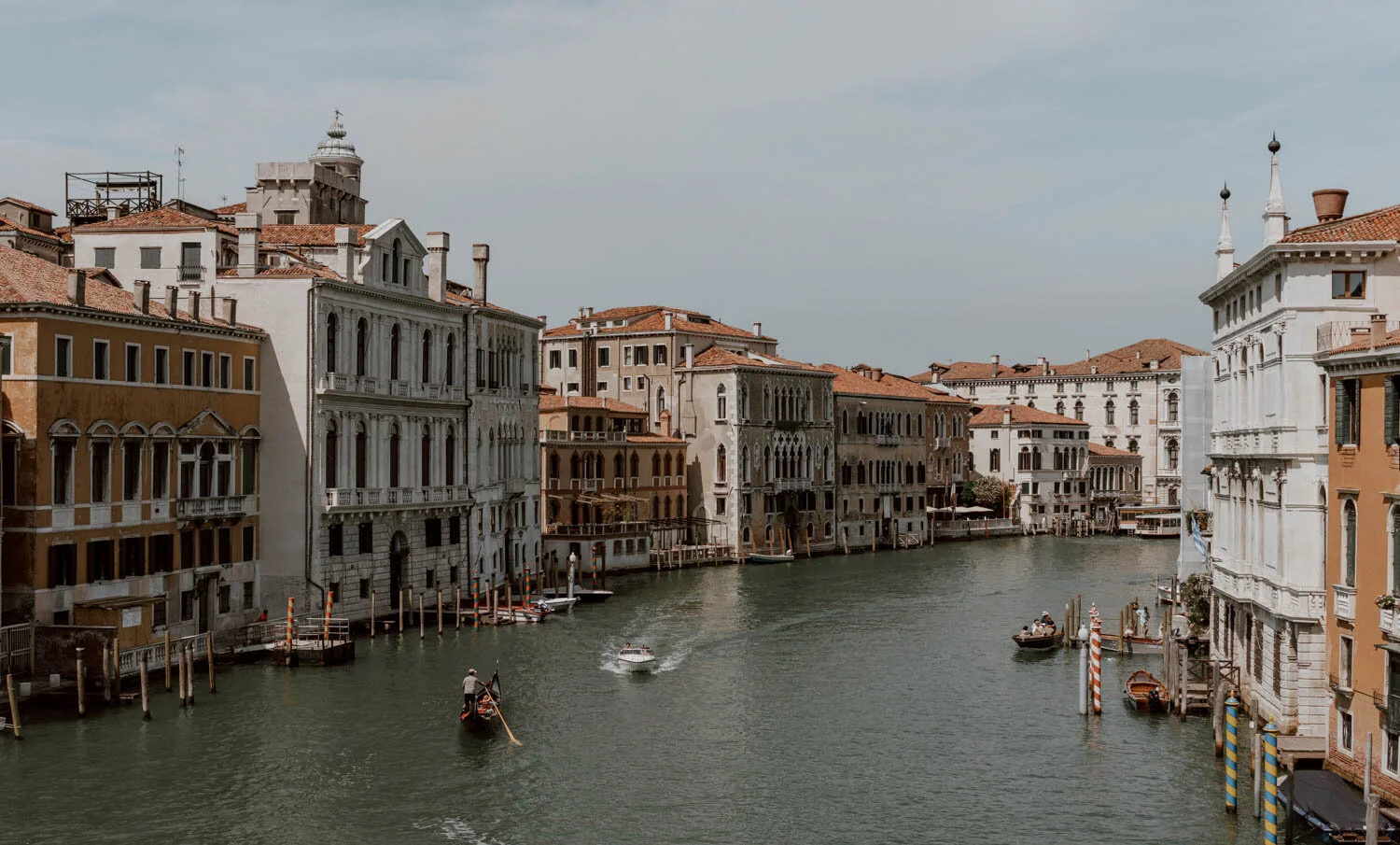
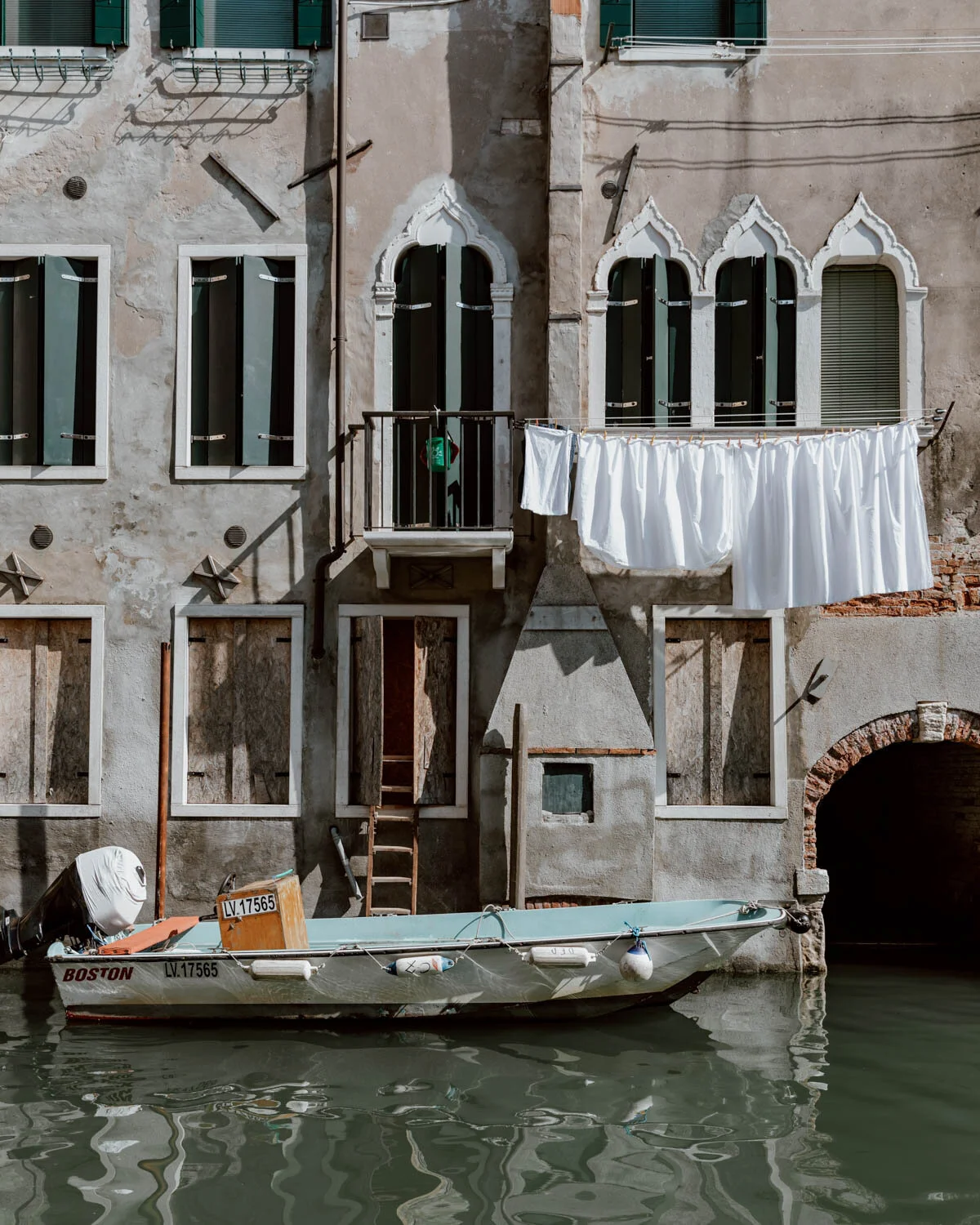
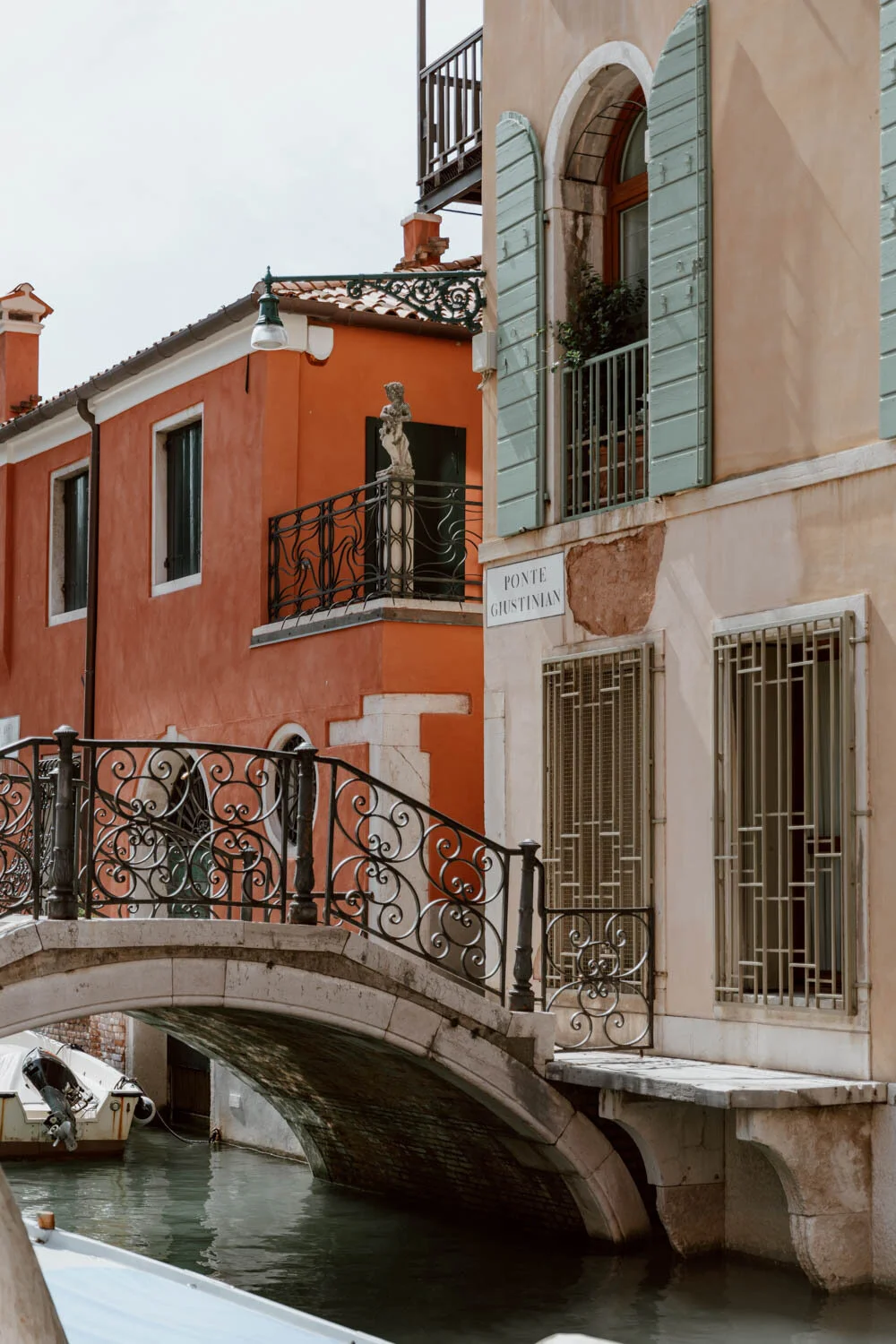
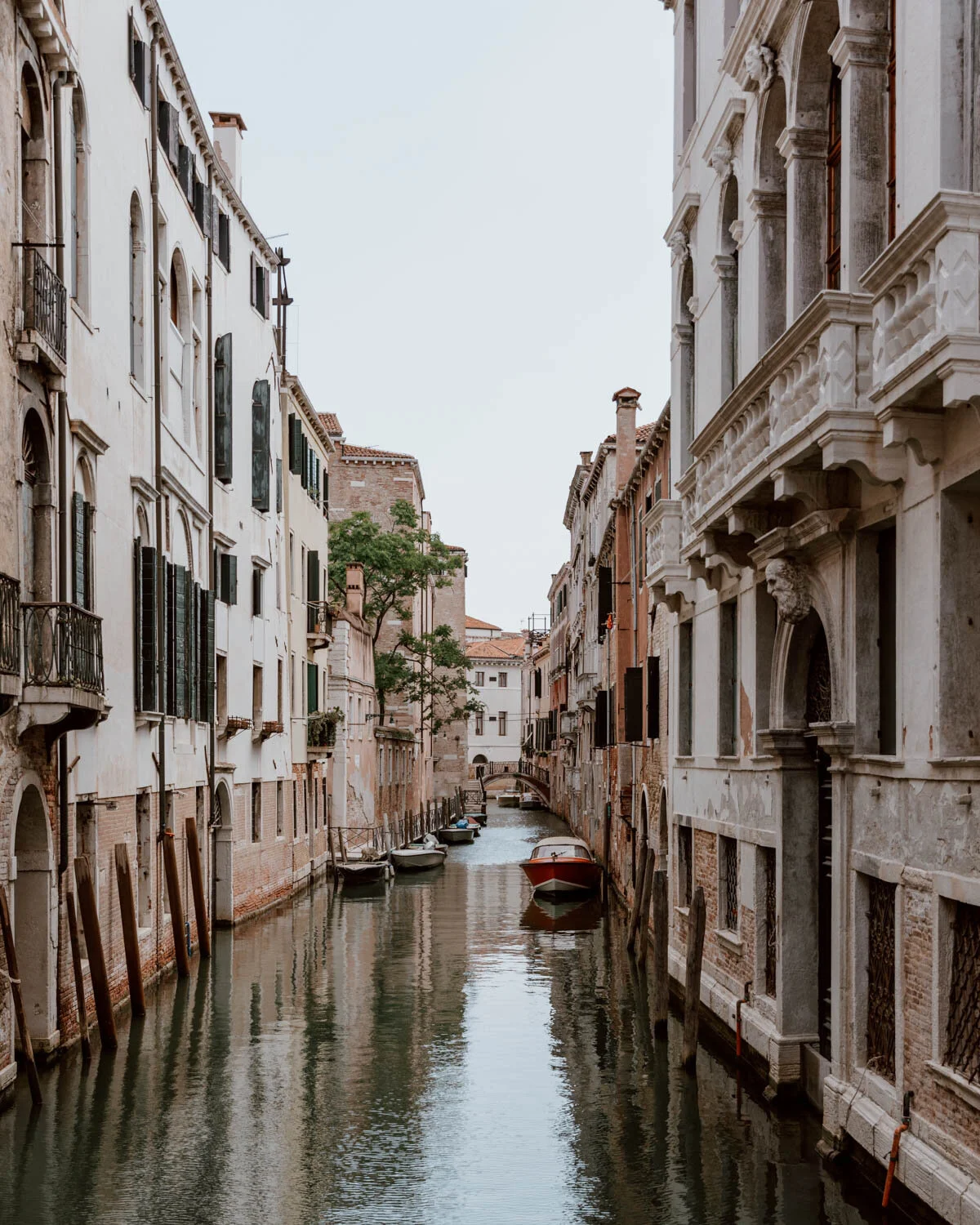
Exploring Venice means seeking out its prettiest viewpoints, which means venturing towards its 149 narrow neighbourhood canals and its bridges. You’ll find your own favourites but we thought we’d share the famous, and some of our personal favourites, to take photos of and from to get your started:
Rialto Bridge (maps) | The only bridge across the Grand Canal until the 1850s, the area around Ponte di Rialto naturally flourished (although on our visit, its San Marco side was one that we started avoiding if we could - simply too touristy). The iconic white stone arch was built following a design competition the late 1500s to replace the old wooden bridge which had collapsed several times and, despite being viewed as hideously expensive at the time, it was an architectural and engineering marvel of the Renaissance. Note that, unless you visit in the very early morning, it’s always going to be quite crowded here with people appreciating Canaletto viewpoints and getting selfies. Also, watch your pockets.
The Bridges of Sighs (maps) | We talk more about this one in the Doge's Palace section below, but to get a lovely photo of it, you should go to one of two other bridges: Ponte della Paglia (you're guaranteed to cross this at some point on your way to/from San Marco) or Ponte de la Canonica (one of several on the beautiful but busy Rio del Palazzo).
Ponte dell'Accademia (maps) | A little walk from Campo Santo Stefano, it takes one over to Gallerie dell'Accademia and our favourite lunch spot in Venice. Constructed of iron and opened in 1854, you’ll either love it or hate it (but the views from it are breathtaking).
Ponte Chiodo (maps) | We stumbled upon this quaint open-side brick bridge after lunch and explorations in the lesser-visited Cannareggio district. The bridge won't take your breath away, but it's set within a lovely narrow part of canal with colourful houses right on the water.
Ponte del Paradiso (maps) | The bridge itself isn’t anything to write home about, but when you see the diners in the canalside window of Ristorante ai Barbacani as the night sets in, with the water shimmering and the bridge in the background, it’s a wonderful sight.
Ponte dei Pugni (maps) | We actually don't think this is worth specifically going out of your way for, and we crossed it a couple of times before realising why people were taking lots of photos of it! Also known as the 'Bridge of Fists', many an argument between factions was settled here. The area is however nice, with boats operating as fruit markets in the canal.
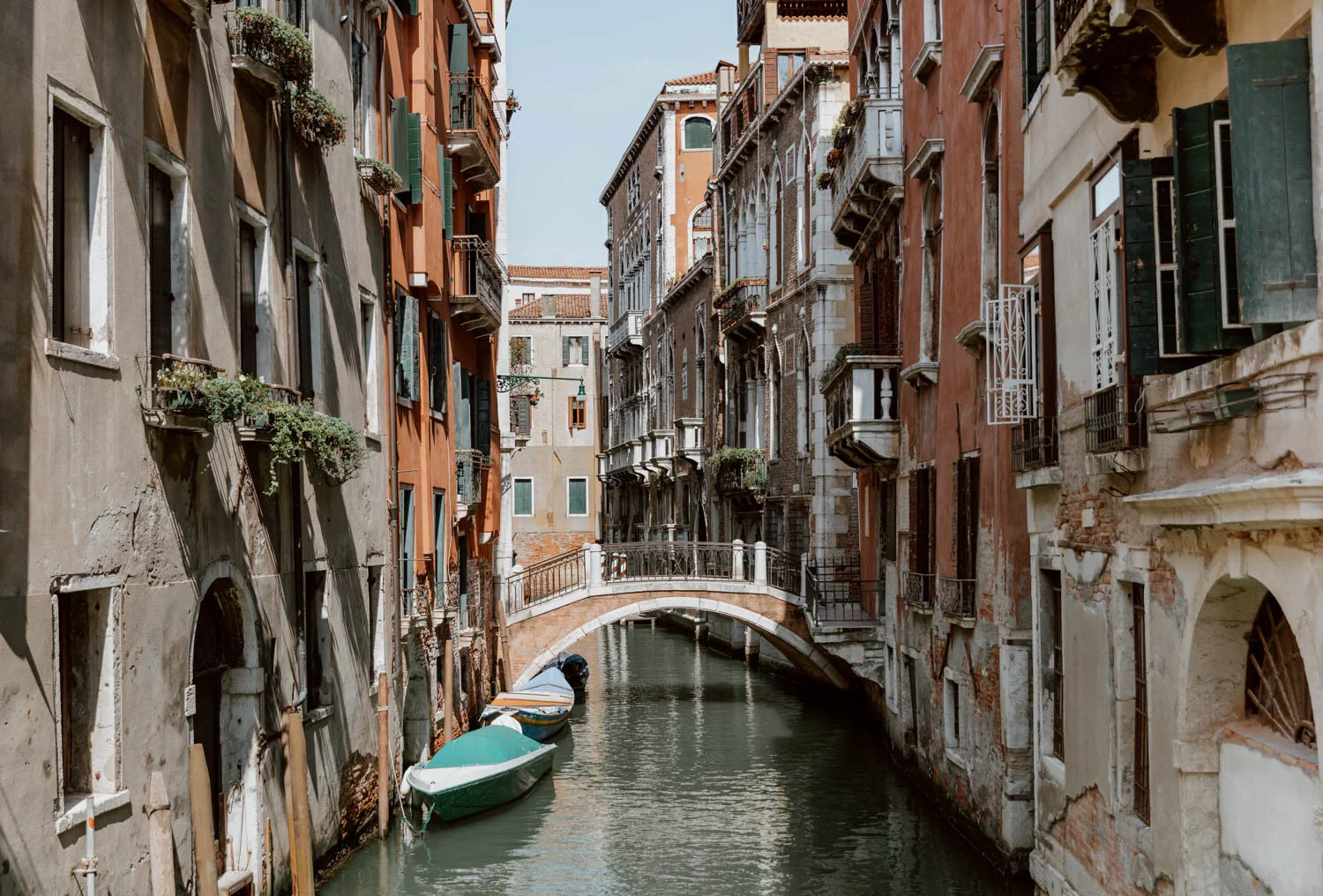
Ponte San Canciano (maps) | With pretty pastel pink buildings, steps into the canal, a stream of gondolas, and a relatively quiet small square behind it, we found this a delightful spot.
Ponte Maria Callas (maps) | On the approach to the Phoenix Theatre (more on that later), we thought this was a really pretty bridge and scene.
We highly recommend everyone to hop on the #1 vaporetto between Piazalle Roma and San Zaccharia (further if you prefer). We did this under starlight after arriving at Marco Polo airport for practical purposes, but it was perhaps the most magical introduction to this city and its Grand Canal we could have asked for - so much so that we did the journey a few days later at golden hour! At only €9.50 per person or included in the 24+ hour transport pass, whether you’re a prince or a pauper, this is good value.
For more information on this activity, read our Best Views of Venice article.
Get Lost In The Neighbourhoods
Getting lost in Venice is no art from, but rather a rite of passage.
The great technological equaliser for travellers of a mobile Google map and a prescient blue dot is bamboozled by the architects of centuries past - the high walls bounding a signal here there and everywhere, a supposed street leading to a surprising canal, a bridge 100 metres further down than you expected it to be, or a non-existent campo (small square).
The patchwork quilt of islands in Venice, threaded together by bridges large and small, take quite a while to get your head around. If you simply stick to the vaporetto (public waterbus), then the layout makes even less sense given the mirror-imaged S-shaped highway of the Grand Canal belies the proximity of the six neighbourhoods and their attractions. Rialto Bridge to St Mark's square, for example, is a wonderful 10-minute straightforward walk whichever streets you take, and preferable to waiting around for the next busy vaporetto which takes the same amount of time to cover it.
Now, there are times when getting lost is a pain in the arse, but there are also times when getting lost should be embraced, nurtured, and loved. For it is only by getting lost in Venice where you can carve out some from of experience which feels, at least on an individual level, to be the fates aligning and bringing you to a sliver of canal or a red-brick bridge between pastel coloured near-submerged homes.
In a place which suffers from so much tourism, it is also one of the few ways to strike out and off the beaten track in search of a serendipitous opening, an intimate encounter, vista, hidden-away campi, or cocktail bar discovery within the labyrinth.
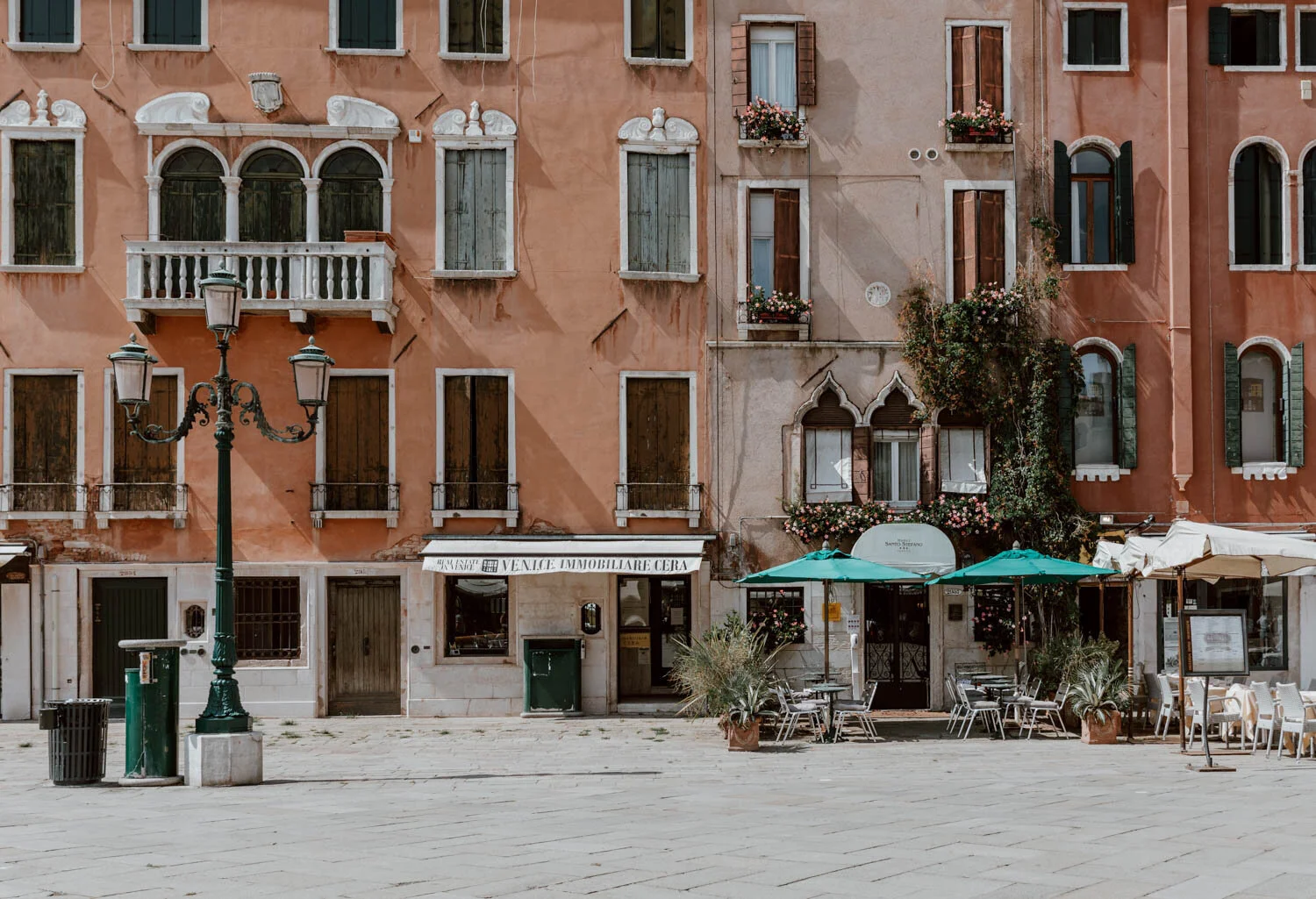
Even if the roads weren't made of water, but tarmac and concrete, Venice would still stand as one of the most captivatingly beautiful cities in Italy - an accolade which really takes some doing. Although the canals large and small draw most people in, we were equally taken in the narrow nooks and crannies of San Marco, Dorodurso, Canareggio, and Castello. It may sound silly, but we had associated a visit to Venice so much with its waterways, the masterpiece of a city which lies between these channels sort of took us by surprise.
Drag and drop Venice and put it on a hill or by the sea, or in the middle of the countryside far away from water, and it would still draw in millions for its beauty and level of preservation.
Getting lost with eyes wide open, alongside knowing some specific things to do in Venice, is the way to find it all.
Travel Tip // If you love the romantic idea of geting lost but are keen to squeeze in as many of the big sights as possible (or indeed learn more about them from a local expert), you may wish to join of the following highly-rated and popular walking tours:
· 2-hour walking tour of Venice’s main sights
· 3 hour off-the-beaten-path walking tour with optional gondola ride
· 1.5 morning walking tour (a great way to orienate yourself before a day of exploring)

Visit The Doge’s Palace
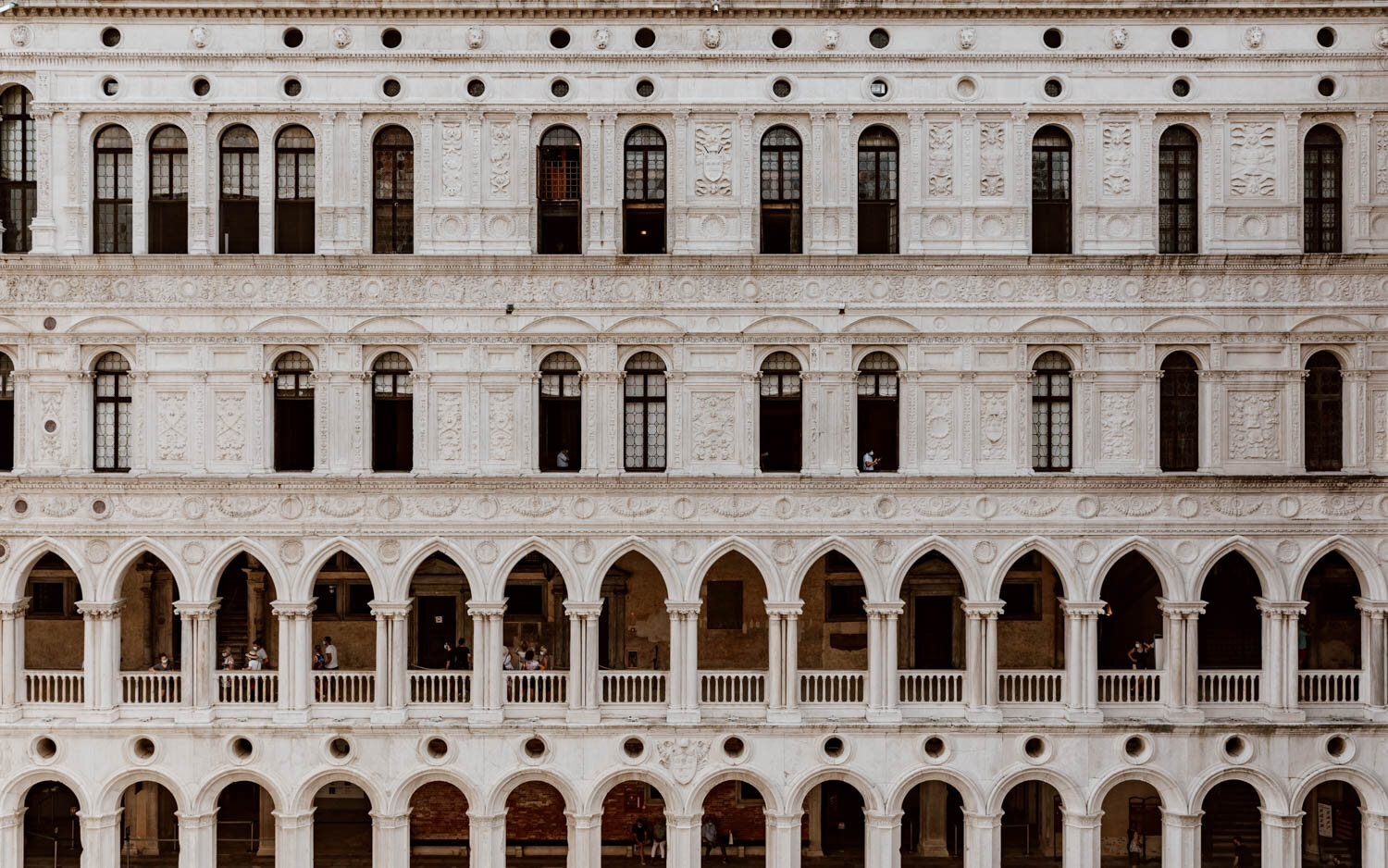
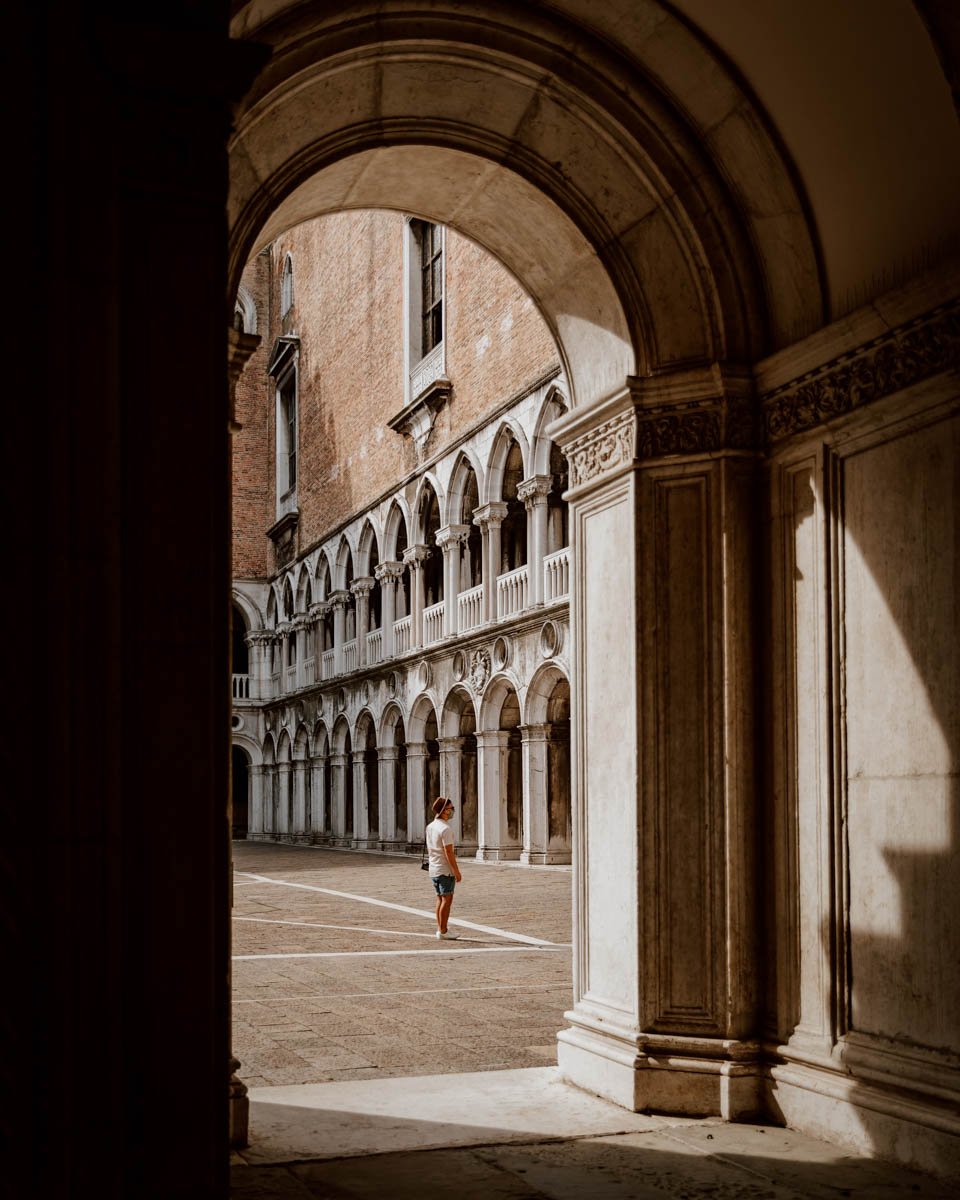
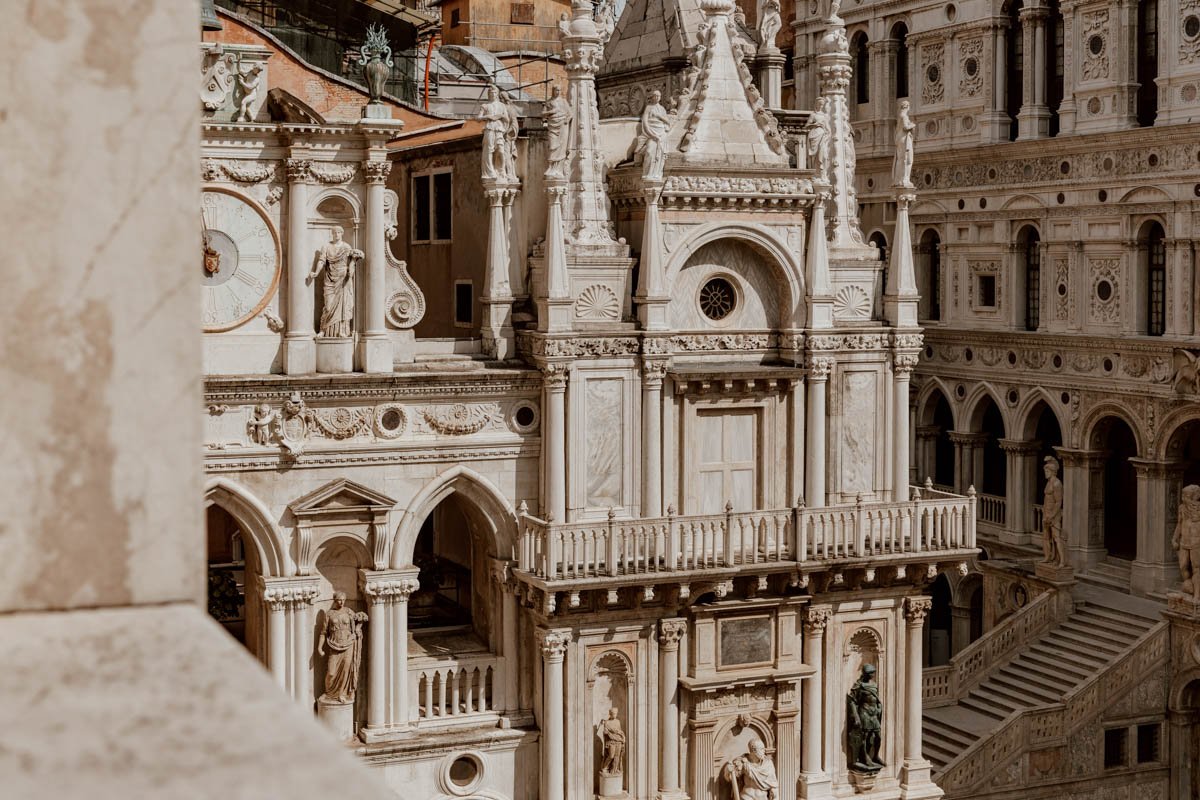
To get a better perspective of how wealthy and powerful the Venetian Republic was for so long, a morning or afternoon exploring the Doge's Palace (Palazzo Ducale) is essential.
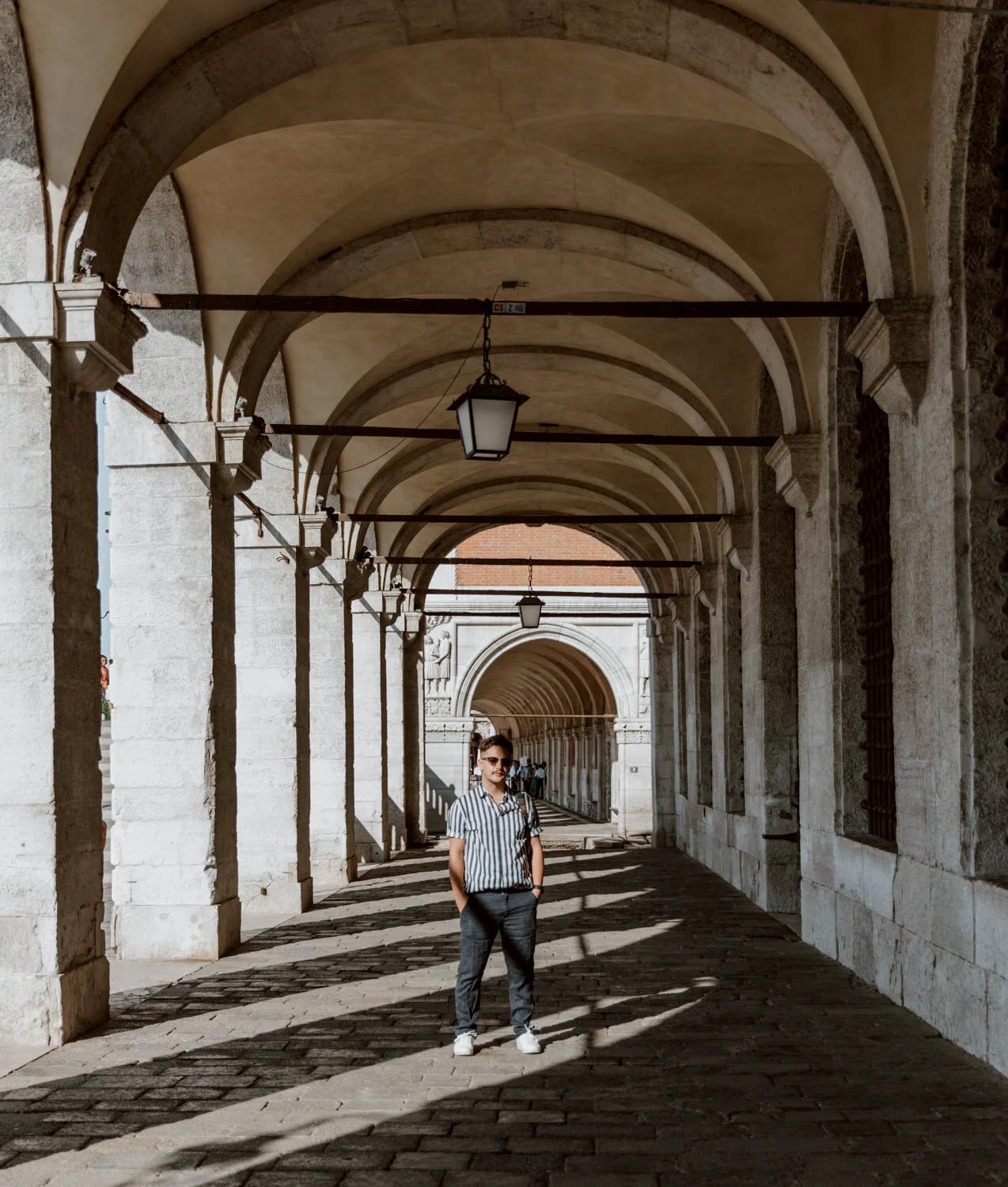
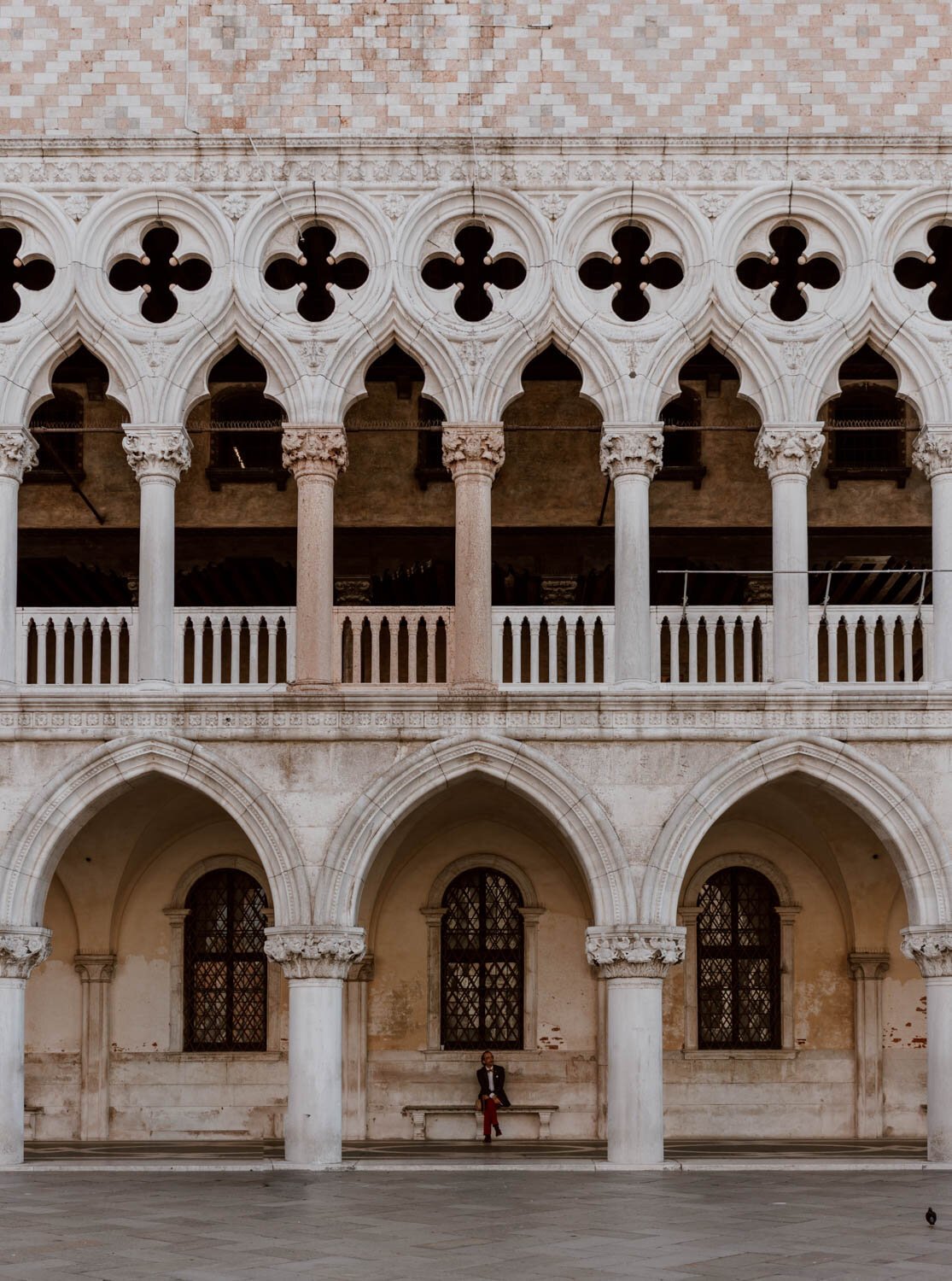
The seat of power from around 810 AD, this building adorned in pastel pink and white diamond tiles and perfect porticoes overlooking the water, was home to the Doge (roughly translated as the Duke, and essentially the elected leader of Venice and its most powerful person) and various organs of government and justice, including the Great Council, the Senate, and the Full Council, and the Council of Ten.
Today, it’s one of the Floating City’s most popular sites, filled to the brim with incredible art work, architecture splendour, rich symbolic decoration, historical curiosities, and an excellent view from the Bridge of Sighs.
Unmissable for any first-timer to Venice, and undoubtedly one of the best things to do in Venice.
Which is why we’ve actually written a full guide to visiting Doge’s Palace covering all the most important rooms and archtectural high points that you simply can’t miss - be sure to read our guide before heaiding to Venice!
Tickets | There is no standalone ticket for the Doge’s Palace, instead you will need to buy one of two combined ticktets:
· St Mark’s Square Museums ticket. Costs €25 per adult and includes entry to Doge’s Palace, the Museu Correr, and the Marciana Library. If you buy it less than 30 days before your visit, the prices increases to €30. For various concessions, including over 65s and students, prices drop to €13/15.
Note that this non-refundable ticket, you have to select both the date + entry time slot for the Doge’s Palace when purchasing it, so it’s best for planners and those who already know their dates.
· Museum Pass ticket. This includes your Doge's Palace ticket, as well as entry to three other museums within St Mark's Square and several others dotted around the city.
It’s €40 for adults (€22 concessions), and the ticket is valid for 6 months from your purchase date, with a single entry to each museum included.
Skip the queue | Yes - and it's essential. This is one of the most-visited places in Venice, and there are queues out the door for unreserved tickets throughout the day.
If you want to save yourself a lot of time, then purchasing the skip-the-line reserved entry ticket for the dedicated entrance is a very good idea. You can also buy fastback tickets here, and note that the three St Mark’s Square museums are also included in the cost.
Alternatively, consider this popular skip-the-line guided tour
Where & When | Find it on Google Maps here.
When | From 1 April to 31st October, the Doge's Palace is open from 8.30am to 9.00pm Mon-Fri, and 8.30am to 11.00pm at weekends. In winter, hours are shortened to 8.30am to 7.30pm.
Blitz The Spritz
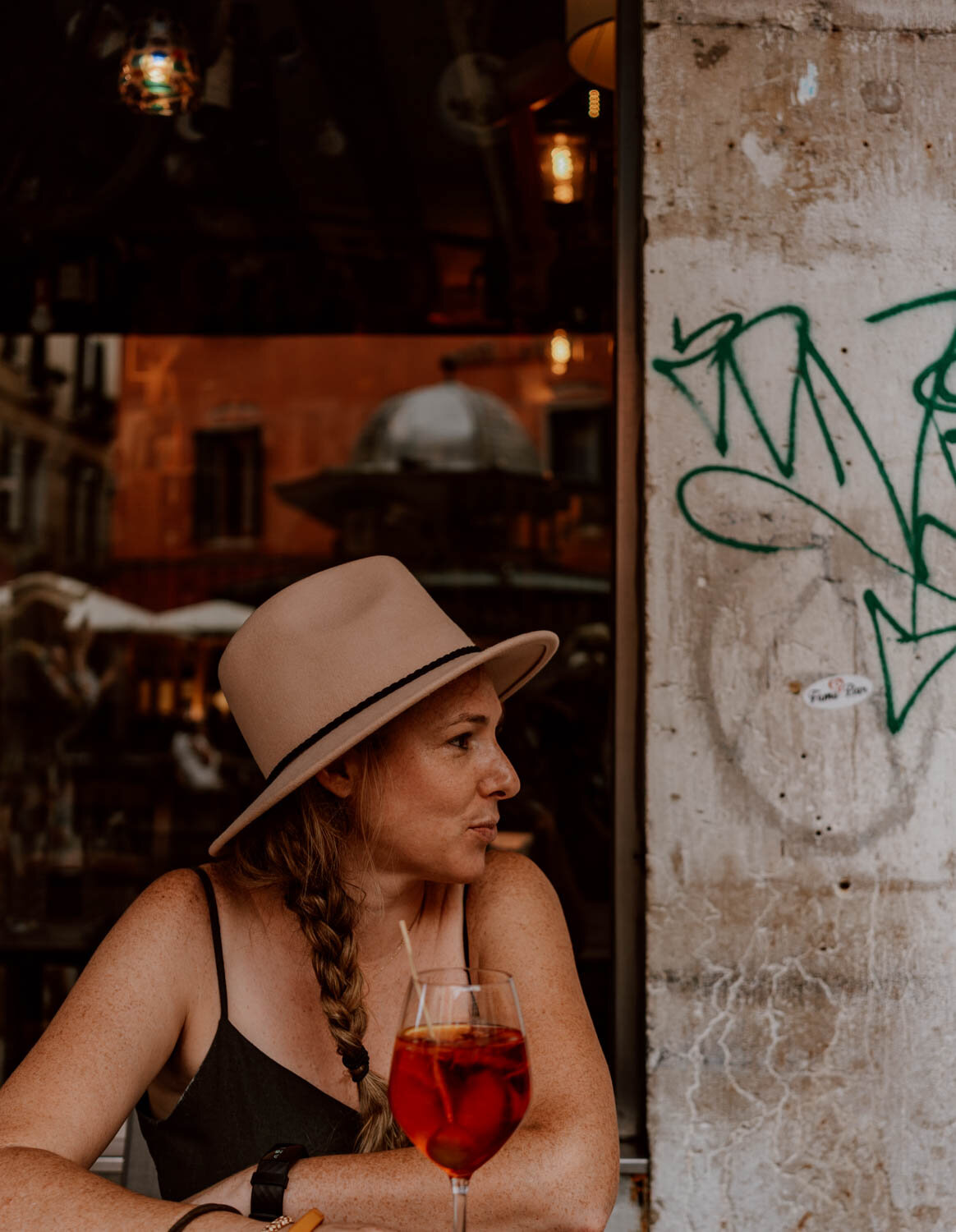
Spritz o'clock is a very frequent time for us whenever and wherever we travel in Italy.
A mix of soda water, Aperol, plenty of ice, and Prosecco, a bright orange Aperol Spritz has become a really popular tipple outside of Italy in the last few years thanks to huge marketing campaigns, particularly in summer; it's as refreshing as it is intoxicating (sort of like an adult's soft drink). However, its gone by the name 'Spritz Veneziano' for a lot longer,and its birthplace was here in the city.
So, on this particular two month trip, we discovered three very important points about the cocktail:
1. A spritz is cheaper and better in Venice than anywhere else in the country.
2. You can go for the sweeter Aperol or a bitter, stronger Campari. However, the mezzo-mezzo with half Aperol and half Campari, is a thing of hitting the-sweet-spot beauty. It's a standard request in any Venetian bar, but the further you travel from these islands, the less understood that request becomes.
3. You'd be a fool to not take advantage of points one and two.
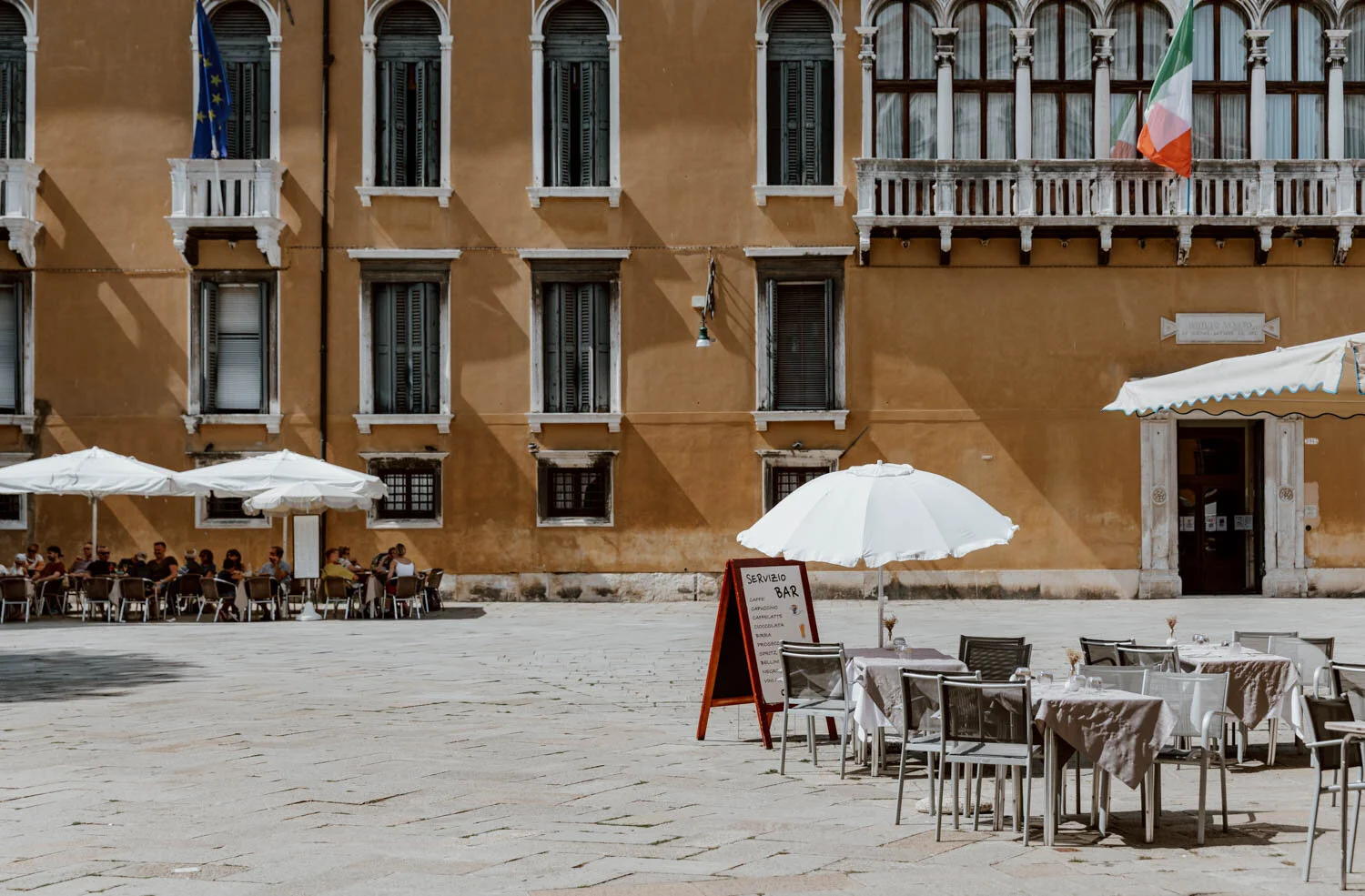
To be enjoyed anytime from about noon onward (although earlier is not to be frowned upon judging by some of old boys in Burano), the difference in drinking one here is that they do not hold back on the Prosecco, with many places doling it out from a spray gun. In Britain and many other places serving it, this is where they go wrong, resulting in a weak-ass expensive drink. Wandering around the streets and the non-ripoff squares here though, you can get the best Spritz of your life for €3.50. Sometimes it may be a little cheaper at €2.50, sometimes it may rise to €4.50, but if you're paying more than that then you're in the wrong bar (or somewhere just for tourists or a little too fancy for us). Bacaro Risorto Castello, a cool little corner bar with good music a short walk from St Mark’s, was our favourite spot for a sundowner or nightcap, whilst Zanzibar in Campo Santa Maria Formosa was run by a lovely couple and often had a local guy busking on a saxophone.
So, when it's a bit hot, you've done too much exploring, or you want to indulge in some people-watching, just make it Spritz o'clock.
And don't be surprised if there's an olive floating in it rather than an orange slice!
Travel Tip // We usually request cocktails without straws so that we cut down on single-use plastic by using our own metal ones. However, it was interesting to note that in Venice most places served the drink without a straw as standard (apparently stemming from tradition rather than environmental concerns) - however, do try and do your bit by asking for it senza cannuccia regardless! Want more tips on how to reduce your plastic consumption when you travel? Read this post.
Experience St Mark’s Square
The city's main public square, its only Piazza, and the civic heart of Venice for centuries, St Mark's Square (Piazza San Marco) offers an ocean of space in comparison to the babbling brooks of the backstreets.
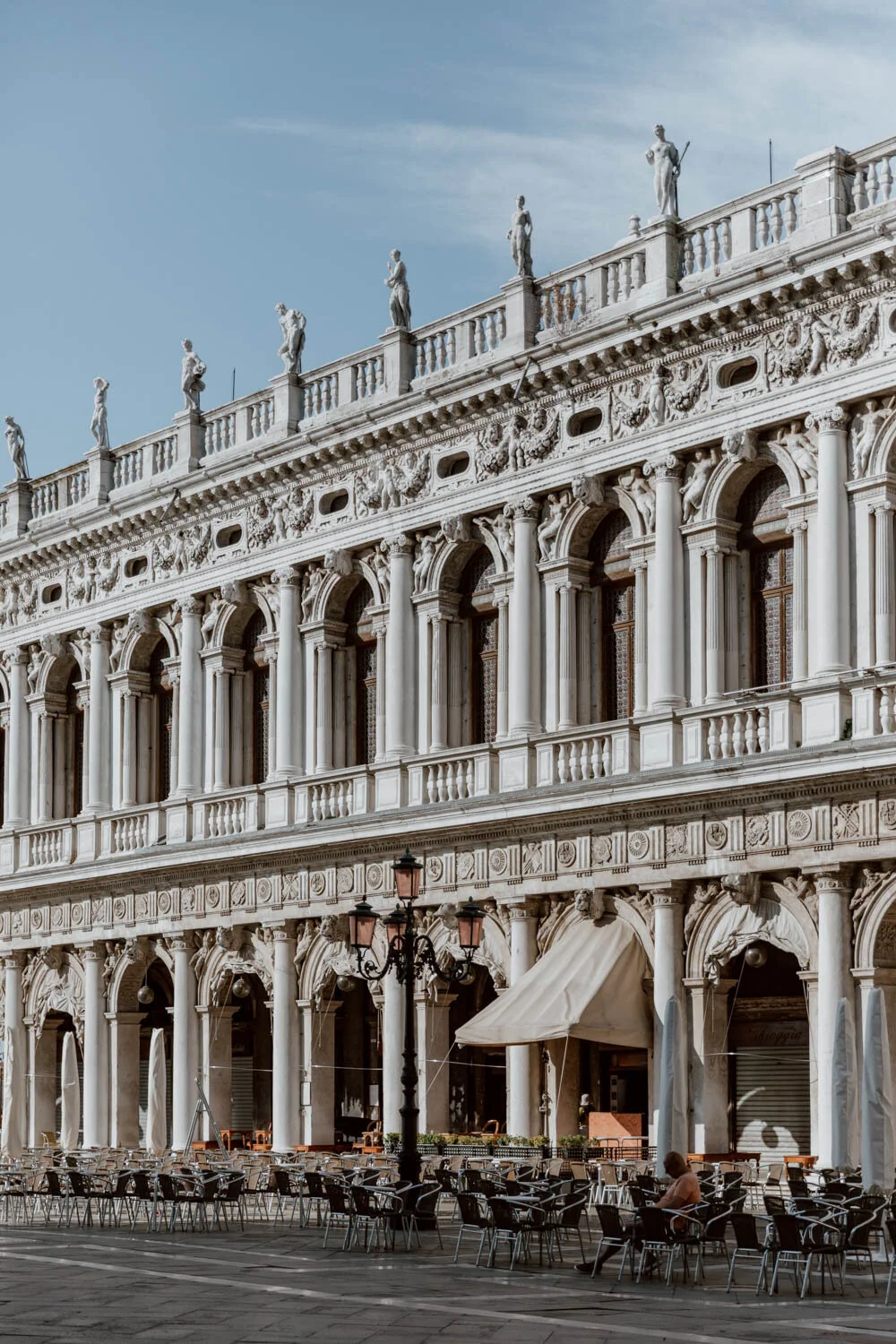
During our five days, we passed through or lingered within it more times than we can count (part through choice, part through necessity, part through getting lost and unintentionally ending up there a few times), and it's likely you will too. Just around the corner from the Doge's Palace, it's home to several popular attractions, famous photo backdrops, and expensive cafes which spill out from the hypnotic arched colonnade of the recently restored Procuratie Vecchie.
Of course, this comes with a big downside given that everyone else is going there too...indeed, those day-tripper cruise ship passengers or tour groups from the mainland tend to be dumped here for a few hours and then leave the city, whilst lengthy queues, souvenir carts, and wait-times are de rigeur. However, if you set the alarm early one morning, tactically reserve your tickets for certain places, and know how to avoid an €11 espresso, you can actually can enjoy it a little more.

It would be disingenuous of us to split out everything in St Mark's Square as separate attractions given that you'll likely pass through here several times or seek to do everything in one-go (we promise it's not just so we can stick to our signature '13 Wonderful Things to Do' title)!
Here’s what to do and see:
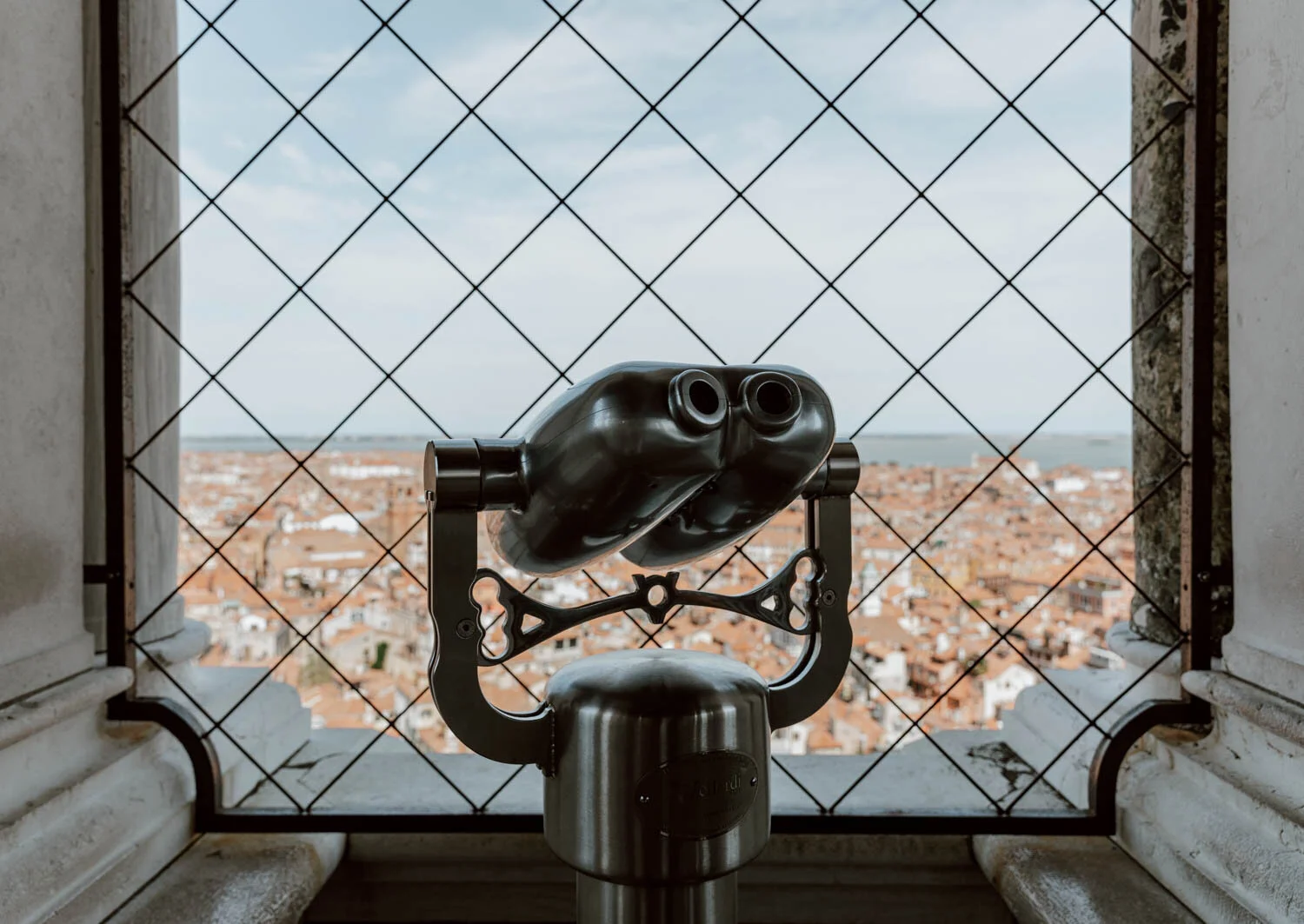
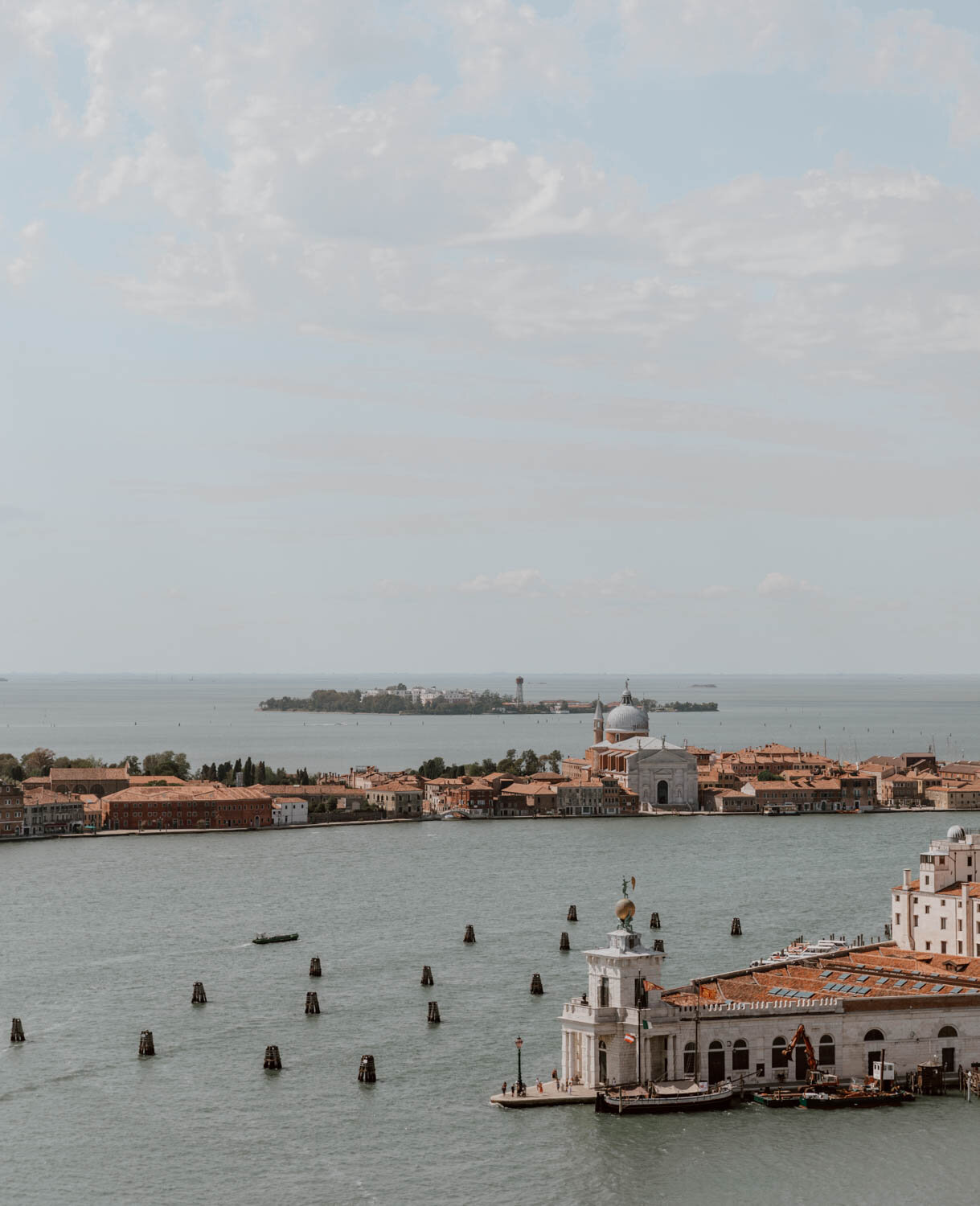
Campanile di San Marco | Opposite the Basilica, we felt that the bell tower, which adds so much to the aesthetic of St Mark's Square whilst concurrently feeling a little out of place, was a little overrated and overpriced despite its photogenic merits and intriguing history. With a lift straight up to the top, you will share the same vantage point as Galileo Galili did for his telescope demonstration in 1609. From all the 12-windows on four sides, you can gaze out and enjoy some excellent views over Venice: north side over the terracotta rooftops, east over the silver domes and wooden ladders of the Basilica roof, south into the cobalt blue of the grand canal, the two columns, and across to Basilica, then west overlooking the space of St Mark's Square. Look out for the old international phone card telephones on each corner from which one could phone home to tell them where you were - how times change!
It was €12 per person to ascend (a price that seems to always be increasing), and you can stay up there as long as you wish. This is a true symbol of Venice and does offer unrivalled views over the Square and shadows below, but we preferred other viewpoints if you're having to budget for only one (read this post to find out which).
We highly recommend booking your tickets in advance, which can be done so on the official website. Note that these tickets do tend to sell out quickly (even in winter), so if you’re not the most organised, or visit Venice at the last minute, you can still purchase skip-the-line tickets here.
The Campanile is open from 9.30am to 9.15pm from mid-March to mid-November, and 9.30am to 7.15pm in the winter. Last entries are half an hour before close.
Torre dell’ Orologio | Whilst queuing to enter the Campanile, we were enamoured by two figures who emerged from nowhere to strike a bell and watching the time pass in five minute intervals on blue and silver plates either side of the Virgin Mary.
Keeping Venetians punctual for the last five centuries, this state-of-the-art timepiece is beguiling and elaborate. Aside from hours and minutes, it also charts the signs of the Zodiac and the phases of the moon, with two blackened bronze figures emerging on the roof striking the bell each hour. Twice a year, on Ascension Week (following Easter) and Epiphany (twelve days after Christmas), three wise men and an Angel appear for a different routine.
The legend goes that the Doge had the clockmaker blinded after its unveiling in 1499 so that no other city in the world would have a clock to rival it. Fortunately for the clockmaker, it appears that his actual role after unveiling was to be its caretaker and reside in the tower with his family (a tradition which continued through the years). During our stay, guided visits inside the clocktower were not permitted, but it's something we would've done. With groups limited to a dozen people and the opportunity to see the ingenious inner workings of such a special timepiece, it would be fascinating.
It is only possible to visit with an advance reservation on a tour with a specialised guide. The tour lasts an hour and costs €14 for adults. Reduced tickets are €11, but children under 6 are not permitted on the tour. A Clock Tower tour ticket also entitles you to free admission to the Museo Correr, the Museo Archeologico Nazionale and the Monumental Rooms of the Biblioteca Marciana within St Mark's Square. Find out more or buy tickets here.
Museo Correr | It was included with our Doge’s Palace ticket, so we spent about 90 minutes in this museum housed in the south side of the square, opposite the Basilica. There’s a lot of history to it, with the era of Napoleonic rule in Venice operating primarily this building, but we were a little overwhelmed having just spent the whole morning at the Doge’s Palace, so we can’t really give too much of a recommendation either way for you. The Roman busts and various other sculptures are however fantastic.

St Mark’s Basilica | The striking Basilica, the most important religious building in Venice, was unfortunately closed for renovations whilst we visited, but there was still a queue around the block to access its museum and the terrace. Built in a Byzantine style which merged eastern and western design principles, influenced no doubt by Venice's trading position between the two, it has seen various decorative additions and modifications over the centuries, giving it a very singular external appearance in comparison to most other Italian cathedrals. Inside, amongst other artefacts, it's the 8,000 square metres of mosaic adorning its walls, vaults and cupolas (many of them golden), which subtly interact with the changing light each day, that attracts most visitors.
Entrance to St. Mark’s Basilica costs €3 per person to enter if you buy it in person, and €6 if you buy it online and in advance for a specific timeslot. The Basilica is open Monday to Saturday, 9.30am to 5.15pm, but opens at 2pm and closes at 5.15pm om Sundays. Last entrances are 15 minutes before closing (but do try not to leave it that late).
Note that this standalone Basilica entrance ticket does not allow you to access the terrace. In order to access this you will need to buy the combined Basilica, Pala d’Oro (a stunning Byzantine altarpiece made from gold), and Museum Loggia dei Cavalli ticket for €20 online via the official website, or purchase individual tickets to each upon arrival at the Basilica.
Do be aware that the Basilica is an incredibly popular tourist site in Venice, and as such, tickets can sell out several months in advance during the high season. If this combined ticket is sold out but you really want to access the terrace consider this guided tour that also includes terrace, and you can buy last minute skip-the-line tickets for the Basilica here.
If you’d like to include access to the Doge Palace alongside a guided tour of the Basilica, check out this super popular - and excellent value - tour run by Get Your Guide.
This is place of worship for Christians, so it is essential for you to dress and act appropriately.
Read More // To know how to avoid those rip off coffees, read our 23 Things To Know Before You Visit Venice.
Take The Boat To San Giorgio Maggiore
There are numerous vantage points from which a sumptuous vista of Venice unfurls out before you - and we've gone into more detail about each of them in this post.
However, this guide to the best things to do in Venice is all about giving your our personal recommendations - rather than generic copy-and-paste ones - so we wanted to share where to find our favourite view of Venice here.
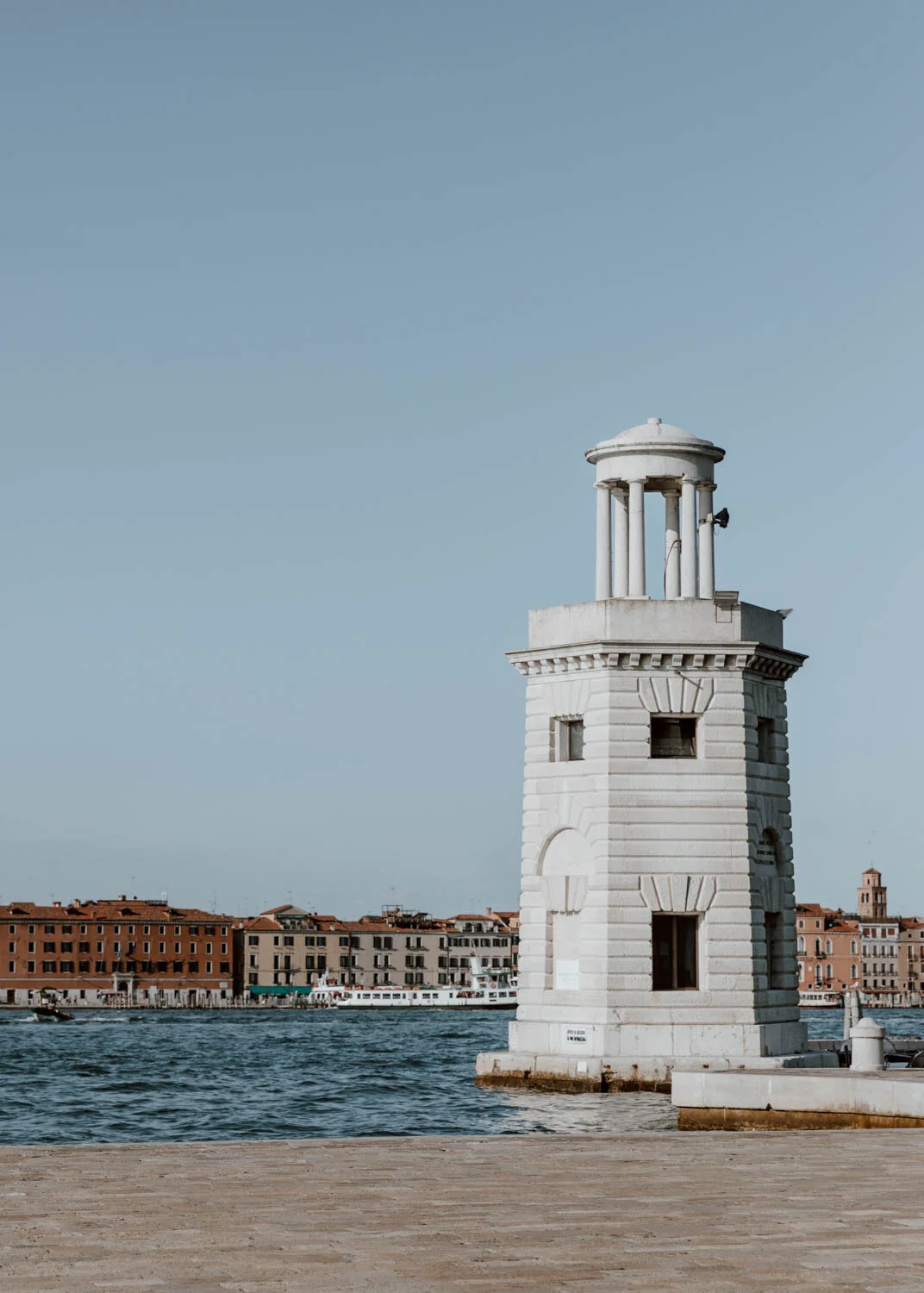
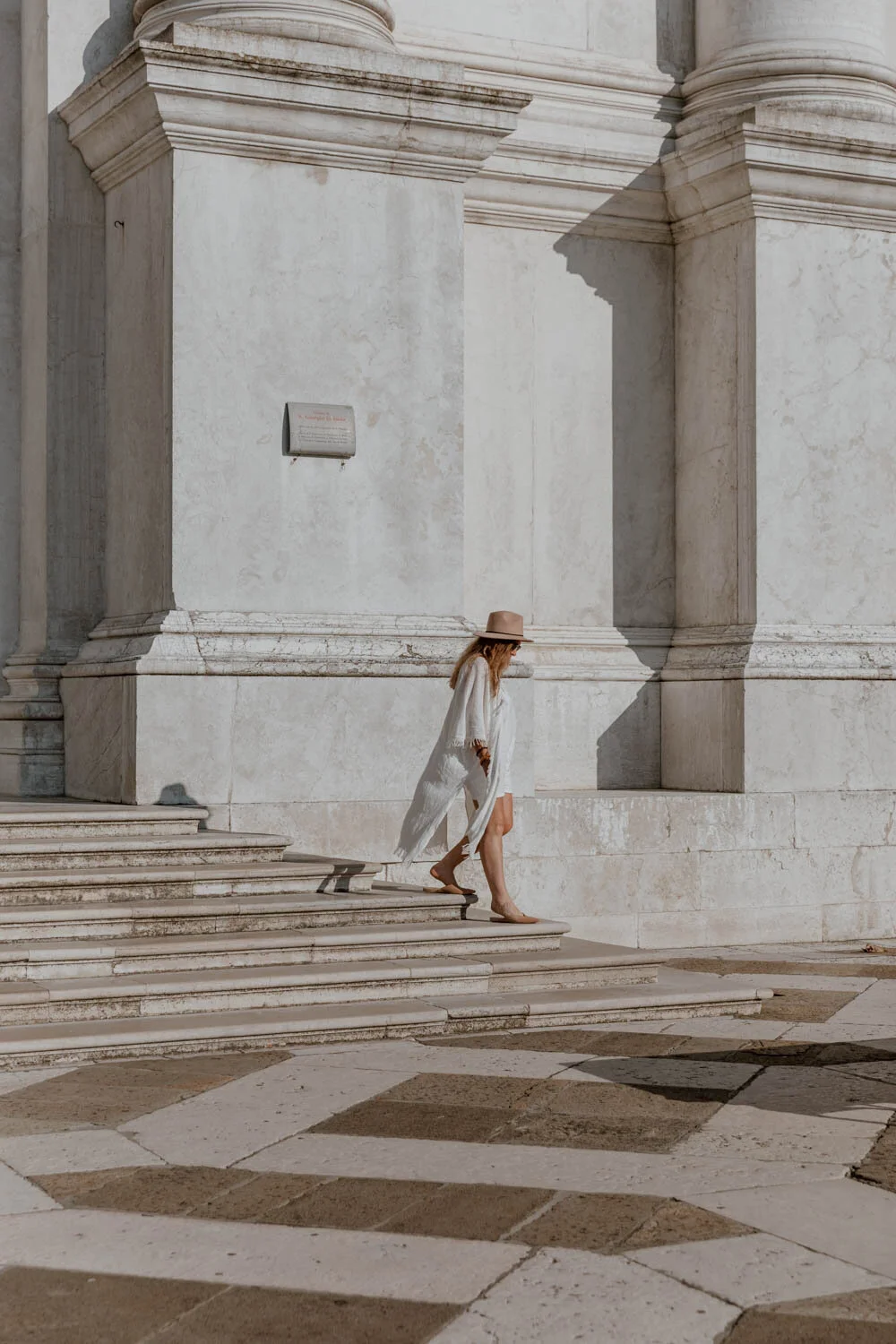
A two-minute vaporetto ride from San Marco-San Zaccaria "E" or “F’, the blinding white marble face of the San Giorgio Maggiore Church beckons travellers across the bright blue of the Grand Canal. Set upon a tiny island of the same name, with little more than an old convent, a concert hall, and an outdoor theatre sequestered amongst an expanse of greenery, the view back upon Venice from the vaporetto dock is worth the journey alone. However, it is from atop the Church's belltower (Campanile di San Giorgio) where you can take in a stellar 360-degree view over much of Venice's most famous landmarks and lesser-known parts of the lagoon.

The Church's bright peaceful interior, home to two Tintoretto paintings, is more than worth a respectful wander around before you leave too. We haven’t listed lots of churches for you to visit in Venice (there really are a lot), as we know from personal experience that it’s sometimes an activity you feel you have to do - and in Italy there really are beautiful, grand, old churches everywhere. If you stick with this, Basilica di Santa Maria della Salute, Chiesa di Santo Stefano, and Basilica di San Marco, you’ll be doing fine.
Tickets | Entry to the church is free, and it's €8 per person to access the tower. You can only purchase your tickets in cash from the manned booth towards the back of the church (it's clearly signposted). Proceeds go towards maintenance of the site.
When & Where | It's open for visits from daily from 9am to 7pm (April to October), and from 8.30am to 6pm (November to March). You can find the church here on Google Maps.
Accessibility | It's a lift from the church right up to the top of the belltower.
Read More // Where To Find The Best Views of Venice
Go On A Gondola Ride
A bucketlist moment for many a dreamer.
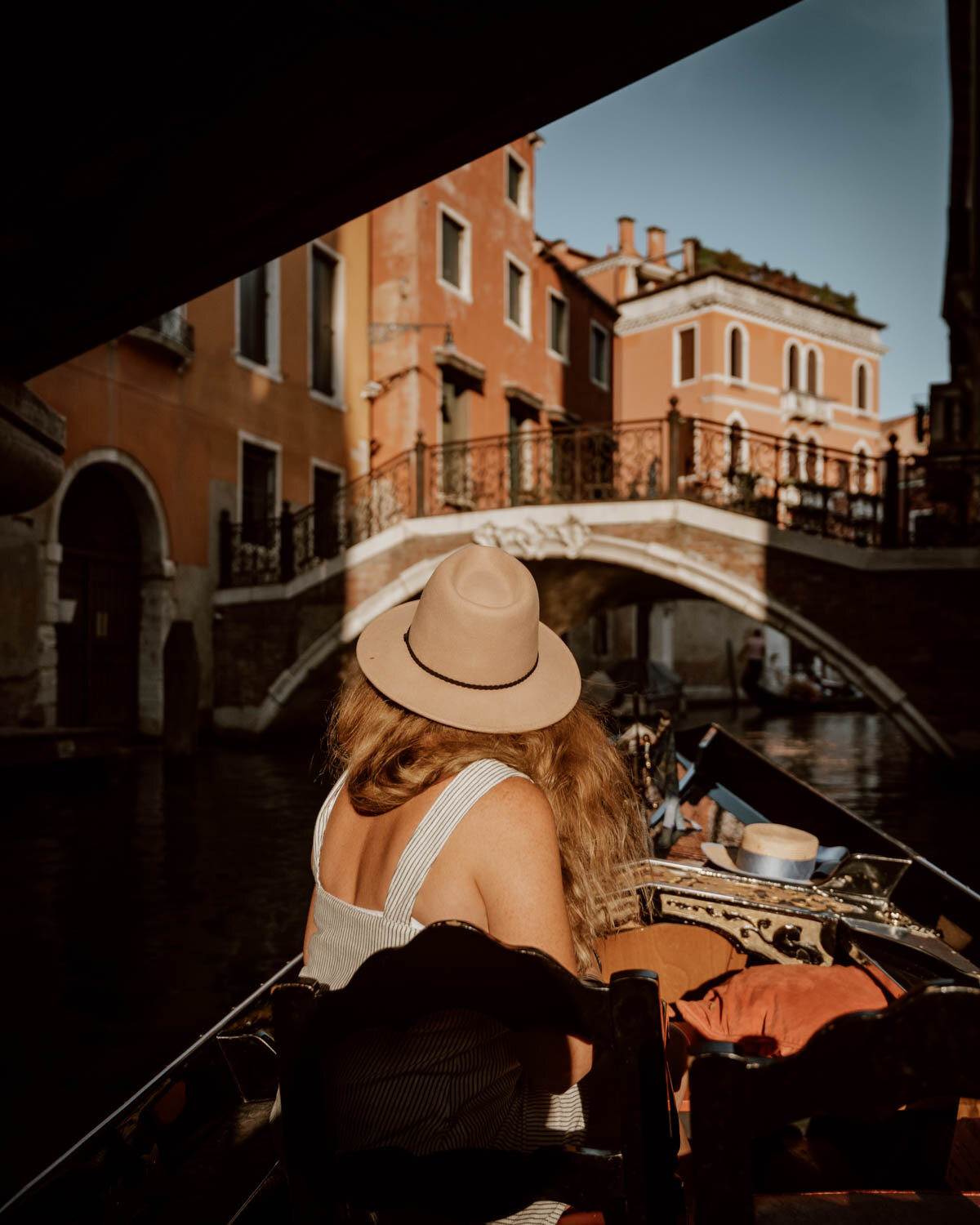
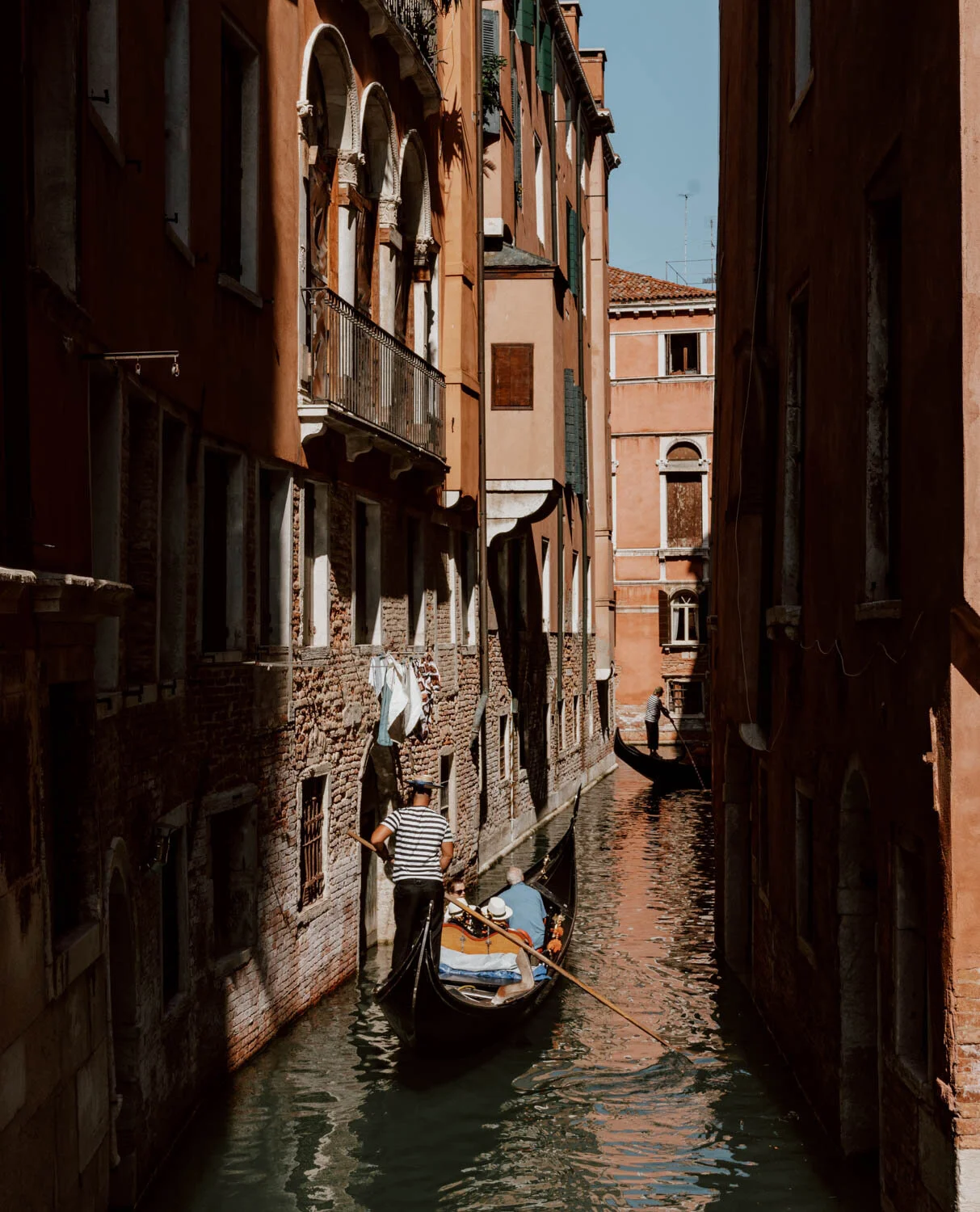
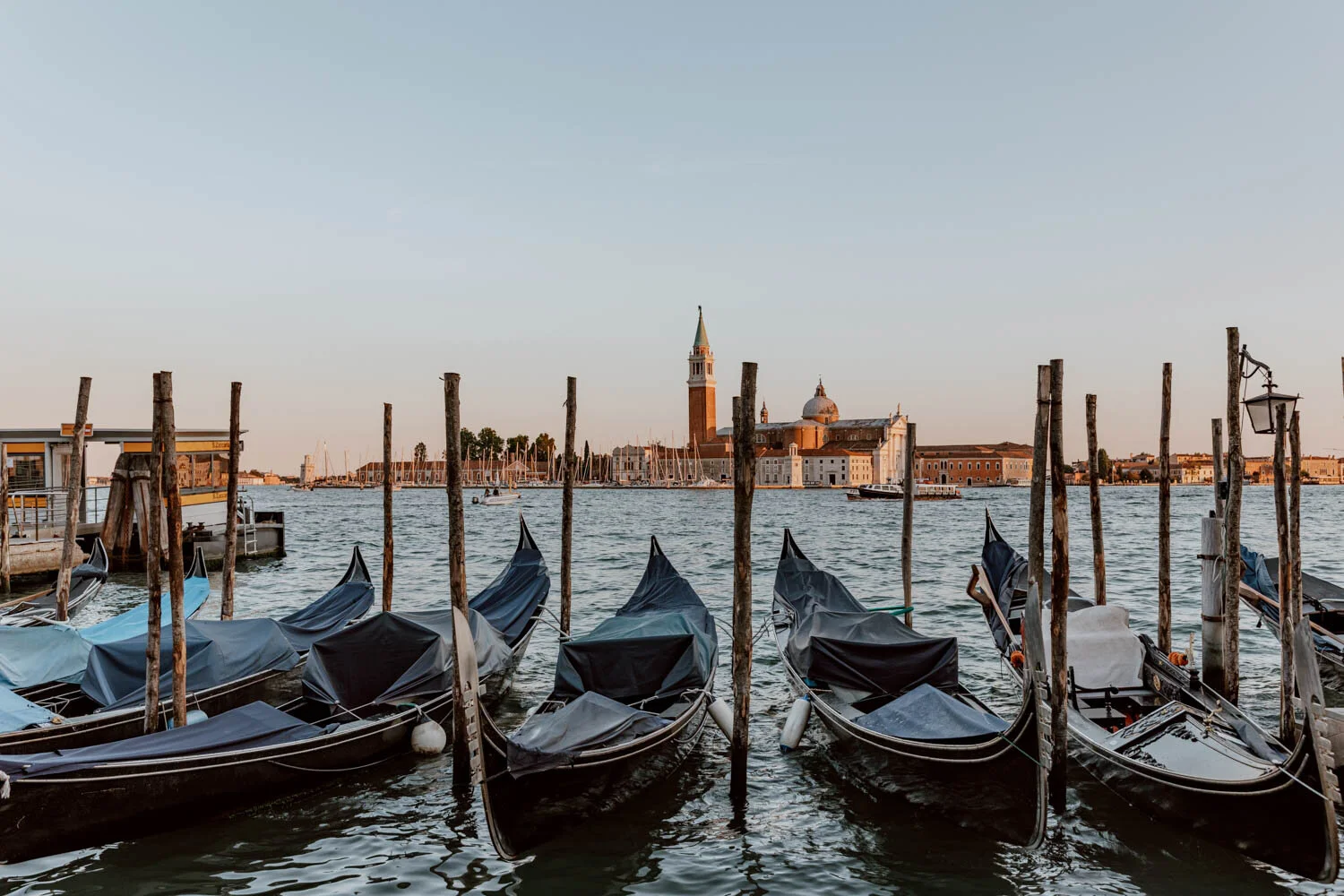
Dressed in candystripe shirts and straw hats, the gonodliers and their boats are such a charming and essential ingredient into the elegant tapestry of Venice. Kicking walls to manouver, continuing yesterday's conversations from other canals, ducking under bridges, whistling, chattering, and occasionally serenading as they glide their narrow black boats along a secret network of navigability known to them only, they transform every scene into a beautiful Venetian memory.
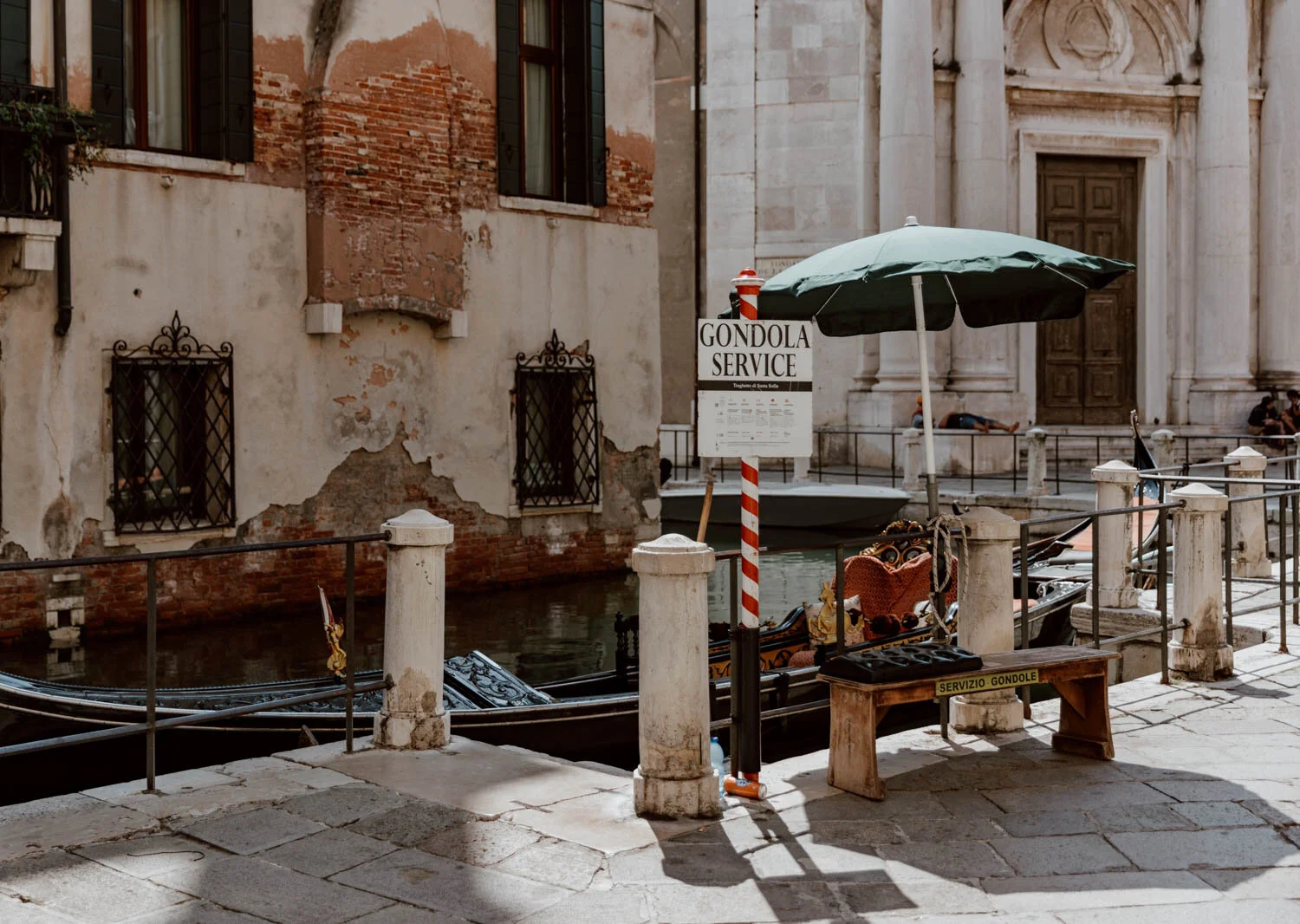
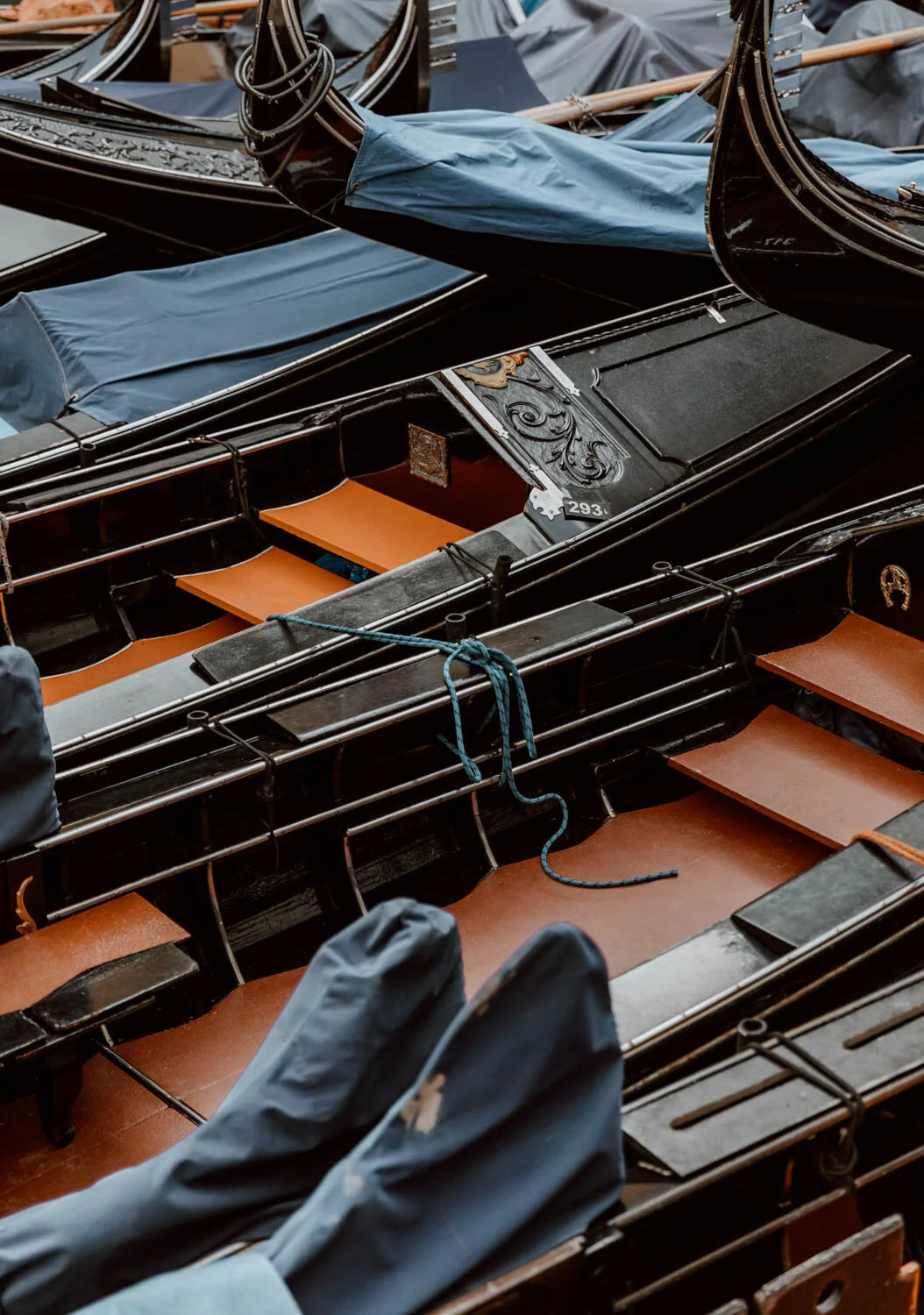
The long, thin, low gondola boats were traditionally used for transportation of goods and people along Venice's version of roads, and essential to navigating the floating city throughout history. They numbered approximately 10,000 in the 17th and 18th centuries, but today there are under 500; they are almost exclusively used by tourists.
Many of you will be dreaming of a romantic ride through the canals and under the bridges, and it is rightly one of the most popular things to do in Venice. However, it's really important to be aware of a few practical things before arranging your own gondola ride to avoid disappointment or bust expectations, including information on prices and the best routes to take.
You can book private gondola rides in advance here, but we highly recommend you read this post - Everything You Need To Know Before A Gondola Ride in Venice - first.
The official prices of the public gondola service if booking in person is €90 for 30 minutes from 9am to 7pm, or €110 for 35 minutes from 7pm to 4am.
Alternatively, if you already know that a private gondola ride is going to be beyond your budget (which we’d completely understand), you can choose to book a place on a shared gondola ride along the Grand Canal instead for a much more reasonable price - ideal if you’re a solo traveler or couple.
Eat Cicchetti
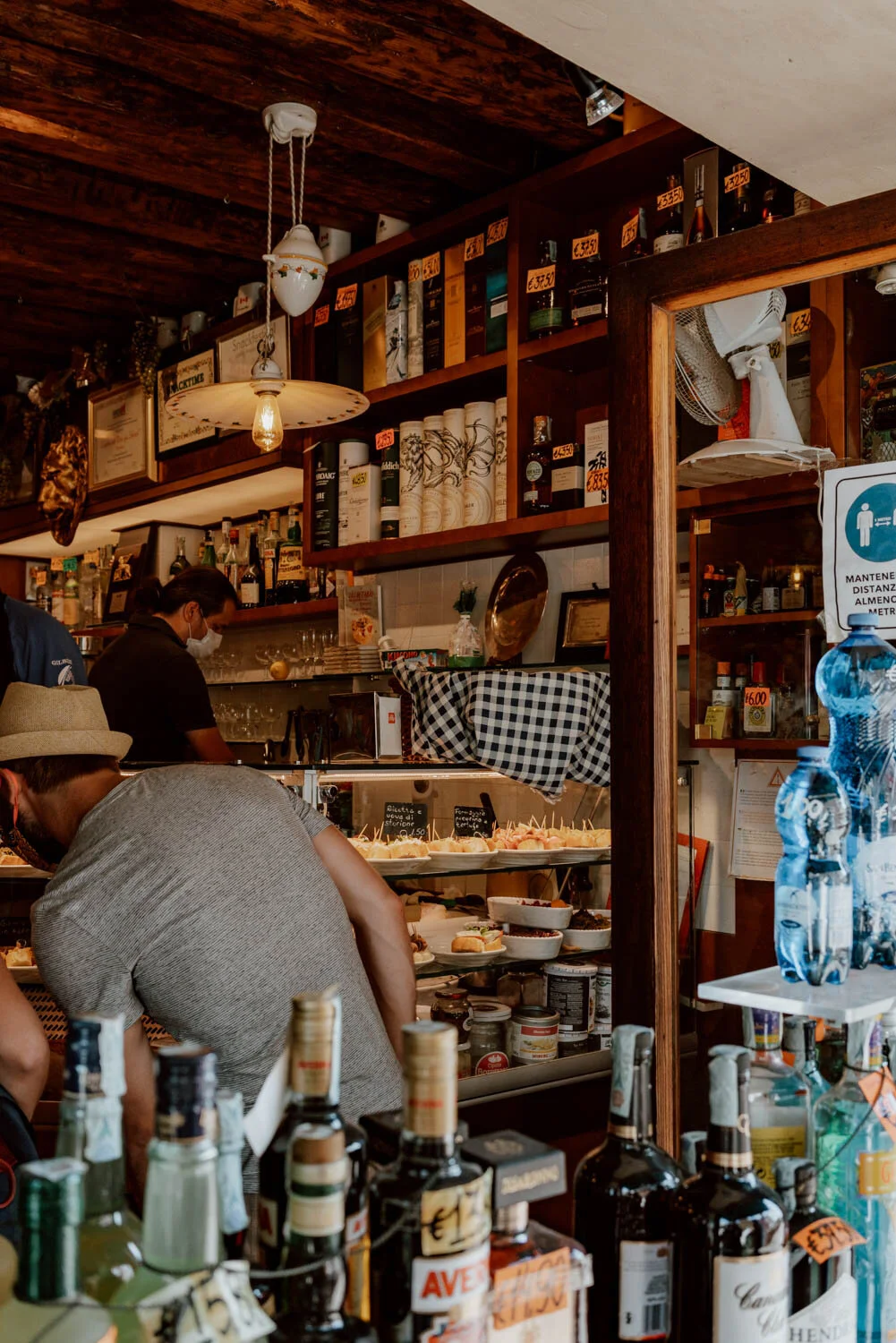
In between explorations on foot or by boat, or when the late morning sun became a little too strong, we took great pleasure in seeking out some of Venice's finest cicchetti (pronounced 'chi-KET-tee').
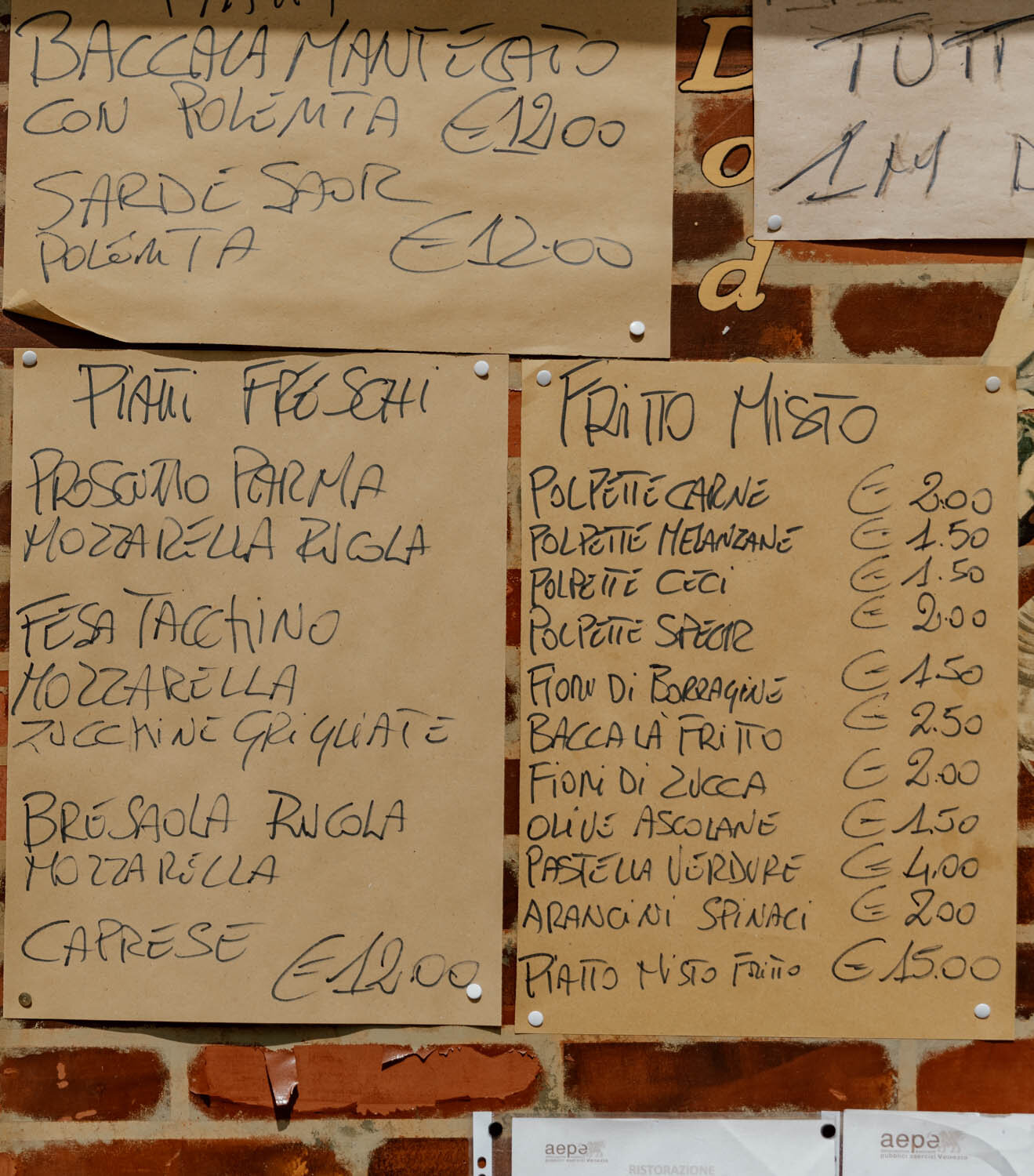
The city's form of pinchos - or the less glamorous-sounding 'finger food' if we're taking an Anglo-Saxon approach - you'll struggle to find something more typically Venetian to eat. Served in those bacaros we mentioned earlier, as well as cafes, osterias, wine bars, and dedicated cicchetterias, these freshly made bite-sized savoury snacks are displayed in glass cabinets for you to choose your pick-and-mix.
Given its aquatic disposition, it isn't a surprise that many traditional toppings are seafood-based: sweet and sour sardines, salted cod, octopus, or shrimp. However, vegetarians and those who aren't disposed to anything fishy will always be catered for too, with the toppings changing according to the season and the establishment.

There are places all over the city which are renowned by visitors and locals alike (check out this New York Times article), and we couldn't visit them all. All’Arco by Rialto Market is excellent, but we think making a beeline to Osteria Al Squero and Cantine del Vino già Schiavi, facing a gondola craftsman's yard canalside at San Trovaso, is the best option if you're only able to dedicate time to one lunch; Al Squero was our favourite because of the range of vegetarian bites and its focus on sustainability. Expect queues at lunchtime, and watch out for the seagulls if eating outside!
Aside from offering a quick, tasty, cultural insight into the regional palate on your plate, cicchetti (also spelled cichetti) are incredibly affordable. You can expect to pay €1.50-3.00 per piece, but there are some wine bars and places serving up gourmet versions for €3-5; at Al Squero, it was €1.50 per piece (an absolute bargain). This makes them ideal if you want a cheaper casual lunch with variety, or a little snack alongside a small glass of local wine or prosecco on your way to your next museum or gallery, or a pre-dinner ‘put me on’ - just don't have try and have them for breakfast!
We should add that not every single cicchetto we had in Venice was to our liking by the way, with a couple very much needing that wine to wash it down! However, this is the beauty of affordable finger-foods in Venice!
Top Tip // For the opportunity to sample lots of local treats - and see some of the city’s most famous monuments along the way - consider joining this street food tour. It lasts 2.5 hours, has a huge number of excellent reviews and allows you to sample everything from cheese, buranelli biscuits to tiramisù and, of course, cicchetti.
A Morning At Mercato di Rialto
Our favourite morning in Venice was the one where we experienced a city awaking.
Leaving our Airbnb at the crack of dawn, we roamed the alleys and the canals in the half-light, sharing the streets only with delivery men wheeling packages here and there, or cafes preparing for the first espresso order of the day.
Life on the Grand Canal took on a more industrial appearance too, with boxes, bags, and crates of food and construction materials being offloaded by burly men from docked long cargo boats, a reminder that these waterways are not simply for photo opportunities and romance; they remain essential to how Venice operates.
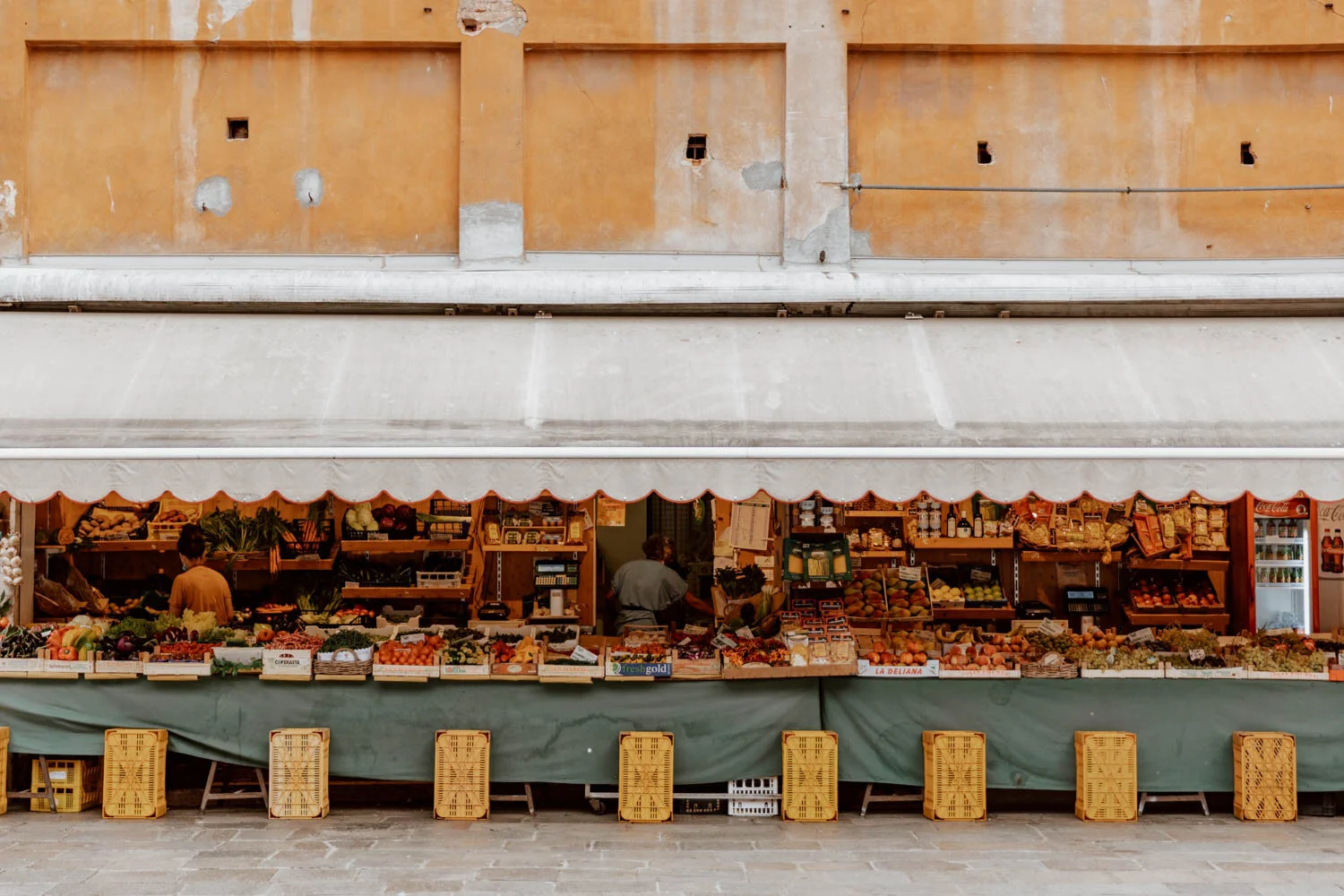
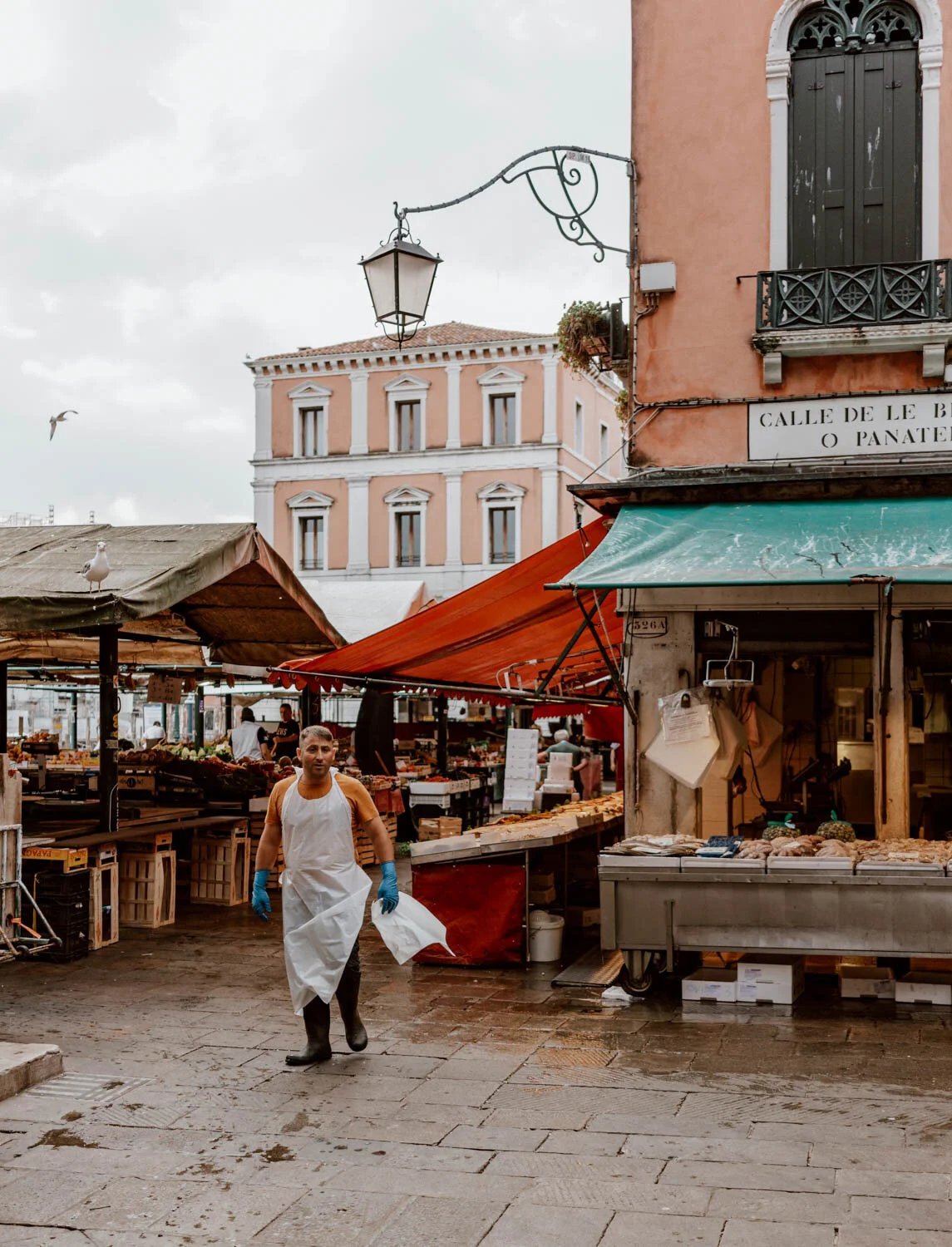
Across a near-empty Rialto bridge, save for barefoot Instagram girls twirling in ballgowns by its side, we had coffee and cornetti next to smoking workmen at Bar San Cassian, the only place open nearby at that hour. The reason for the early rise was Mercato di Rialto, a living breathing reminder that this city is not yet completely hollowed-out. As with all Italian food markets, the breadth of produce is a treat for the senses, but it is the fishmarket under the arches - raw and ready with guts and blood - which is most intriguing. It remains open until around 1pm, but it's always best to come a little earlier in the morning (note that it’s all closed on Sundays, whilst the fish market also closes on Mondays).
Unsurprisingly, there are also a handful of highly-rated canal front fish restaurants in this district; take your pick between neighbours Osteria Bancogiro and Naranzaria.
This area was also one of our favourites for a laid-back drink at night, with several bars spilling out into Campo Bella Vienna until the wee hours. Start at Bussola if you want to accompany it with cicchetti, but there's also a very cool hole in the wall place called Al Mercà doling out spritz and beer for groups outside.

Marvel At Modern Art
The art and culture scene alone here deserves two weeks.
Indeed, the biggest regret we have from our time in Venice - five days in a place which you can ostensibly cross on foot in a few hours - was that we thought we were giving ourselves ample time to go slow, and to savour it.
However, once we tapped into the riches which the rich have bestowed upon the city over the centuries (most notably in recent times by two patrons we discuss below), it became clear what a cultural capital this remained behind the cruise ships, queues, and selfie-sticks which have come to be more synonymous with Venice in recent times in the media.
As we dedicated a lot of time exploring the masterpiece of a city itself (and taking a memorable day trip to Burano), we simply didn't have enough time to go to all of contemporary art and photography galleries our list. Further, the cost of visiting a lot of Venice's galleries and museums mounts up quite quickly - see What Things Cost in Venice - which meant we sacrificed the pre-19th century art at Gallerie dell'Accademia for more modern expression (in Italy, you can become a little fatigued with the older, heavily religious style if it's all the art you're seeing in a short space of time).
Therefore, to avoid becoming overwhelmed and/or missing out on your own visit, we'd recommend prioritising the following:
The Peggy Guggenheim Collection | One of the most important museums of twentieth century European and American art, it is also the only museum (we imagine), with its curator and her pets' ashes buried inside. Peggy Guggenheim moved and settled in Venice in 1949, bringing with her an already impressive collection of pieces she had purchased - and continuing her incredibly colourful approach to life. Set within an 18th century palace in Dorsoduro, the gallery focusses principally on surrealism, expressionism, and cubism, with major works by Kandinsky, Pollock, Rothko, and Miró.
It’s also incredibly popular, not just for its arts but faor its setting; we'd suggest at least two hours, more if you can spare the time.
Entry is €16 for adults, €9 for students under 26 years, and free for childen under 10. The gallery is open from 10am to 6pm (closed on Tuesdays), and last entrance is one hour before close. As this is one of the more popular attractions in Venice, it is highly recommended that you book online in advance - you can do so on the official website.
You can also join one of their guided tours by emailing booking@guggenheim-venice.it, or alternatively book this excellent private option.
The Francois Pinault Collection | Oh to be a billionaire looking for somewhere to house our art collection...Rebuffed by Parisian politics, Pinault (who owns Gucci, Yves Saint Laurent, and Alexander McQueen amongst many other things), settled upon splitting his collections with evolving temporary exhibitions between two incredible sites in Venice.
The first, Palazzo Grassi, launched in 2006 in an 18th century palace which opens out onto the Grand Canal. Punta della Dogana is set in a restored old Sea Customs house on tip of the triangle in Dorodurso, just round the corner from Basilica di Santa Maria della Salute. The building had actually been empty for decades (more common than one assumes in Venice) and its bare red brick environment, rather than a white cube, adds a different dimension to many other contemporary galleries. It opened in 2009.
The galleries are on different islands on Venice, but can be visited with a combined €18 ticket (free for children under 11). Both galleries are open from 10am to 7pm (closed on Tuesdays), with last admission is at 6pm. Buy tickets, or find out more, here.
To reach either, take the line 1 vaporetto to Sant'Angelo (for Grassi) or Salute (for Dogana)
Travel Tip // Art lovers will also want to keep an eye out for the Venice Bienalle, the presitigous long-running celebration of art and architecture, which runs from May to November each year. The annual Venice Film Festival, the world's oldest, also takes place annually in August-September.
Visit La Fenice Opera House
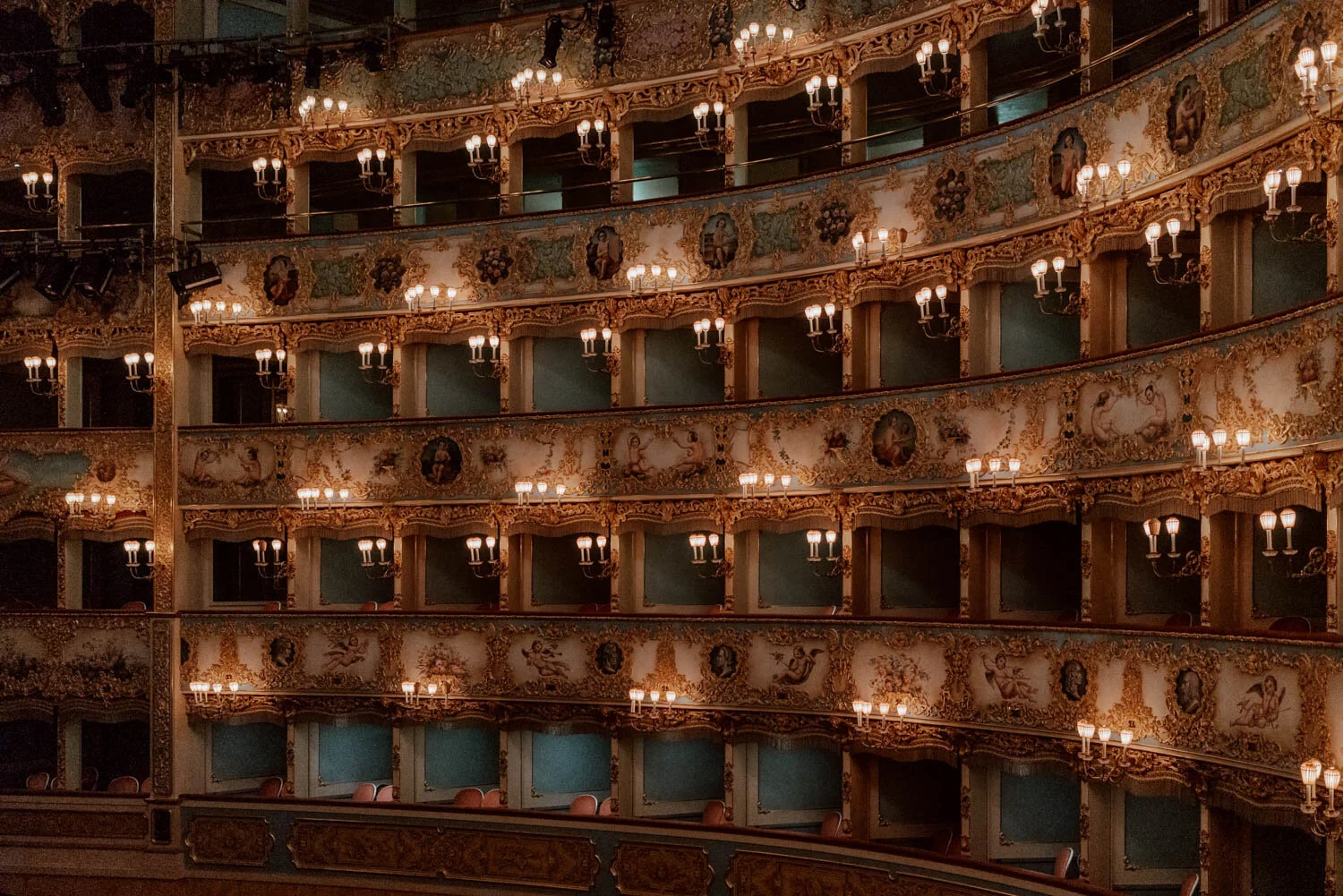
Teatro La Fenice (The Phoenix Theatre or Opera House), heralded as one of the most beautiful theatres in the world, has been cursed from beginning.
Built in the aftermath of a dispute to replace a burned down theatre, the opera house opened in 1792 to acclaim.
It burned down in 1836.
The Phoenix rose from the ashes the year after, reopening on Boxing Day, and proceeded to remain the performance venue of choice for a who's who of composers and singers, including Verdi, Wagner, Britten, Callas, and Pavarotti.
It burned down again in 1996.
Despite the abundance of water, Venice does not deal well with fire - and that week two nearby canals had been drained for the first time in four decades. A fireman involved that day stated, "We had to choose between the theatre and the town: it was either save La Fenice or save Venice". Two electricians, facing penalty fees for late renovation works on the building, were convicted for arson (although there are still those who believe other parties played a role), and a city wept.
Given that the theatre was borne out of fire in the first place, and has twice risen from its own ashes, never has a name been so apt, or so fated. If it weren't so sad, it would be funny. However, a name change never appears to have been on the cards, and long-delayed rebuilding works were completed in 2003 to herald the third rise of The Phoenix.
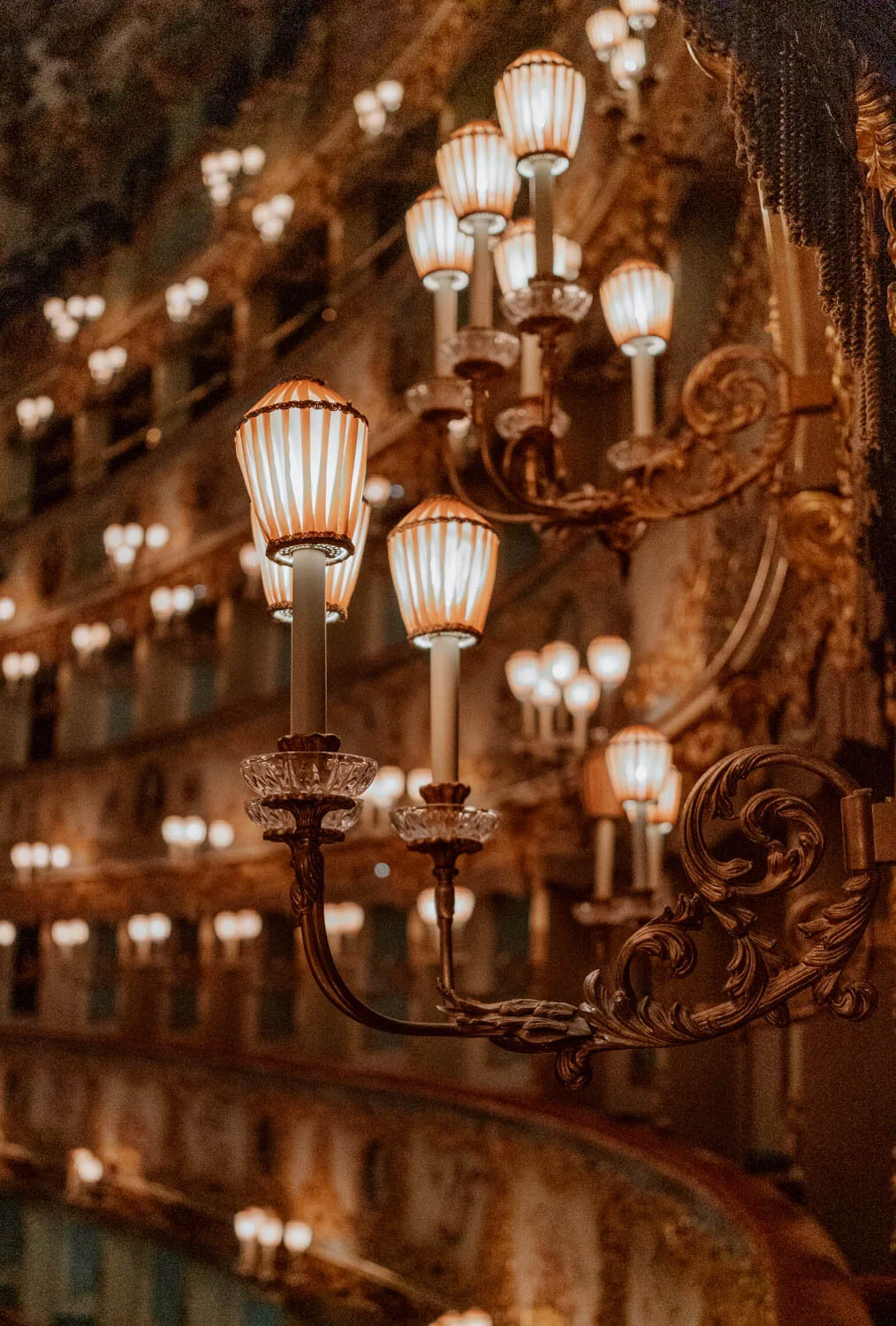
The reconstruction was painstakingly designed to replicate the Theatre as it always was, a replica both in terms of aesthetic and its fabled acoustics. Old photos and film were relied upon to bring back the intricate stucco, the gold, the wonderfully false-sky painted dome, and sumptuous red seats. It is decadently glorious, and gloriously decadent - and we think a visit is even more important given its chartered history of destruction and rebirth. Without knowing its story, you would never know that it was only finished about twenty years ago.
Yet, despite the beauty which plays out within its walls once again, there is one final sombre note on the cursed nature of the Phoenix. Aldo Rossi, the architect charged with bringing the Theatre back to life, died in a car accident before works were completed.
Tickets | If you are able to experience a performance here, then it would be an unforgettable experience. However, the majority of us have to content ourselves with the audioguided visit around the theatre. Entry is €12 per person (with various concessions available) and includes the audioguide. You can buy tickets in person with card or cash or in advance here.
If you'd like to try and see as how, then find out what's on for your dates on the official website here.
Where | You can find it here on Google Maps.
When | The Theatre is usually open daily from 9.30am to 6pm, but this is sometimes affected by performance schedules. Last entry is at 5pm.

Be Curious In Cannaregio
Originally a Jewish ghetto (incidentally, the very first in the world), Cannaregio is home to a significant portion of Venice’s permanent residents, offering an altogether different vibe than that of the city’s other five neighbourhoods. And whilst this is most definitely not an off-the-beaten-track area to explore, it seems that many of Venice’s thousands of daily tourists genuinely don’t seem to make it this far - thankfully.
With common place grocery stores, butchers and bakeries which seem to have all but disappeared from the rest of the historical centre, an afternoon spent exploring the colourful side streets and backwater canals of Cannaregio will offer visitors a ‘local experience’ that cannot be found elsewhere.
It also happens to play host to our favourite canalside street - Fondamente Misericordia - for a lunchtime, sundowner or evening Spritz or plate of nibbles with a variety of bars and restaurants which attract an even mix of hipster-leaning tourists, students and residents alike.

During our time in Venice, we were inundated with food and drink recommendations for restaurants and bars across the city (thanks Instagram fam!), but with only six days here - and despite our best efforts - there really are only so many plates of pasta, glasses of wine and Aperol spritz even the most indulgent traveller can get through!
As it turns out, many of these great recommendations were for places in Cannaregio, so we have included the best ones alongside out personal favourites below:
Il Paradiso Perduto | A traditional tavern, they serve up hearty Venetian cuisine which veers heavily towards the meat eater - which is why we didn’t visit. Comes highly recommended though.
Al Timon | An institution in these parts, they offer up full meals but those in the know head here for spritz al bitter or glass of local wine alongside sumptuous cicchetti.
Retro Wine Bar | If a night of jazz and good wine sound like your sort of thing, be sure to check this place out!
Torrefazione Cannaregio | The oldest coffee roasters in Venice, they make a mean cup of coffee. Note that google maps has this down as permanently closed but there are very recent reviews - if anyone can confrim either way, that would be fantastic!
Vino Vero | A curated selection of wines (not just Italian) and excellent artisan cicchetti.
Bacaro Risorto Cannaregio | In a quite little square without any water in sight, this places serves good spritz and a great range of artisan beers - ideal to escape the sun and give your feet a break.
Top tip // Avoid Strada Nova as best you can. It’s a super touristy street with chain shops and restaurants - basically the antithesis of an idyllic Venetian experience.

A Browse At Acqua Alta Bookshop
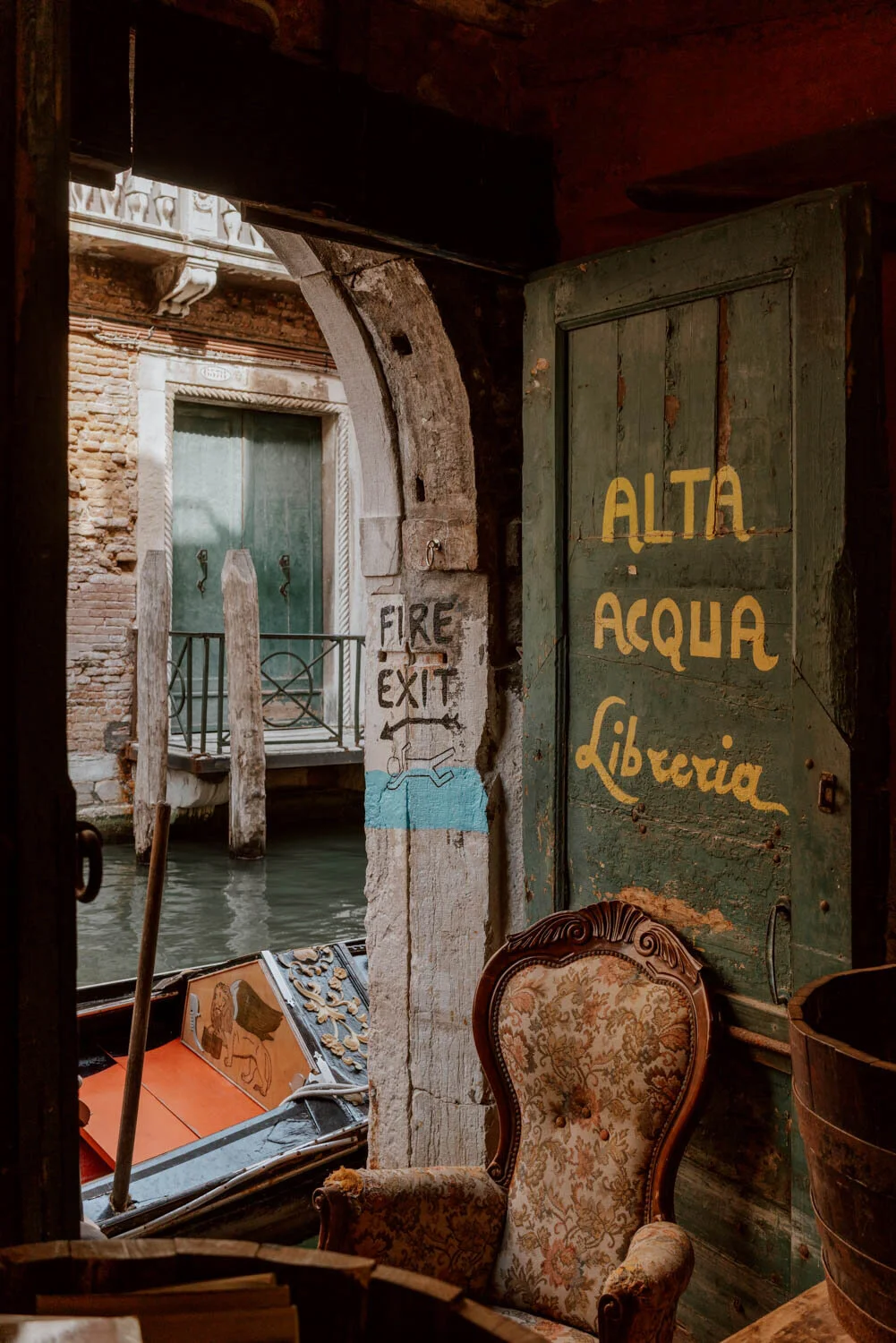
A bookshop with a boat in the middle of it is perhaps something you could only find in Venice and not bat an eyelid.
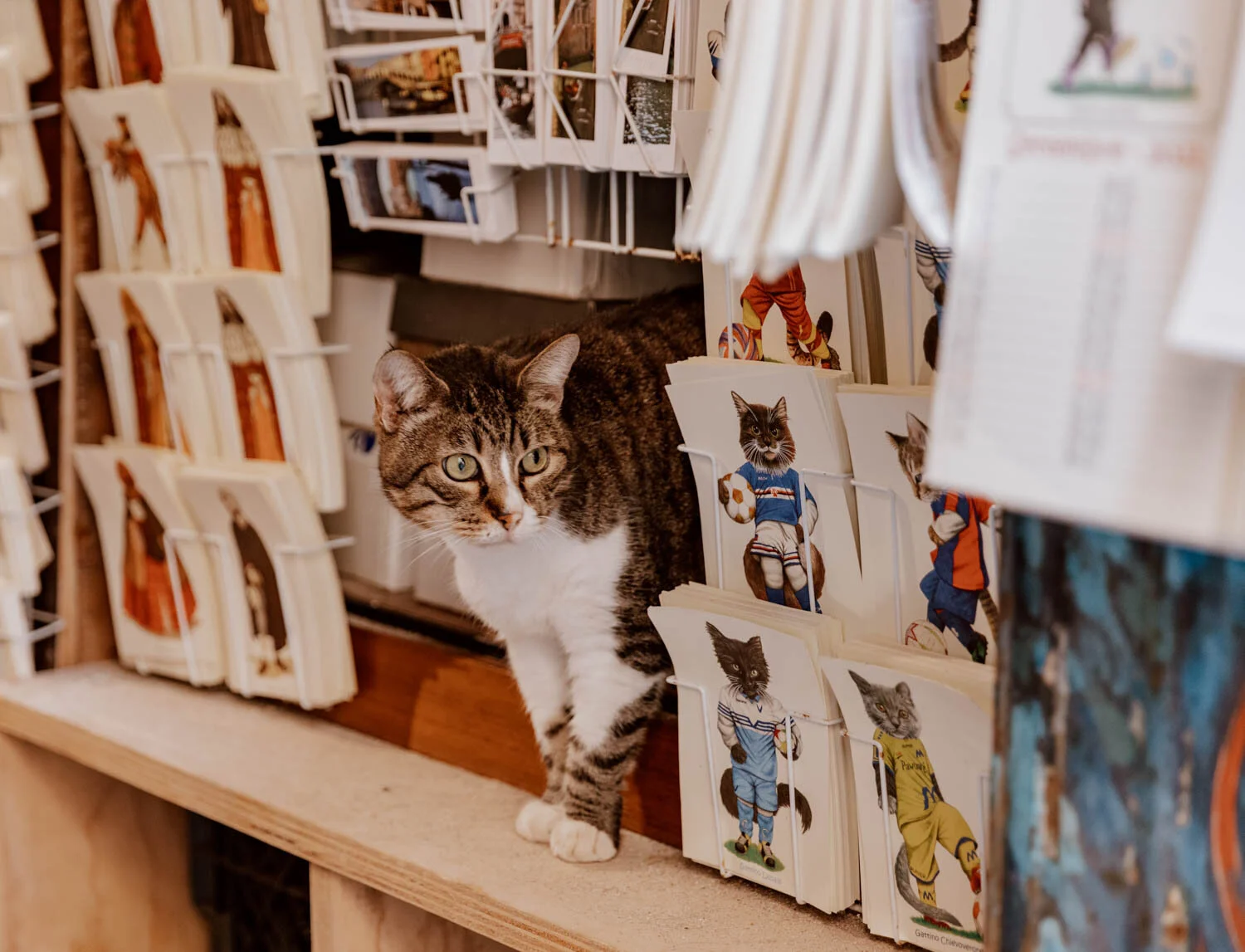
However, the gondola repository is only the beginning of the curiosities which lie within Libreria Acqua Alta (High Water Bookshop). A treat for bibilophiles, rummagers, and those in search of a singularly special souvenir or bargain from Venice: old magazines, beautiful tomes new and old, postcards, prints, songsheets, comics, maps, and everything in between stuffed and stacked in its dark enclaves. It's home to several pussycats, who can be spied between the spines or hiding in the shelves, and its storage systems reflect the issues caused here by the winter floods which inspired its name.
There's no denying that this bookshop is no longer a hidden gem, with Instagram making sure that there are always going to be lines of people waiting to get their shot on or besides the book stack steps out the back or by the canalside fire escape. When we stopped by there were queues out the door but if you have patience or arrive when there's a lull, it could hold you captive for quite a while before the risen waters arrive.

This is a one-of-a-kind bookshop with a very Venetian magic to it.
As ever in independent places like these which have become wildly popular, buying a little something as well as browsing is essential to keeping it alive. This remains very much an active bookshop despite the tourist traffic.
The backstreets and crevices of of Venice are actually home to a number of little antique and curio shops, and only add to the sense of its magic. Patronising these places during your stay - by buying as well as browsing - helps Venice to maintain its special living city status rather than simply being hollowed out with Chinese replica souvenir shops.
You can find the bookshop in the Castello district at Calle Lunga Santa Maria Formosa, 5176b (Google Maps), and it’s open daily from 9am - 7.45pm.
Travel Better In Venice
Has our guide to the best things to do in Venice got you excited to plan for your trip to the floating city? Be sure to check out these articles!
23 Things to Know Before You Visit Venice
A Complete Guide to Taking a Gondola Ride in Venice
How to Get From Marco Polo Airport to Venice
Where to Find the Best Views of Venice