12 Things To Know Before Driving In The Faroe Islands
From practicalities like speed limits and insurance to Faroese quirks like sheep and tunnels, this guide covers everything you need to know before renting a car and driving in the Faroe Islands.
Updated February 2025
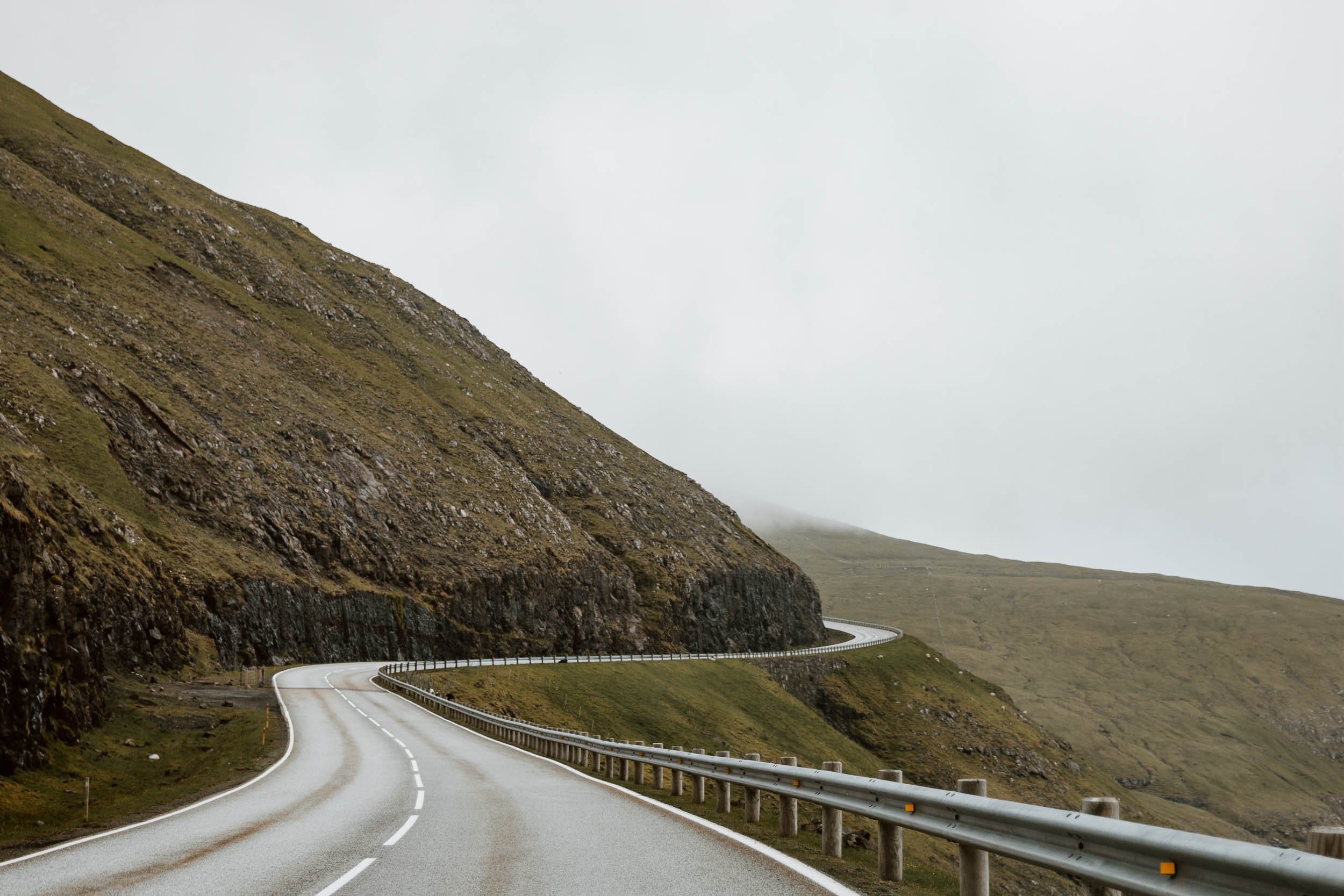
A road trip isn’t necessarily what comes to mind when considering a trip to the Faroe Islands.
After all, we’re talking about eighteen islands in the North Atlantic Ocean, and large stretches of water tend to present an inconvenient obstacle to people driving around a new place.
However, due to a series of old bridges, blasted out tunnels through the mountains and under the sea, and the the odd ferry here and there, a road trip through the Faroe Islands is both remarkably convenient, incredibly easy, and, quite simply, a wonderful way to travel.
Earlier this year, we spent a week driving around from island to island, hike to hike, epic scenery to epic scenery, and learned a few lessons that we think are absolutely essential for anyone hoping to take a Faroe Islands road trip.
In this post, we’re going to explain the essentials about car rental in the Faroe Islands, dealing with its infamous tunnels, sharing the roads with all those sheep, and our own tips for driving across the idiosyncratically beautiful landscapes of the Faroes!

Faroe Islands Car Rental | The Essentials
If you’re reading this, you likely already know that a road trip in the Faroe Islands is not only possible but brilliant.
A typical one-week car rental of the cheapest model in high season (April - September) will cost £500+ / €600+ (a Ford Ka rented via AutoEurope), and that is assuming the cheapest model is still available for your travel dates. Rent the car we did it in - a Nissan Qashqai - and that figure will be closer to £900.
Prices drop by 20–30 per cent outside the summer months, but they’re still one of the biggest line items in any Faroes budget.
Our advice to you is to therefore book your rental car as far in advance as possible to secure the best rates available. Further, although our car of choice would have had a little more resilience on challenging roads, you really don’t need a jeep or a 4x4 to comfortably road trip around the Faroes - the cheapest option of a wee Ford Ka will do the job nicely!
Car Rental Options in the Faroes
62N | The longest queue at the airport was for 62N which reflects its position as the main car rental option in the Faroe Islands. It offers 10 different car types from Sixt, Hertz and Europcar - everything from compact cars to hybrids and electric vehicles (charging cards are included). You can reserve and pay online on their website.
UniCar.Fo | On the islands since 1992, Unicar has a selection of rental cars divided into 3 different price classes. Delivery at the airport and elsewhere on Vágar costs 300kr in addition, whilst collection at Unicar in Miðvagur it is free of charge.
AutoEurope | Whilst there's a limited range of cars available it does seem to offer the cheapest rental we found for the Faroe Islands - check availability here.
Another good option to check prices + availability is Rentalcars.com
You can also look and book all car rental options for your travel dates in the Faroe Islands on this local car rental website.
For most people, picking up your vehicle at one of the handful of car rental companies based at Vagar Airport is the logical choice. Just bear in mind though that most people on your plane will be doing the exact same thing, so queues are inevitable.
Make sure you have a valid driving license and credit card ready. As always, we recommend taking out full excess waiver insurance - just not with the company with whom you rent. We have an annual policy costing just £60 from insurance4carhire, which allows us to rent a car all over the world with full security that we’ve covered.
If you don’t do this, you’ll either be left with the standard excess of around 7,000 DKK (£830 / €940) or be asked to pay extra to reduce it to about 1,000 DKK (£135 / €125). It’s also worth checking that your policy covers windscreen and tyre damage, as these are the most common issues in the Faroes due to gravel shoulders and strong crosswinds.
To find out more about our travel budget in the Faroe Islands, and typical travel costs there, read this post.
If you want more advice about car rental, our Essential Car Rental Tips for Travellers post will help you save a lot of money on car rental, reduce stress, understand the insurance you need and don’t need, and includes our key tips to avoid scams and hidden fees from rental companies wherever you travel.

Control Your Expectations & Fears
We’re absolute suckers for a great road trip, and after tackling everything from Montenegro’s hairpin chaos to Scottish island backroads, we can say with confidence that driving in the Faroe Islands is one of the easiest and most enjoyable experiences you’ll have behind the wheel.
Yes, there are single-track roads, blustery winds, and blind corners, plus an impressive collection of undersea tunnels connecting the islands - including the new Sandoy Tunnel, which opened in late 2023 - but nothing here is truly difficult or stressful once you settle in.
The vast majority of roads are beautifully maintained, traffic is almost non-existent, and Faroese drivers are calm and courteous. Your biggest challenge will be resisting the temptation to pull over every five minutes for yet another photo of cliffs, fjords, and those ridiculously photogenic sheep (which you’ll often find standing in the middle of the road - more on those later).
A few simple rules apply: drive on the right-hand side, keep headlights on at all times, and wear seatbelts in every seat. Take it easy in tunnels and on single-track stretches, and give way courteously at passing places.
The Distances Are Manageable
Another reason that the Faroe Islands are perfectly suited for an independent road trip is the short distances you’ll have to travel each day. This makes a 4-day road trip quite feasible for people who want to concentrate on the islands of Vagar and Streymoy without really feeling too rushed, whilst a week-long road trip provides opportunities for a number of additional adventures and ample time to delve a little deeper into each place.
For example, from Gásadalur on the western side to the island of Vidoy in the east, the drive (without stops) is just under two hours; meaning that you can plan your route safe in the knowledge that no day will involve hours of non-stop driving, and that it’s perfectly feasible to visit 2-3 locations in a day.
Read Next // You can see our seven day Faroe Islands Road Trip Itinerary to help inspire and shape your own road trip route.

Fuel
If your car’s a bit thirstier, keep an eye out for stations on Vágar, Streymoy, Eysturoy, and Borðoy, as well as a few on Sandoy and Suðuroy (you can find a map of all petrol stations here). Beyond that, they get scarce, so follow the golden road-trip rule: don’t let your tank drop below one-third before refuelling.
Most larger petrol stations accept international Visa/Mastercard credit cards; many pumps are self-service, though you may come across machines that don’t accept certain cards or mobile wallets. Petrol prices in 2025 hover around 14 DKK per litre (~€1.90 / £1.65), with diesel a little cheaper. There’s also a station right outside the Vágar Airport rental-return area, ideal for topping up before your flight.
Coffee stops, on the other hand, are few and far between once you’re outside Tórshavn or Klaksvík. Petrol stations are your safest bet for a caffeine fix, but we’d still recommend packing a thermos for your hikes and long drives.
The Famous Faroese Fog
Something that everyone needs to be aware of before they visit the Faroes, whether you’re driving or not, is that a thick ‘Faroese fog’ is not uncommon.
Indeed, it is responsible for many delayed hikes or changed plans as, once it descends upon its chosen island for the day, it’s pretty much impossible to do anything there. We found this out on our own trip, and these weather conditions are the reason why the popular Mykines day trip is sometimes cancelled at short notice.
Such foggy frequency is also one of the principal reasons that it is a legal requirement for all drivers to always have their lights on whilst driving, even during daylight. The other reason for this requirement is due to one of the most memorable (and potentially terrifying) aspects of driving in the Faroe Islands….
Top Tip // Check the local forecast at dmi.dk before setting out, but know that even the best weather app can’t always predict Faroese fog.

All About Those Tunnels
Back in 2006, a tunnel carved through the cliffs finally connected the once-isolated village of Gásadalur to the rest of the Faroe Islands, the first of many feats of Faroese engineering that have since reshaped how people move between these windswept islands.
Fast-forward to 2025, and there are now 23 road tunnels linking the archipelago, including three incredible subsea tunnels - the Vágar, Eysturoy, and newly opened Sandoy Tunnel - which dive deep beneath the Atlantic and make it possible to drive between islands that once required ferries.
Driving through tunnels is a hallmark of any Faroes road trip, and even the most confident driver can feel a flicker of nerves the first few times. Most of the modern tunnels are wide, well-lit, and straightforward, however it is the much older, dark, narrow single-lane tunnels which you will find on the northern islands of Kalsoy, Bordoy, and Vidoy which feel treacherous in comparison.
It is not uncommon to enter these and be faced with a car coming towards you from the other direction, and this definitely induced a few butt-clenching moments in our car!
Indeed, it’s in these that most visitors earn their tunnel stripes (and where rental companies see most of their damage claims).
So, here’s what you need to know before setting off and seeking out the light at the tunnel’s end:
Always have your lights on. Always - have - your - lights - on! It’s the law.
The entrances of the older tunnels will have a very clear sign signalling who has right of way (indicated by the black vehicle); be sure to look out for these. In the modern tunnels, there are two lanes so right of way is not an issue.
Limit your speed when approaching, entering, and driving through the tunnels. Locals may take them slightly faster, but you should play it safe, slow, and steady - these tunnels are NOT made to go through quickly.
At single-lane tunnels, enter cautiously as a car may be coming in the other direction.
For cars that DO NOT have right of way, you’ll note upon entry that there are regular ‘passing places’ available inside the tunnel - each of these is marked by a sign, spaced out at approximately 100m intervals, and counting out the number remaining (and therefore proximity to the end). When these ‘passing places’ are on your right hand side, you have to go into them in order to let the oncoming vehicle pass. In this situation - the most likely context where you will damage your car - it’s incredibly important not to panic. Take a breath, slow down, and pull over into the nearest ‘passing place’ well in advance of their arrival. On occasion, more than one vehicle will join you in the passing place, so be aware of what is in front and behind you at all times as well.
In advance of exiting the single-lane tunnels, be aware that someone else may be waiting on the other side and unaware of your presence, so proceed accordingly. There are mirrors placed at every exit, so be sure to use them.
Lastly, if you are incredibly unlucky and come face-to-face with a truck in a single-lane tunnel, then you HAVE TO pull into the ‘passing place’ regardless of whether it is on your right or left. In short, ‘see truck = get out of way fast’.
Driving through these tunnels does get easier however, but we cannot stress enough how important it is to continue to approach them with caution. The guys at our rental car company told us that the tunnels are the main source of damage and insurance claims, so be aware of your inexperience in handling them, and ensure your priority is getting through them safely.

Tolls Not Trolls
This is the very last time we’re going to mention those tunnels, we promise!
There is a toll charge for using the Vágar, Eysturoy, Sandoy, and Norðoy tunnels, and payment is handled automatically through number-plate recognition. There are no barriers or booths; you simply drive through.
If you’re renting a car, your rental company will handle the tolls for you, adding them to your final bill after you return the vehicle. For anyone driving their own car, payments can be made online at tunnil.fo or through a prepaid subscription.
Prices vary slightly by tunnel: expect around 100 DKK for the Vágar and Norðoy tunnels (round trip) and 175 DKK each way for the Eysturoy Tunnel, with the new Sandoy Tunnel currently charging a similar rate.
All other tunnels across the islands are toll-free, so you can focus on enjoying the drive rather than counting coins.
Sheep Sheep Sheep
That most-trotted out statistic about the Faroes - that it is home to more sheep than humans - certainly feels true when you’re driving around the islands. The 70,000 gorgeous sheep which roam around pretty much wherever they fancy will often be spotted mooching around at the road side or in the middle of the tarmac, and so present a photogenic (but serious) risk whilst driving.
On some of the islands, the sheep were much more skittish than others, so always drive with the expectation that one will decide to leap out in front of you at the last minute.
If you do hit a sheep, you’re legally required to contact the police (+298 351448) and wait for instructions. Don’t drive off or try to move it yourself; the authorities will contact the owner, and your rental insurance should cover any damage once it’s properly reported.

Passing Places
As with the North Coast 500 in Scotland, lots of narrow single-track roads mean that you have to understand how passing places work - very straightforward, but integral to being a good driver here.
Simply pull in to them if they’re on your right hand side in order to let the oncoming driver continue, and then pull out and continue your journey! Courtesy when driving on countryside roads is essential, so always give a little nod, wave or raise of the finger (not the middle one, obviously) to show appreciation to the driver who has pulled into a passing place to let you by.
And remember, passing places aren’t parking spots. If you really want a photo, take it quickly and be ready to move. Blocking a passing place, even briefly, can result in a fine if you’re caught holding up traffic.
On a separate note, be aware that a driver driving down a hill must always pull into a turnout and give a way to the car going up the hill. It’s the Faroese way.
Find Your Ferry
Although tunnels and causeways connect most islands, a ferry is still necessary to reach a couple of the more remote destinations in the Faroe Islands - including the ridiculously photogenic islands of Mykines (unless you take the helicopter) and Kalsoy.
For Mykines, you will simply leave your car in the car park and jump on the morning ferry as a foot passenger from Sørvágur. Sailings are entirely weather-dependent and often cancelled at short notice, so always check the latest updates and book through ssl.fo, the official site for all Faroese ferries and helicopters.
To reach Kalsoy, take the Klaksvik to Syðradalur car ferry. It’s a short, scenic journey but one of the most popular in the islands thanks to the Kallur Lighthouse Hike, so arrive at least 45 minutes early. Be aware that they pack you in like sardines so prepare your best parking skills! You can now book tickets online via ssl.fo, but space remains limited, especially in summer.
For more information on this ferry and hike journey with your car, read our detailed guide to the Kalsoy Lighthouse Hike.

Know Your Limits
Across the island, the speed limits (unless indicated otherwise on a sign) are 50 km/h in built-up areas and 80 km/h on main roads. This may seem incredibly slow when being given your quick induction at the rental office, however once you’re out and about, driving through fog, tunnels and passing sheep, driving at speeds you are more used to at home will seem crazy.
As ever, be aware of driving and weather conditions and adapt accordingly to keep yourself and others safe.
Whilst as far as we know there are no fixed speed cameras, police now run occasional roadside checks and utilise mobile speed cameras (especially near Tórshavn and in tunnels), with pretty pricey fines for those that flout the law.
The Faroes also have one of the strictest drink-driving laws in Europe (0.02 % BAC). Even a single drink can put you over the line, and rental companies are quick to refuse vehicles if they smell alcohol - as two guys on our flight over found out the hard way.
Buttercup Routes
Our own Faroe Islands road trip itinerary will bring you to many of the most photogenic and beautiful parts of the Faroes. However, if you prefer to follow a slightly looser approach to driving around the islands, then keep an eye out for the brown signs with yellow flowers which mark the ‘Buttercup Routes’; these indicate a network of especially beautiful drives threading through remote villages, cliffs, and coastal stretches that are perfect for road trippers!
If you haven’t ever done a road trip before, then read our Beginner’s Guide to Road Trips (we promise, it’ll be out soon!), where we share advice on how to plan a route, apps to use, how to have offline maps and GPS, and mistakes to avoid when renting a car.
Read Next // Our 7 Day Faroe Islands Road Trip Itinerary