13 Wonderful Things To Do In Ischia | Italy’s Green Island
Whether you’re planing a couple of days or a slow week-long sojourn, these are the best things to do in Ischia, Italy’s green island.
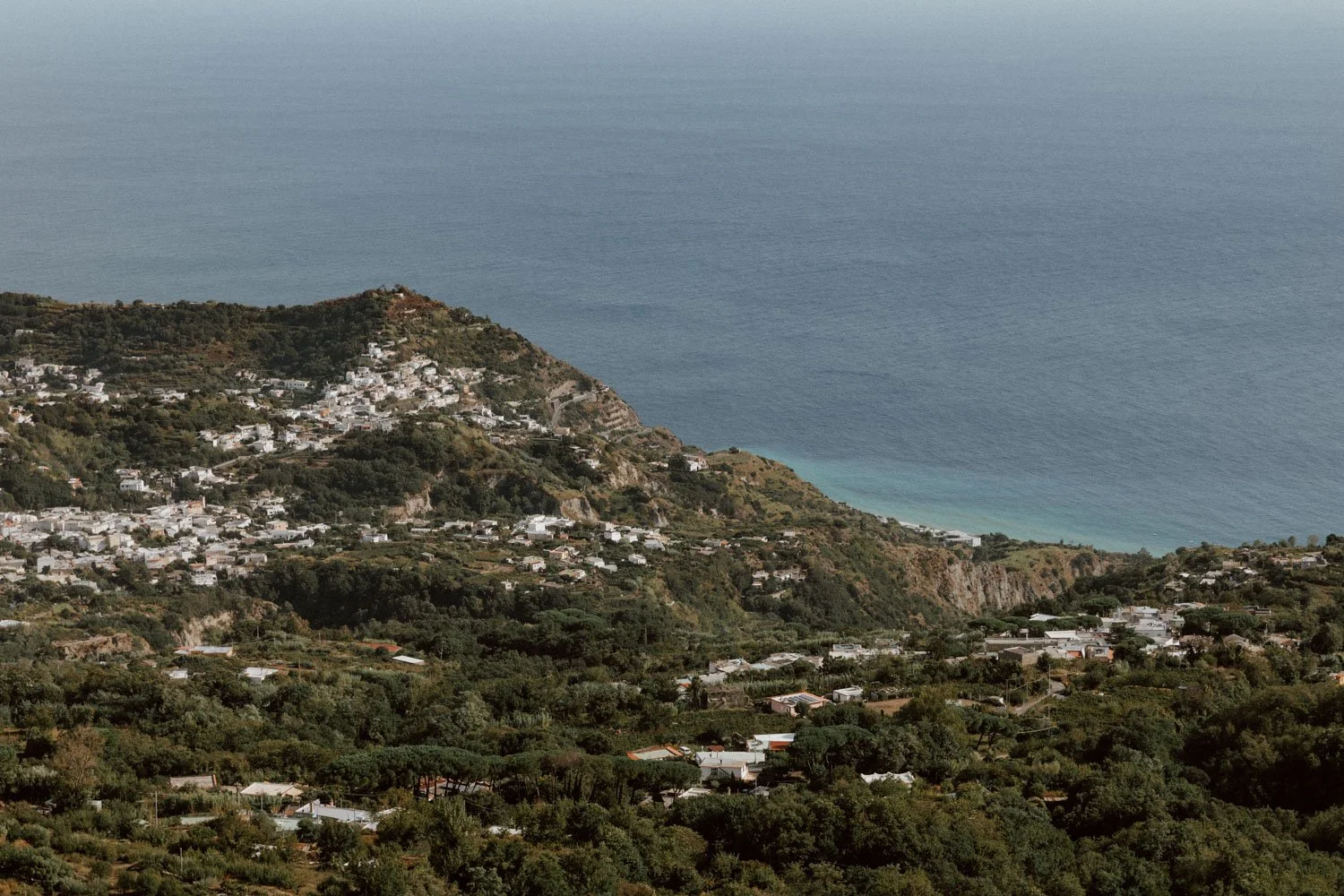
We’d dreamed of visiting Ischia for years.
It started, as it often does, with a handful of photographs: images that seemed to capture something timeless. Moored boats in a quiet bay, striped umbrellas on dark sand, bronzed shoulders turned to the sun, and that soft, honeyed light that clings to summer in southern Italy.
Frames distilled everything we imagined the island might be - gentle days, sea air, and that unmistakable dolce vita ease.
And Ischia seemed to have it all. A volcanic island dotted with natural hot springs, faded seaside towns, long lunches by the water, and that gently crumbling glamour we’ve come to love in other parts of Italy. We pictured scooter rides along quiet coastal roads, swims off the rocks, and small discoveries around every corner: the sort of place where everything unfolds at exactly the pace you need.
But if we’re honest, it didn’t quite land.
That’s not to say it isn’t beautiful. The pastel buildings of Sant’Angelo glowing in the late afternoon sun, the sky turning to fire as it slips behind Forio, Castello Aragonese rising from the water at the end of its narrow stone causeway - it all stops you for a moment, just like we hoped it might.
But, as veterans of several Italian summers now, Ischia was the closest we’d come to a resort destination in the country. Pleasant and easy, but missing that layer of everyday life, grit or eccentricity that tends to draw us in elsewhere in southern Italy. The towns are neat, curated and, despite having a large local population, geared towards a certain type of tourism.
It also felt, at times, like a destination aimed at a more mature, traditional crowd - perhaps because of the spa culture, its botanical merits, or just the general pace of life. The energy was soft, slow, overwhelmingly older, and skewed a little more northern rather than southern European. We didn’t quite find the atmosphere we tend to connect with when travelling in Italy summer but, given we’d just come from its little sister island of Procida, perhaps unfair comparisons were always going to be made.
Still - and this part matters - we’re glad we went.
Because Ischia certainly had its moments.
Taking a boat out across the water, slipping between beaches under a hot, open sky. A final hour in a thermal spa, surrounded by locals speaking a dialect we couldn’t follow but found oddly comforting all the same. The foil-wrapped eggplant parmigiana from the tiny cafeteria near our apartment, so good we went back for it three times. Riding a scooter along narrow country roads, vineyards on either side, the breeze warm against our backs. Reaching the top of Monte Epomeo and seeing the island unfurl below us, before eating figs with dusty hands on the way back down. The boat captain and the unforgettable sun-kissed lunch by Spiaggia dei Maronti. A spritz at a bar that looked like it hadn’t changed in decades, a Negroni Sbagliato that made us question why we’d ever ordered anything else. And a Sunday morning in Lacco Ameno, when a small community fair transformed the town, just for a moment, from somewhere people visit into somewhere people live.
Even if the whole picture didn’t come together, the fragments were beautiful.
And because of that, this guide to L’Isola Verde isn’t written through rose-tinted glasses. But it is written to help you see the very best of what Ischia can offer - because when the island shows its good side, it really does shine. From hidden coves and botanical gardens to sea-facing fortresses, scenic viewpoints, and slow swims in thermal waters, Ischia still gives you more than enough reason to go, and plenty to savour.
This is 13 Wonderful Things To Do in Ischia.
The Essentials | Best Things To Do in Ischia
Wander / The streets of Ischia Ponte & explore Castello Aragonese
Discover / The charms of Sant’Angelo and take the boat over to the beautiful Maronti Beach
Hike / The summit of Mount Epomeo for incredible views
Dip / In Ischia’s famous thermal waters on a resort day at Negombo or Poseidon
Visit / The tropical landscaped gardens of La Mortella
Watch / A sunset from Forio’s Chiesa del Soccorso
Enjoy / A boat ride around the island - this popular one includes lunch and drinks
Hire / A scooter to explore the island and its beaches
Stroll / The pretty streets of Lacco Ameno
Devour / Ischian specialities like rabbit or even take a cooking class
Drink / Local wine with views of the sea (or visit a vineyard)
Our Favourite Things To Do In Ischia
Explore the Timeless Castello Aragonese
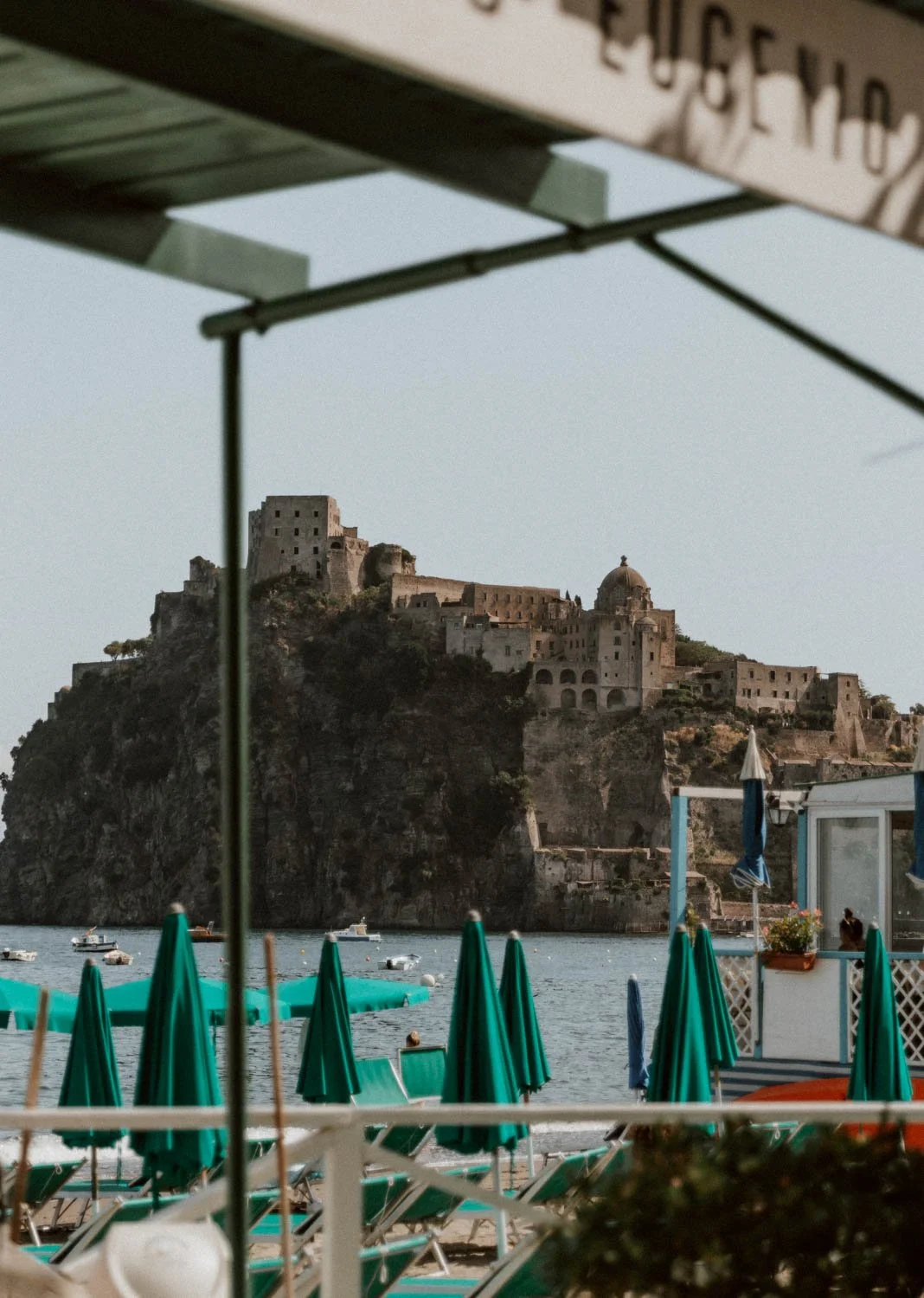
Connected to the eastern edge of Ischia by a narrow stone causeway, Castello Aragonese rises from the sea like something out of a legend, a hulking silhouette that feels part fortress, part fairytale. Originally fortified by the Greeks in the 5th century BC, Alfonso of Aragon expanded it in 1441and had a bridge built to connect it to the main island, turning the rocky islet into a stronghold capable of sheltering and protecting an entire population from pirate raids and volcanic eruptions.
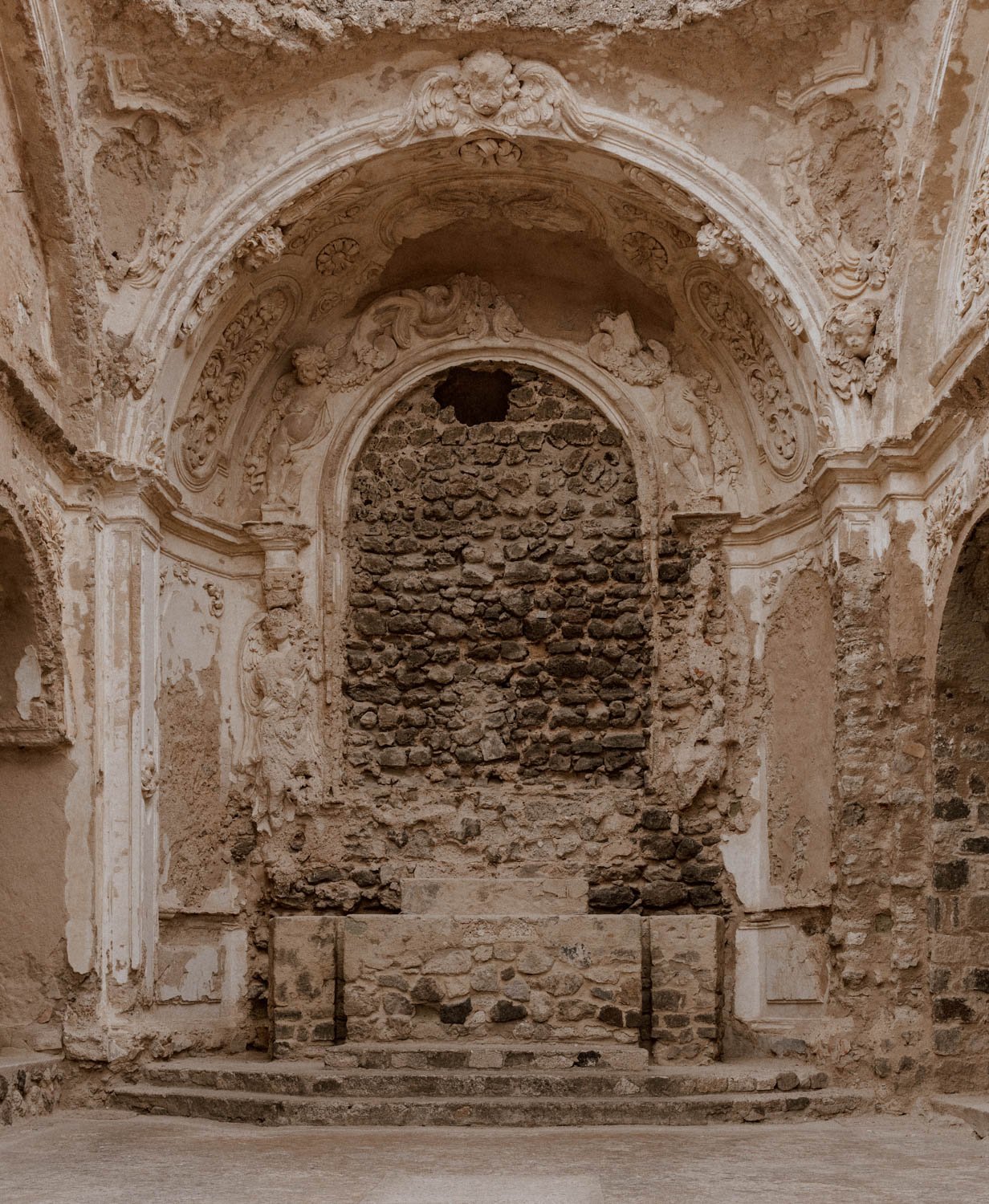
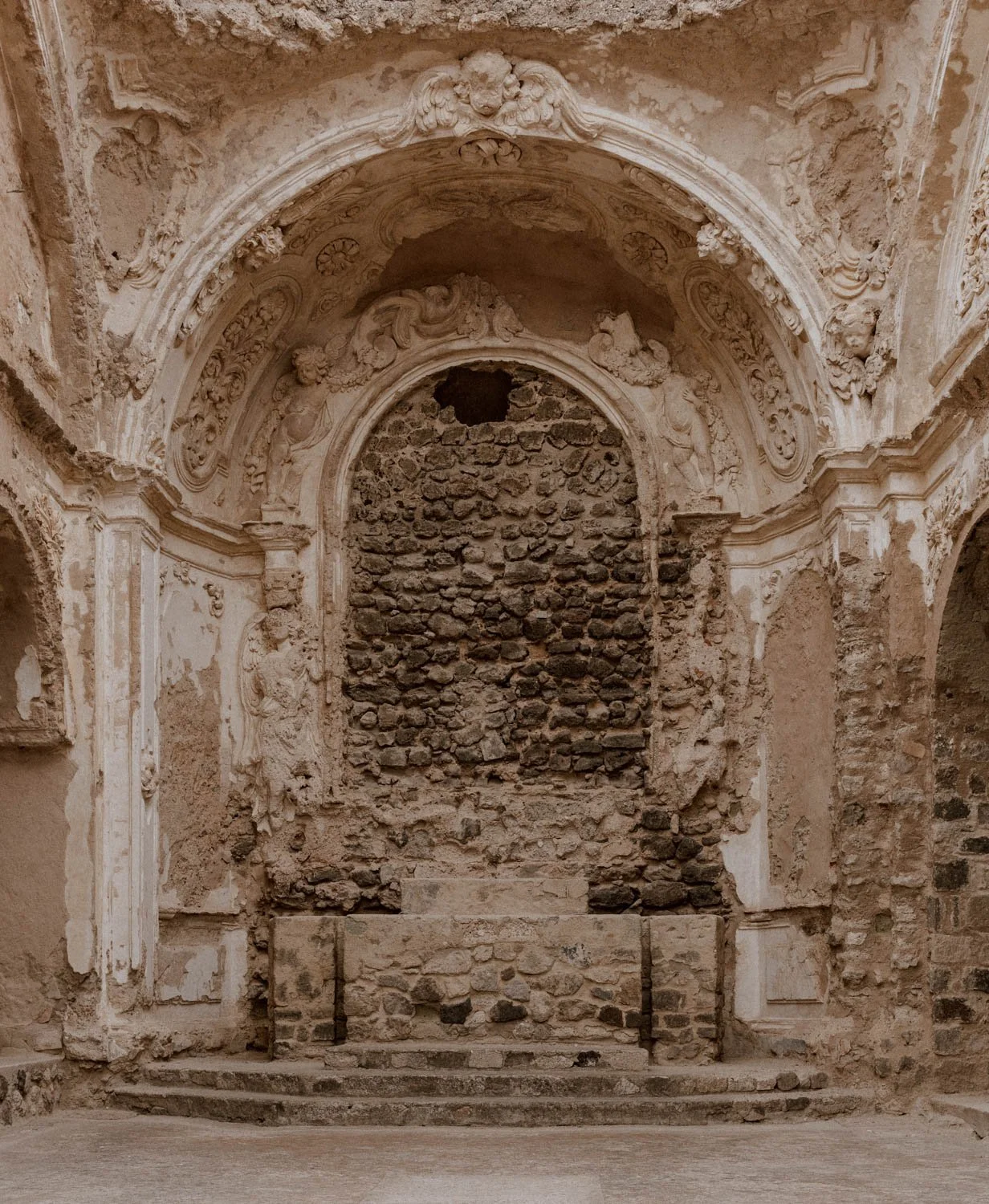
By the 17th century, the castle had become a thriving fortified village, home to more than 2,000 people, and inside its walls were churches, monasteries, the bishop’s residence, a convent of Poor Clares, a seminary, and a military garrison. Thirteen chapels once stood across the site, tucked between terraces and stone corridors.
Today, the castle is partly in ruins, partly restored - a maze of stone passageways, vaulted tunnels, gardens, and lookout points. A lift carved through the rock takes you to the main level, from where footpaths branch off towards chapels, prisons, olive groves, and the still-standing cloisters of the convent. One of the most unsettling is a small room where the Poor Clares once placed their deceased sisters upright on stone chairs to decompose; a strange and silent space that Emily found deeply affecting but one worth stepping into, if only briefly.
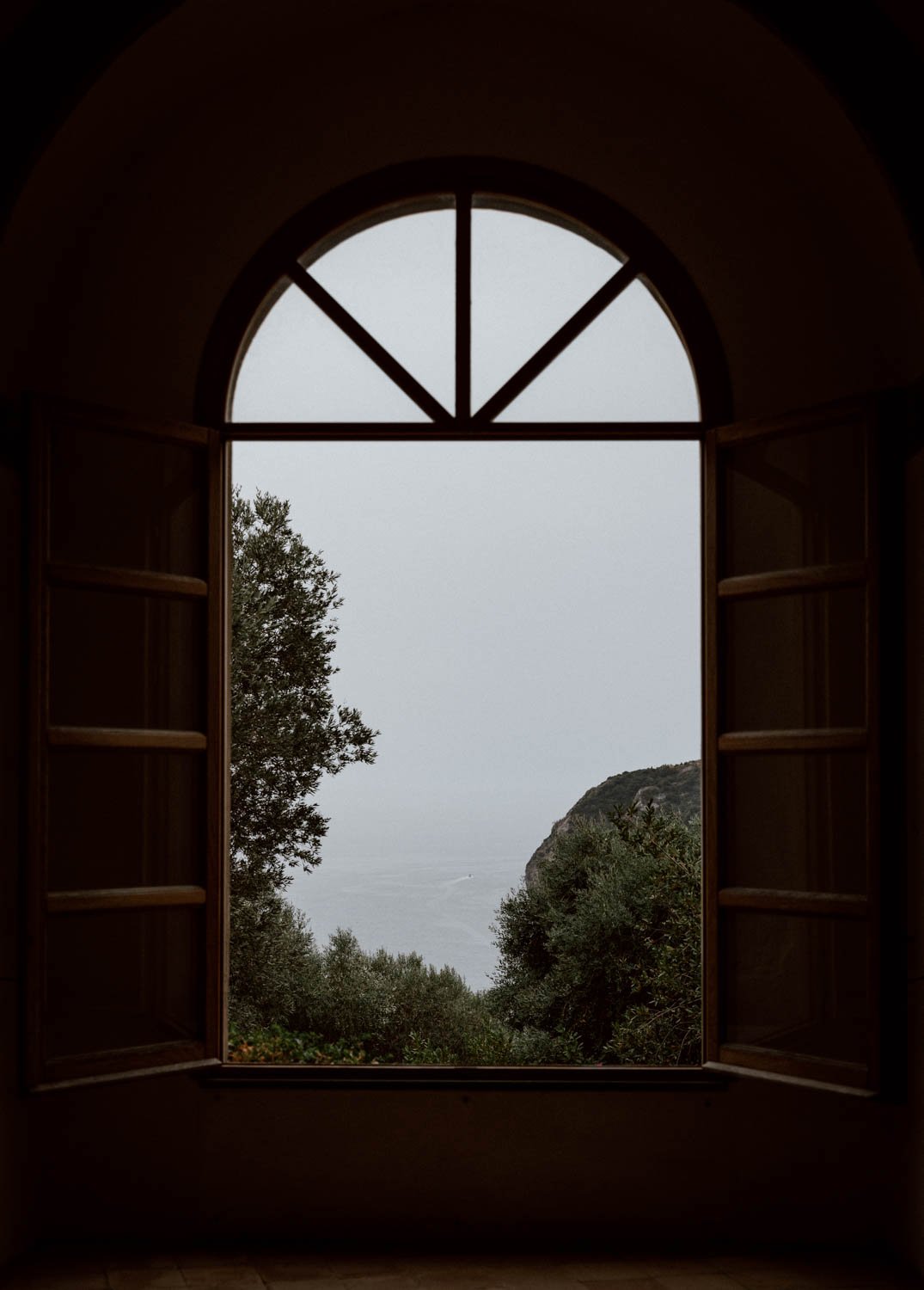
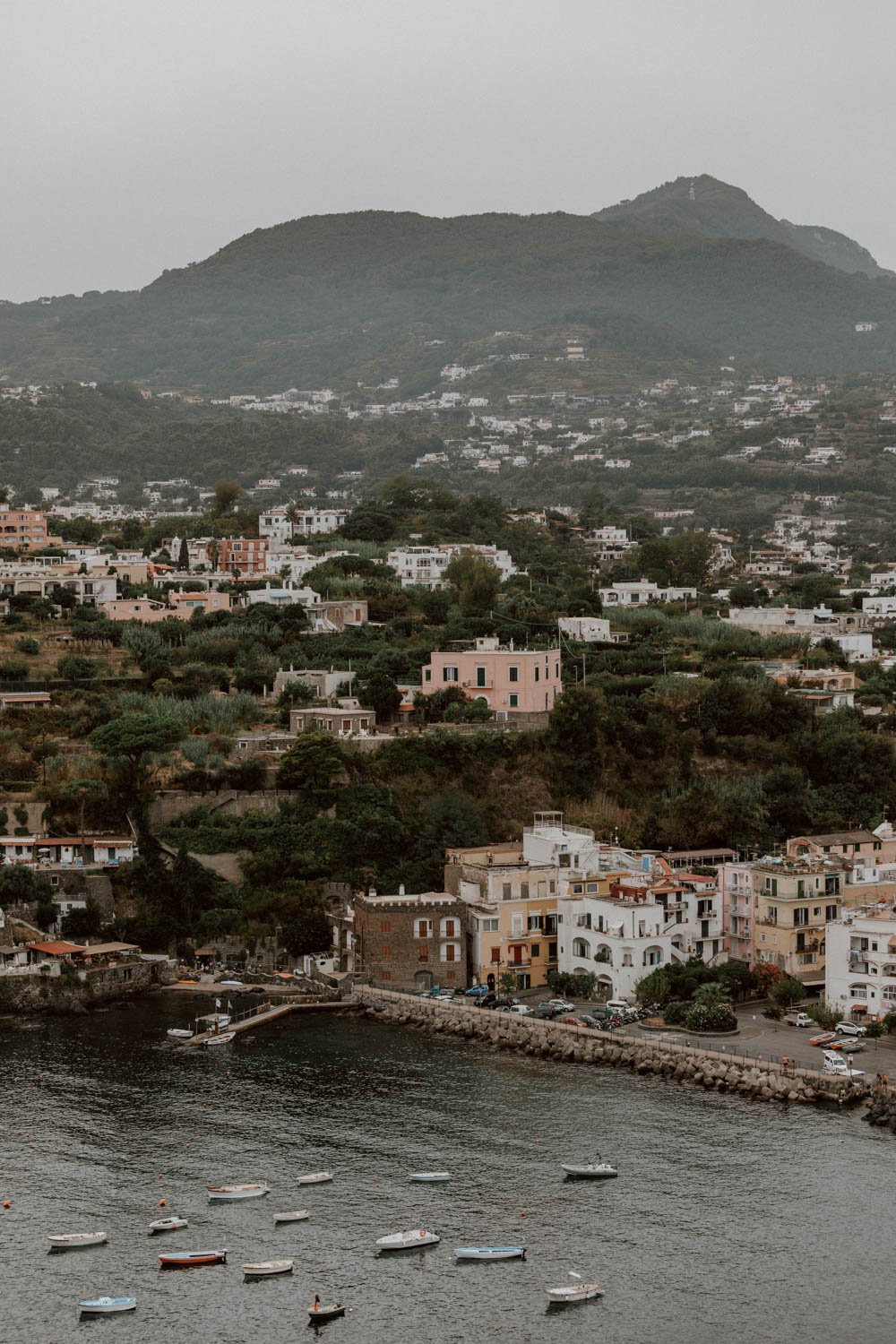
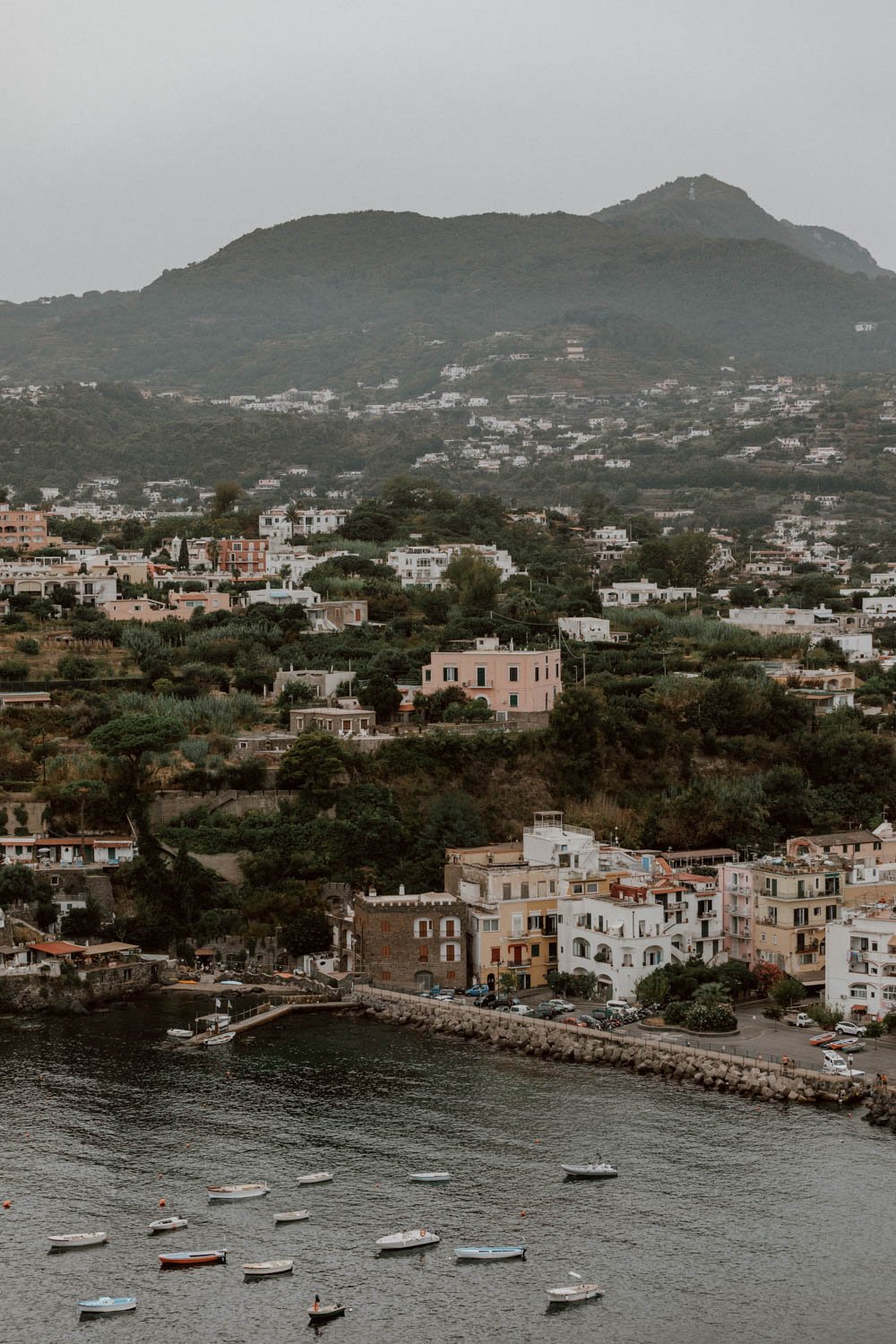
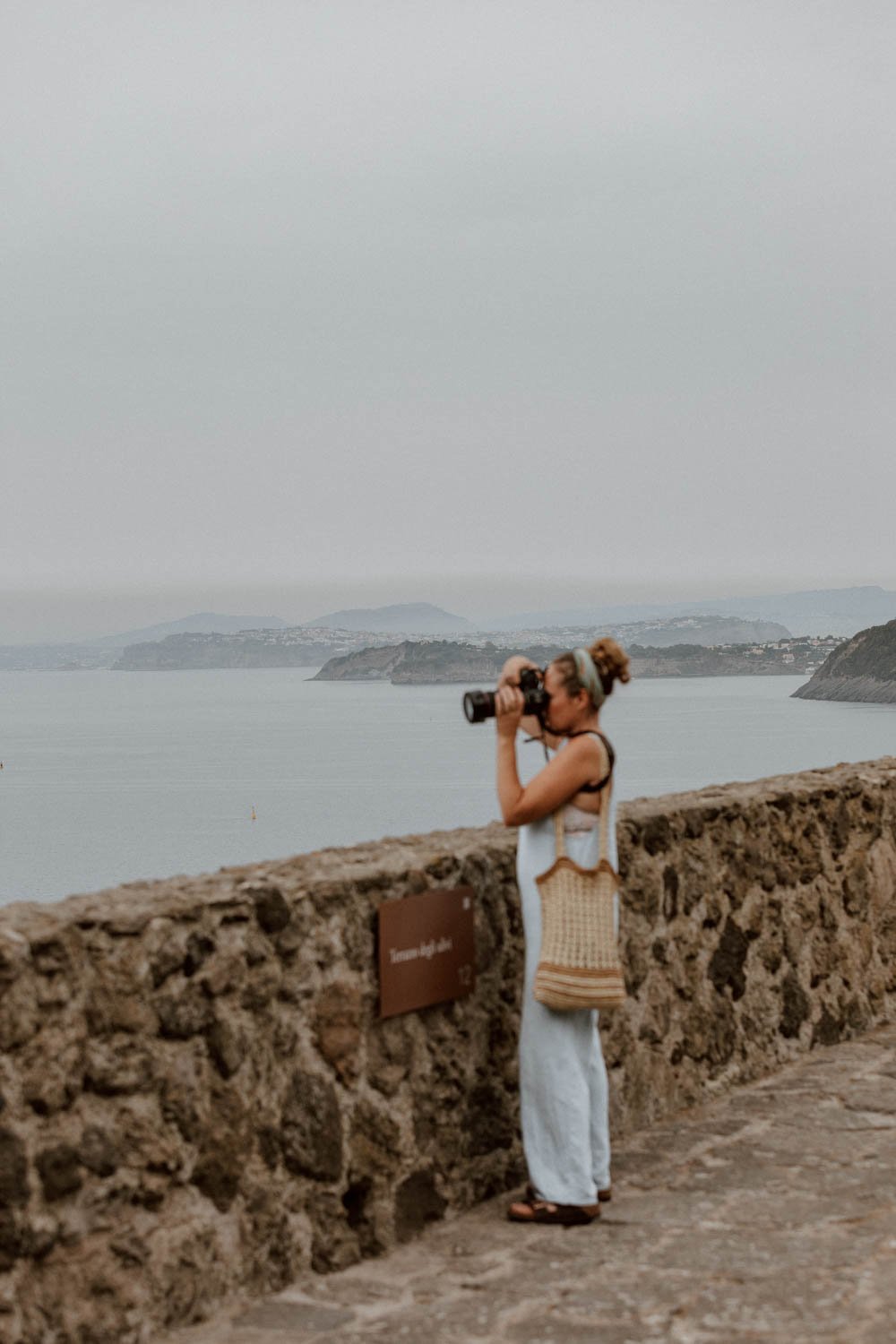
At several points, the views open wide: across to the other Phlegraean Islands of Procida and Capri, back toward the rooftops of Ischia Ponte, or down to the boats drifting in and out of the harbour below. Our visit brought low clouds and persistent dull light, but under a different sky the views from the Castle would be nothing short of astounding.
The official website says that a visit should take around 1.5 hours but we recommend that you allow up to double that if you can. The site is far larger than it first appears and rewards slow exploration. There are plenty signs throughout to help you make sense of what you’re seeing, though much of the experience is in the wandering and the the appreciation of the setting.
There’s also small café partway round the path if you need a pause (or a wonderful place to sit enjoy a spritz if visiting in the afternoon!), and several spots to sit and take it all in, whatever the weather’s doing.
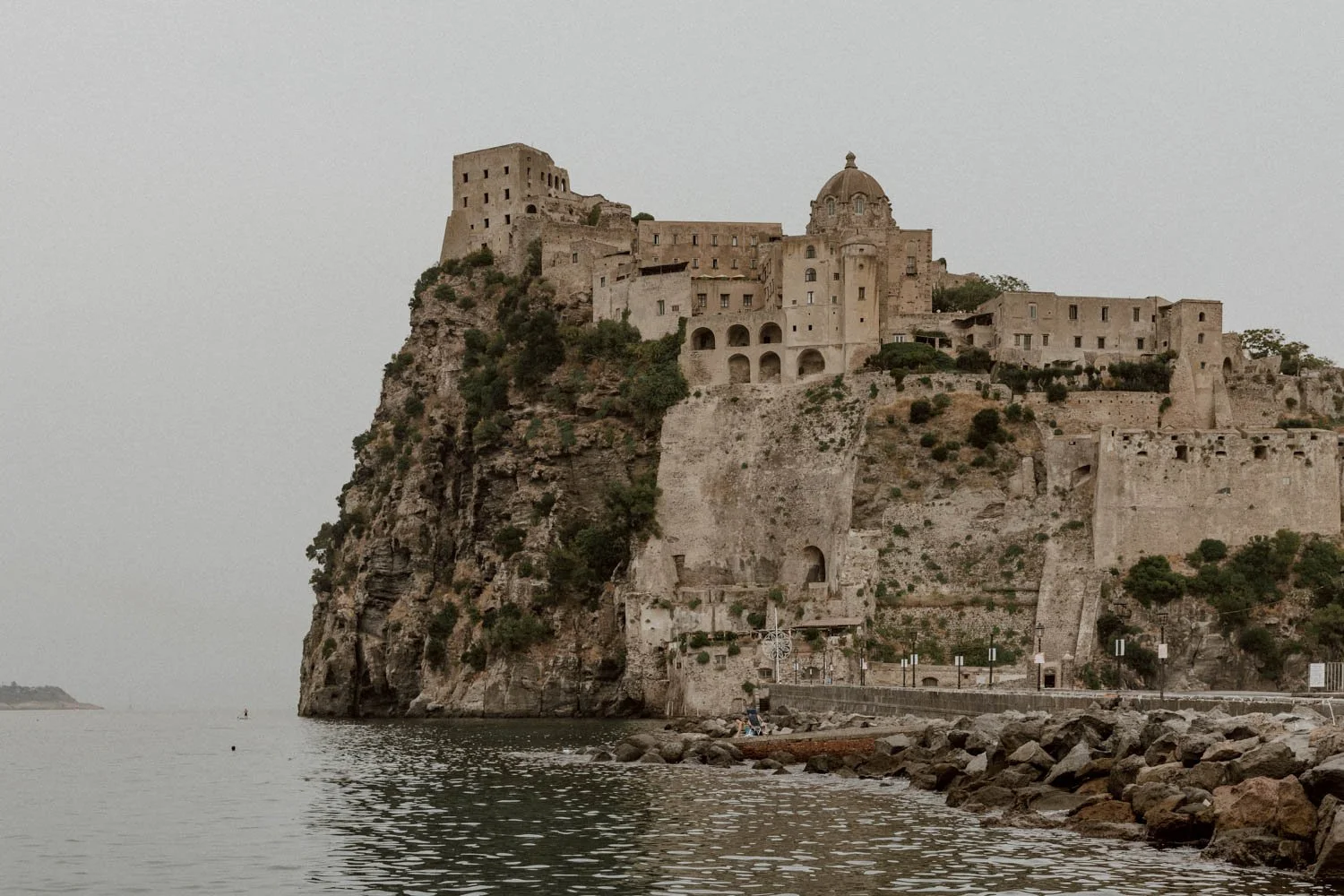
The Details | The castle is open 9am until sunset, 7 days a week, and can be found here on Google Maps. An adult ticket costs € 12, students pay €10, whilst it’s €6 for 10-18 year olds (children under 9 are free).
To reach the castle from Porto di Ischia take the #7 bus (15 minutes), or walk through the town in around 15 minutes
Note that the visitor routes have lots of steps and, in some cases, steep slopes which means people in wheelchairs are unable to visit independently.
Top Tip // If you’re hiring a scooter during your time on the island (spoiler alert: this is a very good idea), you need to put this spot in the map for a hidden away but wonderful view over Castello Aragonese.
Discover the Charms of Sant’Angelo Village
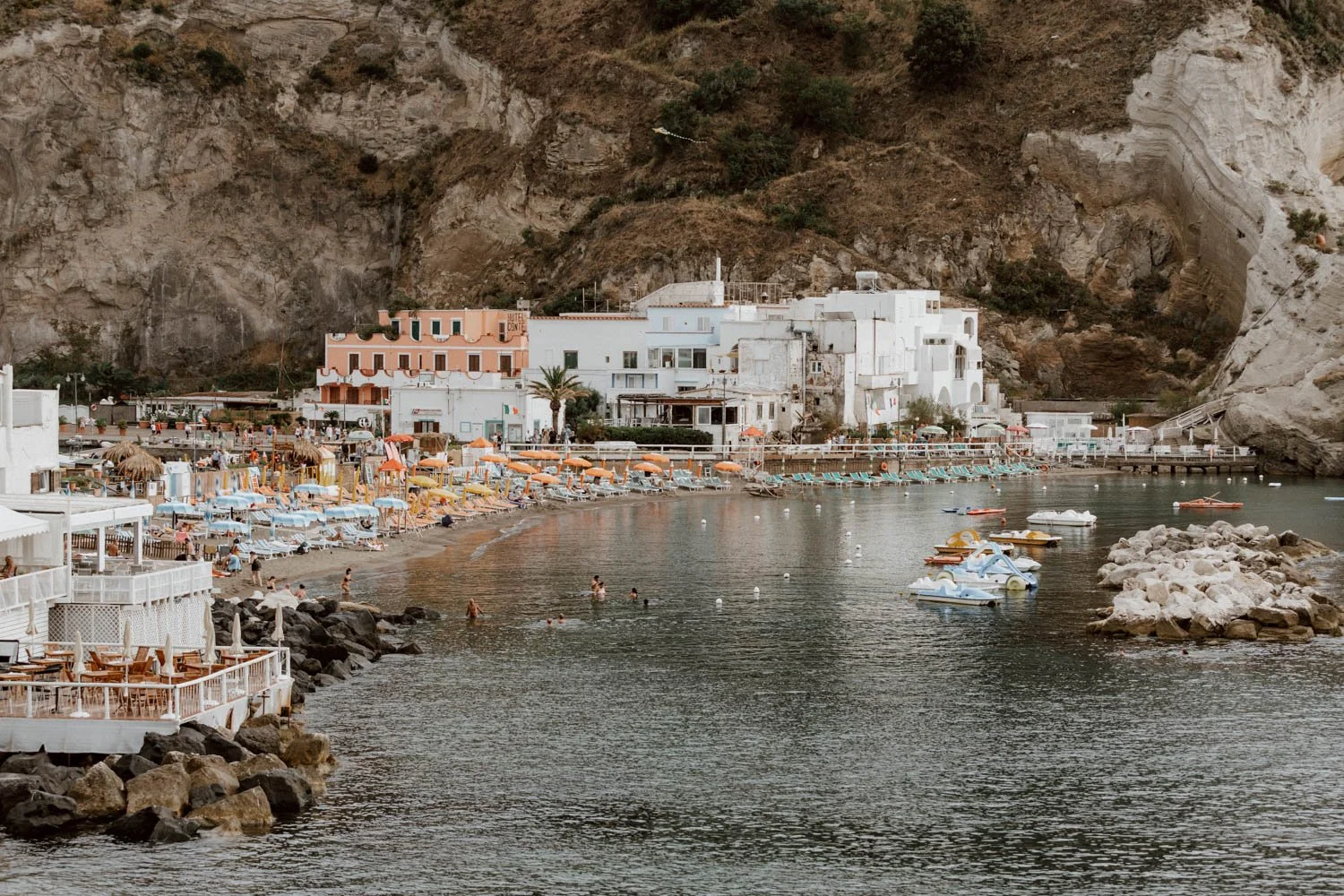
Tucked away on Ischia’s southern coast, Sant’Angelo is the island at its most postcard-perfect.
Pastel houses tumble down the hillside toward a clear blue bay, narrow car-free streets thread between them, and the whole place feels like it’s moving at half speed.
The village is completely pedestrianised, which certainly adds to its appeal but also means you’ll need to walk the final stretch in. If you’re arriving by bus, be prepared for a fairly steep downhill path from the drop-off point at the top of the hill. In summer heat - or with bags in tow - it’s not the most comfortable arrival.
That said, once you’ve made it down, the view opens up beautifully: a small harbour flanked by outdoor cafés and a pedestrian promenade, with a thin strip of land stretching out to a rocky islet known as La Torre. From the end of the isthmus, the views back over the village are lovely, especially in the late afternoon, low sun.
There’s not a huge amount to do in Sant’Angelo. A wander through the village might take twenty minutes, and the handful of boutiques and artisan shops, seem more aimed at resort tourists and day trippers rather than casual browsers. Still, you’ll find a few nice places for lunch or a sunset spritz, and some of the more luxurious hotels on the island are tucked into the hills above town.
The beach is small and sits just beside the harbour. It’s fine for a short swim, with calm water and loungers available to rent (€15 per sunbed, €5 for an umbrella), but it’s not the kind of place we’d spend a whole afternoon. For more space and better sand, most people take the short water taxi across the bay to Maronti Beach (more on that later in the article), or walk over via one of the coastal paths; this little connection also means Sant’Angelo makes a good starting or finishing point for a longer day out.
If you're hungry while you’re here, Casa Celestino (maps) is a favourite for a reason - excellent seafood, sweeping views, and a long lunch vibe you won’t want to cut short (just be aware that those wonderful views come with quite a high price point); Ristorante Deus Neptunus (maps) is a great alternative with equally expansive views. Bar Ridente (maps) in the village square is a reliably good spot for a drink or gelato - with a side of people watching - and Dolce è La Vita (maps) offers a broader menu in a chilled setting, ideal for anything from an early morning coffee and cornetto, to lazy brunch and evening cocktails
Whilst Sant’Angelo is a popular place for visitors to base themselves in Ischia, for day-trippers this isn’t somewhere you need to spend a whole day. Indeed in peak summer, it will likely feel a little too busy during the middle of the day. Instead, time your visit for the early morning, or just as the last boats are leaving, and you’ll catch a version of it that’s slower, softer, and really quite lovely.
Hike to the Summit of Mount Epomeo
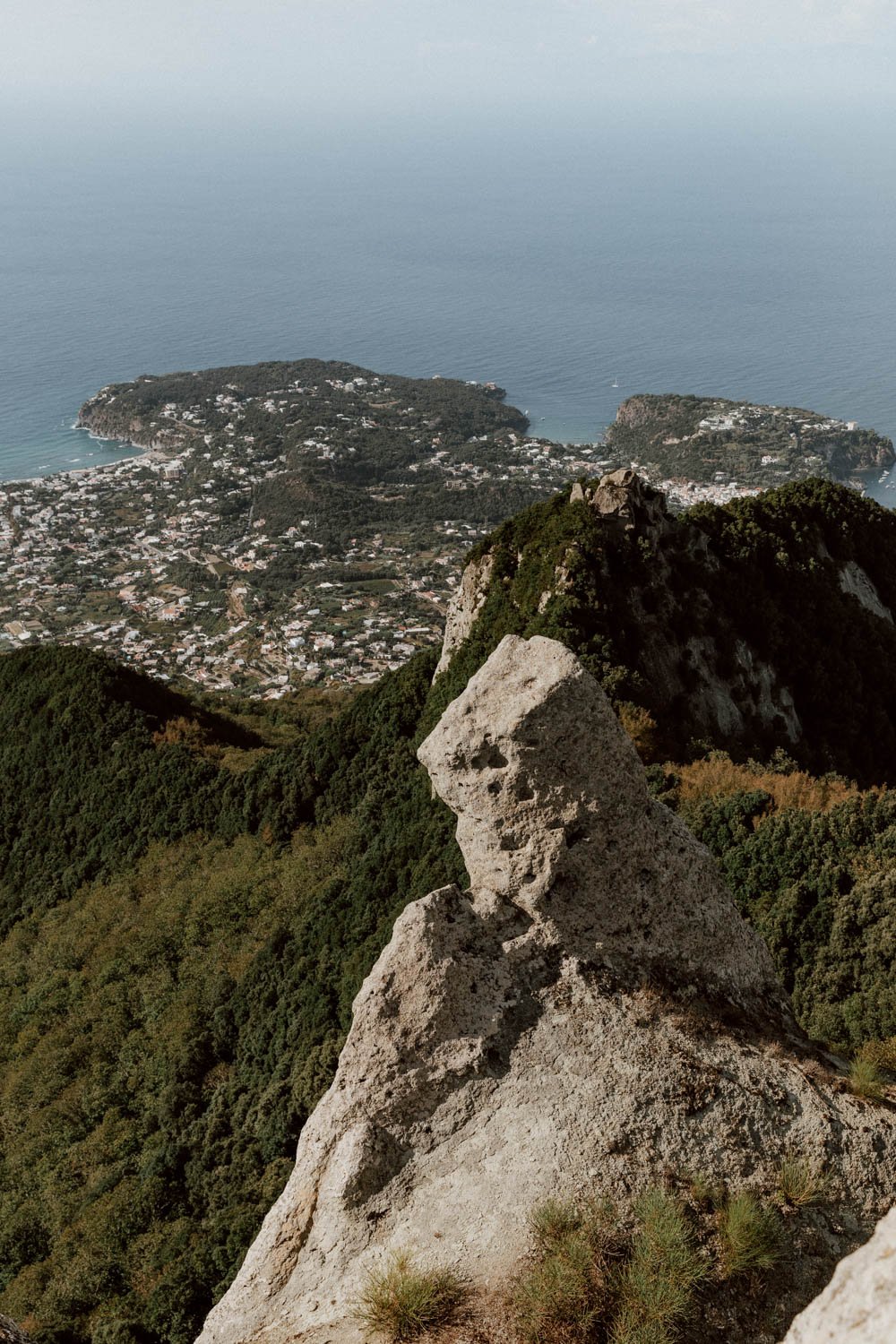
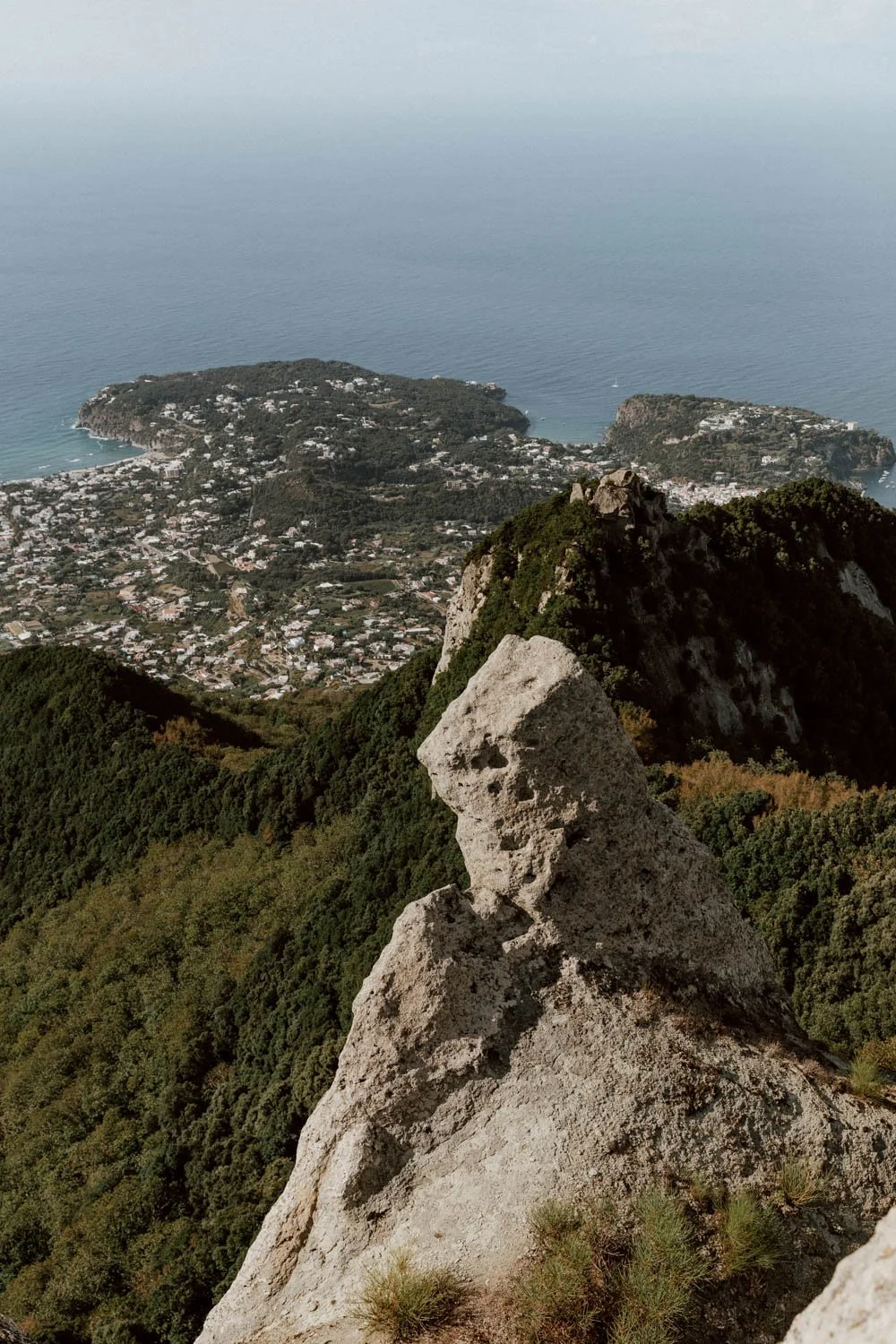
At 789 metres, Mount Epomeo is the highest point on Ischia.
From the summit, the island stretches out in every direction: green ridgelines spilling down to the sea, whitewashed towns scattered like chalk across the hills, and the silhouettes of Procida, Capri, and the Bay of Naples hovering in the distance.
The most popular walking route starts in Fontana, a small village tucked into the slopes above the southern coast. From there, a well-marked trail winds gently uphill, passing through chestnut woods and past terraces of vineyards and wild fennel. It’s a peaceful and manageable climb, with plenty of shade in the early stages and occasional glimpses down to the sea. As you ascend, the vegetation thins and the terrain becomes more exposed, dry, dusty, and flanked by steep drops.
The path isn’t especially technical, but it is steep in places, and the midday heat can be brutal in summer. Go early, take water, slap on suncream and wear proper shoes.
The final section is the most dramatic, and the wind often picks up here as the views open out over the coast, then the whole island, and eventually across the Tyrrhenian to the mainland. Just before the summit, there’s a short scramble up to a small plateau with a whitewashed chapel carved directly into the rock.
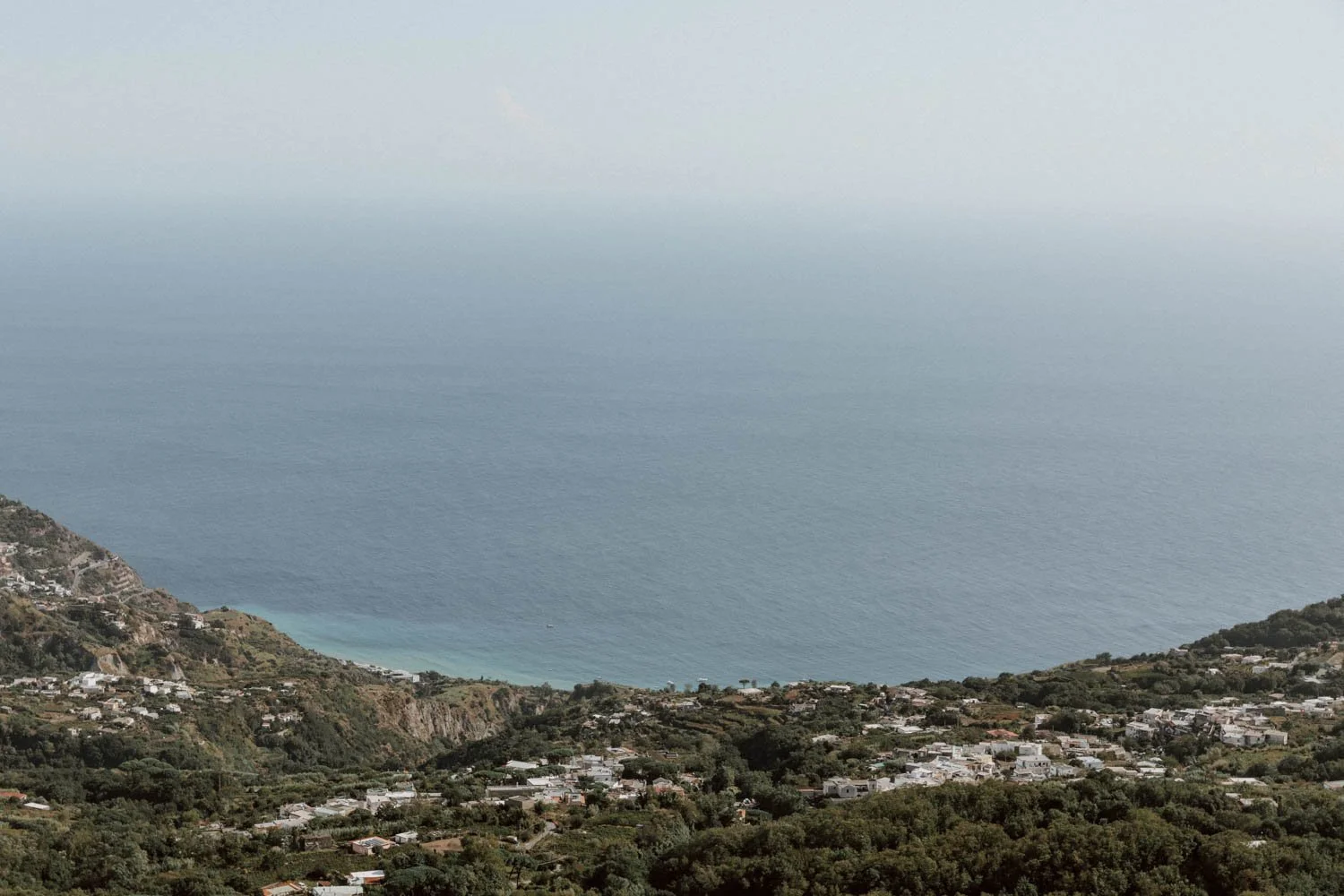
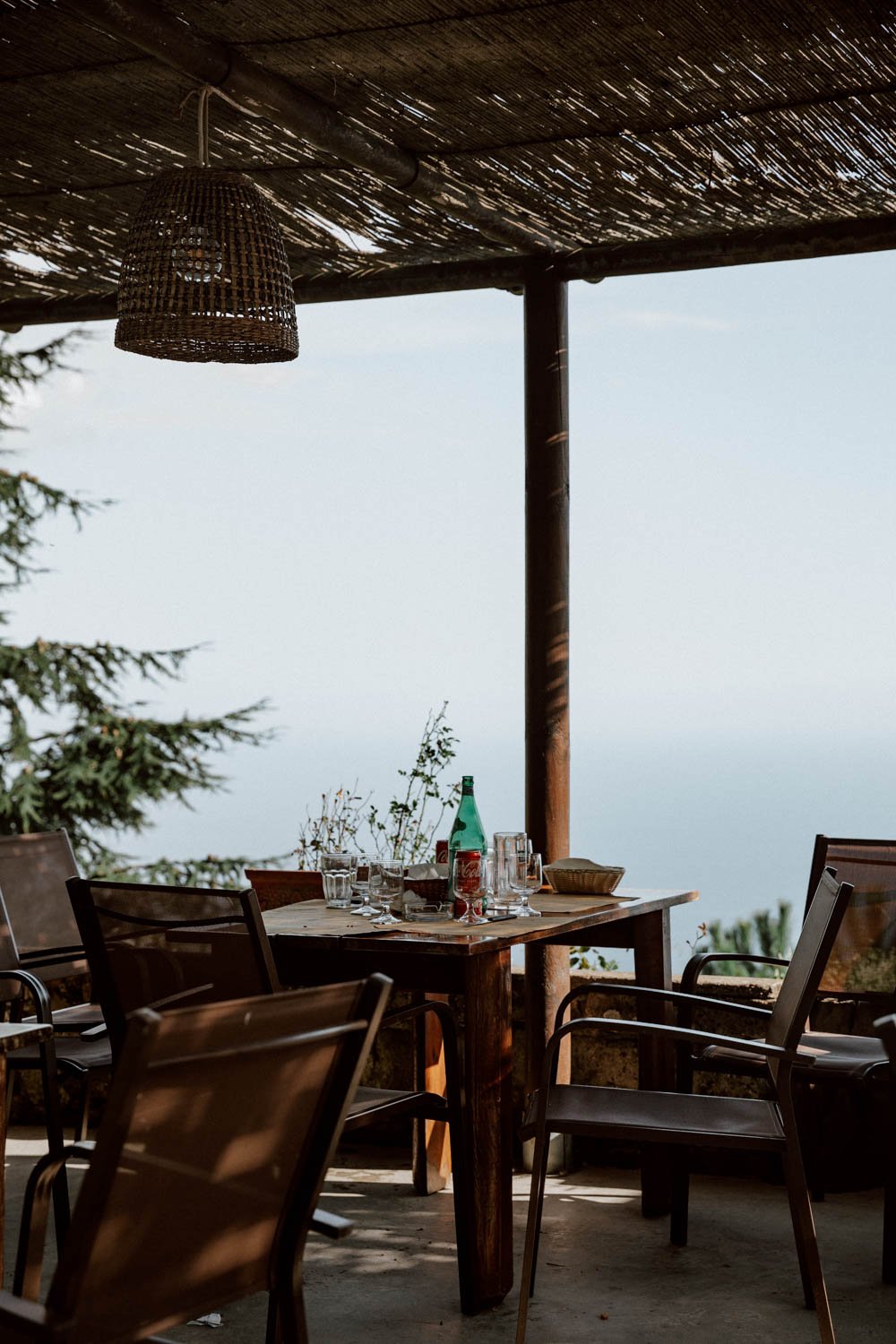
Just below the summit, there’s a small, wonderful restaurant called Ristorante La Grotta da Fiore (maps) with a terrace perched on the slope. It serves simple, traditional dishes - things like rabbit, grilled vegetables, and slices of local cheese - and is a particularly popular weekend lunchtime spot, when it fills with locals lingering over long lunches that stretch unhurried into late afternoon.
If you don’t have time for a full meal, even just stopping for a cold drink with the view is worth it.
Whether you’re after a short morning hike or just the best vantage point on the island, Mount Epomeo is an excellent spot to add to your must-visit list as it’s one of the few places on Ischia where you can really get a sense of the island’s shape and scale - not to mention the best reminder of just how green, wild, and volcanic it all really is.
The Details | If you have a scooter or car, you should put this point in your GPS - it takes you to a decent-sized gravel carpark next to the Miscillo Sapori restaurant where you can park your vehicle for €2 (a man will pop over to you to take the money). This is where we parked, and it’s about three-quarters of the way up the mountain, so makes like easier than starting out from the bottom.
From the car park, it took us 35 minutes to reach the top.
There are also several bus lines that link up popular coastal towns with Fontana - Line 1 from Ischia Porto, Line 3 from Casamicciola, and Line 5 from Fontana.
Besides the restaurant at the summit, there are also a few family-run restaurants lining the first couple of hundred metres from the car park. Most of them have KM0 ingredients and local dishes, so do consider a stop on the ay up or down, and an Instagram follower recommended La Porta di Agartha (maps) to us.
Alternative // If you’d really like to hike up Mount Epomeo but don’t want to deal with the bus (or hire your own scooter), this popular experience includes a guide and transfers to and from your hotel, and has excellent reviews.
Take a Thermal Journey Through Ischia’s Healing Waters
Ischia is famous for its thermal waters.
The entire island rests on a complex volcanic system, and for thousands of years, its geothermal activity has shaped not just the landscape, but also local traditions and tourism. More than a hundred natural springs, fumaroles, and thermal pools bubble up through the rock, some spilling freely into the sea, others channelled into spa gardens carved into the hillside.
The Greeks and Romans came here to bathe, convinced the ‘miraculous’ mineral-rich water could soothe joints, heal skin, and restore balance - and that reputation stuck.
By the 1800s, Ischia had become known as a place to recover - part health destination, part coastal escape - and by the early 20th century, the first thermal hotels had started to appear. Beyond Italians, it became a popular destination for Germans, Swiss, and Austrians to convalesce, warm their bones, and (true or not) make them look younger.
That spa culture still shapes the island today, and is responsible for directly drawing in thousands.
Indeed, soaking, steaming, and drifting between hot and cold pools isn’t just a wellness trend here - it’s part of Ischia’s identity and a trip to the island really isn’t complete without experiencing at least one of its thermal parks or natural springs.
The only difficulty is choosing which one to visit - especially as some of the most famous don’t come cheap - and that’s why we suggest setting aside at least a proper half-day to make the most of it and get your value.
Poseidon
On the western coast, above the wide sweep of Citara Bay (one of our favourite beaches in Ischia), Poseidon Thermal Gardens offers the most resort-like version of the spa experience. It’s the largest on the island, with over twenty thermal pools of varying temperatures spread across a well-kept garden landscape that gently slopes down to the sea.
The grounds are immaculate: paved paths between pools, terraced sun decks with loungers, and well-maintained facilities including changing rooms, showers, and a beachside restaurant. There’s also direct access to Citara Beach, so you can alternate between sea and spring if the mood takes you.
Most people spend the whole day here, moving between the pools, finding shade under the pergolas, or stretching lunch out into the afternoon. And whilst it’s not the most atmospheric or distinctive of Ischia’s thermal spots, it’s considered, well laid out, and easy to navigate.
The Details | The thermal park is open from 9am until 7pm and you can find it on Google Maps.
A full-day pass costs €45 per adult between 19 April and 31 October (excluding August), or €40 for an afternoon-only pass. In August, these prices increase to €50 and €45 respectively. Children aged 4–11 receive a 50% discount; children under 3 enter free.
Tickets can be bought on arrival at the spa, or alternatively, if you don’t have your own transport (or fancy chacing the suses in high season) you could book this option that includes transfer and your entrance.
Negombo
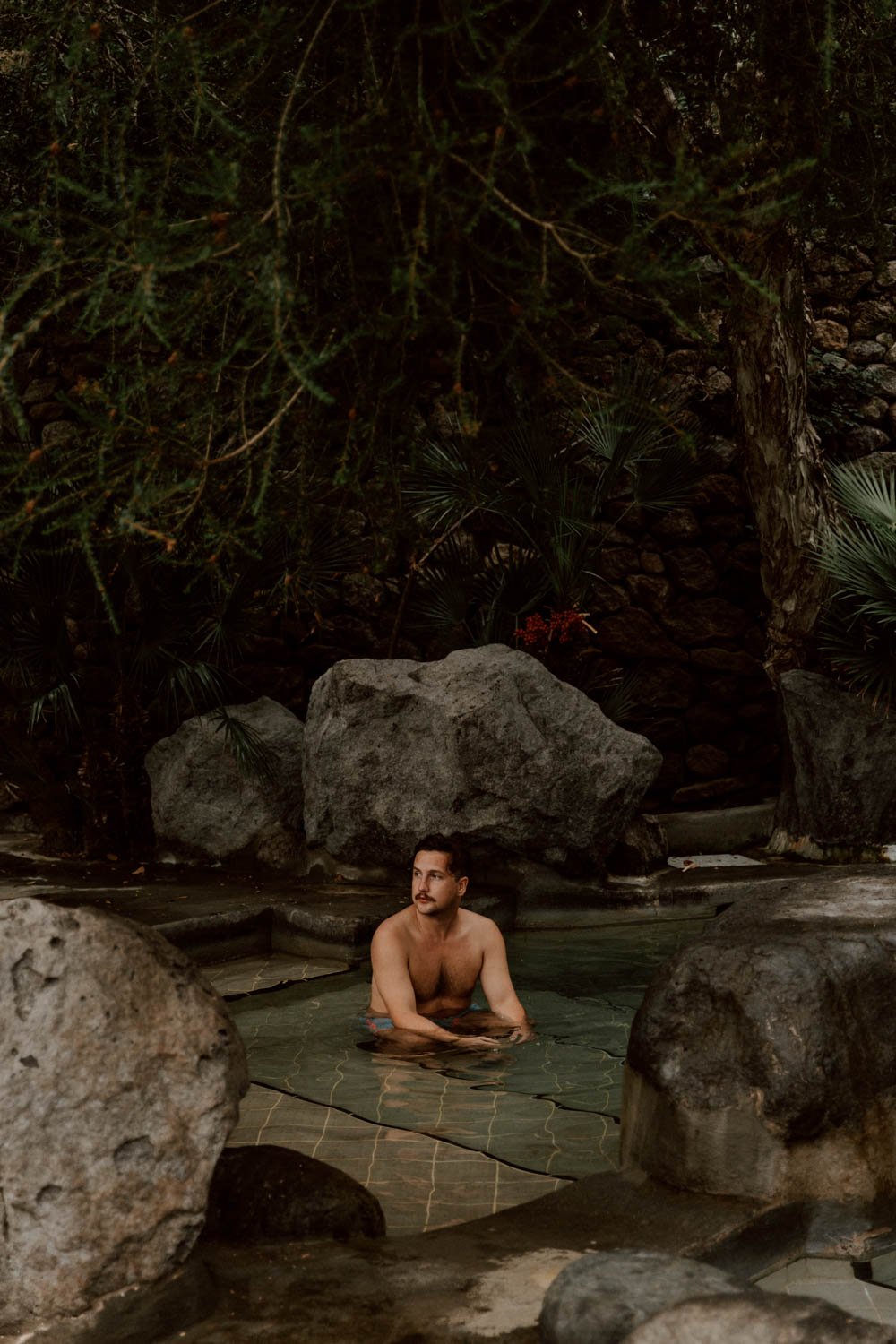
Further north, in the protected curve of San Montano Bay, Negombo offers a slightly smaller, more distinctive take on the thermal park. The layout is less manicured than Poseido - pools tucked between terraces and trees, linked by narrow paths and steps, with views opening out to sea as you climb through the gardens. Some pools have hydromassage jets, others are set beneath rock faces or shaded by climbing plants, and there’s a cold plunge discreetly tucked away for anyone brave enough to use it.
When you’ve had enough of soaking, you can step straight onto San Montano Beach or there’s also a large freshwater pool if you’d prefer to stay sand-free.
Negombo also leans into art and atmosphere more than Poseidon. Sculptures are dotted around the gardens, there’s a small amphitheatre for concerts in summer, and the café on the top terrace is a great spot to linger. You could easily spend a full day here, but it’s also a good option for a half-day if you’re already in the area - particularly as the pricing is a little more flexible than at Poseidon.
This is the thermal spa we chose to visit, and we honestly couldn’t fault it, especially during the final couple of hours, when the light softened, the pools filled with locals, and the air was full of easy conversation in the Ischian dialect.
The Details | Negombo is open daily from 9am to 7pm and can be found here on Google Maps.
At the time of our visit, full-day entry cost €50 for one adult or €90 for two; half-day tickets (from 1pm) were €38 and €70 respectively, while late afternoon entry (from 4pm) cost €30 or €60 for two. We suggest doing the full or half-day to make the most of it.
Slightly confusingly - and very frustratingly for Dutch people and parents of tall kids - prices for children are based on height: those between 1.0m and 1.4m pay €20–€25 depending on time of entry; shorter children go free, taller ones pay the adult rate.
Alternatives
Baia di Sorgeto | At low tide, hot spring water flows directly into the sea at this rocky cove on the southern coast. Natural pools form among the stones, and locals build makeshift walls to trap the heat, adjusting the temperature with the incoming waves. You can visit for free by hiking down a steep staircase, or hop on a water taxi from Sant’Angelo. It’s raw, completely uncommercial, and unlike anything else on the island (maps)
Cavascura Baths | Just inland from Maronti, a short walk into a rocky ravine leads to Cavascura, one of Ischia’s oldest thermal sites. Water flows through carved channels into open-air tubs and stone basins, and treatments are still offered in the same no-fuss way they’ve been for centuries. It’s a bit rough around the edges - no loungers, no spa playlist - but that’s what makes it interesting (maps). It is also accessible by boat taxi from Sant’Angelo.
Nitrodi Springs | High in the hills above Barano, Nitrodi (said to be one of the oldest spas in the world) offers a gentler thermal experience. The water here is cool, not hot, and known for its healing and skin-soothing properties. Visitors shower beneath stone fountains in a peaceful garden setting, fill bottles to take home, and linger for hours doing very little. It’s one of the few springs still frequented by locals as well as travellers (maps)
Visit The Landscaped Gardens Of La Mortella
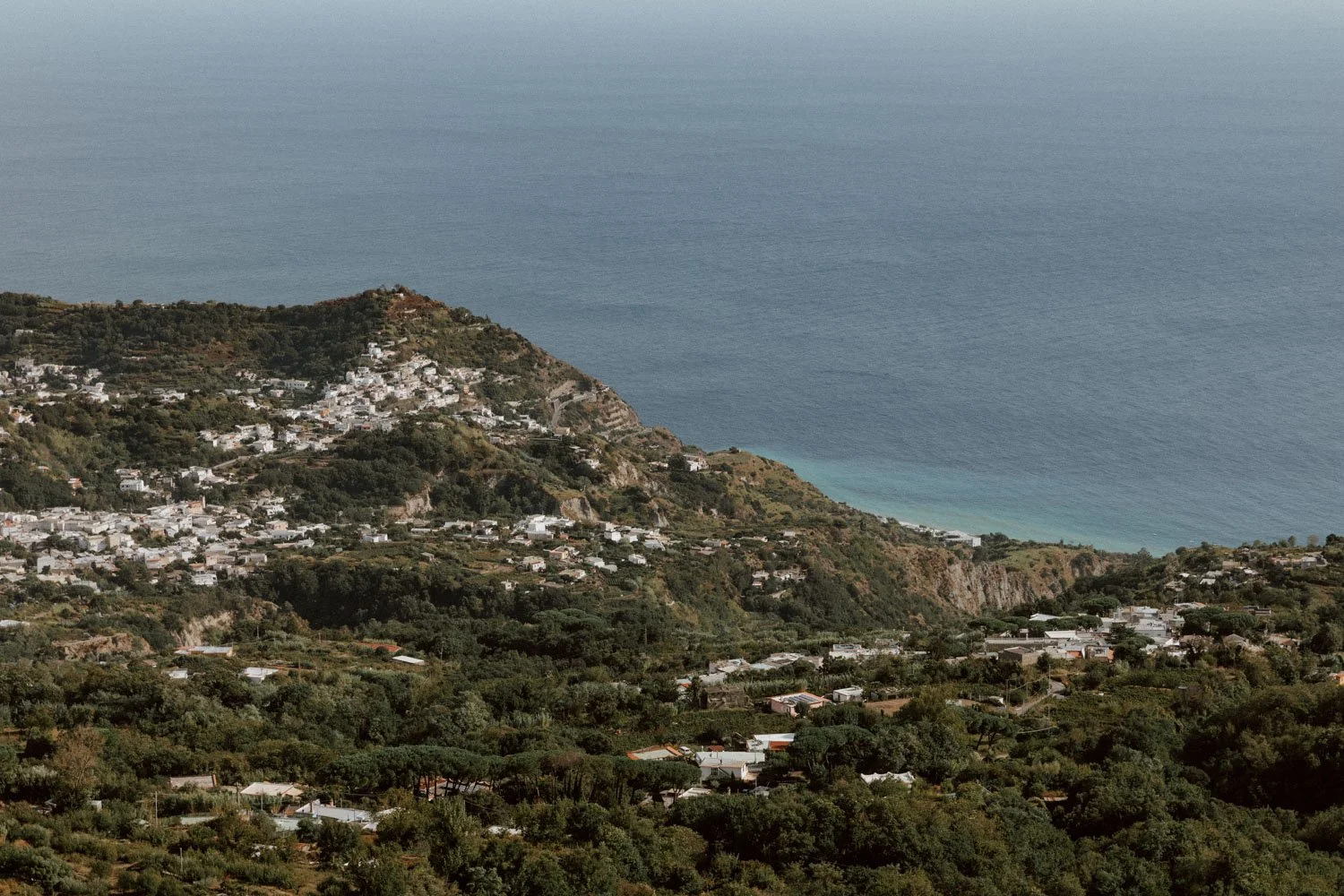
On Ischia’s western coast, La Mortella sits tucked into a ravine above Forio - a quiet, layered garden built slowly into the hillside over decades.
Created by Susana Walton and her husband, the British composer Sir William Walton, after they settled on Ischia following the war, the garden began as an old stone quarry above Forio and was gradually transformed into one of the most remarkable in southern Italy. While William composed, Susana focused on the land, gradually shaping it with the help of landscape architect Russell Page into a space that feels both natural and deliberate: a mix of tropical planting, hidden corners, and long views out to sea.
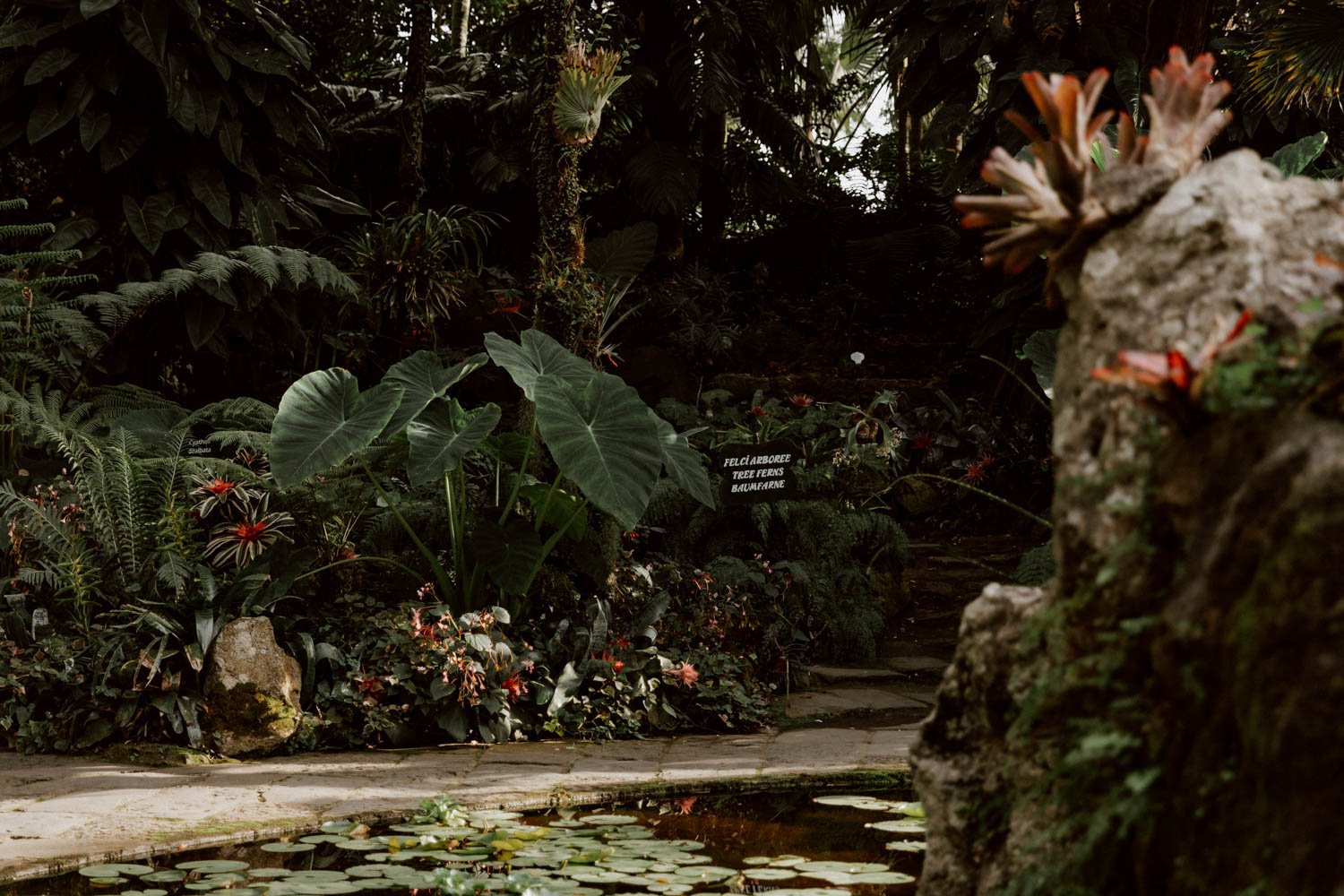
The lower level is shaded and humid, dense with ferns, lotus-covered ponds, banana plants, and bamboo. It’s quiet here, the paths enclosed by foliage, with only the occasional croak or birdsong cutting through the stillness.
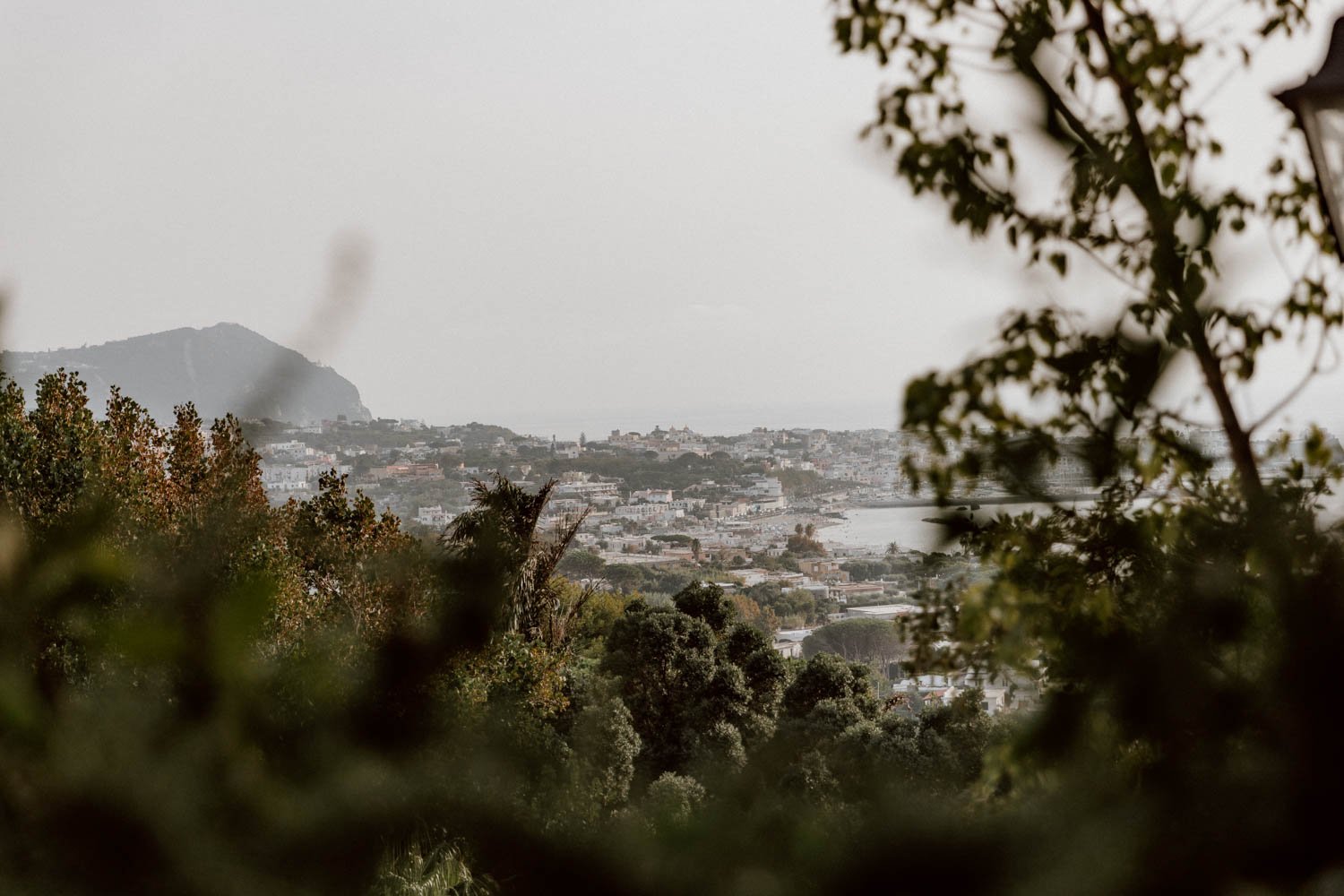
Higher up, stone paths wind through Mediterranean plants - lavender, citrus trees, succulents - and past small architectural flourishes: a Thai pavilion, a shaded courtyard, a pond set inside a mock-Egyptian temple. There are benches tucked into corners and the views out across the Bay of San Francesco and down over Forio are especially lovely in the late afternoon when the light starts to change.
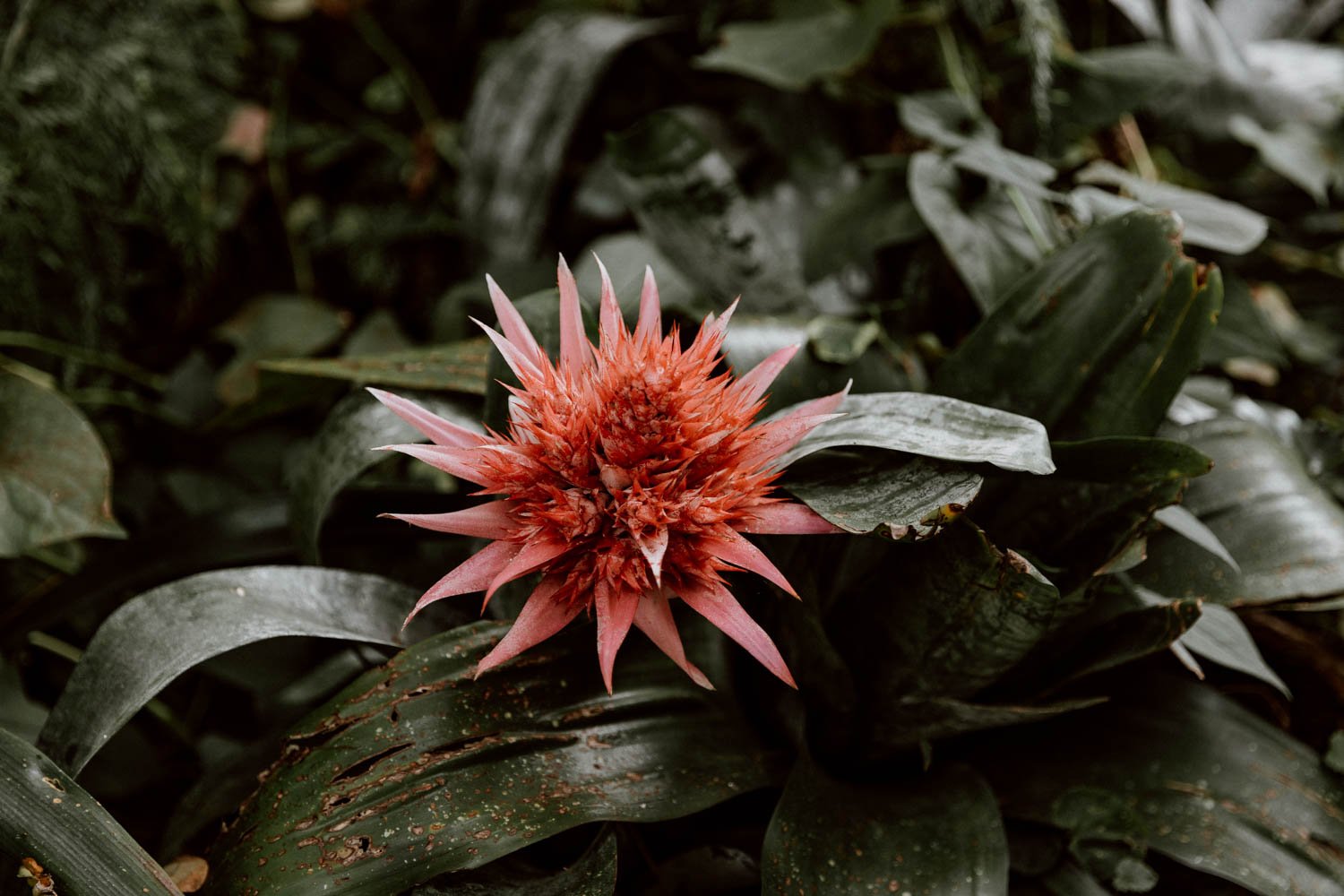
Music still runs through La Mortella too. Tucked into the grounds is a small museum that gives a glimpse into the Waltons’ life here. In the warmer months, concerts take place in a small amphitheatre hidden among the trees, and occasionally in a cave-like hall built straight into the rock.
The Details | The Giardini la Mortella are only open Tuesday, Thursday, Saturday, and Sunday from 9am to 7pm (last admission at 6pm) - find them here on Google Maps. Lots of Ischia buses will take you to/from the nearby bus stop, but please just watch yourself when crossing or walking along the roadside as it’s a surprisingly busy bend.
Full price tickets cost €12 per person with various concessions available (seniors over 70 and children aged 12-18 pay €10, children aged 6-11 pay €7, and children under 5 go free). You can buy tickets from the ticket office on arrival or alternatively you purchase this option in advance that also inlcludes a transfer from your accommodation and a guided tour.
There’s a small cafe just by the entrance that offers drinks and snacks.
Watch the Sun Set from Forio’s Chiesa del Soccorso
There are plenty of beautiful viewpoints on Ischia, but few rival the sheer simplicity and drama of sunset at the Chiesa del Soccorso.
Perched on a rocky promontory just beyond the centre of Forio - our favourite town on the island - this small whitewashed church sits alone above the sea, flanked by nothing but sky and open water.
Built in the 14th century by the Augustinians, the church was once part of a much larger monastery, though today only the chapel remains. With its white façade and clean lines, it’s become one of the most recognisable images of the island, and while it’s no secret, it somehow still feels unspoilt. Arrive a little early, before the main crowd rolls in, and you might just get a moment to yourself.
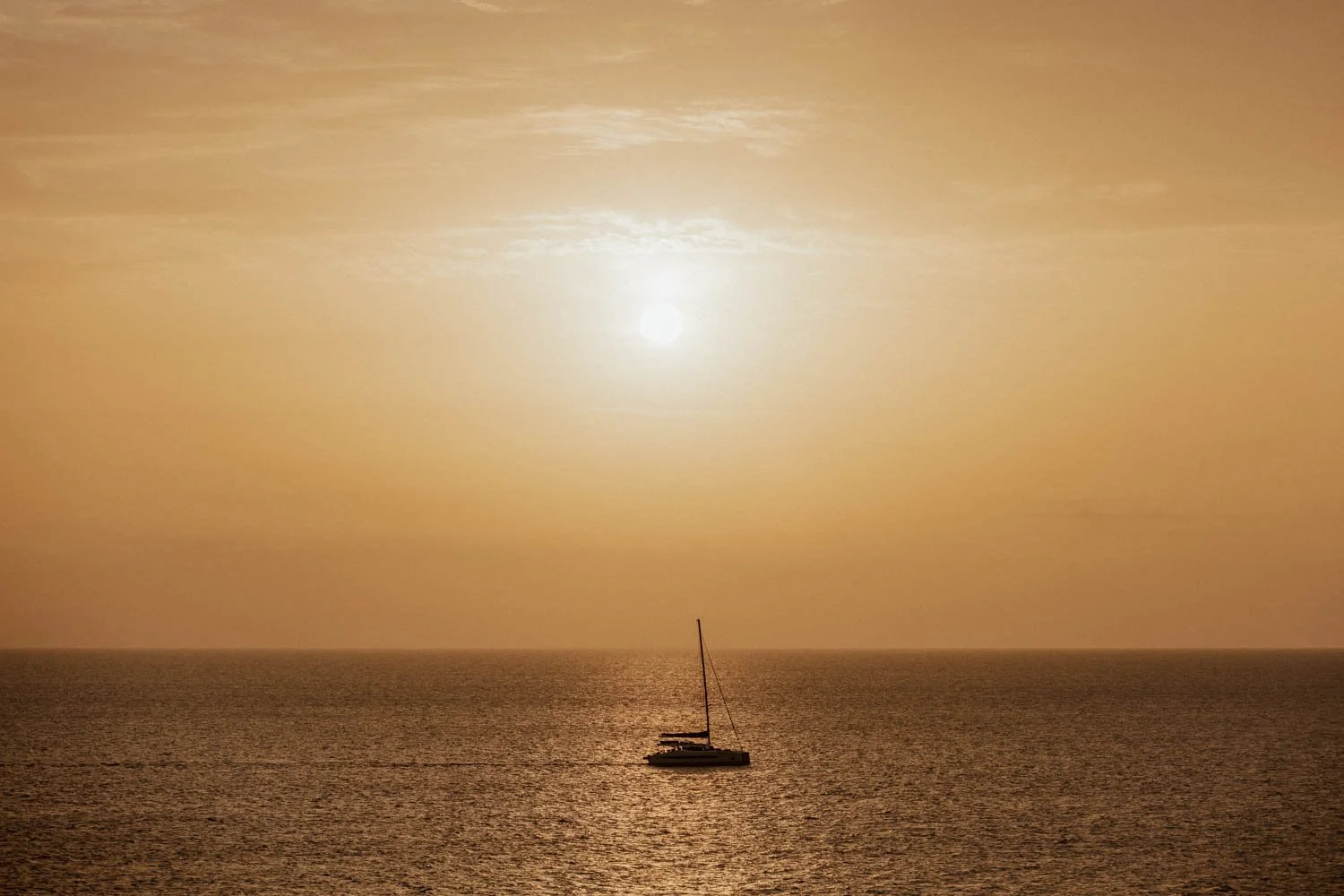
As golden hour sets in, the small terrace out front slowly fills up - couples leaning against the low wall, kids on bikes, someone with a cone of gelato, a few people quietly setting up tripods. The light changes gradually. The sea darkens. And if the weather holds, the sun drops clean into the horizon, throwing colour across the water and turning the church pale pink for a few minutes before it all fades.
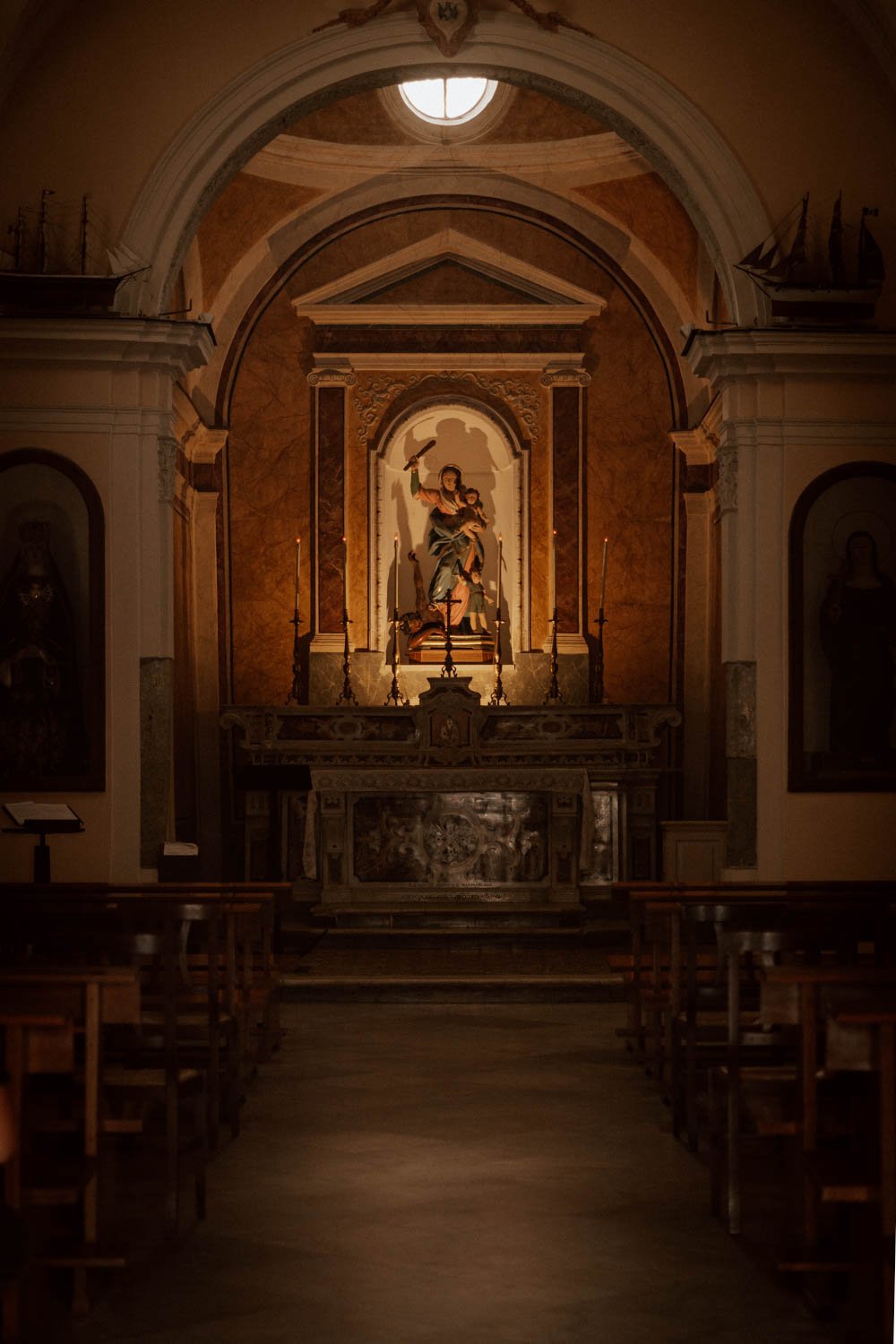
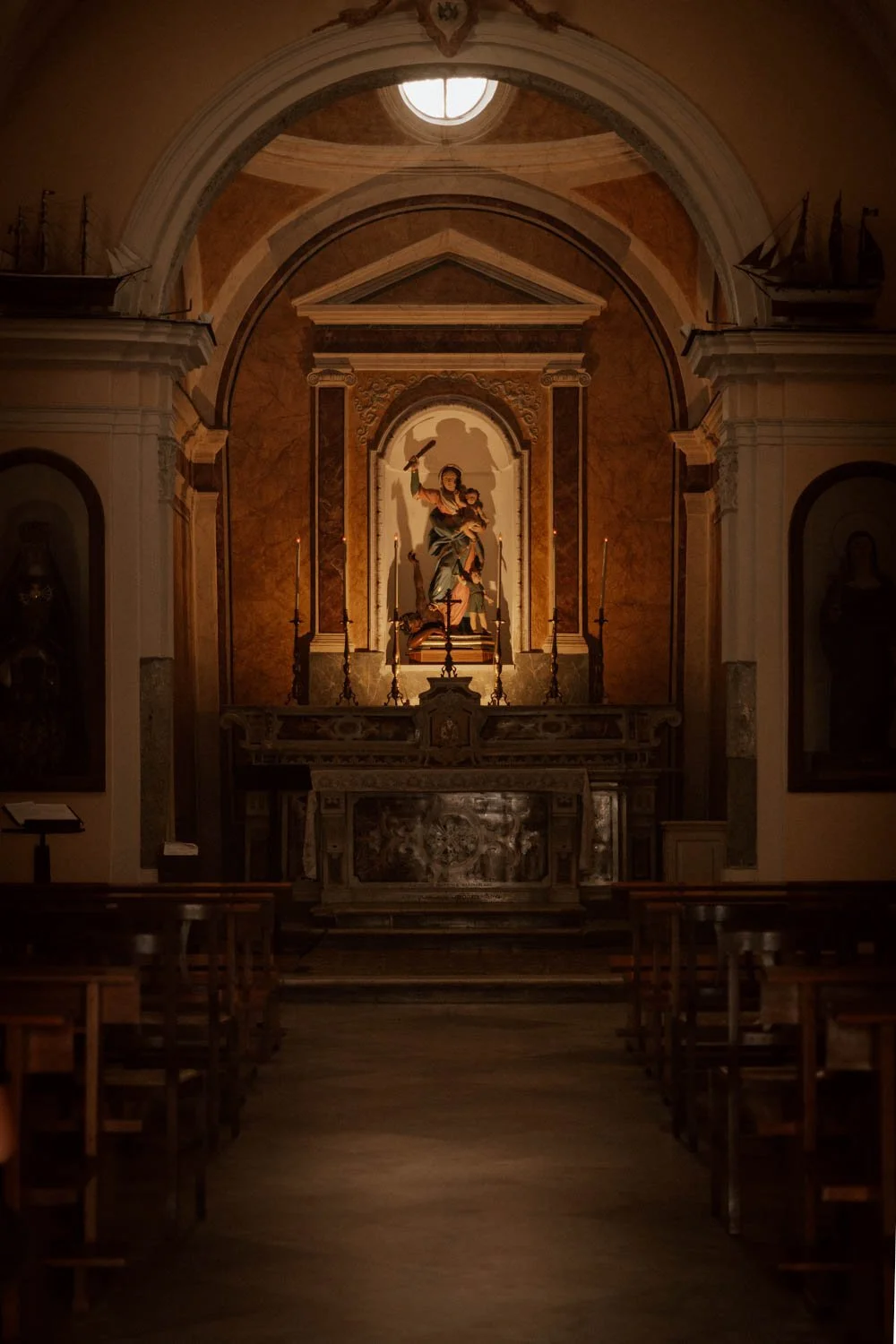
It’s also worth stepping inside the church itself. Though small, its interior is a contrast to the starkness of the exterior, with devotional offerings left by sailors and fishermen over the centuries, and - according to local legend - a crucifix that once miraculously calmed a storm and saved a ship from being wrecked
Once the sun has dipped below the horizon, you’re perfectly placed to wander into Forio’s old town for the evening. The streets just behind the church lead to a cluster of bars, pizzerias, and small seafood restaurants, many with tables that spill out onto piazzas and cobbled lanes. It’s one of the island’s more atmospheric towns after dark, and our top pick for an evening meal.
Top Tip // For something a little bit special, consider booking a table at Luci Restaurant. Situated within the stunning Faro Punta Imperatore, a luxurious boutique hotel with just four rooms, they offer the ‘Lighthouse Dinner’ beginning with an aperitif and followed by a multicourse menu created and prepared by one of the island’s best chefs - all enjoyed from the private terrace with 240-degree views over sea and the setting sun. Reservations are essential and can be done via their website.
But Don’t Forget About The Town!
Most people come to Forio for one reason - the sunset at Chiesa del Soccorso - and whilst, as mentioned it’s certainly one of the island’s most iconic spots, it would be a mistake to leave without exploring the town itself.
We chose to base ourselves here (in this excellent little apartment), and it ended up being one of the best decisions of the trip. Forio has just the right balance of energy and ease with enough happening to keep things interesting, without ever feeling busy or overdeveloped.
Set on the island’s western flank, it’s is the second-largest town on Ischia and has long been known for its independent streak. Historically a stronghold of sailors, winemakers, and artists (William Walton, W.H. Auden, and Pablo Neruda all spent time here), and it still carries a slightly bohemian energy that sets it apart from places like Ischia Porto. There’s more grit to it than Sant’Angelo, but also more going on - and fewer of the high-end prices.
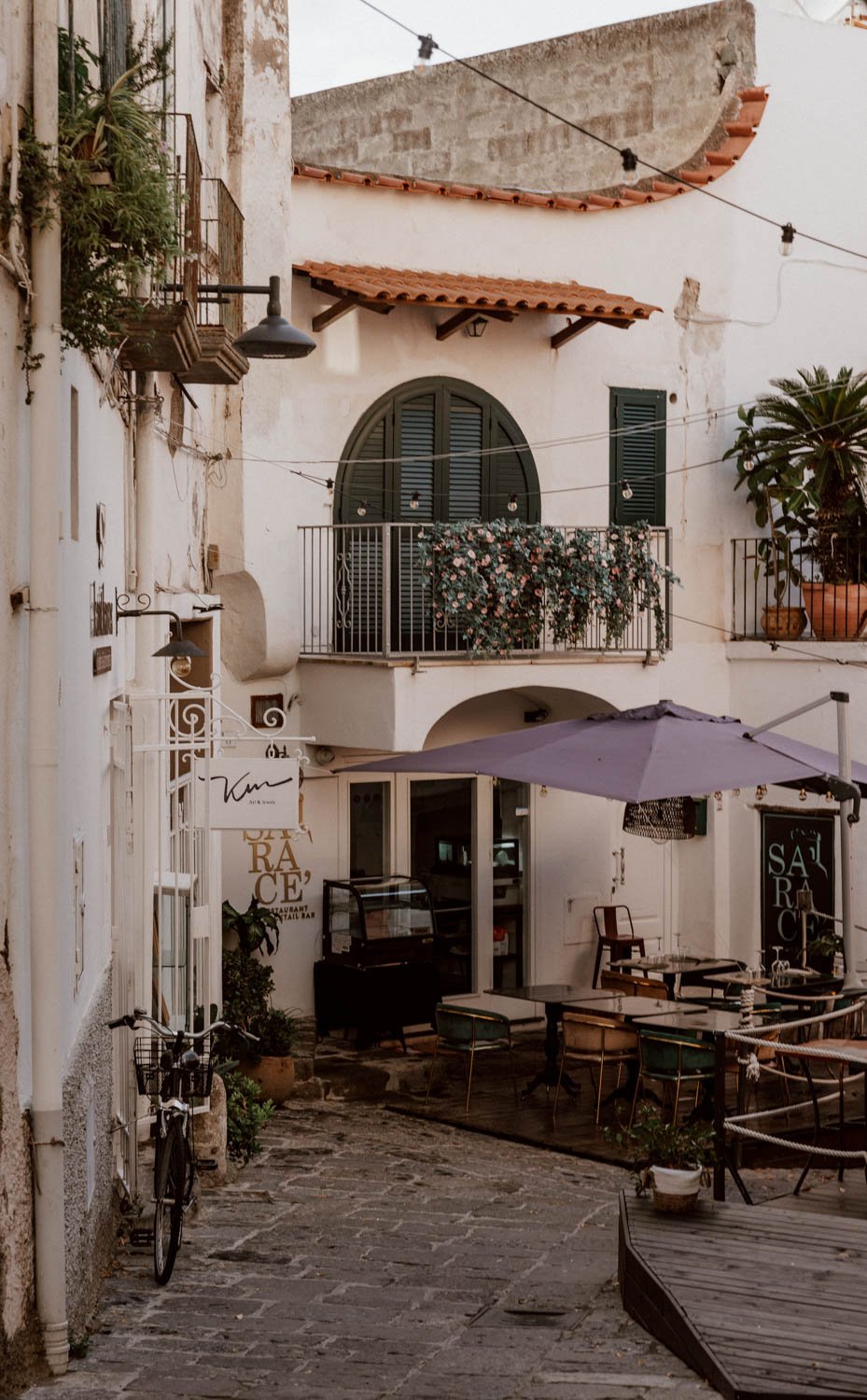
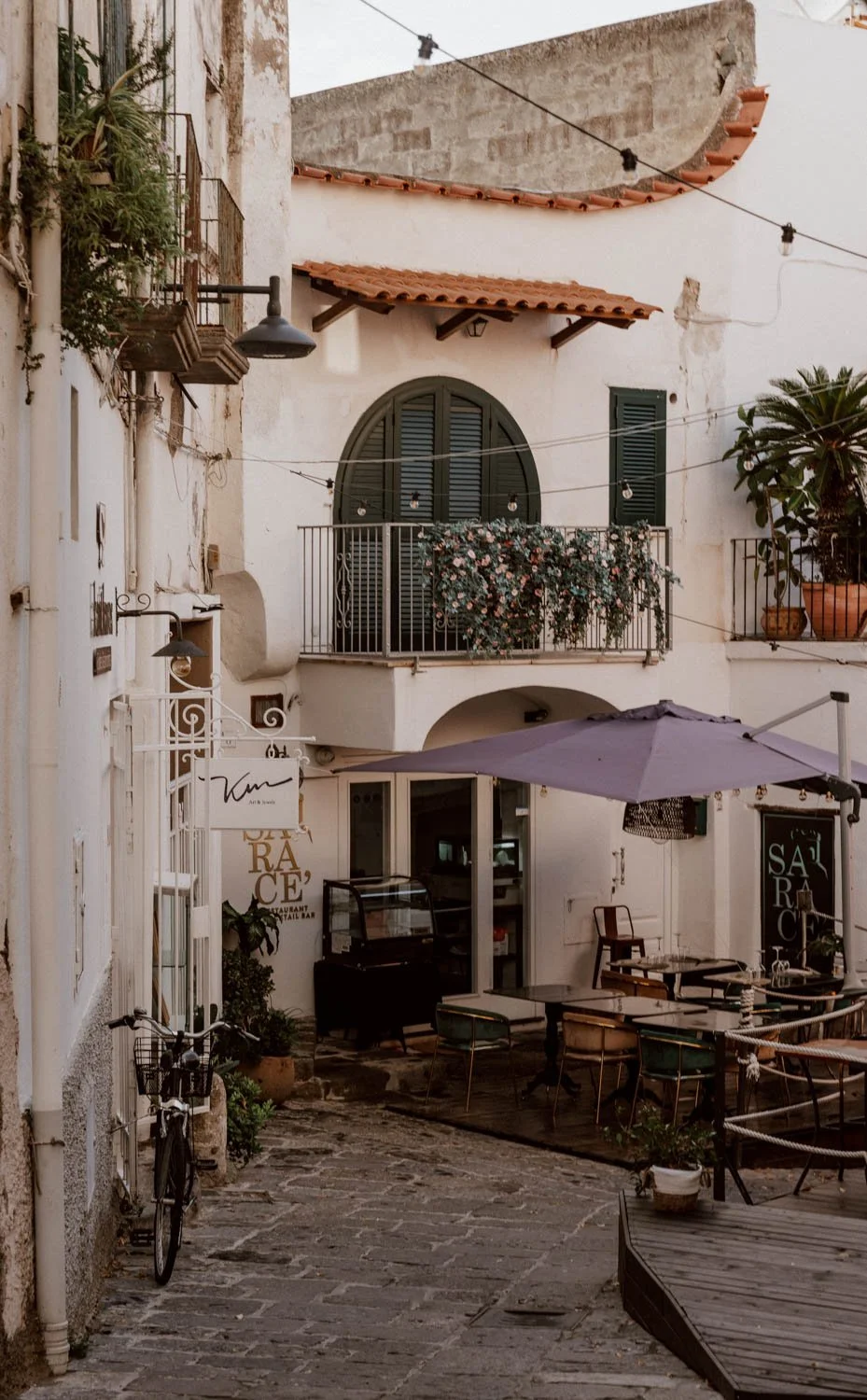
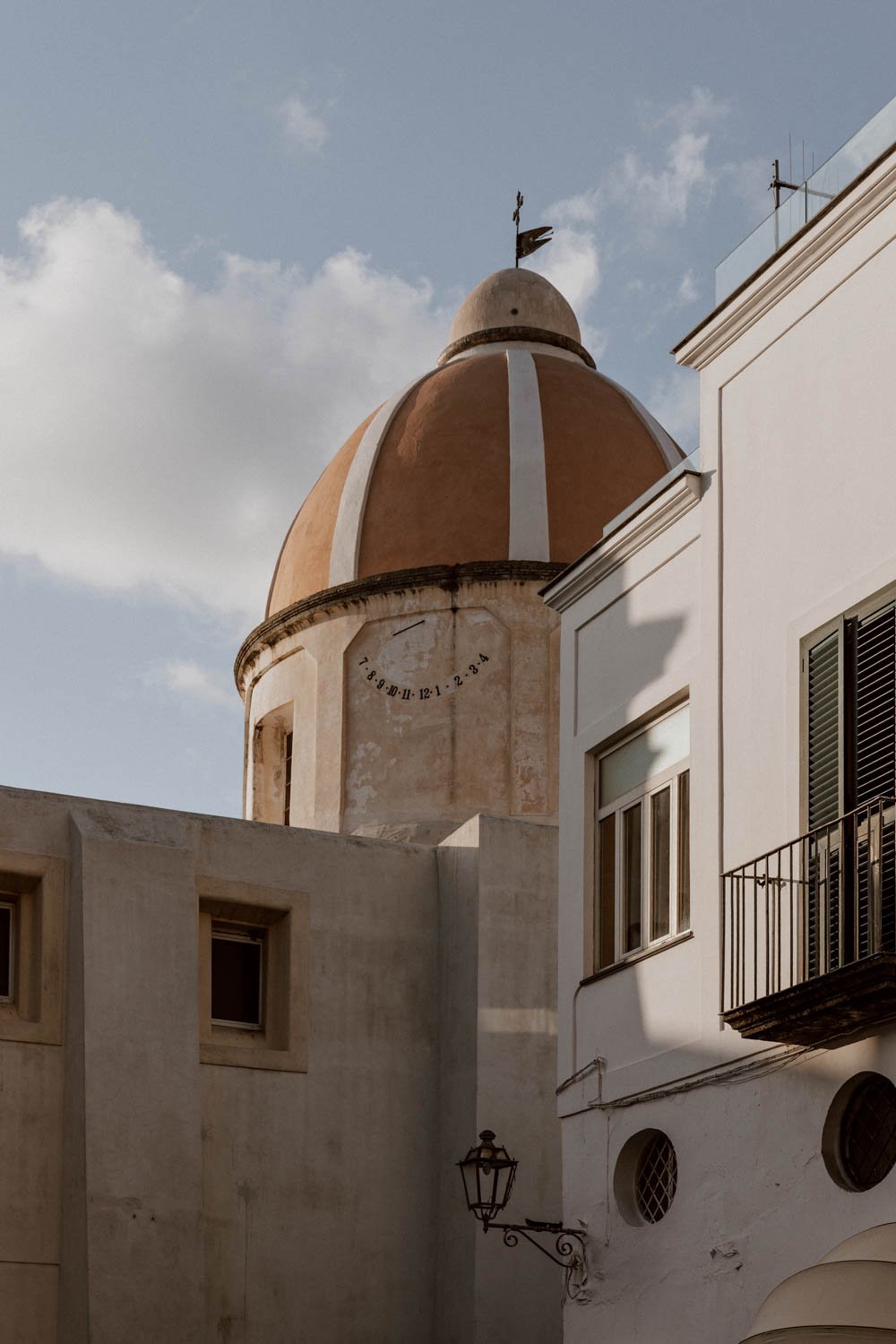
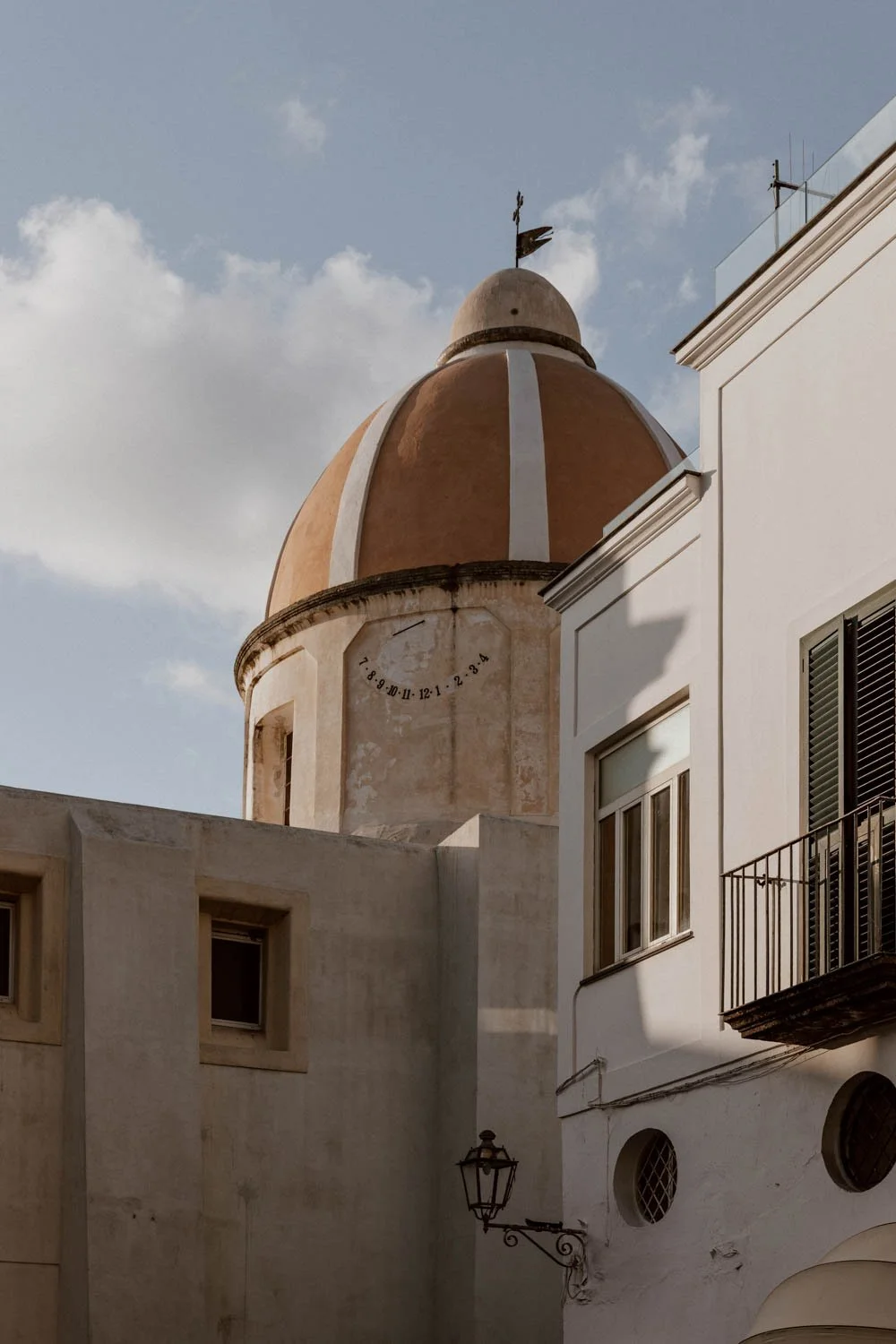
The historic centre is small but full of character. Down its narrow backstreets, laundry hangs overhead, fairy lights criss-cross between buildings, and you’ll find a few tiny wine shops with shelves lined with local biancolella. There are the usual galleries and boutiques, yes, but also crumbling palazzi and small bars that haven’t changed in decades. Forio has a realness to it that makes it feel different from the more curated corners of the island, and that’s exactly why we were so drawn to it. Even during our summertime visit there were still neighbours chatting in doorways, kids playing football, and someone pulling up a plastic chair to watch it all unfold.
Don’t miss the long promenade that runs from the port to Citara Beach, with views across the bay and Mount Epomeo rising in the distance. It’s a lovely walk in the early evening, with plenty of cafés, gelaterias and restaurants that start to buzz as the day winds down. There’s a small port too, mostly used by ferries and fishing boats, though you’ll find the odd yacht moored up for lunch.
If you’re into history, there are still a handful of coastal towers scattered through town - built back in the 15th and 16th centuries, when raids by Saracen pirates were a real threat. One of the best-known, Torrione (maps), now houses a small museum and art gallery. And while it’s not a beach town in the classic sense, the stretch of sand at Spiaggia della Chiaia (maps) is easily walkable from the centre and is a great spot for a swim if you don’t want to venture far.
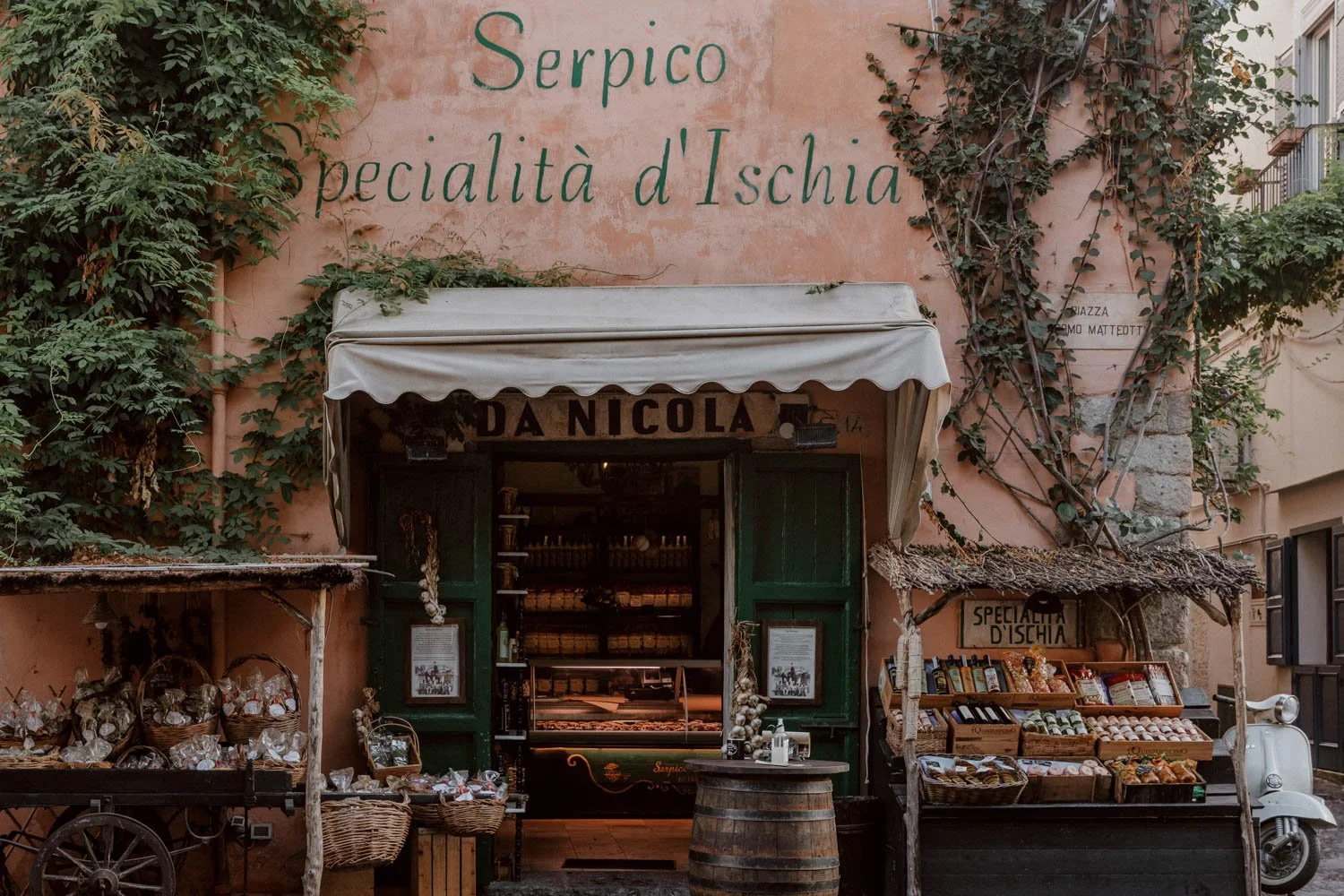
Swim & Sunbathe at Maronti Beach and the Fumarole Sands
Ischia’s longest stretch, Maronti is the obvious choice for a proper beach day.
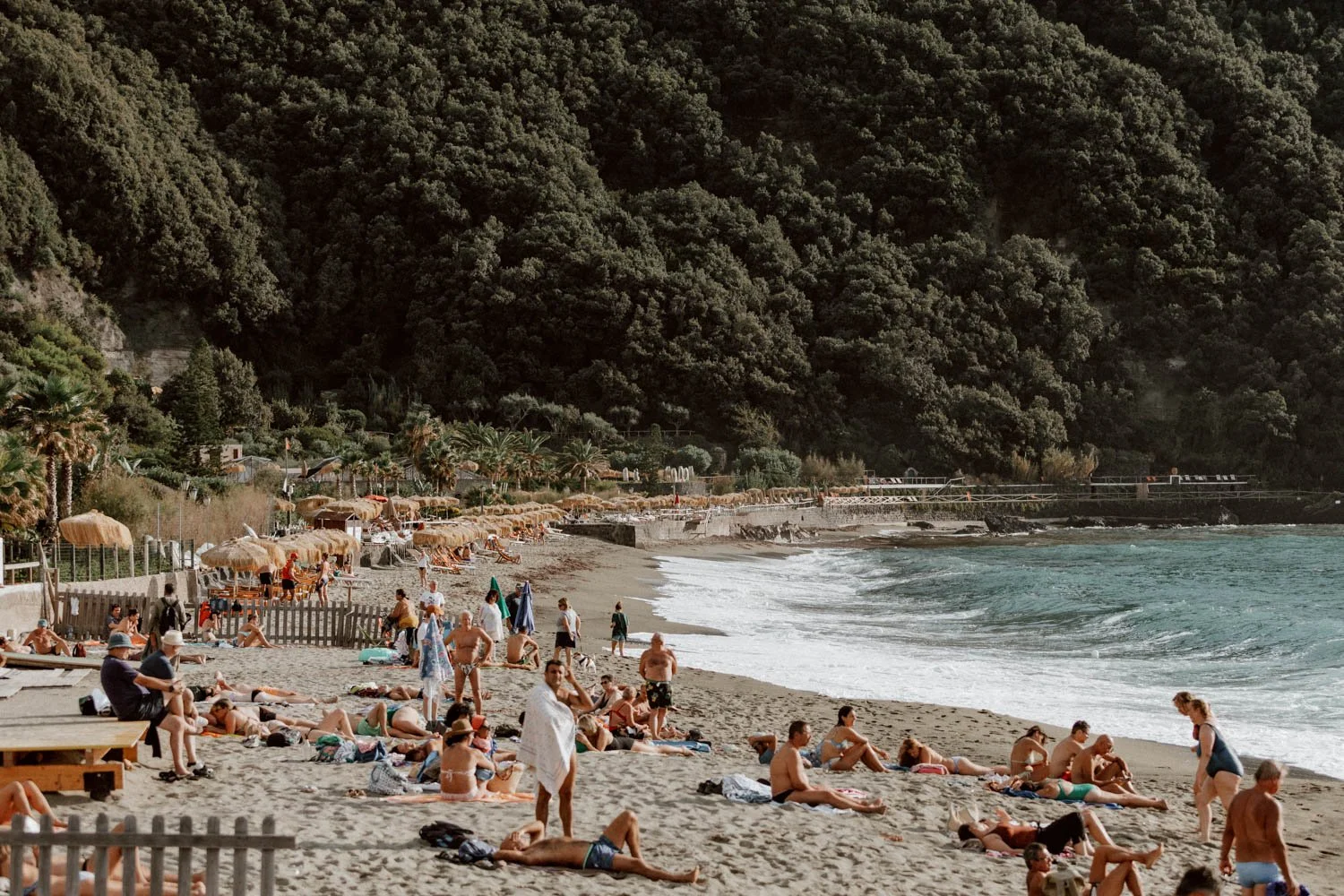
Covering nearly 3km of the island’s southern coast, it’s backed by steep, scrubby hills rather than resorts or high-rise hotels, giving it a more open, natural feel than you might expect for such a popular spot. Even in peak season, it rarely feels overcrowded with more than enough space to spread out, especially if you keep walking beyond the first few clusters of sunbeds.
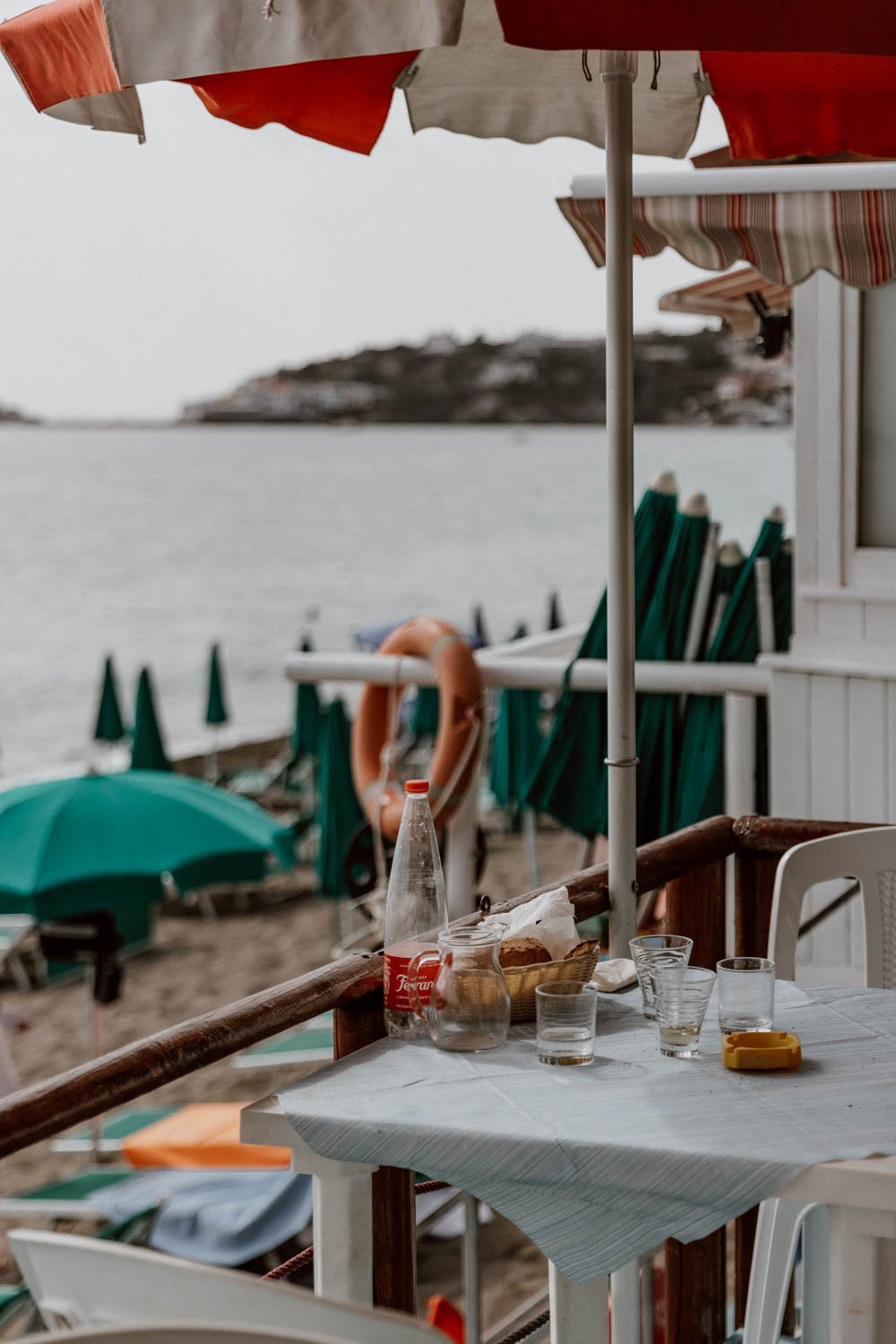
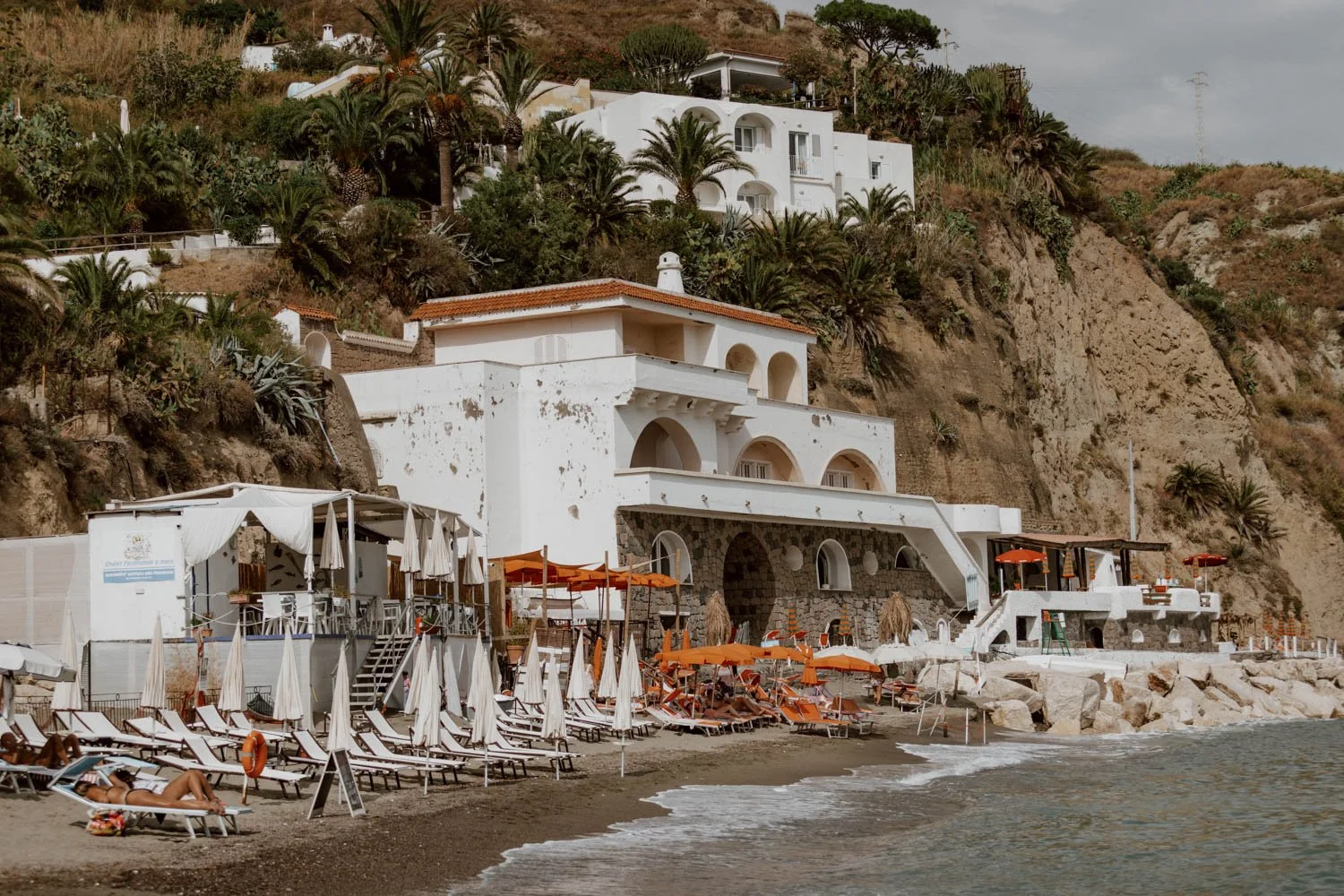
There are plenty of lidos along the shore offering loungers, umbrellas, and simple lunches (all with the most wonderful classic Italian summer palette that we could not stop photographing), but you'll also find quieter stretches of public beach dotted in between.
Not sure how an Italian lido works? Read this explainer.
The sand is soft, the seabed slopes gently, and the water is quite calm and clear - perfect for long, lazy swims. In the late afternoon, the cliffs behind the beach catch the light, turning a soft golden ochre that makes the whole bay glow.
You could of course spend the entire day here, but if the lounging has worn off and you’re ready to stretch your legs, don’t head back just yet: the far end of Maronti has a few surprises in store…
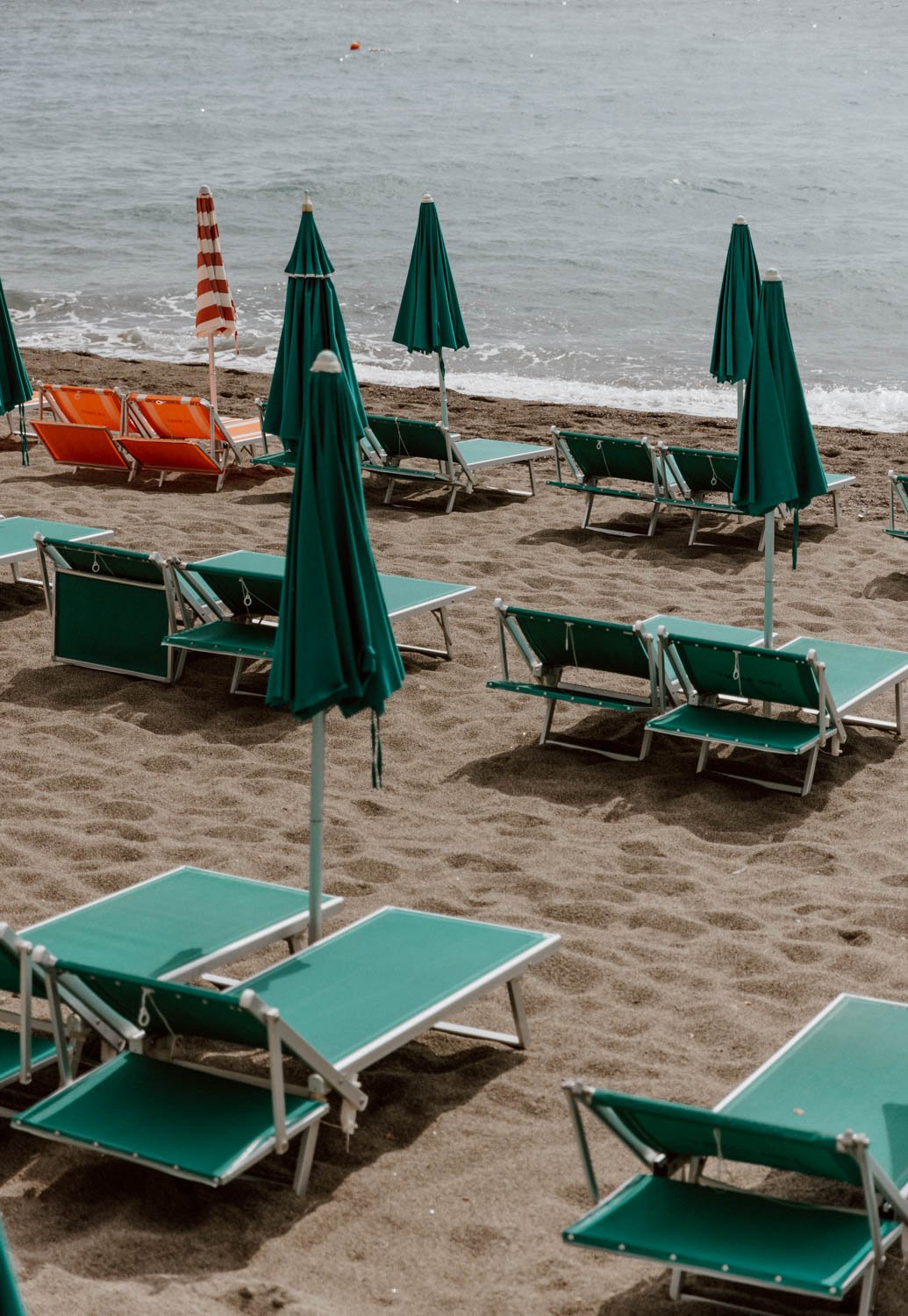
From just beyond Hotel Regina del Mare, a small path (Via Lesca) leads inland towards Cavascura - the rustic thermal spa we mentioned earlier - or continues on through farmland along a scenic, cactus-lined route with wide sea views. Eventually, the trail brings you back to the shoreline, where a more secluded cove and some of the island’s geothermal quirks await.
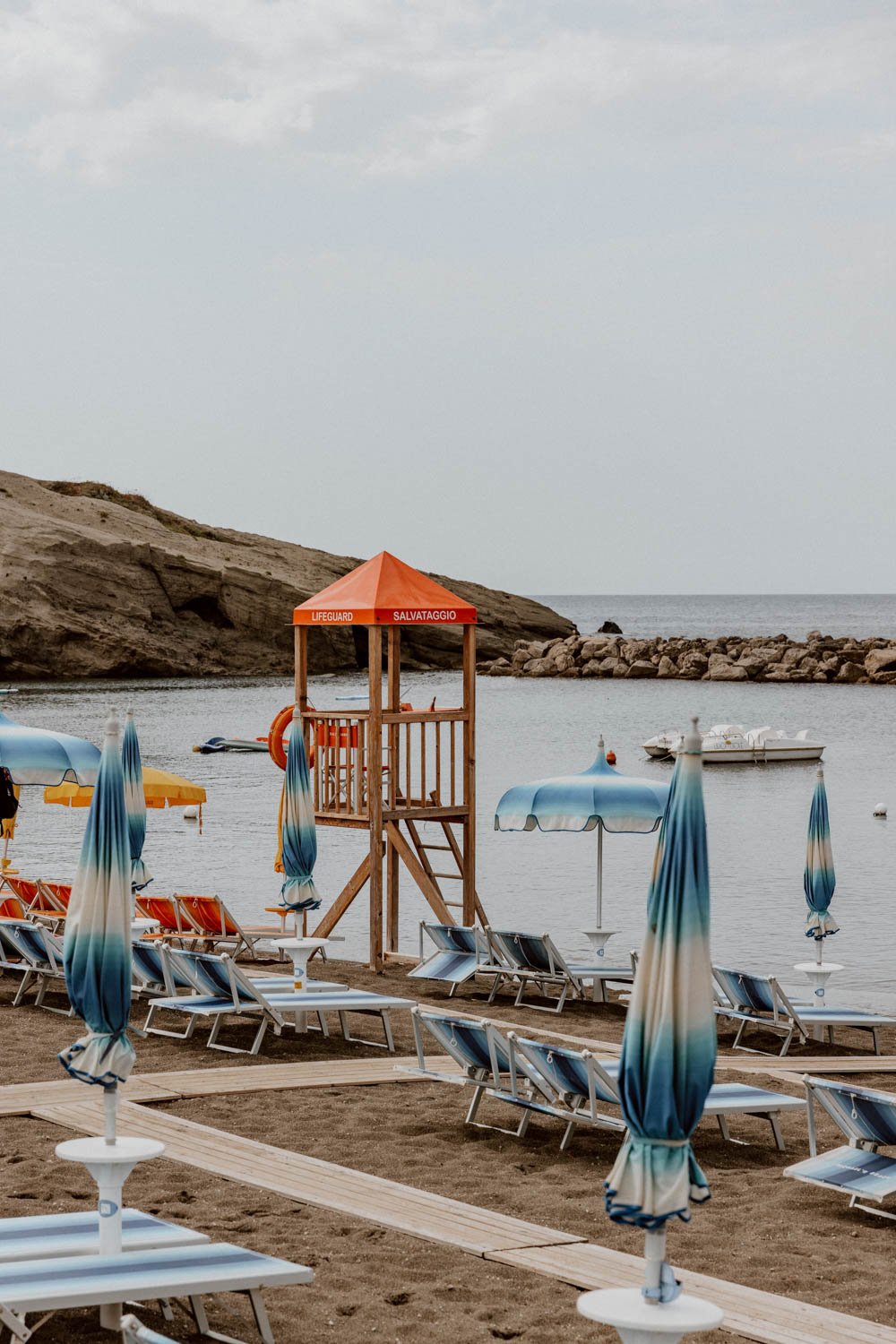
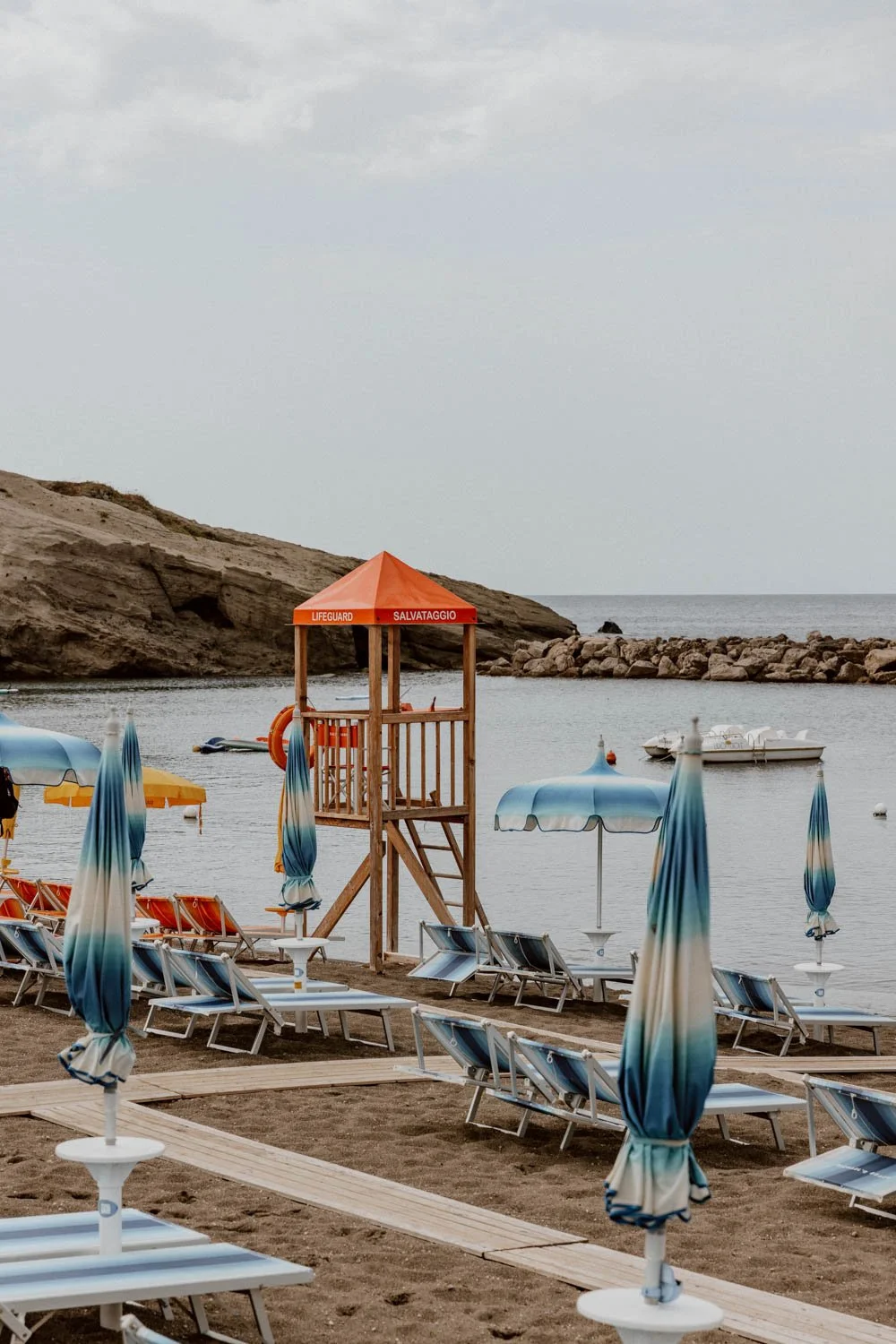
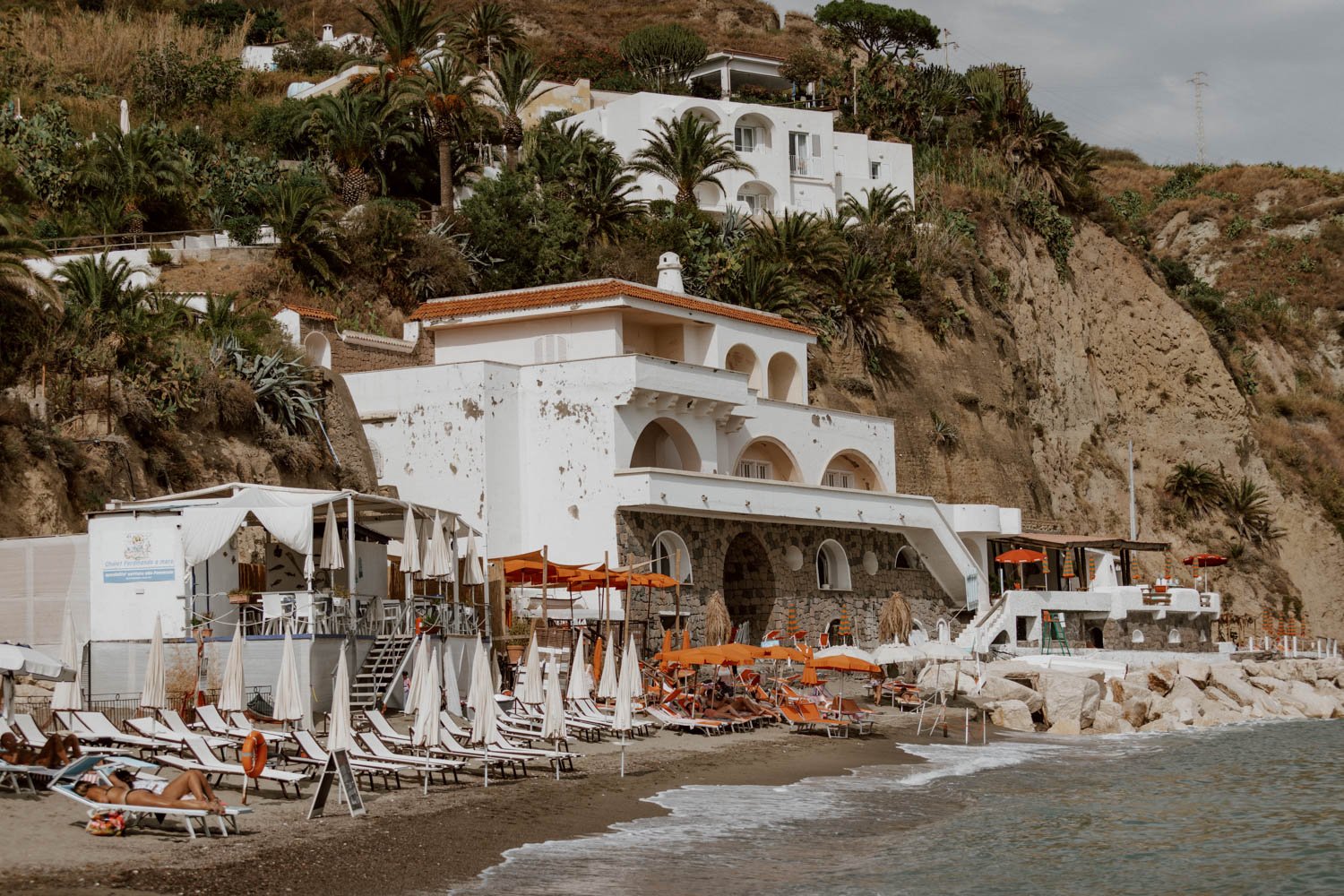
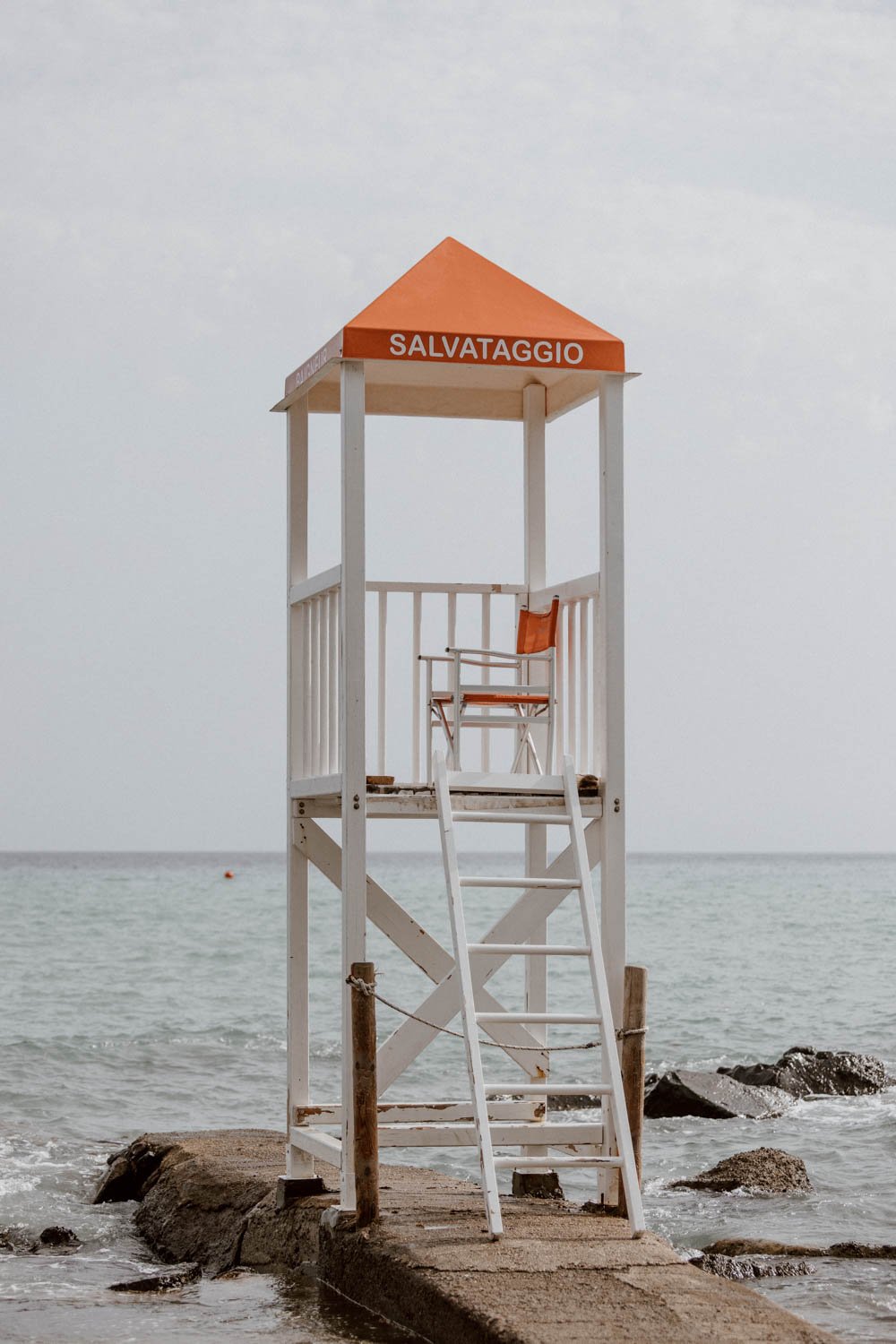
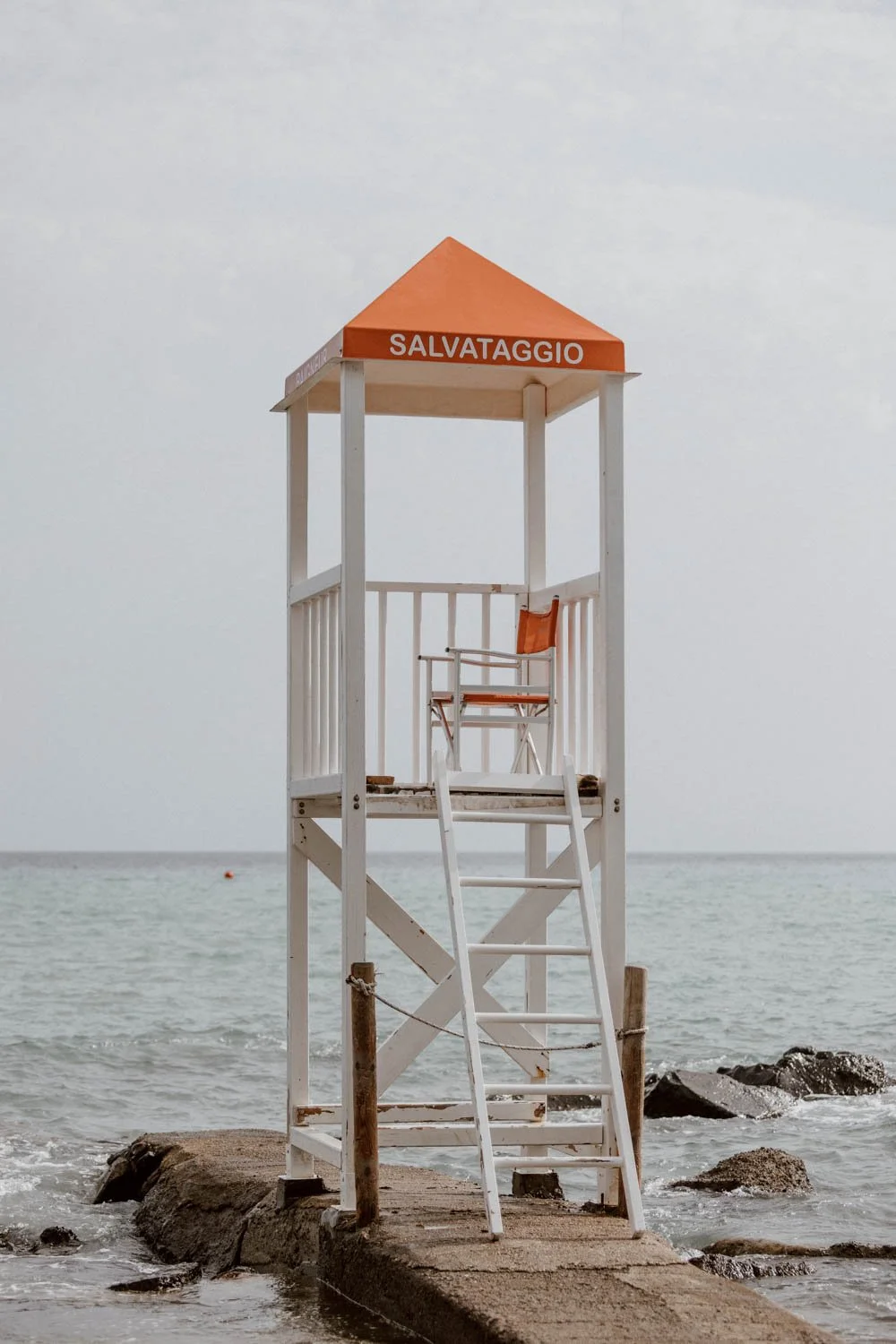
This is Le Fumarole dei Maronti, a section of beach where volcanic gases escape through natural vents, warming the sand underfoot. The area has long been known for its geothermal activity - and yes, the sand does feel noticeably warmer here, especially in summer. But it’s worth noting that the vents themselves are a little underwhelming; partially fenced off behind a makeshift plastic barrier, they lack the drama you might expect. Some locals still cook food here by burying it in the sand, whilst restaurants on the beach advertise various sand-cooked dishes, but we didn’t see anything of that sort. Still, the surrounding cove is pleasant, with a few lidos, a photogenic lifeguard tower, and a simple restaurant right by the water. If you’re already spending the day on Maronti, it’s worth the short walk to see for yourself.
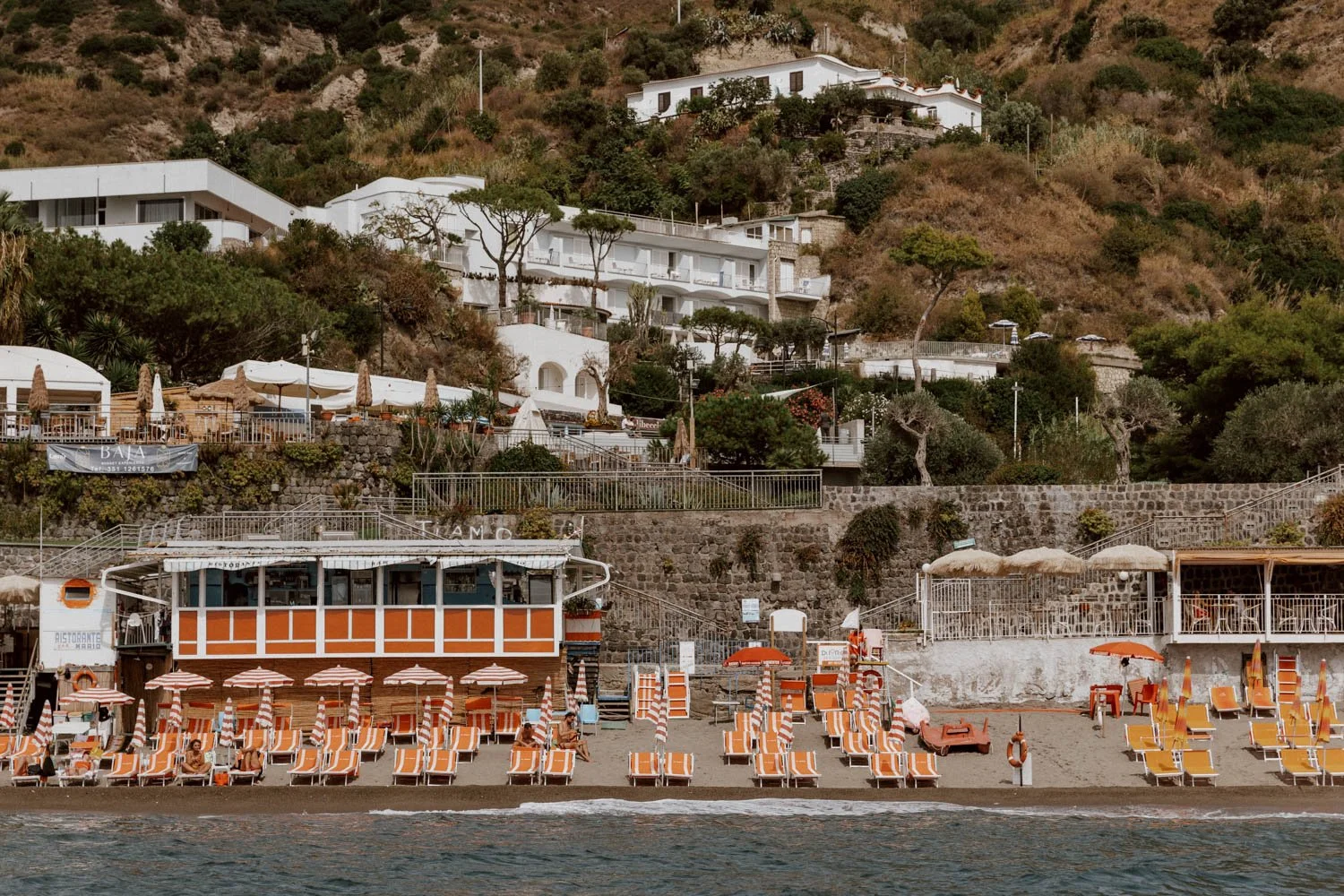
How to Get To Maronti | The beach is easily reached by bus from Ischia Porto or Barano. If you're staying in Sant’Angelo though - or doing as we did and exploring the town first before heading over to Martonti beach - it’s best to hop on the small water taxi across the bay, which is far more fun than walking the steep hill in the heat. If visiting during the busier months, you shouldn’t have to wait long for a departure as they go very regularly or when full. The journey time is around 5-10 minutes and a single adult fare is €5 during the day, but may increase after 7pm.
To return to Sant’Angelo from Le Fumarole dei Maronti, you can either jump on a boat or do what we did and follow the paved and pedestrianised (bar the odd golf cart ferrying luggage to nearby hotels) path back to Sant’Angelo; it’s a short walk that offers lovely views over the town and sea beyond.
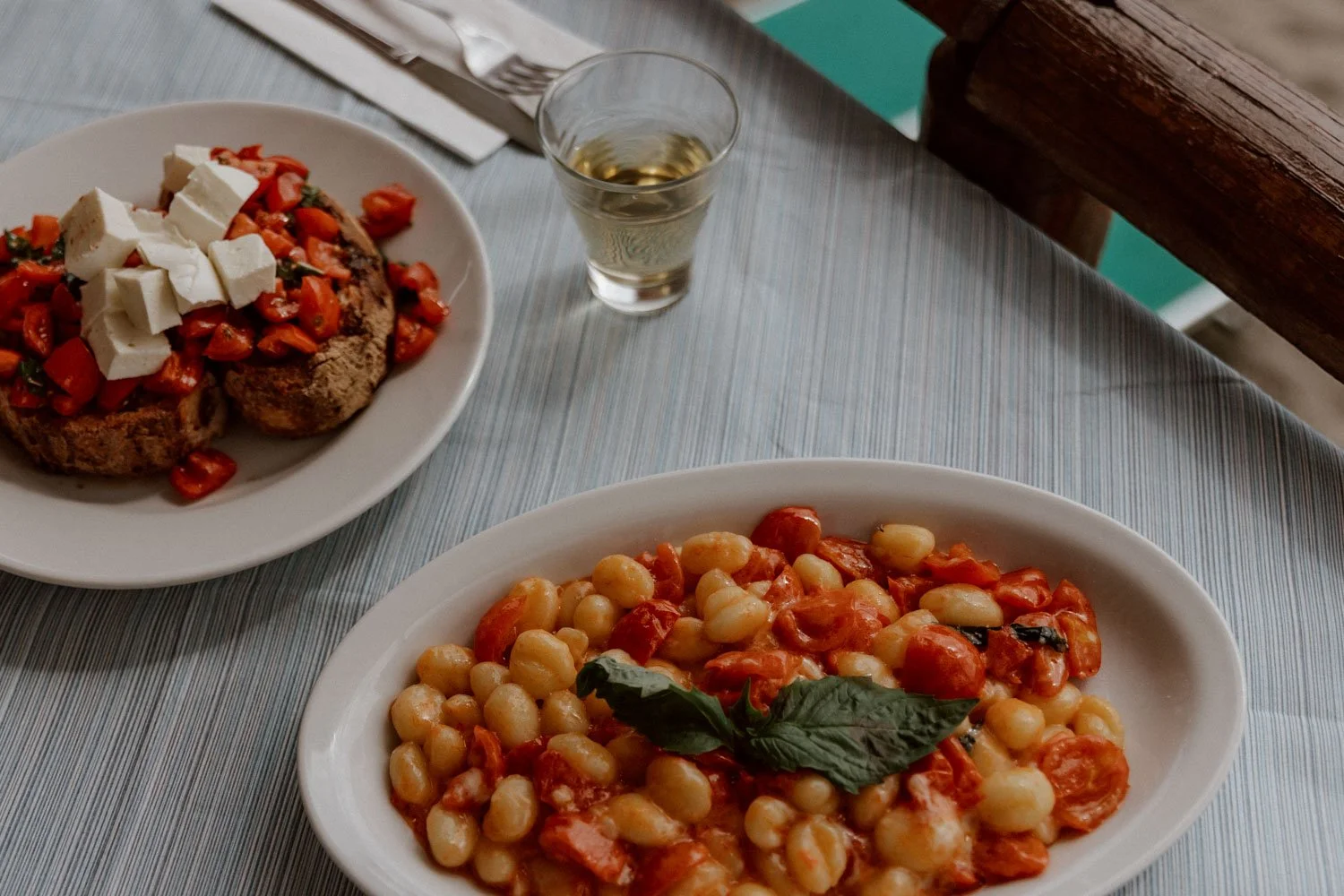
Top Tip // If you’re looking for a lunch spot over on Maronti, we can highly recommed Lido Sammy (maps). A gorgeous gnocchi alla sorrentina thick with ripe mozzarella, vinegar-spiked anchovies and bruschetta piled high with sweet, plump tomatoes - all washed down with chilled local white wine. Bloody delcious. Alternatively, Restaurante Da Nicola Fumarole located a little further down the beach also comes very highly recommended.
Enjoy a Scenic Boat Trip Around the Island
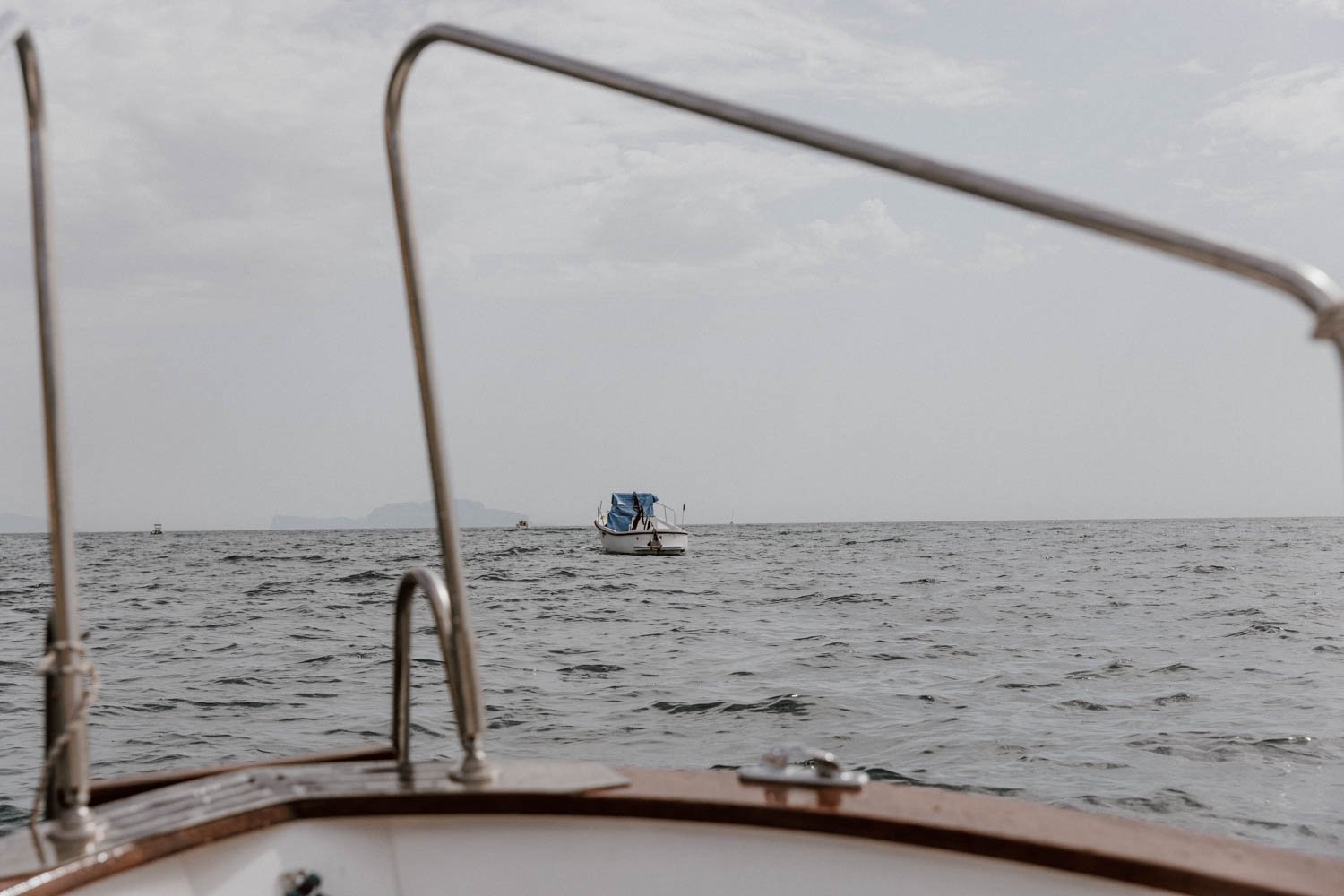
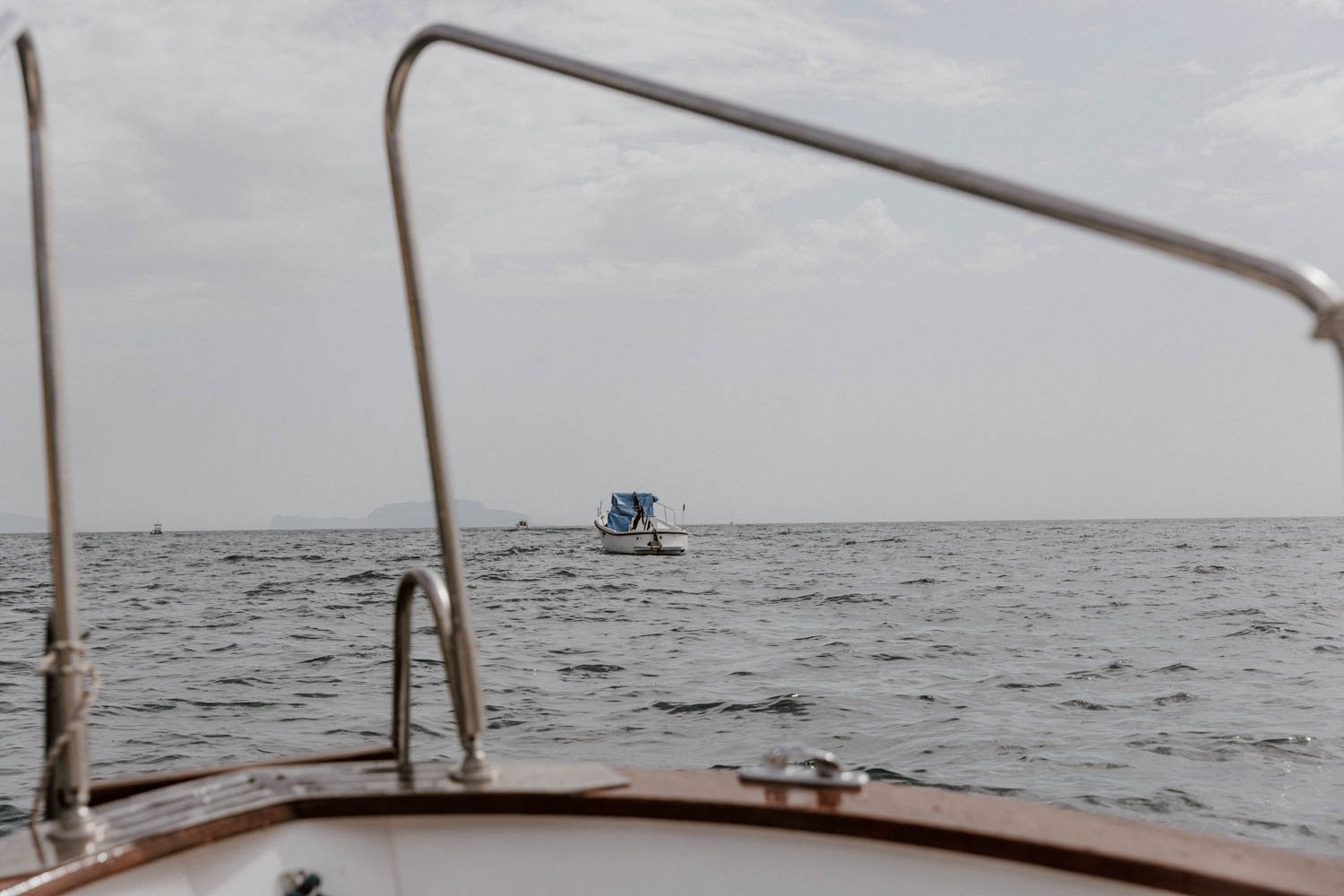
Whether you hop aboard a skippered tour, rent a motorboat for the day, or join a guided kayak excursion, one of the best ways to truly appreciate Ischia’s coastline - its dramatic cliffs, pastel-hued fishing villages, hidden beaches, and rocky outcrops - is, unsurprisingly, from the water.
Most boat tours do a full loop of the island over the course of several hours, with stops built in for swimming, snorkelling, or simply basking in the sunshine. Whilst it’s easy to arrange a tour once you arrive - especially if visiting during the high-season - if you’d like to get one booked in advance of arriving in Ischia, this full-day option departing from Forio has hundreds of really excellent reviews and includes breakfast, an aperitif and a two-course lunch
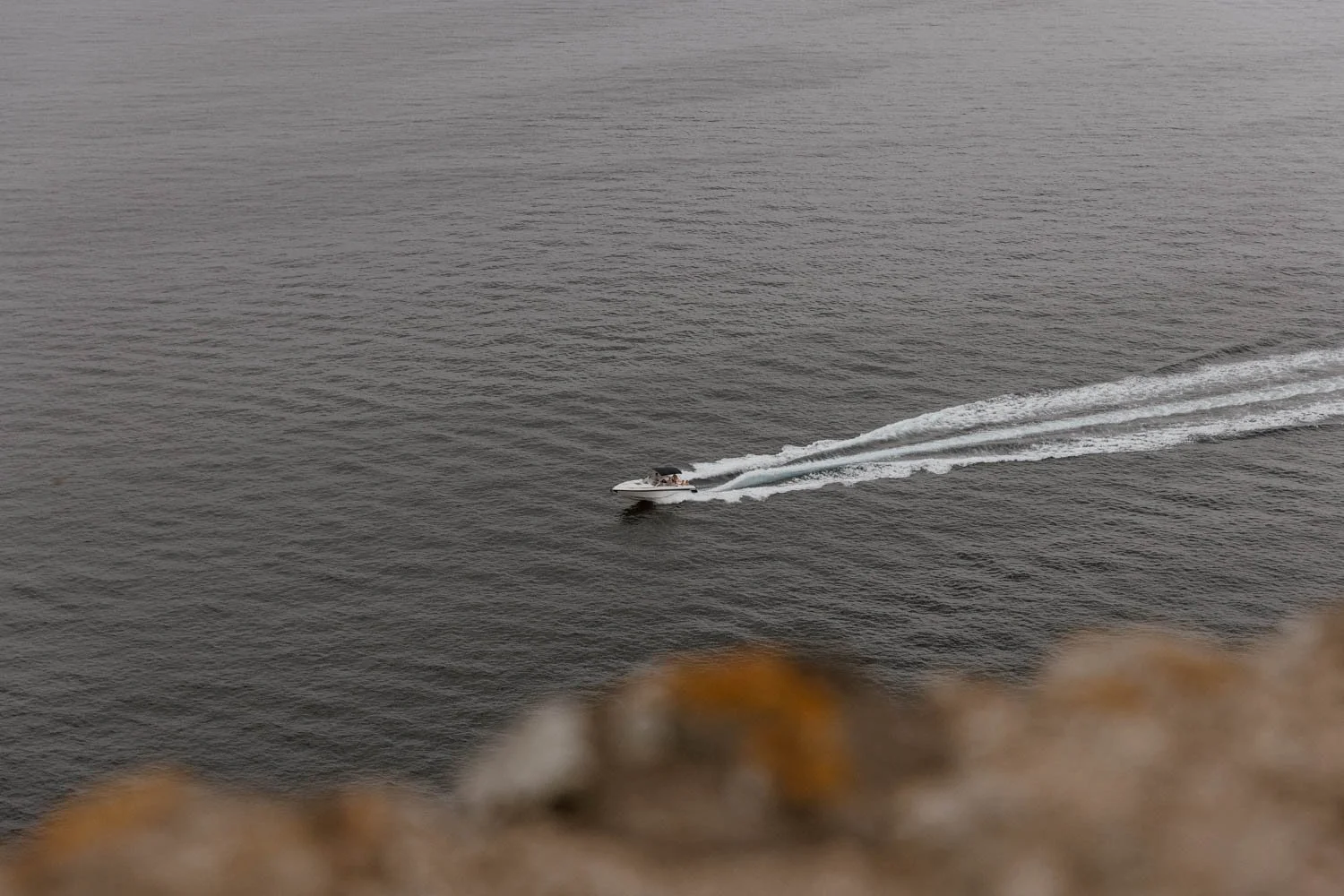
If you’re after something more flexible, renting your own small motorboat is a brilliant alternative. It’s particularly good for couples or small groups looking for a more laid-back, DIY experience; pack a picnic, bring plenty of water, and take your time finding the perfect cove to drop anchor - the mineral-rich sea around Ischia is warm, clear, and ideal for swimming straight off the back of the boat. No licence is required and yes, it is as wonderful as it sounds - we didn't do it in Ischia, but we have very fond memories of sailing the sea independently in Calabria, feeling like millionaires for a day!
For a slower-paced, low-impact alternative, consider a sea kayak tour. There’s an excellent local operator that runs trips from Sant’Angelo, with options to explore caves, thermal springs, and lesser-visited stretches of coastline only accessible by smaller vessels. It’s a great way to get closer to the island’s natural features while also squeezing in a bit of gentle exercise. Find out more about the highly-rated half-day tour here.
Top Tip // Boat tours and kayak trips generally depart from Ischia Porto, Forio, or Sant’Angelo, and run frequently throughout the warmer months. If you fancy a dip in the island’s natural hot springs, look for an itinerary that includes Sorgeto Bay, where geothermal waters bubble up into the sea along the rocky shoreline.
Wander the Streets and Waterfront of Ischia Ponte
Ischia Ponte is the oldest part of the island, shaped by centuries rather than planners - a patchwork of weathered facades, narrow flagstone alleys, and shuttered houses that lean together like they’ve grown tired. Sitting between the more tourist-focussed Ischia Porto and the stone causeway leading out to the island’s historic fortress, it wears its history lightly: part fishing quarter, part faded grandeur, part everyday town where laundry still flaps between second-floor windows and fishermen haul crates across the pavement.
The main draw, of course, is Castello Aragonese, rising from the sea at the far end of the bridge, but it’s worth giving the town itself a little time before heading straight for the castle. Along Via Luigi Mazzella, the main street, you’ll find tiled courtyards, little churches, wine shops, and crumbling doorways that seem to have barely shifted in fifty years. It’s a narrow, meandering sort of street that works best on foot, especially late in the day when the temperature dips and the façades begin to catch the light.
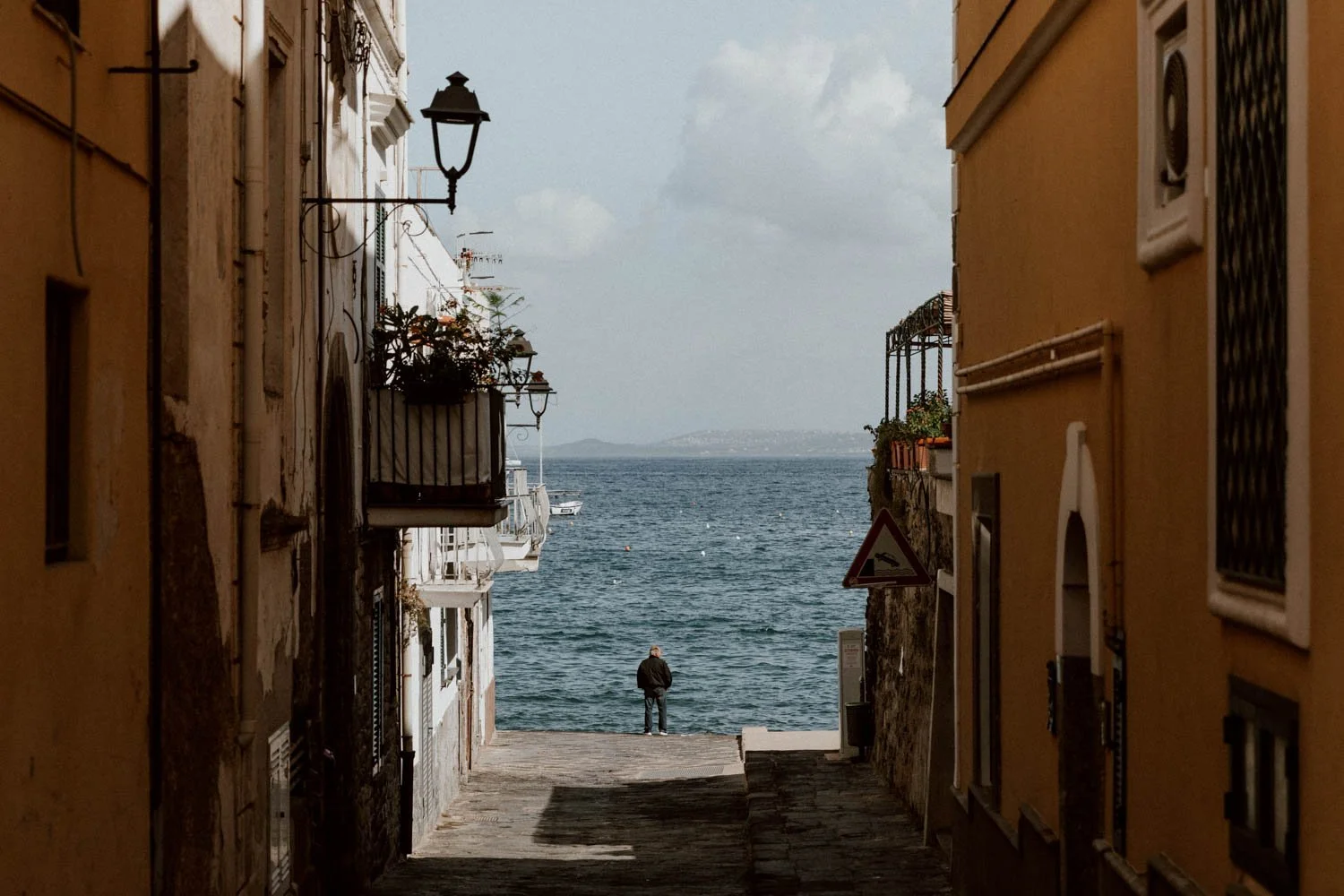
If curiosity takes you, step inside the Museo del Mare (maps), a small maritime museum tucked near the northern edge of town. It’s a quietly interesting space filled with salvaged shipwrecks, photographs, and tools from the island’s fishing past. A little further on, you might miss the entrance to the Cattedrale di Santa Maria Assunta (maps) if you’re not looking for it, but it’s worth ducking inside for a moment of peace. Built in the 18th century to replace the old cathedral within the castle walls, it’s softly lit and quietly elegant, with dusty Baroque arches, flickers of gold, and an icon of the Madonna rescued from the ruins of the Castello.
Just north of town, a short stroll brings you to Spiaggia dei Pescatori (maps), a long, slate-grey stretch of sand with a gloriously nostalgic vibe. The majority of the beach is taken up by old-school lidos, each one proudly clinging to a slightly faded sense of summer glamour. Wooden changing huts painted with bright blue or emerald green accents, neat rows of striped umbrellas, and loungers arranged with geometric precision all stand out against the dark sand; Aperol spritzes arrive on plastic trays, and lunch might be nothing more than a panino wrapped in wax paper, eaten with salty fingers under the shade of a candy-coloured awning.
It all feels fantastically kitsch - like a postcard that hasn’t changed in decades.
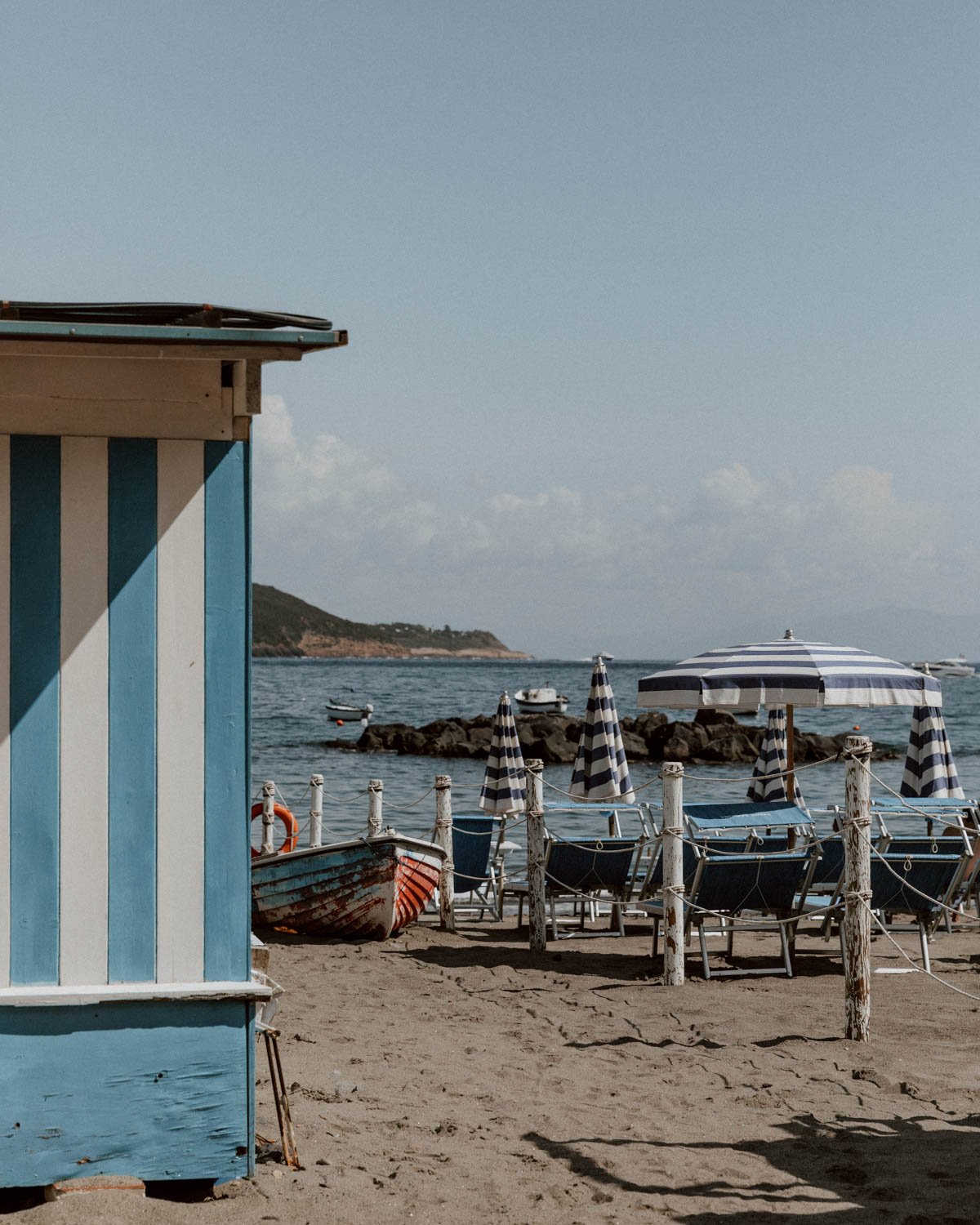
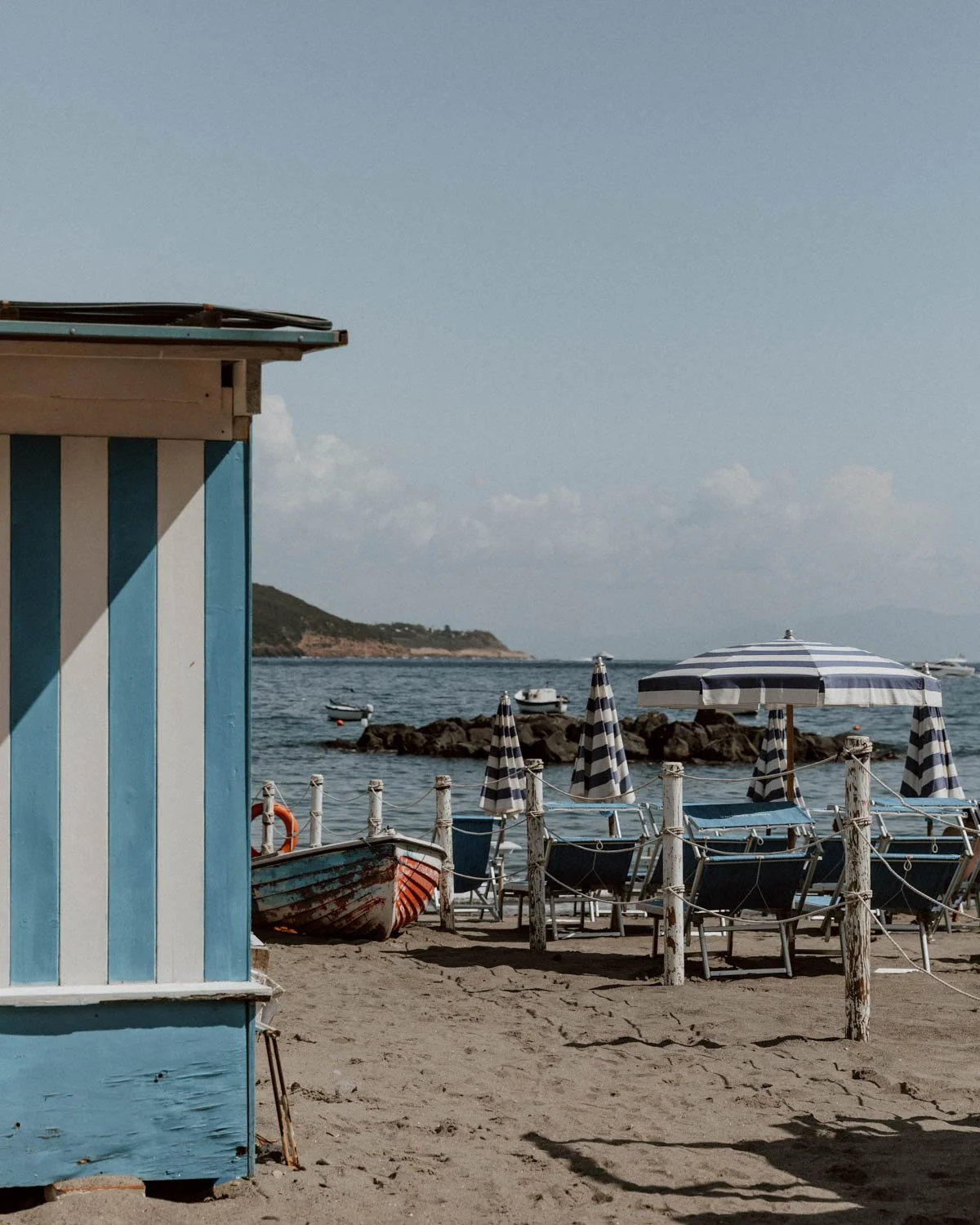
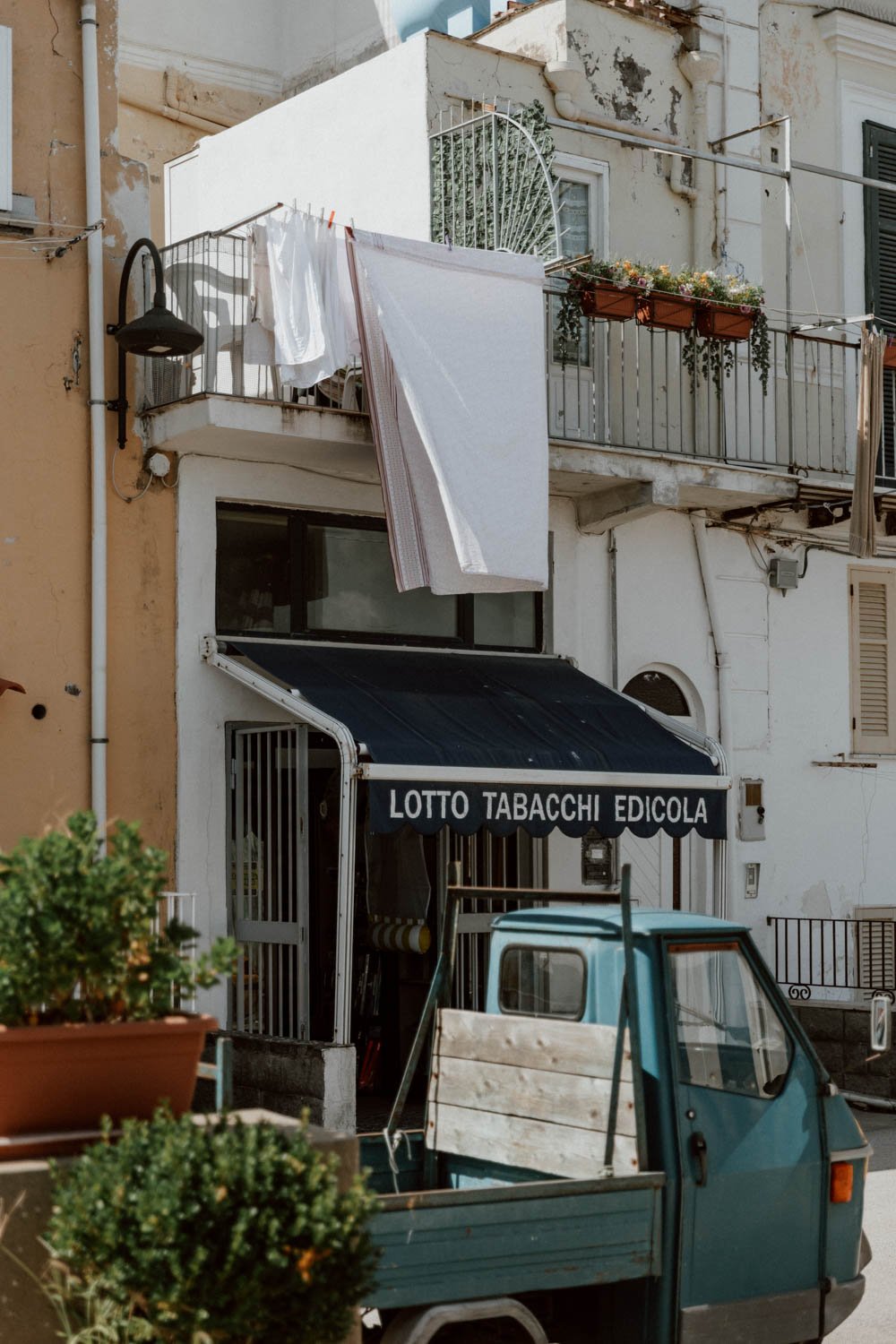
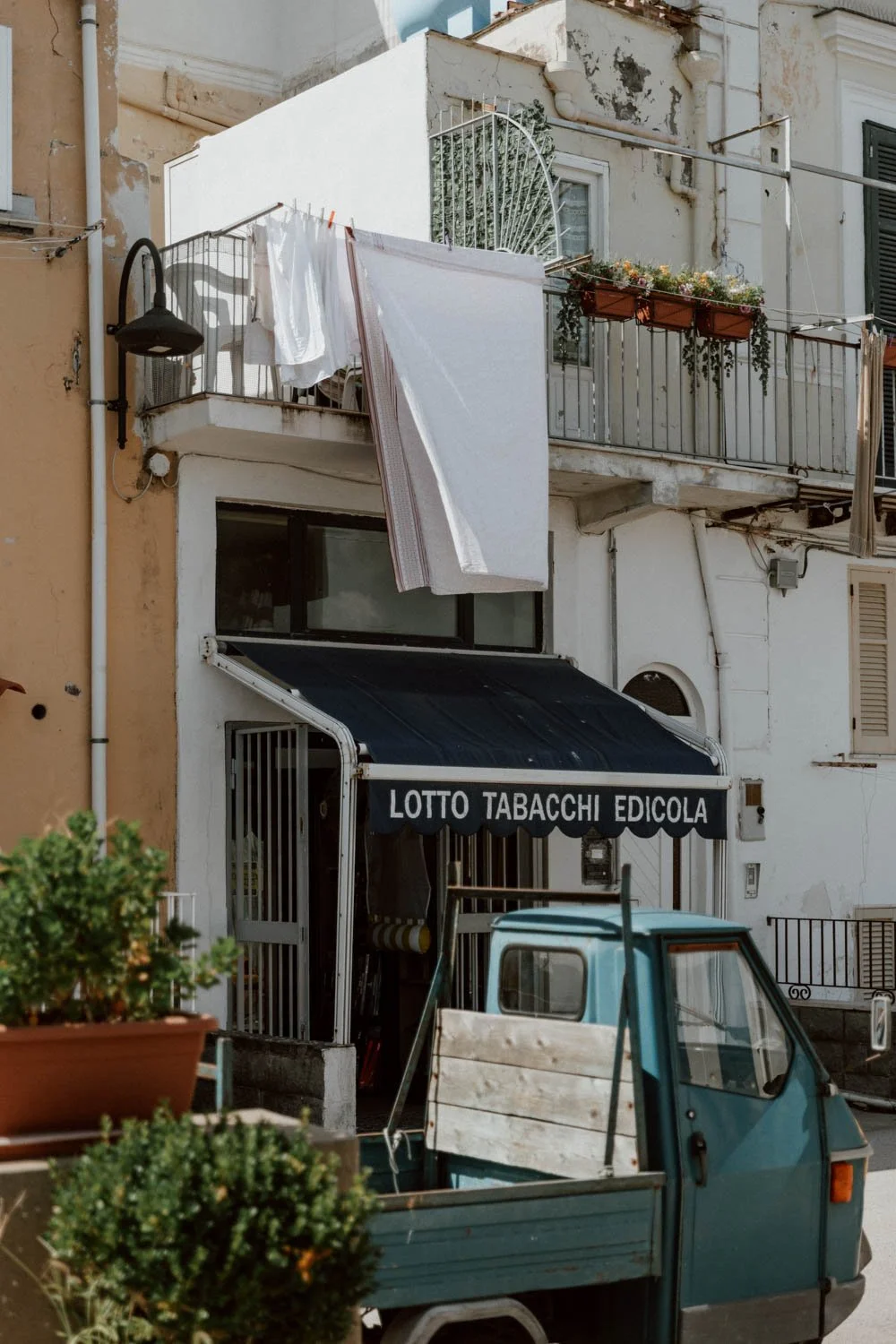
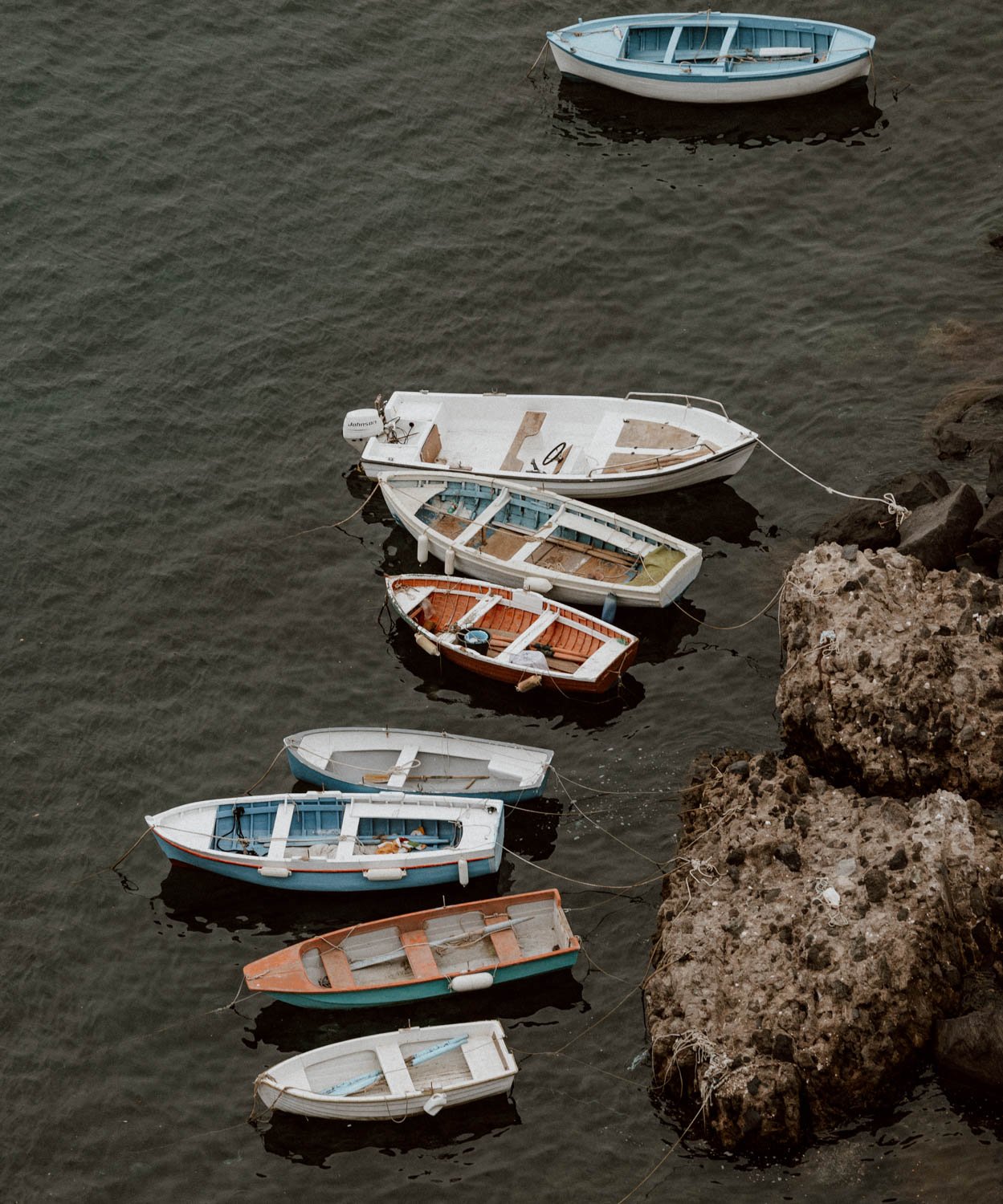
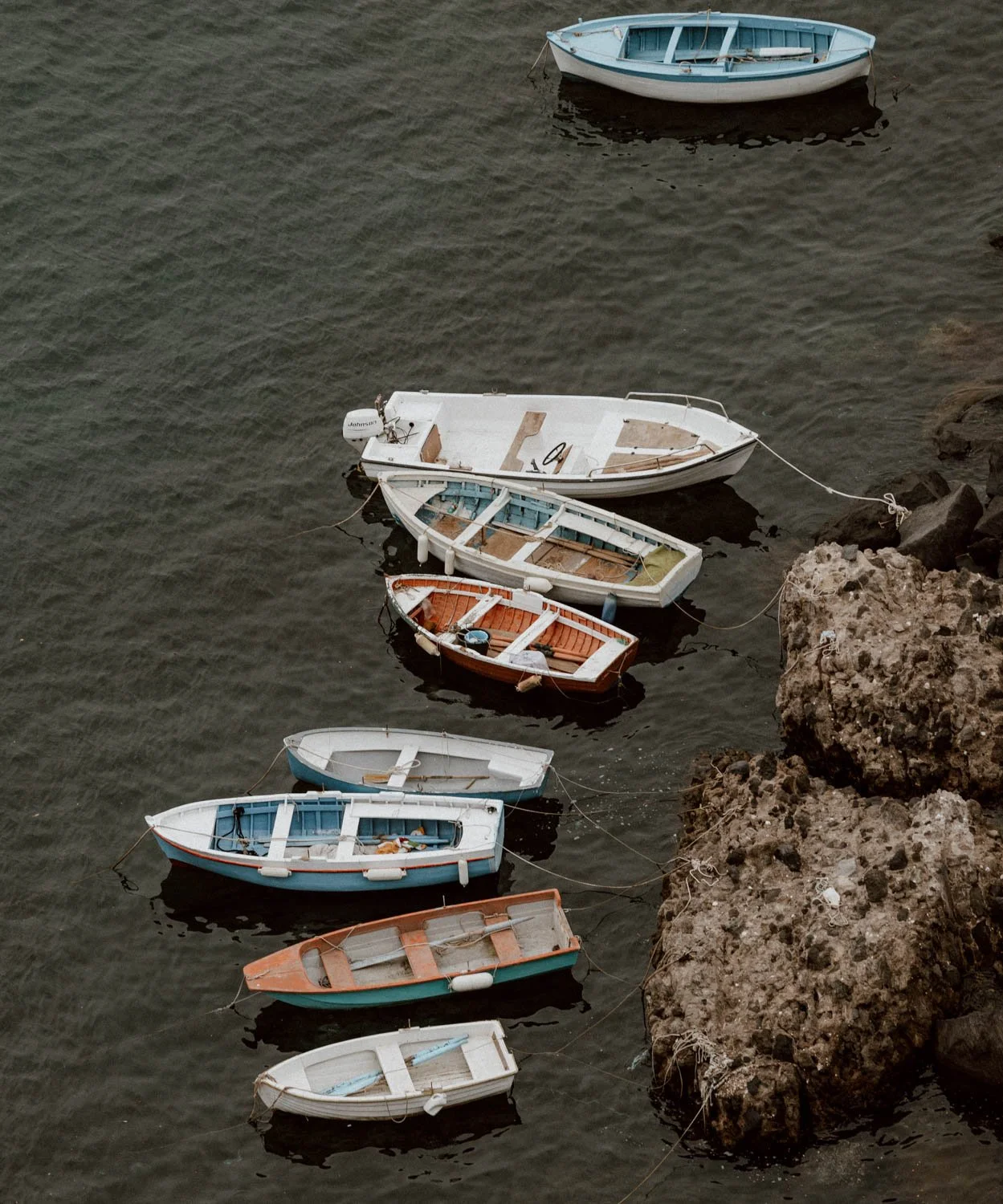
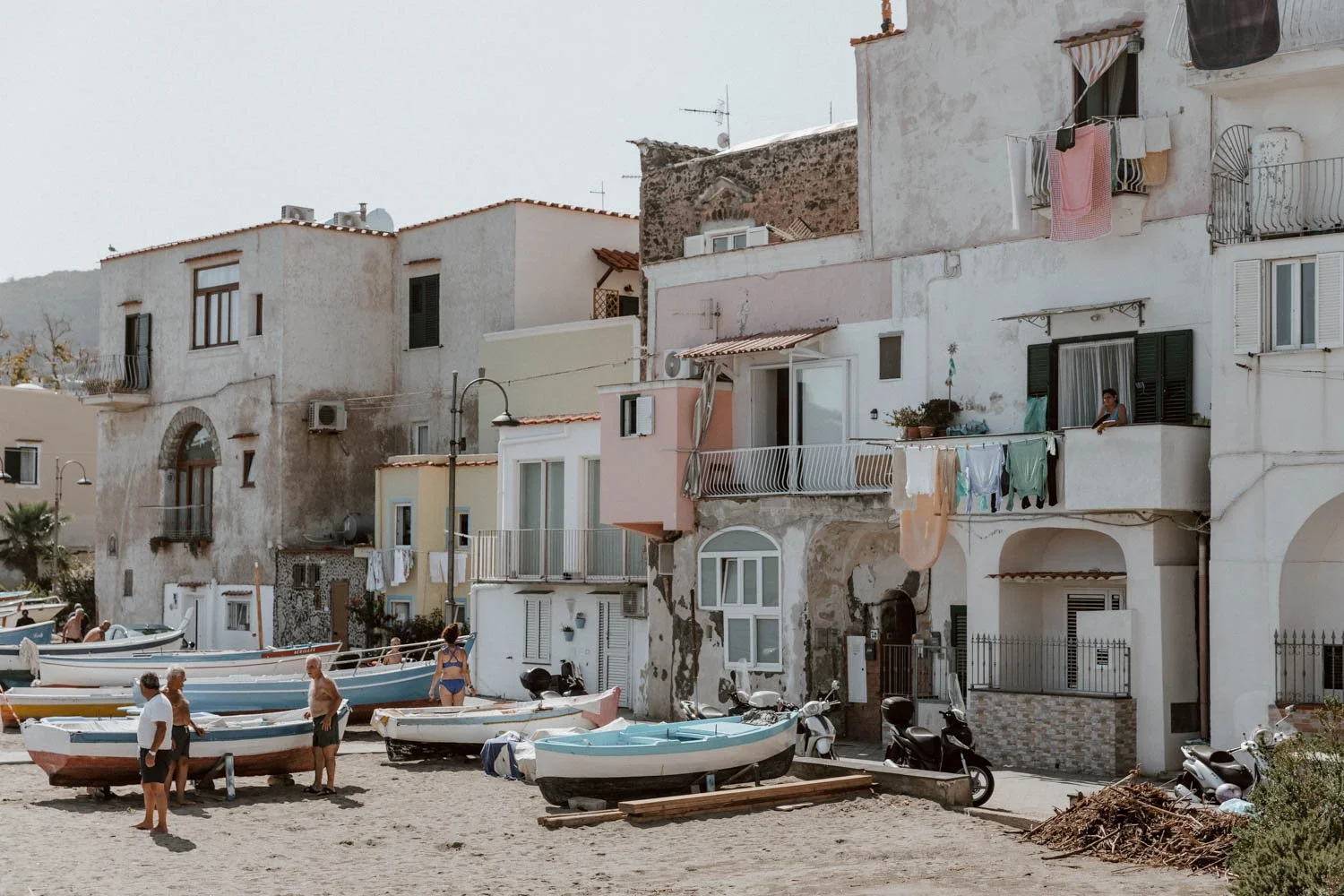
Be sure to wander to the far end, where lidos give way to open sand and wooden fishing boats rest on the shore. Above them, whitewashed buildings lean into the light, their walls gently flaking, paint sun-worn, with the occasional blush of lemon or rose. Towels hang from balconies, children paddle in the shallows, and the scene unfolds like a fragment of 1970s southern Italy: simple, unstyled, and quietly wonderful.
If you’re staying long enough to linger, stop for a gelato at Pasticceria Trani (maps). The pistachio - our baseline for judging a gelateria - was only average, but the nocciola was dense, smooth, and entirely unmissable. Further along the waterfront, Ristorante Aurus (maps) is a fantastic choice for a languid lunch, serving excellent seafood in a beautiful setting right on the water, with castle views that slowly shift as the light changes.
Hire a Scooter and Explore the Island
While Ischia’s public buses are affordable and fairly reliable, they can also be slow, ridiculously crowded, and quite frustrating in the height of summer, especially when the sun’s beating down and timetables start to feel more like suggestions than schedules.
If you’re up for it, hiring a scooter is one of the best ways to get around the island and explore at your own pace.
The roads around the coast are winding but scenic, offering sea views, hillside vineyards, and plenty of places to stop for a quick dip or long lunch. Travel times are short - you can get from one end of the island to the other in under an hour - and having your own wheels gives you the freedom to reach quieter inland villages and tucked-away beaches that are harder to access by bus.
Scooter rental shops are easy to find in most of Ischia’s towns, particularly around Ischia Porto and Forio, and daily rates are generally reasonable, although they do rise slightly in high season. Just make sure you’re confident on two wheels. If it’s your first time driving in Italy, be aware that local drivers can be assertive, and some of the inland roads are narrower and steeper than they look on a map.
For the most part though, it’s generally quite rural and quiet roads.
As for where to go, the loop from Forio to Sant’Angelo is a great place to start. It’s a winding coastal road that dips past vineyards, lemon groves, and long views out to sea - one of our favourites to drive, and a route we returned to several times. Further inland, the climb up to Serrara Fontana reveals sweeping views of the southern coast, with a particularly lovely stop at the Belvedere di Serrara where you can pull over and look down at Sant’Angelo tucked into the rocks below.
From there, the road weaves through quiet villages and small farming plots, often with little more than a stone wall separating you from rows of tomatoes or old olive trees. If you continue towards Campagnano or along the northern ridge, you’ll come across wide views towards Procida and the mainland.
If you’re planning to hike up Mount Epomeo, then pairing it with a day when you’ve got your own wheels is a great idea. Not only does the drive up offer beautiful views, but having a scooter gives you more flexibility with timings than relying on the buses.
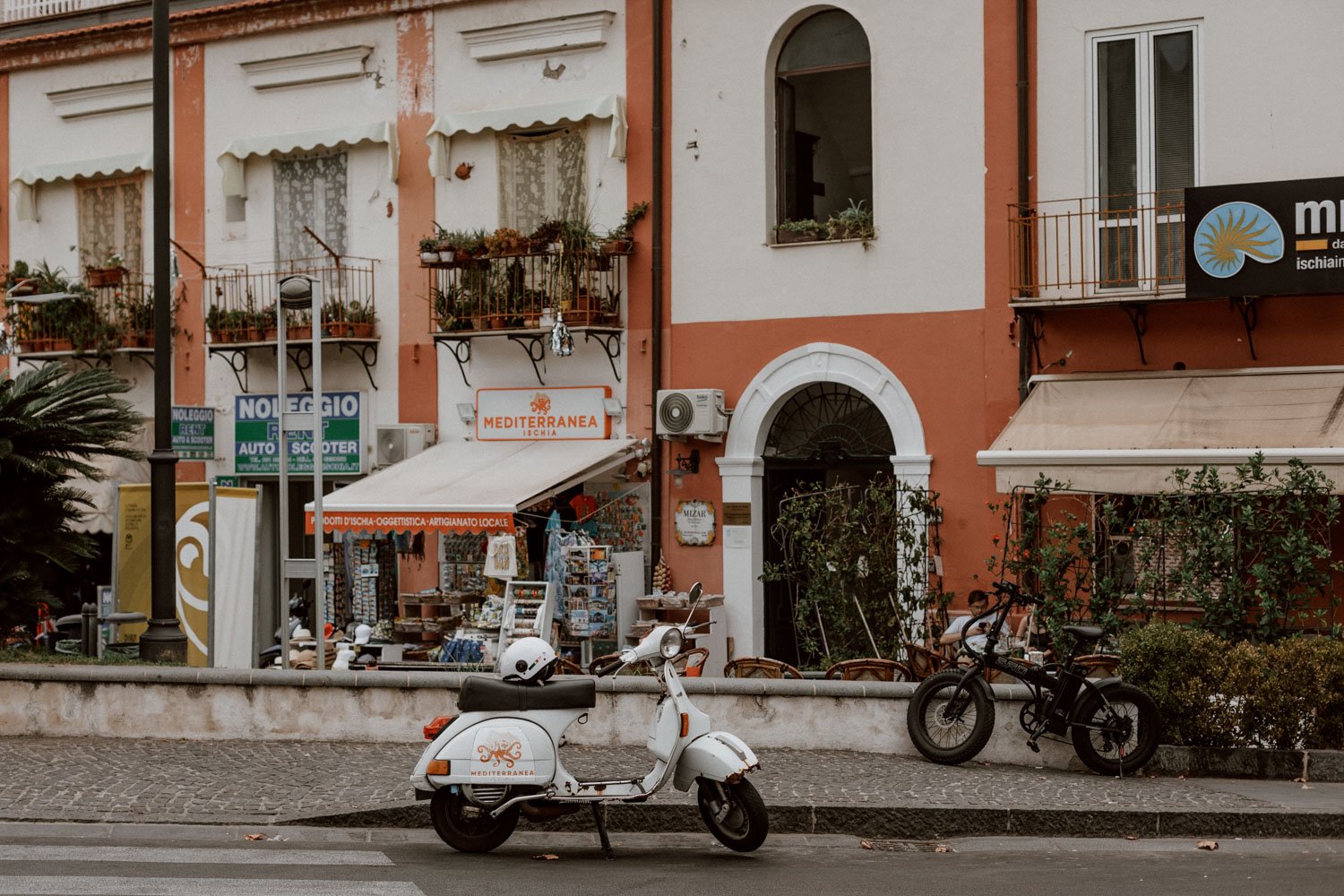
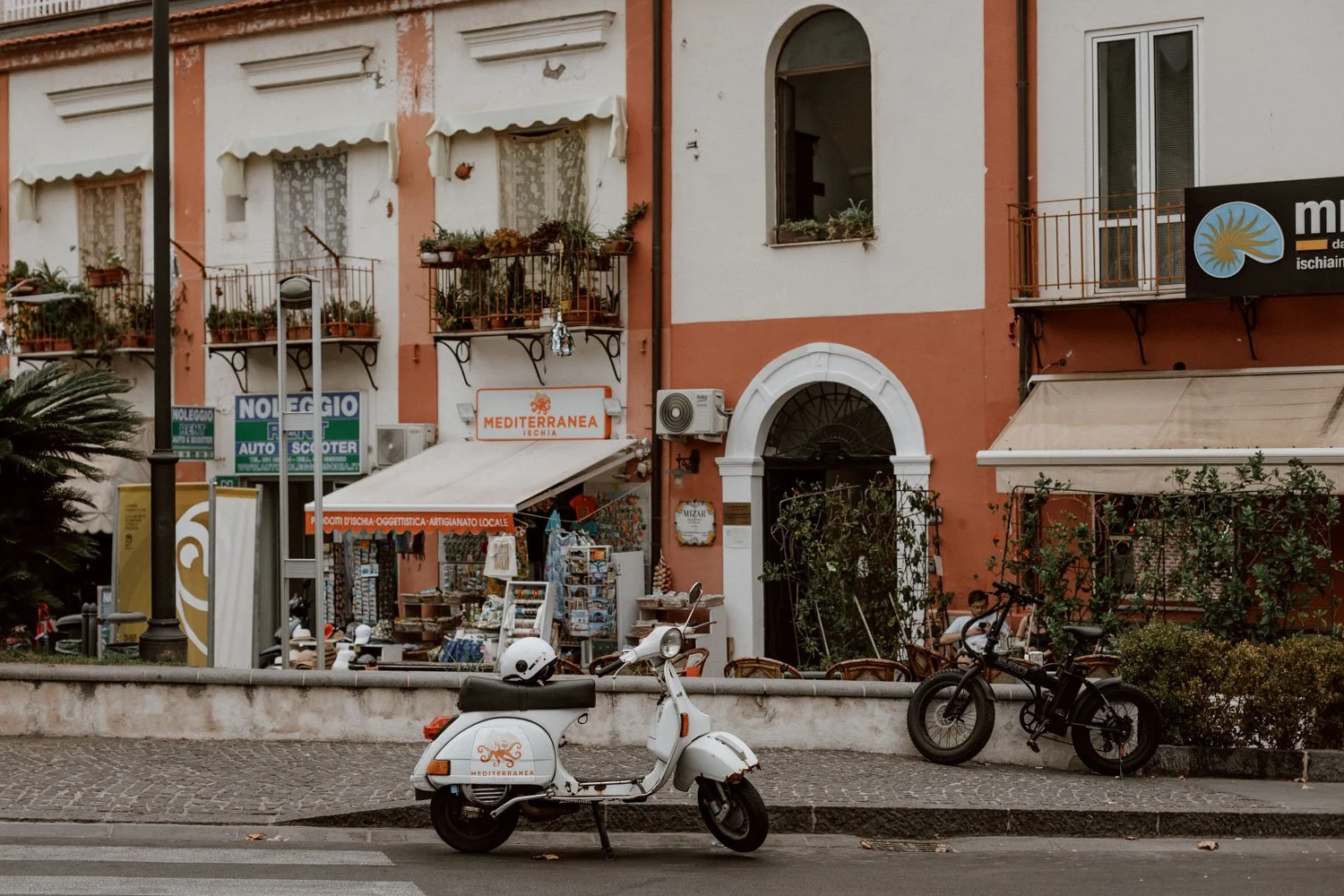
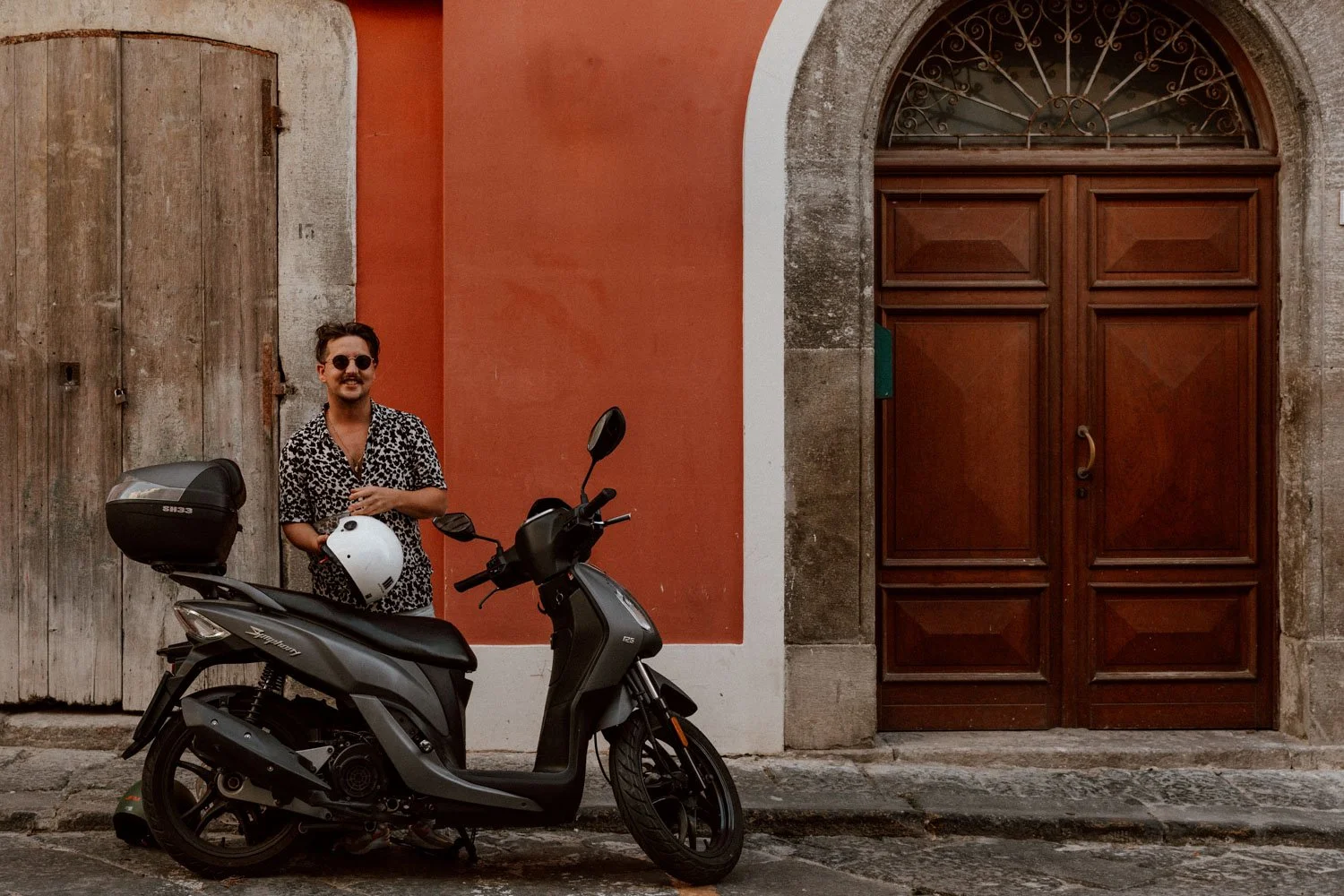
The Details | Scooter rental shops are easy to find in Ischia Porto, Forio, and Casamicciola, with prices from around €25-30 per day for a basic 125cc model (with discounts available for longer hires). We simply turned up in the morning and rented from CostabileRent in Forio for two days, but if visiting during high season, it may be worth arranging something in advance to guarantee availability.
You’ll need a valid driver’s licence (an international one if you’re not from the EU), and many places will ask for a deposit and a quick demo ride. Helmets are included as standard, and most shops will provide a simple map of the island. As ever, make sure to photograph / video the condition before you leave the rental shop.
There are petrol stations in the main towns, and traffic’s rarely heavy outside high summer. That said, some of the mountain roads are narrow and bend sharply, so it’s worth taking things slowly - you’re not in a hurry anyway!
If a scooter in Ischia doesn’t appeal, then you can of course consider a car rental for some or all of your stay. Personally, we don’t think it’s necessary for most day trips and may be become a bit of an inconvenience. However, it’s not a bad idea for a few days if you’re like to explore further afield independently and you’ll be better off getting the smallest vehicle available. We look + book on Auto Europe and Rentalcars.com to get the best deal.
For more advice, check out our 9 Car Rental Tips for Travellers
Stroll The Pretty Streets of Lacco Ameno
Of all Ischia’s towns, Lacco Ameno feels the most composed.
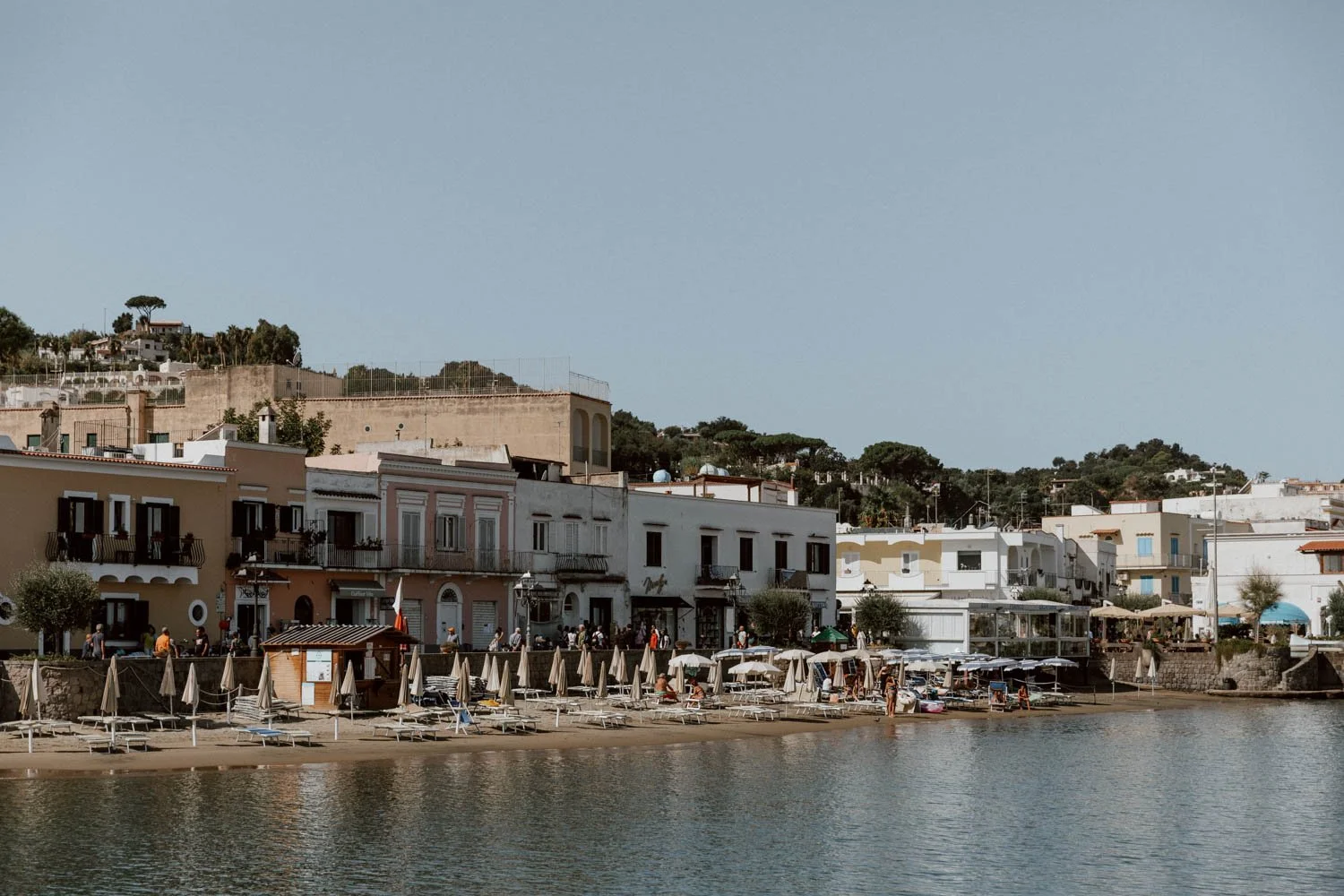
White tablecloths in shaded courtyards, pressed linen in the boutiques, and an easy calm along the waterfront that doesn’t feel staged or over-designed. It’s small, quiet, and mostly flat, with a palm-lined promenade, a pedestrianised centre, and a relaxed rhythm that lends itself to wandering without aim.
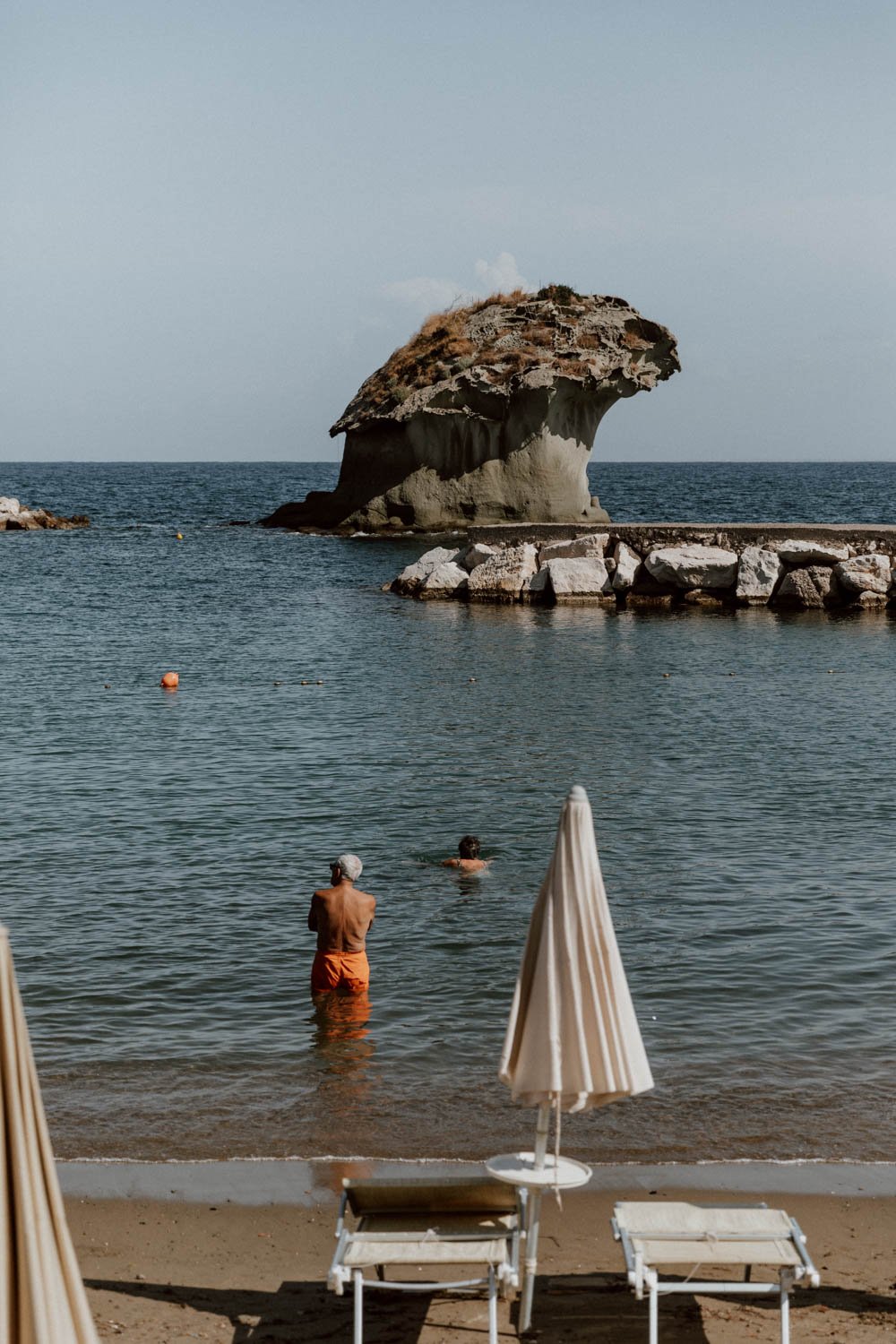
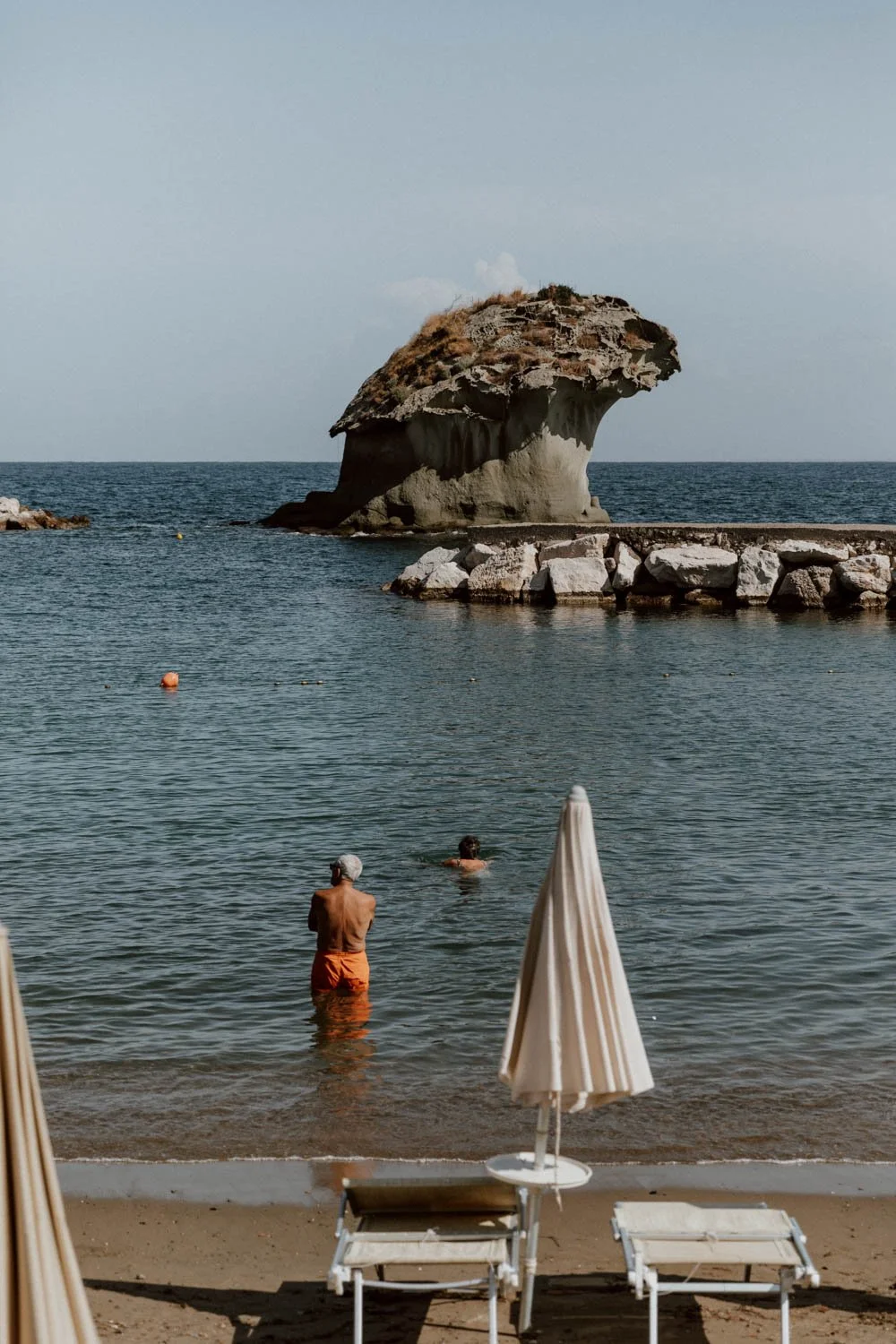
The main square and marina form the centre of town, but most people gravitate towards the pedestrian walkway that runs behind the beach. From here, or from under one of the blue-and-white striped parasols that line the sand, you get a perfect view of Il Fungo - a mushroom-shaped rock just offshore, smoothed by centuries of wind and salt, and now something of a local mascot. It’s strange and oddly photogenic, especially in the soft light of early evening when the stone turns golden and the town begins to hum.
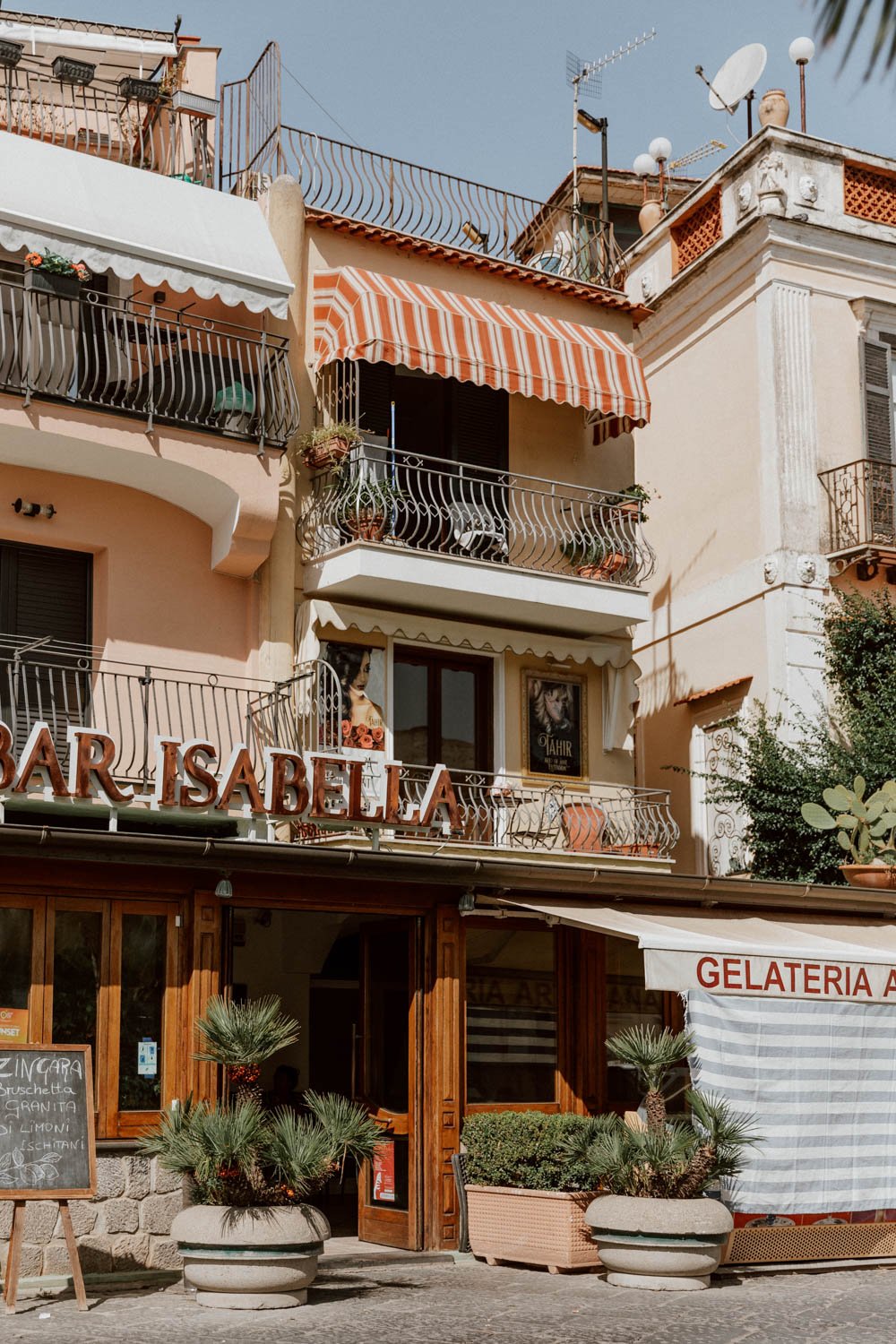
Step back from the water and you’ll find a compact web of perfect little side streets. Ceramics shops with hand-painted tiles lean into pavement cafés. The awnings of small delis ripple gently above baskets of sun-dried tomatoes and capers, staples of the island’s cuisine. You’ll pass faded palazzos with iron balconies, pastel homes just starting to peel, and a handful of designer boutiques that seem to have washed up here from the mainland. Like much of the island, it all feels a little 1960s, but in the best possible way - like the kind of place someone’s well-dressed aunt has been coming to every summer since she was nineteen.
Visit | While Lacco Ameno might now be better known for its quiet elegance and spa hotels, it was also the heart of something much older. Tucked behind the town is Villa Arbusto, a pale stucco villa now home to the Museo Archeologico di Pithecusae. Small but well-curated it’s home to the Coppa di Nestore, a small clay drinking cup from the 8th century BC inscribed with one of the oldest known examples of Greek writing in the West.
Top Tip // For those looking to stay somewhere truly special, San Montano Resort & Spa sits just above the town, with panoramic views over the bay. It’s one of Ischia’s most elegant places to stay, complete with its own thermal spa, an infinity pool made for slow afternoons, and sunset views that feel almost cinematic. There’s even a funicular to take you down to the nearby beach if you don’t fancy the walk back.
Taste Traditional Ischian Rabbit and Island Specialties
We might not have tried it ourselves - pescetarian habits die hard - but coniglio all’ischitana is undeniably the most iconic dish on the island and we’d be doing you a disservice not to mention it.
A slow-cooked rabbit stew rich with tomatoes, garlic, white wine, wild herbs, and local olive oil, it’s a recipe born in the kitchens of Ischia’s hill villages, where rabbits were once raised at home and Sunday lunches a serious affair. These days, it’s on offer across the island, though many say the most authentic versions are still found inland, far from the sea views.
While we can’t offer a personal verdict, the most recommended spot to try this most special of dishes is Il Bracconiere (maps), a rustic trattoria tucked into the slopes of Monte Epomeo that’s known for its traditional take on the dish - and the panoramic views don’t hurt either. Just be sure to call ahead, as the rabbit is slow-cooked and usually made to order.
Beyond the rabbit, a lot of Ischian cooking is shaped by the land as much as the sea. Despite being an island, many of its oldest dishes come from the hills, from terraced gardens, family plots, and whatever was growing well that season. Zucchini, aubergine, peppers, tomatoes… you’ll find them everywhere: in pasta sauces, vegetable stews, tucked into antipasti plates, or just grilled and served with olive oil and bread. It’s simple, unfussy food, built around what the island’s always had close to hand.
Given the island’s proximity to Naples, you’ll also not struggle to get an excellent Neapolitan pizza on the island, and we’d be lying if we didn’t mention the several plates of induglent and calorific but utterly delicious gnocchi alla sorrentina that were consumed whilst here.
A glass of local white is pretty much always a good idea. Light, dry, and grown in the island’s volcanic soil, it goes especially well with seafood or anything vegetable-heavy. Keep an eye out for small producers like Pietratorcia and Tommasone - both offer tastings and cellar tours if you fancy diving a bit deeper. Most restaurants serve house wine by the carafe too. It’s rarely fancy, but more often than not, it does the job just fine.
Top Tip // If you’d like to gain an even deeper understading of Ischian cuisine (and take some recipes back home with you), consider joining this highly-rated cooking class hosted in a local’s home - you’ll make a starter, a main and a dessert and it also inlcudes wine. Alternatively, this option is quite a bit cheaper and still has excellent reviews.
If you’re more a wine connoiseur than a chef, this excellent tour takes you to an authentic vineyard and cellar to learn all about wine making process, and then finishes with a tasting of four local wines with cheese and meat pairings.
How To Get To Ischia
Throughout the year, three companies (Snav, Medmar & Alilauro) run a regular service of slow ferries and faster hydrofoils between Naples and Ischia.
What is super important to realise before booking your ticket however, is that there are several ports in Naples and several in Ischia.
We’d recommend catching the fast hydrofoil from Molo Beverello port just outside Naples historic centre (here on Google Maps). These depart regularly, take 50-75 minutes depending upon the Ischia port that you arrive into: the three ports on the island are Casamicciola, Forio, and Ischia Porto, and most day trippers choose to disembark at the latter due to its frequency of service and good transport connections with the rest of the island.
Tickets cost around €22 - €25 per person for a single journey, and these can be easily purchased in person at the port, but we’d highly recommend arriving early during high season as tickets can and do sell out. Alternatively, you can buy the tickets in advance. As there are a number of companies operating this route, we’d recommend looking + booking with an aggregator like FerryHopper or Direct Ferries to enable you to see all departures, from all operators.
There are also ferry departures from Calata Porta di Massa (Naples’ larger port that can carry vehicles), but these are a fair bit slower so not ideal for making the most of your time on a day trip.
It’s also possible to reach Ischia by ferry from Procida and Capri.