Hiking in Montenegro | 10 Things to Know
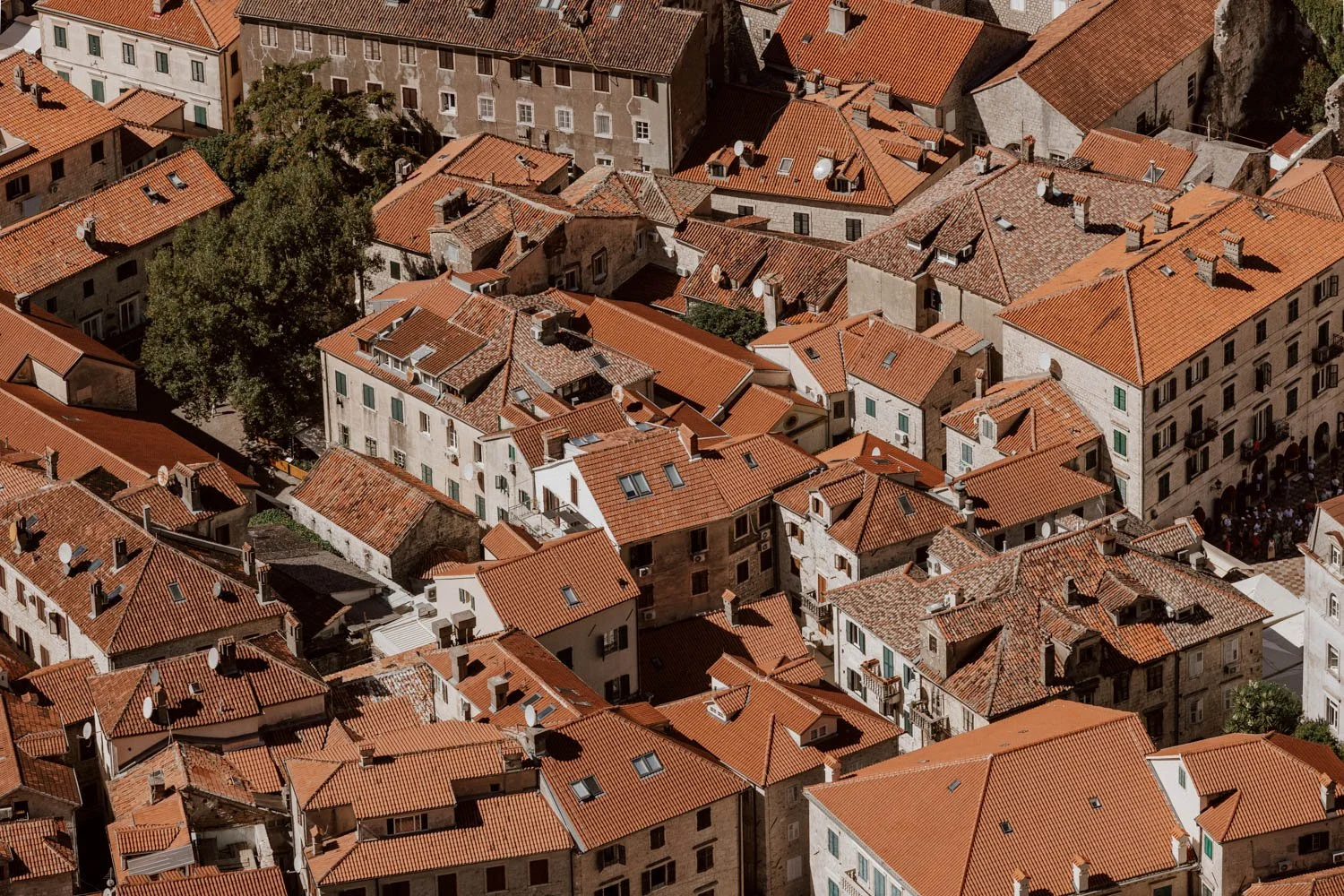
Spend any time at all on social media, and you’ll soon realise that Montenegro’s coastline gets most of the attention.
Places like Kotor, Budva, and Sveti Stefan.
And whilst this is completely understandable - it’s not only beautiful, but a compact area to explore in a week or so - if that’s all you see, then you’re really just getting half the picture.
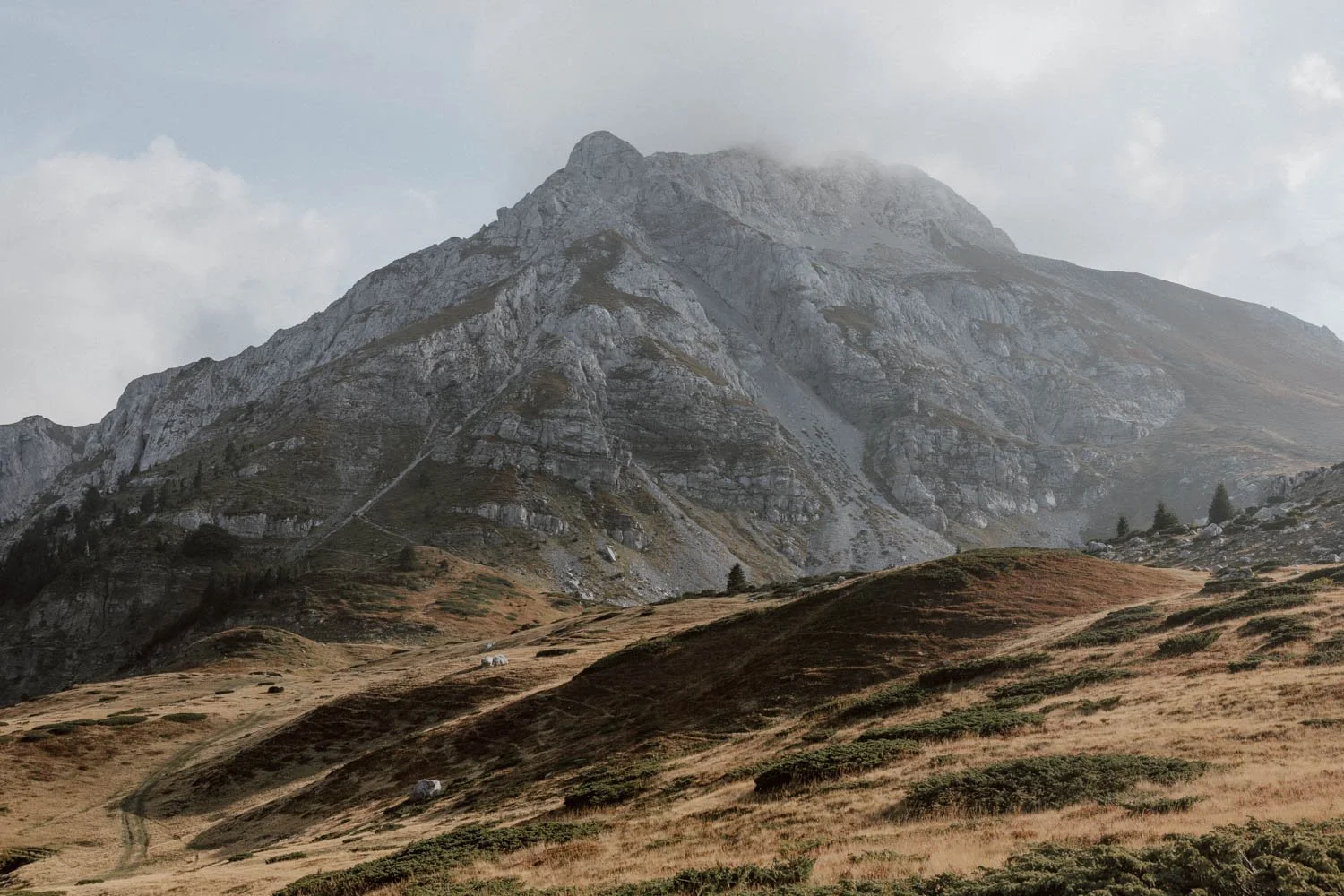
Beyond the beaches and bays, the crowds and the cruisers, Montenegro’s interior is another world entirely: wild mountains, mirror lakes, canyons deeper than you’d expect to find in Europe, and tiny hamlets that still feel a million miles from the tourist trail.
Air that’s as pure as the Adriatic is blue.
Scenery that would make Scotland, Switzerland, Austria, and the Dolomites of Italy blush with envy.
It’s in these landscapes that Montenegro really starts to surprise you and get under your skin. The hiking, the sense of scale, the quiet, the chance to breathe - this is what made us fall for it, and what makes so many travellers do the same.
If you’re only focussed on the coast, we really think you’re missing out.
The mountains are calling, and we insist you must go.
Thankfully, with five national parks scattered across a pretty small country, it’s remarkably easy to trade salt air for mountain air, even on a short trip.
For both seasoned hikers and those just starting out, this short guide shares our favourite trails, insider tips and advice to help you find the right path and peak for your travel style.
This is our beginner’s guide to hiking in Montenegro.


There Are Five National Parks
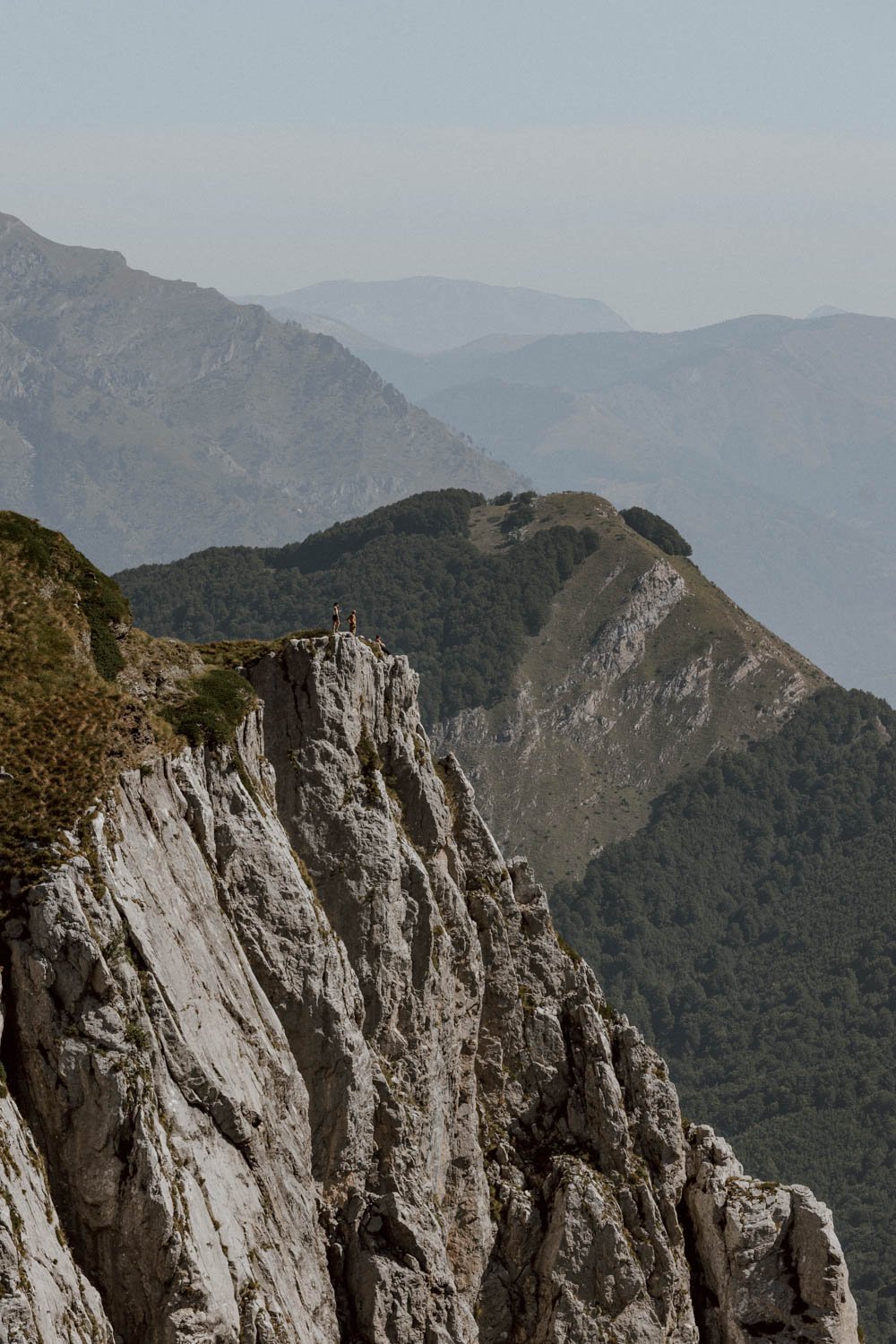
For a rather diminutive country, Montenegro has an incredible number of protected areas: five in total, each with its own distinct landscape and character. Together they cover roughly ten percent of the country, from glacial lakes and deep canyons to ancient forests and dramatic karst peaks.
Durmitor in the north is the most famous - home to Bobotov Kuk, the Black Lake, Tara Canyon and countless alpine trails. Biogradska Gora is one of Europe’s last remaining primeval forests, with beech and fir wrapped around a glassy lake being its iconic backdrop, whilst its lesser-visited eastern fringe was home to our favourite katun experience.
Down south, spreading out along the maritime and land border with Albania, Lake Skadar is a wetland haven for birdlife and the perfect spot for a picturesque early morning boat ride. Lovćen holds deep cultural significance for Montenegrins, with its mountain-top mausoleum to Petar II Petrović-Njegoš, and the newly opened Kotor Cable Car is bringing thousands more up there each day.
Prokletije, the youngest and wildest of them all, is in the east and shares its jagged peaks with Albania and Kosovo.
Each national park offers something quite different, and though you’re very unlikely to have time to see them all in one trip, even visiting one or two gives a sense of just how much untamed beauty and soaring scenery Montenegro packs into its borders.

The Entry Fees & Excellent Value Montenegro National Parks Pass
Each national park charges a daily entrance fee, and these vary across the parks:
Durmitor National Park | In high season (June to September) tickets cost €5 per adult, whilst students and seniors pay €2.50 and children under 15 are free. Low season sees prices drop to €3 for adults, €2 for students and seniors.
Skadar Lake National Park | €5 per person, with children under 15 free
Biogradska Gora National Park | €4 per person
Prokletije National Park | €3 per person, including for the Three Peaks Hike
Lovćen National Park | €3 per person
These fees are pretty low if, for example, you’ll be spending most of your time along the coast and perhaps only taking day trips to Durmitor National Park and Lake Skadar, but if - like us - a significant part of your trip will be based around the mountains, paying daily entrance fees can - ahem - mount up (sorry).
Thankfully, there’s an annual pass which offers unlimited entry to all five of the country’s national parks for just €13.50. We think this represents FANTASTIC value for all travellers and budgets - and in comparison to the €15 for a Kotor Fortress ticket or a sunset spritz in Sveti Stefan it’s an absolutely steal.
You can also see how it would save you money quite quickly if your Montenegro itinerary includes couple of days in Durmitor and two other national parks.
The annual Montenegro National Parks Pass can be purchased quickly and easily on the official website (as we did), or in person at the entrance kiosk of the first national park you visit; you will require a valid ID document for either option.
Good to Know // If your first hike is going to be started early, we’d recommend buying the annual pass online as most of the kiosks don’t open until 8am.


The Hiking Season Starts Late, Ends Early
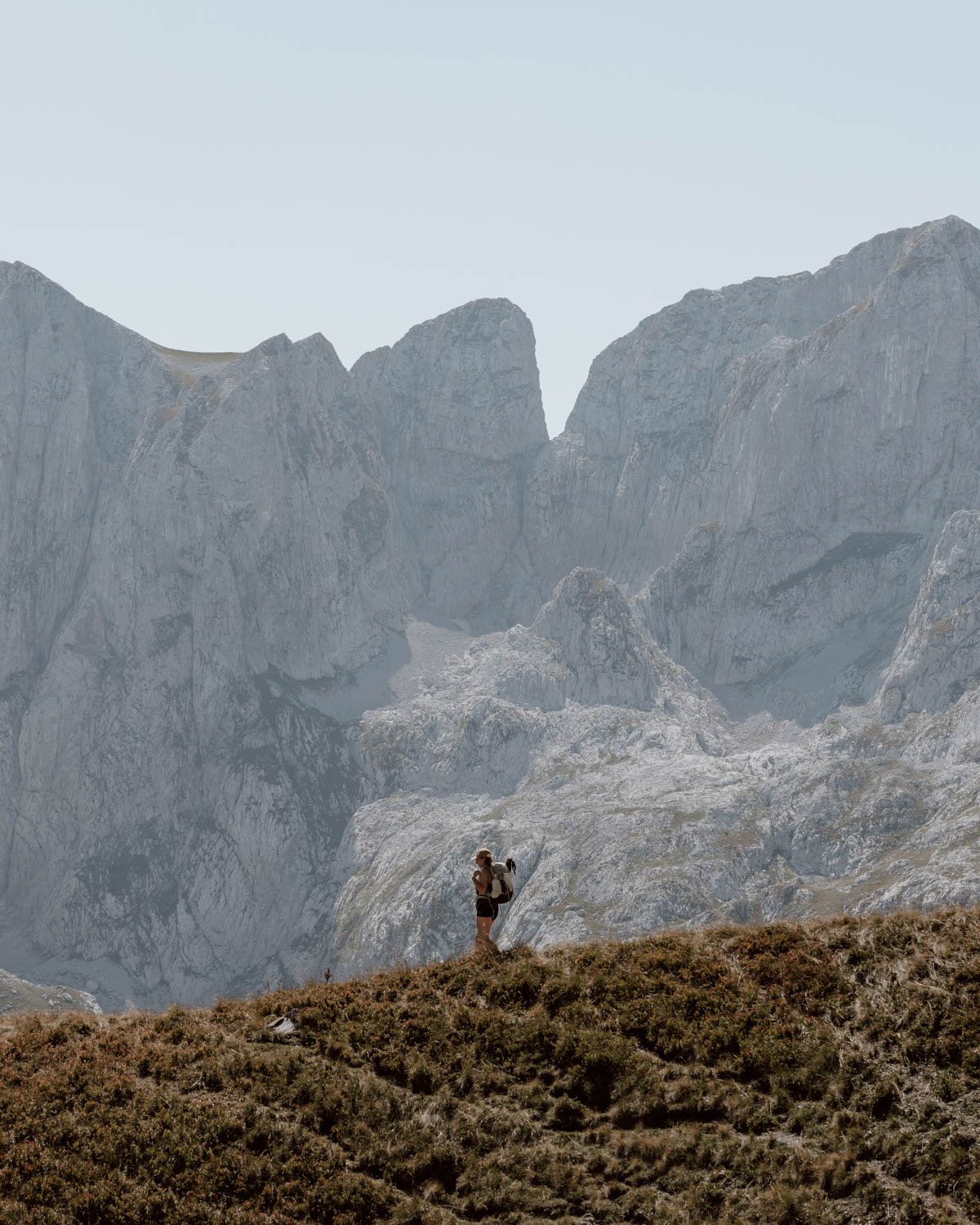
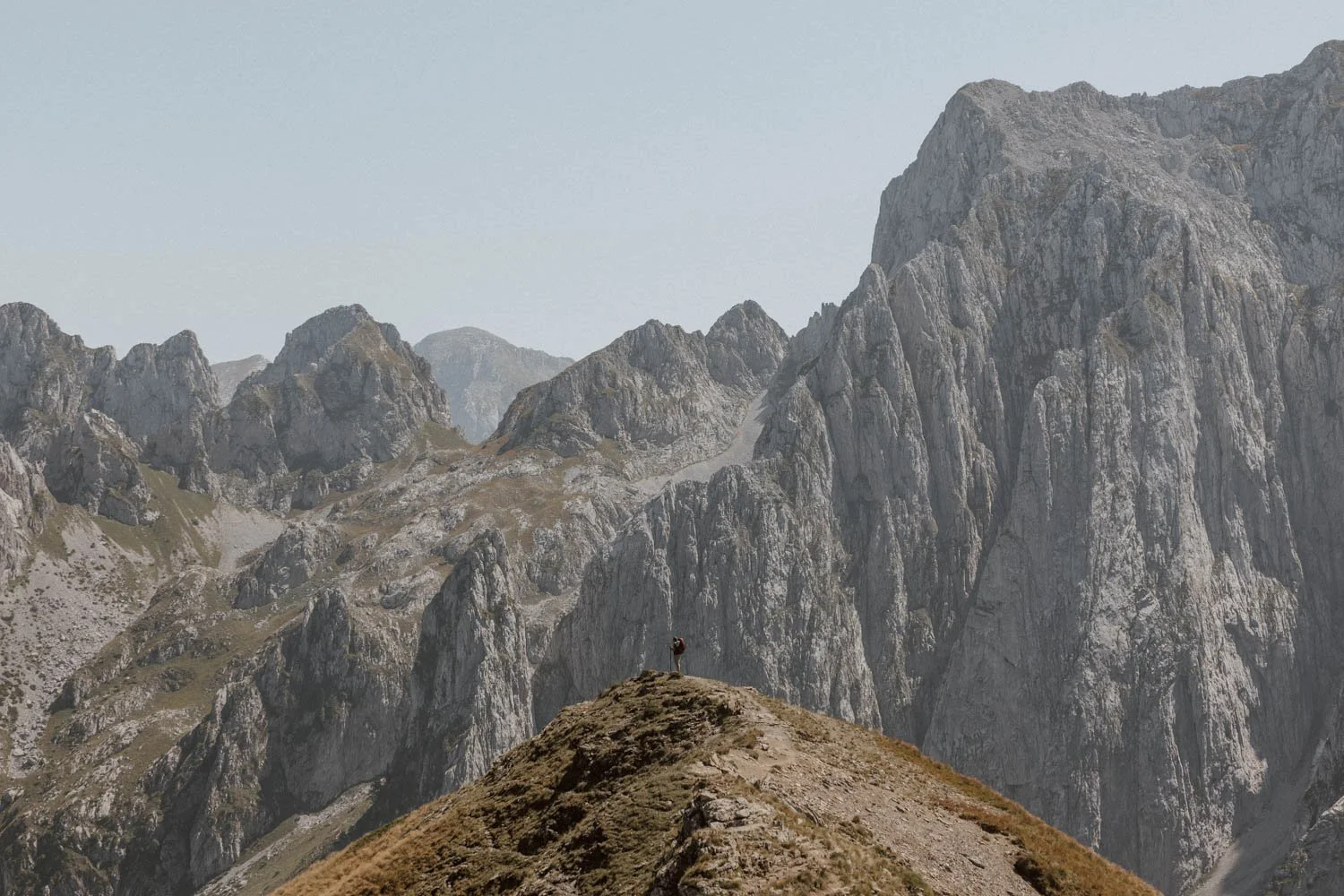
Montenegro’s peaks climb higher than you may think, and those extra metres make all the difference once winter rolls in. Many of the country’s best-known trails sit under snow for months at a time, completely out of reach unless you’re the sort of person who packs crampons for fun (which, let’s be honest, most of us aren’t). This is part of the reason it’s such a popular ski destination!
As a result, timing is everything.
The Montenegro hiking season begins later than most expect, and only when the passes are clear and mountain roads are open again. This is typically the beginning of June, so those planning a spring or early summer trip really need to be aware that some hikes won’t yet be possible.
The season generally runs until the early-to-mid October in the mountains, after which safety and access becomes dependent on specific conditions and hikes.
Importantly, even if you’re visiting in July/July, don’t assume everything will be snow-free: the summit of Bobotov Kuk, for example, can still cling to icy patches well into early summer.
Before setting off, it’s always a good idea to speak with a local in the know (the team at Hiker’s Den in Žabljak, for instance, are excellent at offering up-to-date trail advice for guests). It’s a simple step that can save you from a miserable, and possibly dangerous, day out in the mountains.
Know / For hikes on the coast and Bay of Kotor, the season runs from around mid-April to the end of October.
The Mountains Get Very Chilly, Even In Summer
The biggest mistake anyone heading to the mountains of Montenegro in the summer months could make? Not bringing any trousers.
Once the sun goes down in the early evening, the chill in the air arrives swiftly. We anticipated this with our fleeces, but only had a single pair of trousers each for the ten days (thankfully we have near identical length legs so immediately doubled our respective trouser supply!).
So, pack some layers - even if you’re just planning on an overnight in Durmitor National Park.
This is especially important if you’re staying in the signature small wooden chalets and A-frames dotted all across the countryside (sometimes it’s really just a nice garden shed) where the communal areas are outside and the temperature really does drop dramatically inside and out after a sunny afternoon.
Nobody wants to freeze on the way to the bathroom at 3am in the morning.
You’ll also need more layers than you think when setting off early for hikes, so wear them in and peel them off as you tick off the miles.
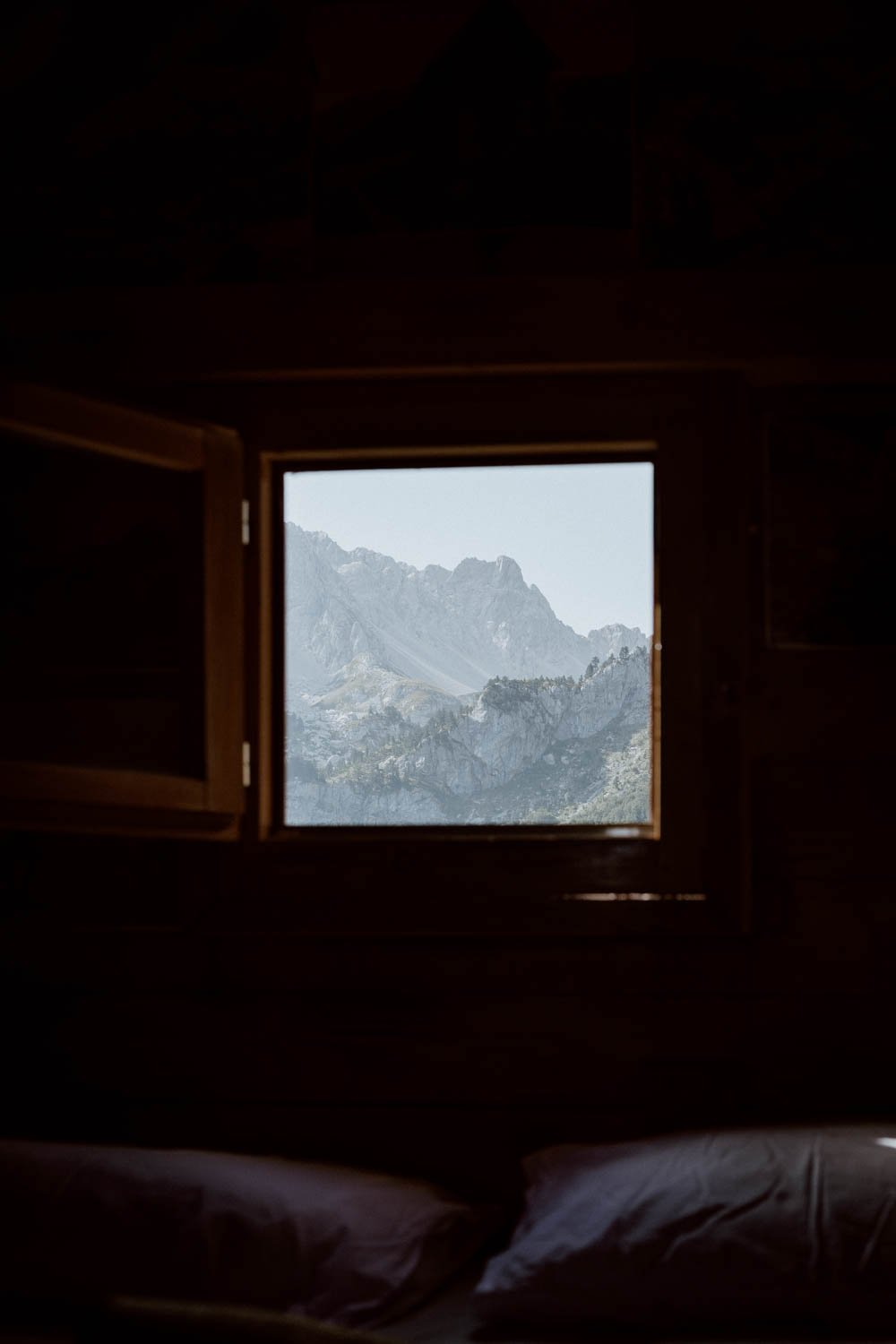
Travel Tip // That gorgeous view through the window? That was from our cabin at this remote katun in Komovi. The Komovi region isn’t a national park, but has plenty hikes and is arguably lesser-visited. We had our first night there, but screwed up on the timings so couldn’t actually do the proper hike we’d planned. Instead, we spent a lovely afternoon out walking with the owner’s massive dog.

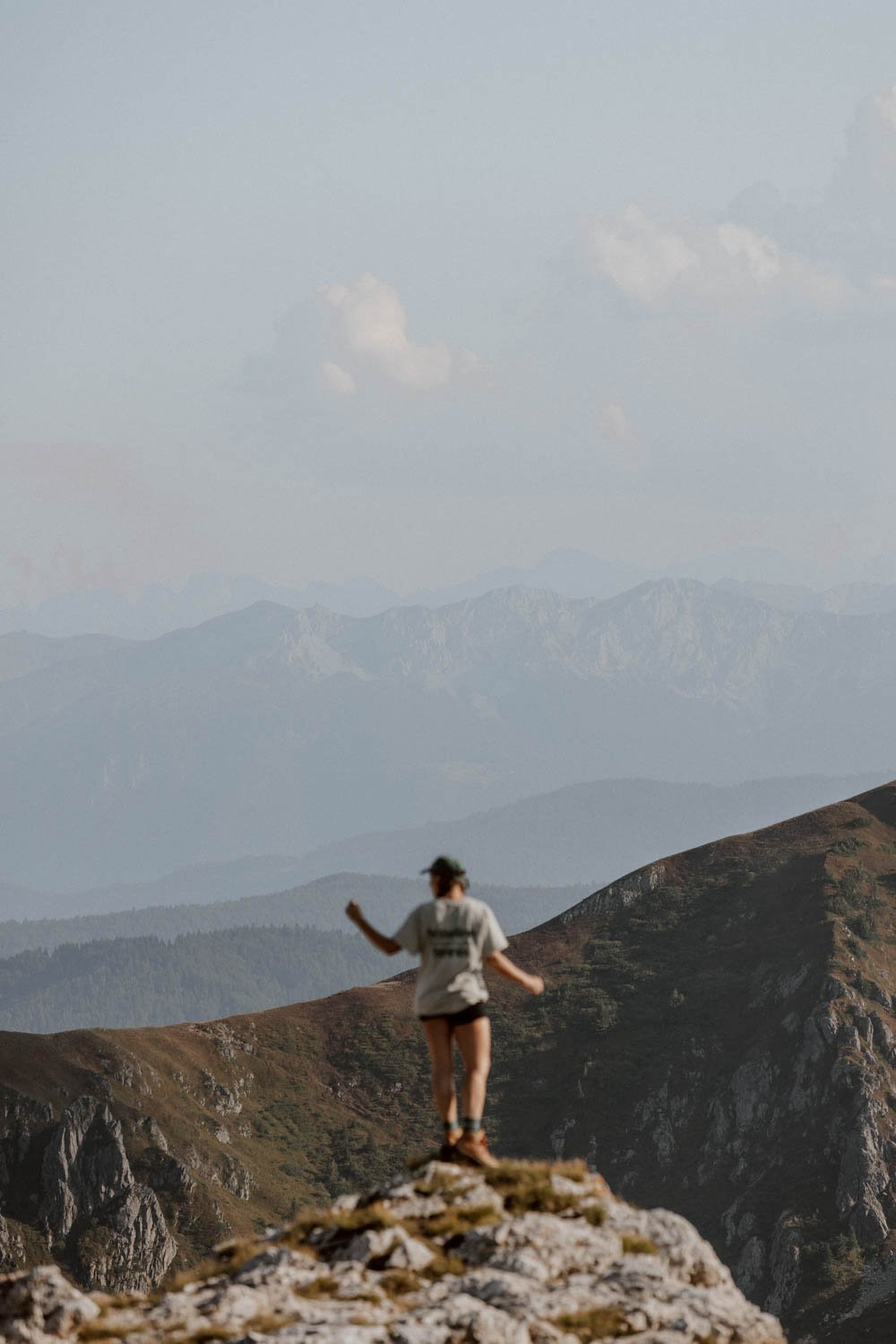

Hiking Boots Should Be Your Go-To Footwear
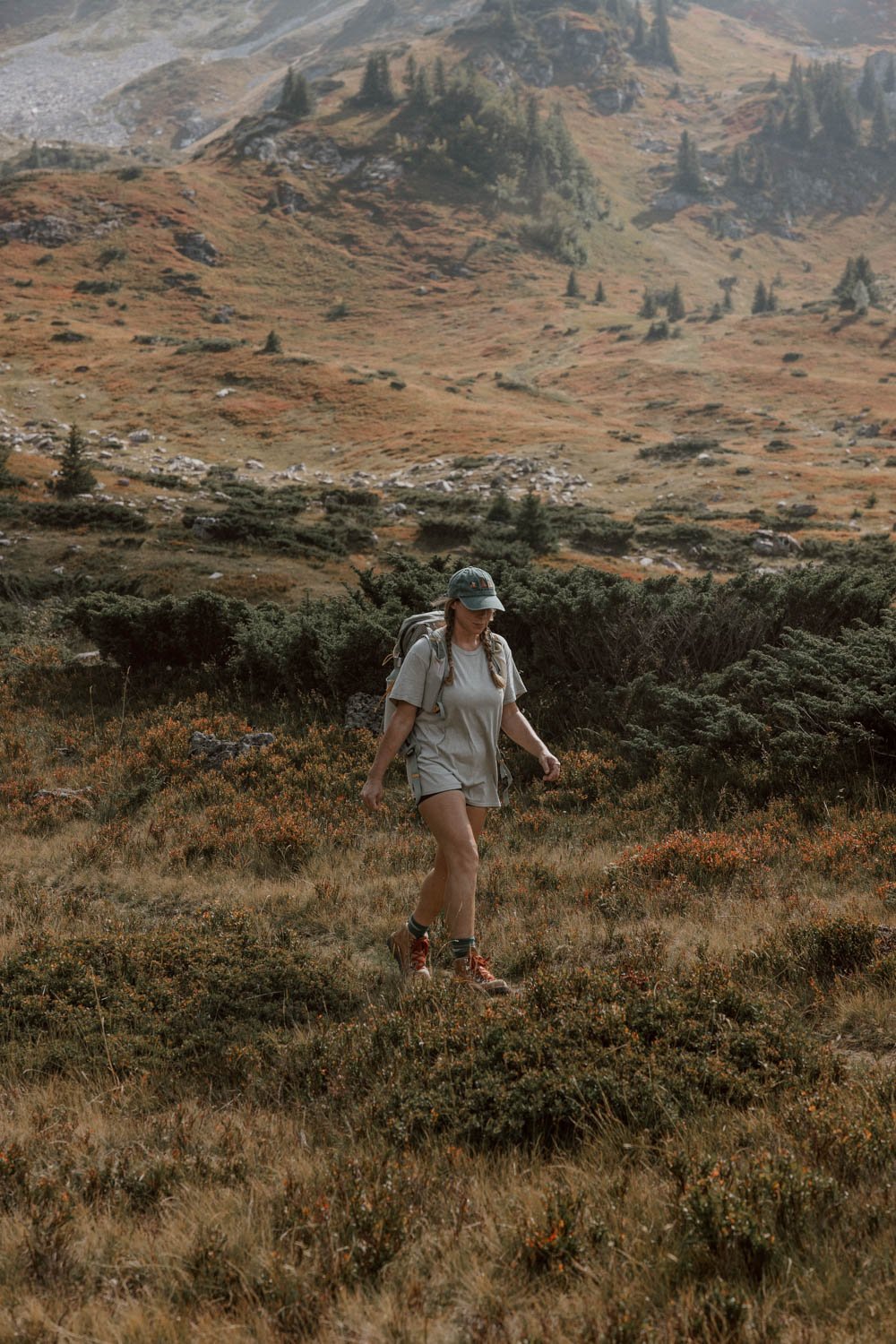
Trust us when we say that Montenegro isn’t the place to test the limits of your trainers (or even think of tackling a peak in a pair of sandals).
Even short walks have a habit of turning into mini hikes, and many of the country’s trails involve loose rock, sudden inclines, and sections of scree that will make your ankles scream out for decent support.
A sturdy pair of broken-in hiking boots or trail shoes will make a huge difference, not just for comfort, but for safety too; Emily would almost certainly have done herself a mischief on several hikes without her trusty pair of Danners!
Of course, you don’t need anything overly technical or expensive, but a reliable, well-worn pair with good grip will serve you far better than anything designed for stomping through the historic centre of Kotor. If you’re only planning on one or two shorter hikes, then sports trainers will be better than nowt.
Your feet will thank you for it.
Travel Tip // The secret to good hikes? Hydration and snacks. Everything tastes better up a mountain, and they can both be the difference between a challenging walk and a miserable slog. It’s a good idea to bring plenty of both on every hike, and one advantage of Montenegro is there are usually springs and taps to fill up (but not guaranteed). Many trailheads won’t have amenities in the vicinity, so it’s best to purchase + prep the night before.

Durmitor Was Not Our Favourite National Park
Durmitor is fantastic for families, those with more limited mobility and anyone who prefers to take in the views by car rather than on foot - it offers up easy to reach scenic lookouts, short trails, and mountain passes without needing to be an experienced hiker.
But, to us at least, parts of the experience felt a little over-managed.
The layout and level of organisation sometimes make it feel more like a packaged ‘outdoors’ destination than a true wilderness (not entirely dissimilar to destinations like Costa Rica and some American national parks), and the growing number of hotels and tourist-focused accommodation developments around Žabljak only add to that impression. It’s hard not to shake the feeling that some of Durmitor’s raw, untamed character is being slowly eroded (but it’s also a major ski destination, so perhaps that’s where its focus lies).
We spent four nights there, but should have cut that down to three.
Still, we have no regrets about including it on our Montenegro itinerary. We really glad we hiked Bobotov Kuk - it was one of our favourite trails in recent years, a proper challenge with epic scenery and that satisfying sense of achievement at the summit. In hindsight, we suspect we’d have enjoyed the area more if we’d stayed outside town and just driven in for supplies.
And, admittedly, a run of miserable weather probably coloured our experience too.


Know Your Markers
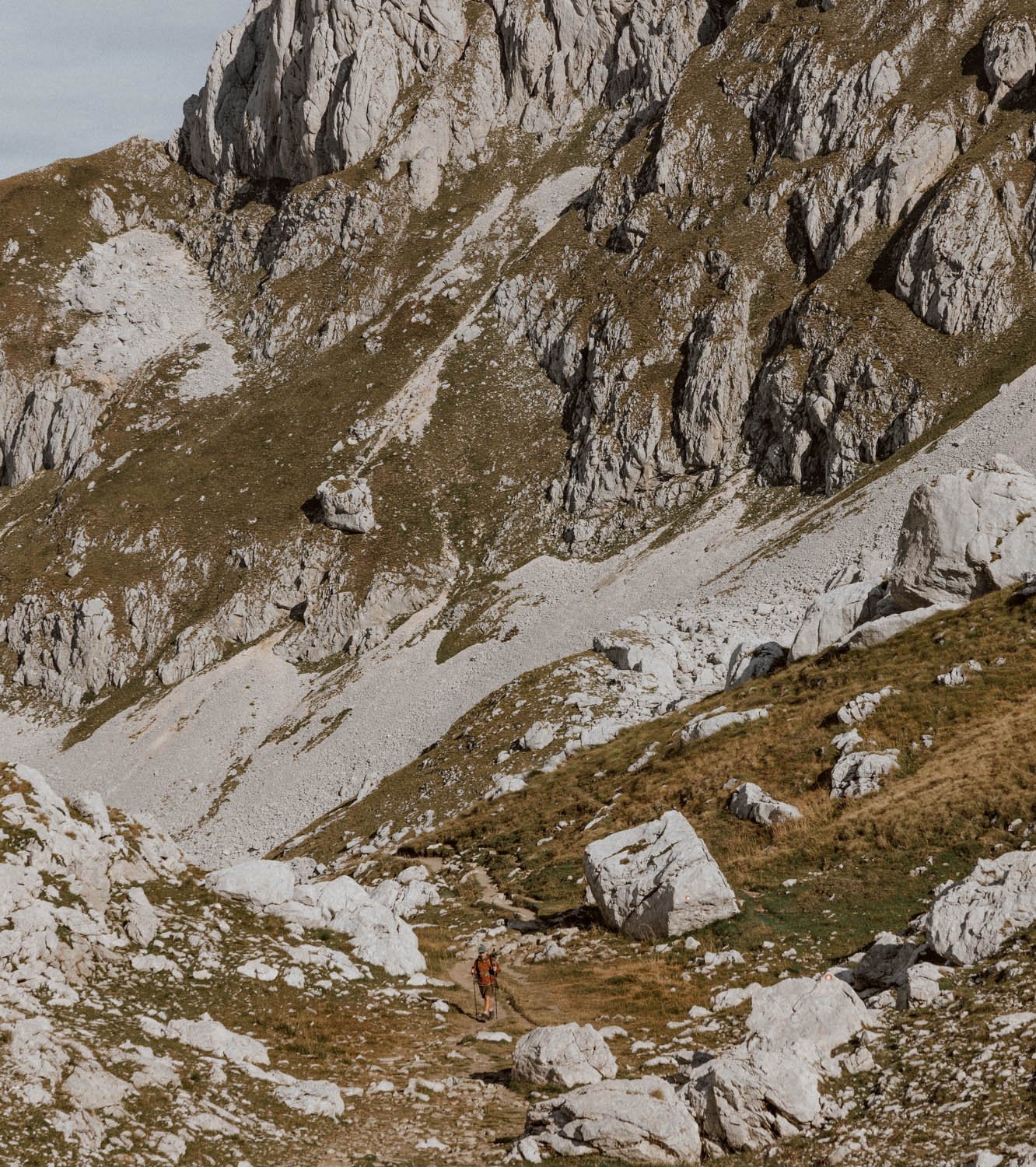
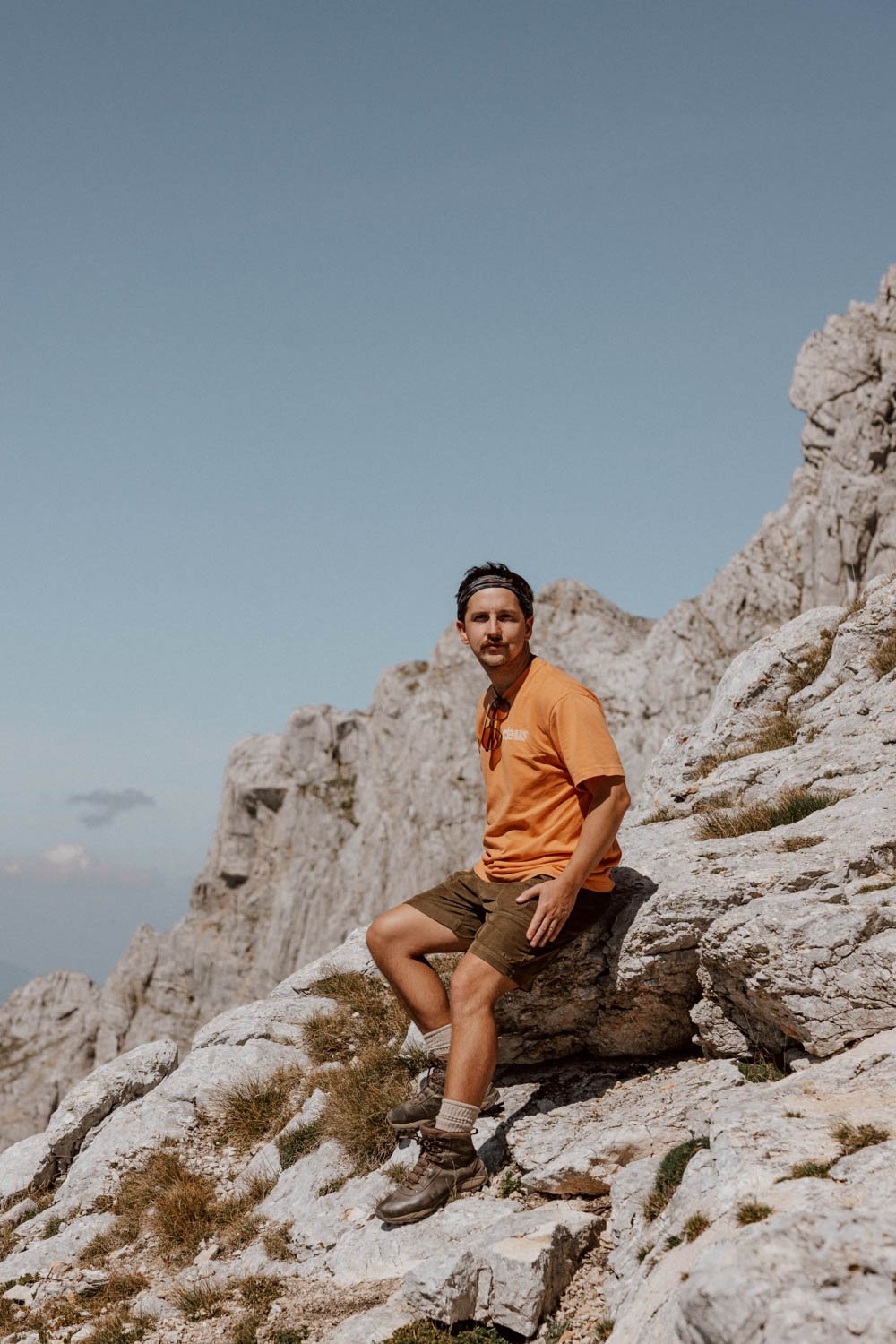
Montenegro’s hiking trails are usually marked by red-and-white circles, and once you start spotting them, you’ll see them everywhere.
Painted onto tree trunks, rocks, the occasional roadside wall, or even the back of a traffic sign, they’re scattered across the country like a breadcrumb trail for the perpetually curious. Around Lake Skadar or Ostrog Monastery, they appear in such abundance that it’s easy to get swept up in the idea of following whichever one looks most interesting!
But that’s not always a great idea. Trails here often overlap, fade away without warning, or lead off into remote areas where there’s no signal. The yellow way-finding signs you’ll see now and then don’t always help much either: they can be confusing, inconsistent, or simply point to destinations you hadn’t planned to visit.
If you love to hike, you’ll really be spoiled for choice in Montenegro, but spontaneity only gets you so far. Pick your routes carefully, download offline maps, and have a rough plan before you lace up your boots - otherwise you might end up miles from where you meant to be, following a marker that was never meant for you.
Know // There are a few offline maps that we have used over the years, but now consistently rely upon AllTrails, an app that’s worked well for us here and elsewhere. It’s also really useful for finding and choosing nearby walks and routes! Also, for solo travellers, we should mention that all hikes we did are feasible to do independently, but if you stay at Hiker’s Den you’ll meet plenty others to buddy up with in Durmitor. Welcome your suggestions on other good hiker social accommodation!

The Ladder of Kotor Confusion
We did a fair bit of research before setting of on our three week Montenegro road trip, yet despite reading countless articles about Kotor and the surrounding area there was one activity that we just couldn’t make head or tail of: The Ladder of Kotor.
Was it a hike? A walk? Would it take the four hours we hoped or the nine we’d feared? Where did it end?
Yeah, we had a lot of questions.
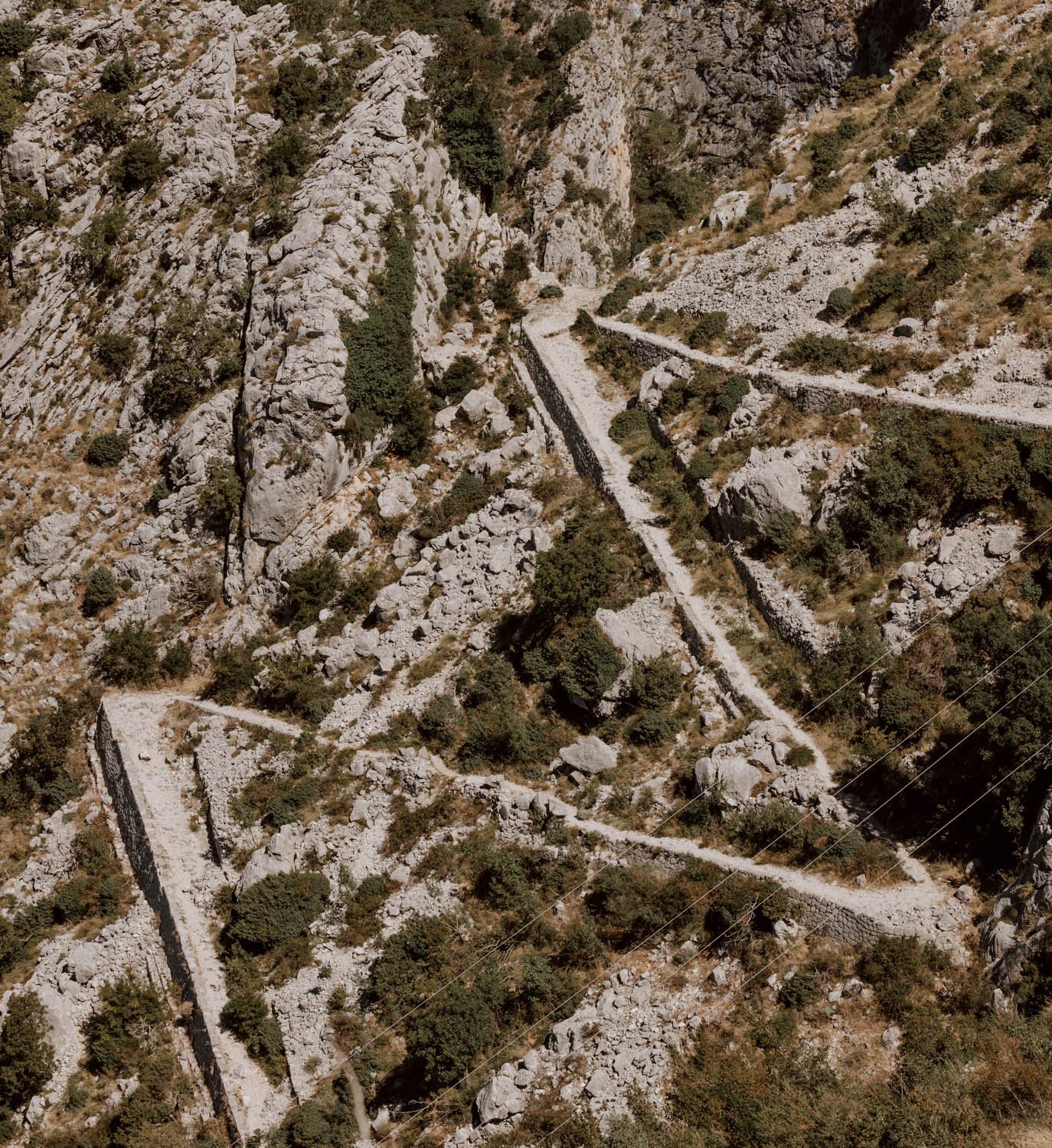
In short, it’s a 10km round trip hike beginning in the centre of Kotor that follows a path made of more than 70 switchbacks. Compared to other hikes we’ve done in Montenegro this one was, well, pretty damn easy. We’re even reluctant to call it a hike if we’re honest but the constant incline under the hot sun just about pushed it beyond walk territory for two fit hikers.
Should it be viewed as one of your Montenegro hikes? No. Should it be viewed as the main activity to help you escape the cruise ship crowds of Kotor? Abso-bloody-lutely.
It’s almost certainly not as confusing as you may have been led to believe by other sources either, so we’d definitely recommend checking out our guide before setting off.
Plan // Our Ladder of Kotor Guide


Take Your Time
As we’re taking photos and videos on hikes - and Emily has all the stability of a tipsy baby mountain goat on descents - we tend to take a bit longer on trails than necessary. Yet on every hike in Montenegro, it was the dramatic scenery that kept us out far longer than planned.
Case in point: we probably could have done the Three Peaks Hike in the Grebaje Valley in five hours, but spent eight hours up there because it was just stunning. We’re really fortunate to have done many wonderful scenic hikes on our travels, but what you’ll find across this country is just ‘chef’s kiss’.
So, if we could give just one essential piece of advice to every hiker in Montenegro, it’s this: take your time.
Don’t rush any hike - even if that one bloke from your hostel group is trying to get everyone round in record-time. Factor in at least an extra hour to sit on a meadow or mountaintop with your breakfast or packed lunch and truly savour what you’ve sweated to see.
Trust us on this.
Know // The long-distance Peak of the Balkans hiking trail also passes through Prokletije National Park. Encompassing the highlands of Albania, Kosovo, and Montenegro, the 192 km trails and typically takes about 10 days to complete. You don’t have to complete the entire trail at once though, and some hikers focus solely on the Montenegrin section (running roughly from Babino Polje to Plav and then to Vusanje) which is entirely viable as a standalone trek.
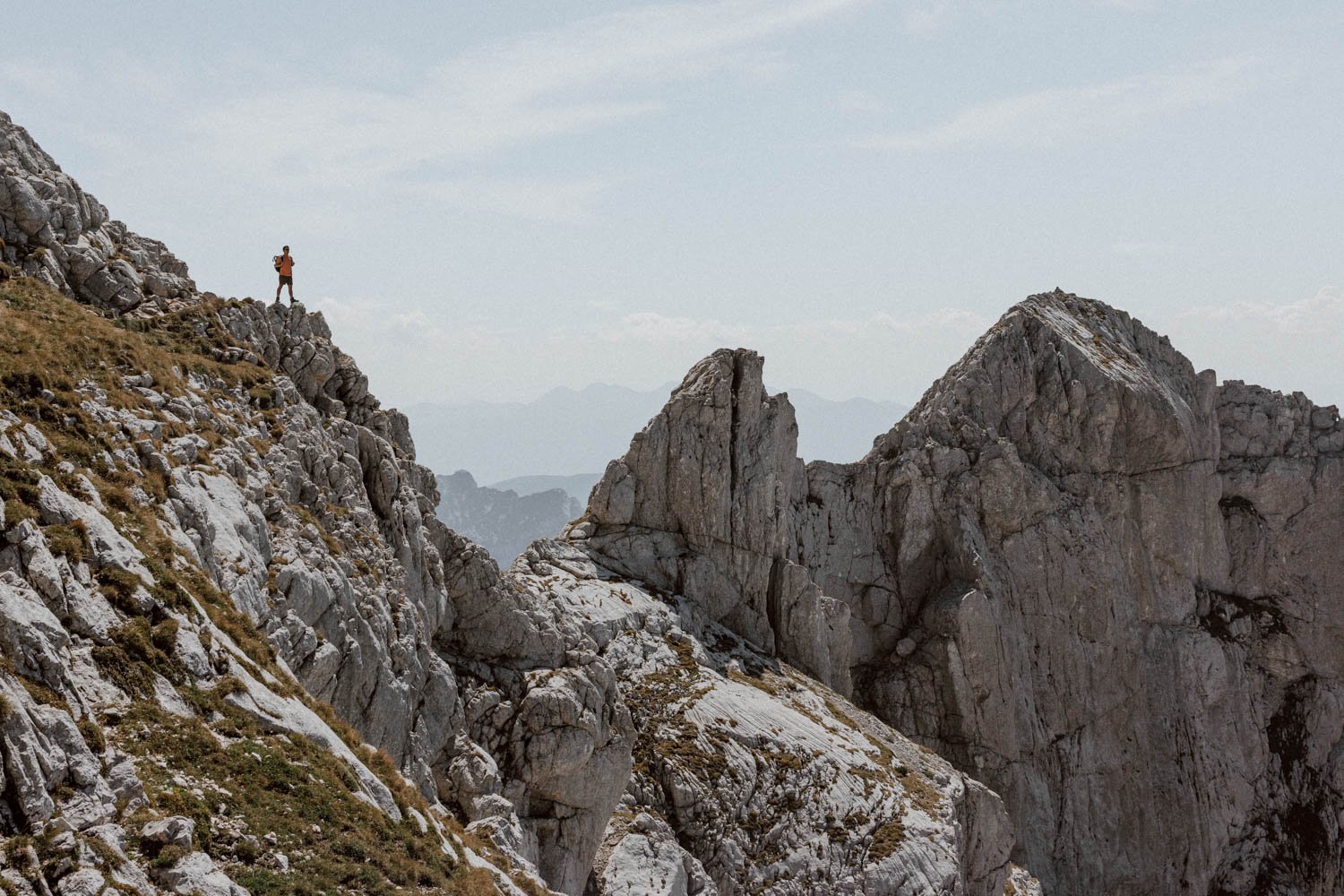
You May Need A Car & The Dogs
Whilst the bases and startpoint for several popular hikes in Montenegro can be reached by public transport, some require a taxi, shuttle or hitchhiking - Bobotov Kuk in Durmitor - and having your own wheels is 100% necessary in Komovi.
We fortunately had a rental car for our three weeks in Montenegro, but those depending on the buses will be a bit more limited in where they can go and / or the number of days they can fit in hiking between travel days. Bus schedules are infrequent, and many trailheads sit well beyond walking distance from the nearest stop, so a car really does open up much more of the country’s outdoors. A car will also mean you’re much less restricted on where you can stay before/after hikes.
Before making any decision though, you should absolutely read our no-nonsense guide to driving in Montenegro.
Tip // Oh, and before we forget. There are bears and wolves in Montenegro but they’re supposedly very very rare to see. Supposedly noise is good to ward them off, and if you do encounter a bear, try to stay calm, keep your distance, move slowly without running, and make noise to avoid surprising it.
Much more likely on your hikes in Montenegro are random dogs joining you on the trail - or meeting a pack of six or seven chilling out atop Bobotov Kuk. Like in Central America, some of these are strays and some have homes but just like the company, and all will absolutely go to the top just for the chance of some fuss and scran. We absolutely encourage you to share something with them, and suggest always carrying a bag of treats in Montenegro in reserve for the skinny ones.

Travel Better in Montenegro
How To Do The Three Peaks Hike, Grebaje Valley
Lake Skadar, Montenegro | A Travel Guide
How To Hike Bobotov Kuk | Montenegro’s Highest Mountain
A Short Guide to Durmitor National Park (published soon)
The Biogradska Galcier Lake Hike (published soon)