How To Visit The Panama Canal

These days, most people know of Panama as the country with a canal.
For much of its history though, it was the other way round: the canal that just happened to have a country attached to it.
Situated 20 minutes from the capital city, this man-made waterway that joined the Pacific and Atlantic Oceans is undeniably the main character in Panama's story.
The crossroads of the world carved across the narrowest point in the Americas, it’s definitely not just about cargo ships, commerce and engineering.
Indeed, for some, the Canal ranks amongst the most consequential man-made achievements in modern history.
But, we totally understand that some of you may be questioning whether watching a few very large boats slowly move up and down a waterway is the best use of your time and money on a Central American backpacking trip or couple’s adventure in Panama.
Sure, you might be curious to learn more about why the Canal is so important, but should you prioritise visiting it if you've only got a few days in Panama City?
The majority of younger travellers we met on our month in Panama skipped it - mostly due to cost, some due to lack of interest - and the demographics we saw on the crowded observation deck at Miraflores underlined this.
Somehow though, we’ve visited twice a decade apart: once on a super budget two-year trip through Latin America, then again on this Panama road trip.
So, is it really worth visiting the Panama Canal?
In this post, we're going to give you the honest answers and a realistic take on the (at times bizarre) Miraflores Locks experience, as well as all the essentials to help you decide on the best way to visit the Panama Canal for your budget and travel style. Alongside advice on the best ways to get there independently from Panama City, alternatives to the popular Miraflores Locks, the key costs and money-saving tips, and the absolute best times to visit if you actually want to see the ship passing through, we’ll also explain why it's actually a good idea to make time for the Morgan Freeman IMAX (yep, really).
There’s also a podcast recommendation.
This is how to visit the Panama Canal from Panama City.
The Panama Canal Essentials
· The Miraflores Locks is the place to go
· Easily accessible via 20-minute drive from Panama City
· There’s also regular C810 and C790 buses
· Open daily for visitors from 8am-6pm
· Essential to time your visit with two north/south locks crossings
· Tickets are $17.22 foreign adults, $7.22 children
· No combined ticket with Panama Canal Museum
· Visits only require about two hours
· Alternatively consider this popular full-day ocean to ocean boat trip or doing a half-day transit through the canal.
How To Get To The Panama Canal / Miraflores Locks from Panama City
Firstly, let’s clear up some potential confusion. There are only two official places in the country where visitors can access the Panama Canal:
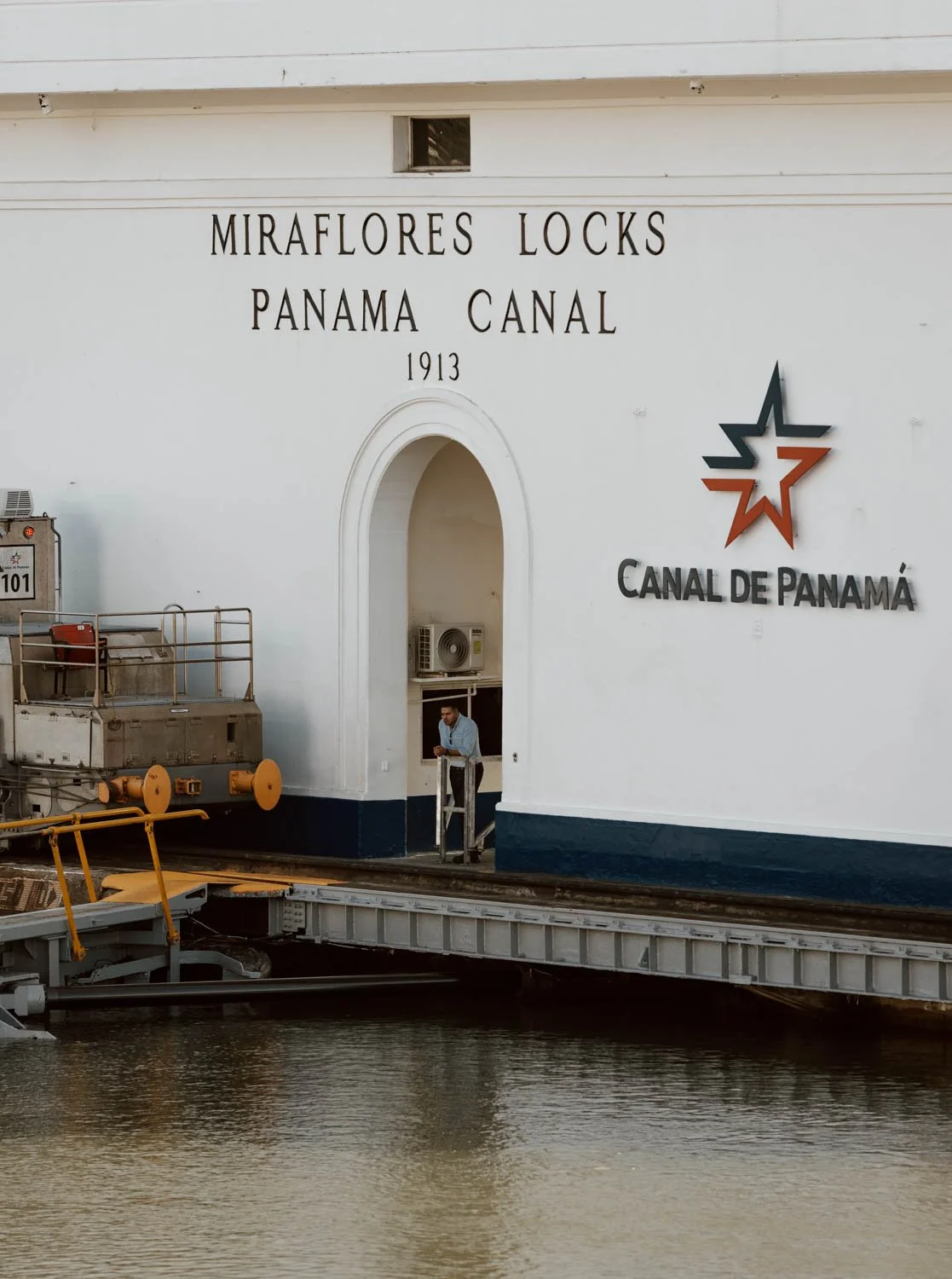
The Miraflores Locks | On the Pacific Ocean side (south), it’s a 12km / 20-minute drive from Panama City. These are the oldest ‘locks’ and offer the classic experience. They’re very well set-up for tourism with platforms and viewing decks, and it’s where you'll see the ships enter and transit through the locks before they sail across the artificial Gatun Lake toward the Atlantic.
The Agua Clara Visitor Centre | On the Caribbean Sea side of the Canal, near the city of Colon. That's 80km away from the capital and doesn’t feature on most Panama itineraries. These are part of the newer locks, and there’s a modern visitor centre there too though, as well as several viewing platforms.
So, 99.9% of travellers staying in Panama City and hoping to visit the canal will therefore be heading to the Miraflores Locks - and it’s quite easy to do it yourself.
For all transport options, just bear in mind that traffic can really affect the journey time. Also, all prices in this article are in USD, which is the main currency of Panama alongside the Balboa.
By Bus | $0.25 | 30 minutes
Make your way to Albrook Bus Terminal, the city’s main bus station - find it here on Google Maps.
The only trouble? It’s about an hour’s walk from Casco Viejo and other accommodation hubs, so not going to be a convenient or sensible option for everyone. The metro Linea #1 does go there though, so that may work out well from where you’re based.
You need to find the C810 bus, which helpfully has ‘Miralores’ on the digital destination sign. The C970 bus also departs from Albrook, and also passes the Miraflores Visitor Centre.
Both services run from very early in the morning, with departures every 15-30 minutes. Travel time for both lines is about 20-30 minutes depending on traffic, and Google Maps is the best place to get live schedules.
The bus costs $0.25 one-way, but you’ll need to purchase the RapiPass card for $2. This is Panama’s rechargeable contactless card used to pay fares across the city’s integrated transport system, including the Metro and Albrook buses that go near the Miraflores Locks. You can buy one at the bus station and any metro.
You likely won’t be the only traveller getting off for the Visitor Centre, and it’s about a 10-minute walk from the bus stop.
Travel Tip // The same card can be used by multiple people, but make sure you have enough balance on your card to make it back from Miraflores too.


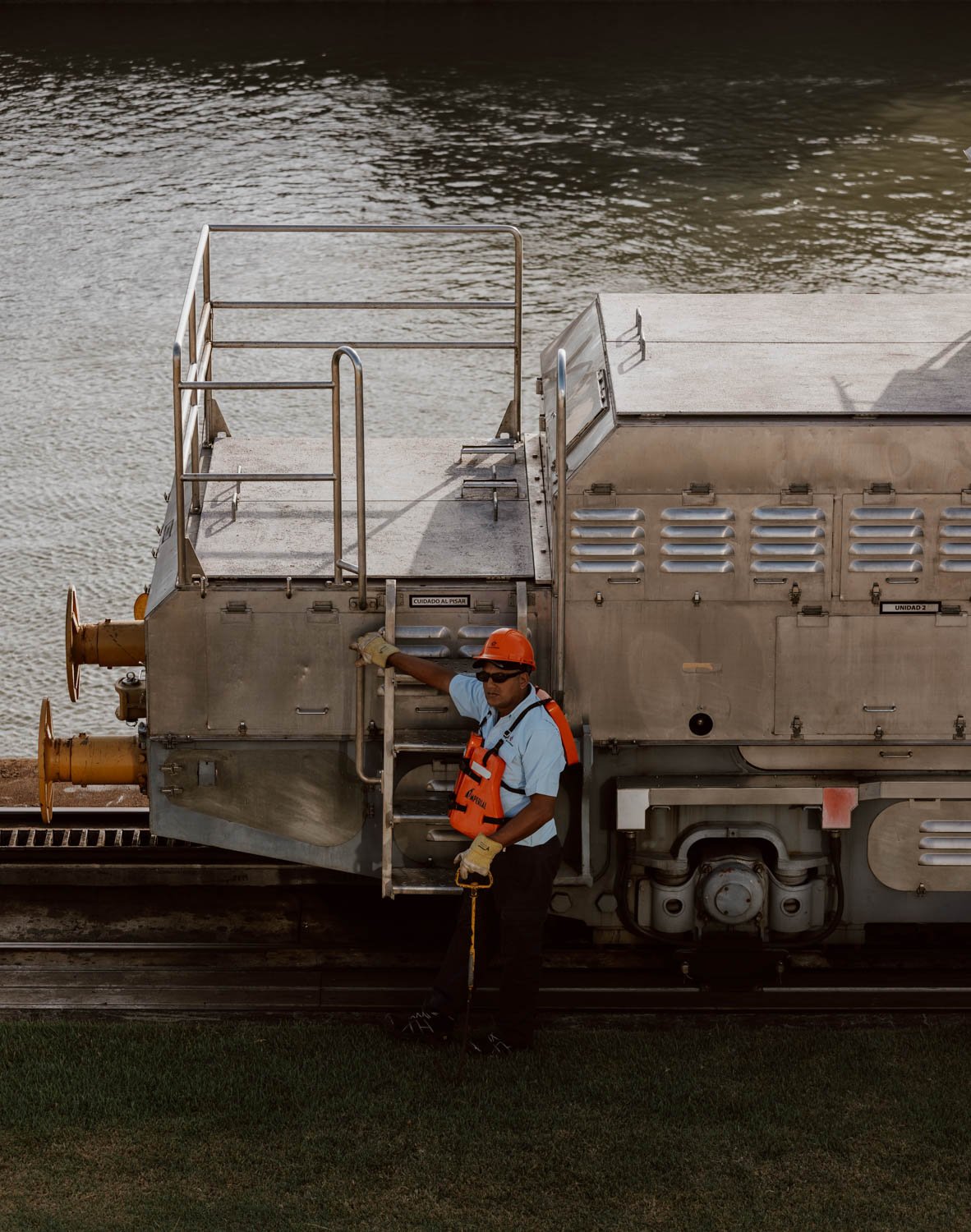
By Uber / Taxi | $8 | 20 minutes
Uber has excellent coverage in Panama City, and offers the easiest and most straightforward way to visit the Miraflores Locks.
We paid $8 one-way from outside our Airbnb apartment in Casco Viejo, and it took 20-minutes to reach the visitor centre entrance.
Alternatively, you’ll find yellow and black taxis all over Panama City constantly tooting and beeping at you for a fare. They're not on the meter, but will be very willing to take you out to the Canal. However, it's absolutely essential that you agree the price before you set off.
Expect regular taxis to cost a wee bit more, and our tip is to check the prices on Uber first to get a rough benchmark.
If it’s a flying visit, then consider negotiating a round-trip rate with the driver - but only pay the final 50% once you’ve made it back to the city.
Alternatively, for the return journey you’ll find several taxi drivers hanging around in the visitor centre car park, as well as waiting Ubers. We went direct with the taxis and had a memorable ride back with a charming old boy called Oriel. He started at $15 and agreed to $10, but did try and get us back up to $15 just before dropping us off. Cash always best.
Travel Tip // If you’re a solo traveller or worried about the safety of walking to the bus station, then ask around at your hostel for others to share the Uber/taxi ride; there’s a good chance that at least one other person is planning on going to the locks.
Tours & Transits
Given the ease of accessibility from the city, you really don't need a tour just to visit the Panama Canal.
However, if that’s the better fit for your travel style and/or you’ve only got a day or two in the city, then there are plenty options available. Our suggestion would be to pair it with tour which includes the Canal and another experience in or around the capital - one of the most popular options is to combine the Locks with a boat tour on the artificial Gatun Lake - also part of the canal - where you can spot monkeys, sloths, and crocodiles between passing cargo ships.
The below are all exceptionally highly-rated, include transport, and also offer free cancellation. Whether choosing these tours or others, make sure to understand whether Panama Canal Entry tickets are included or not ($17.22 standard).
· Half-Day City Tour, Canal Entry & BioMuseo Park - Canal tickets included, and it’s also available to book here
· Small-Group Panama Canal Tour - ticket not included
· The Miraflores Locks Experience - ticket not included
· Panama City & Panama Canal Tour - ticket not included
· Skip-the-line Canal and Nature-Spotting on Gatun Lake - tickets included

Want to Sail the Panama Canal?
A wildcard alternative for those who’d prefer to have a completely different perspective and experience of the Panama Canal’s scale and engineering, there are now several tours that allow you to travel through the canal on a boat.
The prices mean it won’t be possible for all travellers’ budgets - and we haven’t personally done it - but for those who have a deeper interest or curiosity, it likely offers a much more insightful and rewarding way to visit the Panama Canal than a couple of hours at the Miraflores Locks.
Do note that these tours only run on a limited number of dates each month, so need to be booked in early and specifically planned around.
Partial transits (half-day)
The most popular option. Boats travel through either the Miraflores and Pedro Miguel Locks on the Pacific side or the Agua Clara Locks near Colón. You’ll pass through one or two lock chambers and sections of Gaillard Cut, with live commentary explaining how it all works.
· Six-Hour Panama Canal Cruise with Lunch | Souththbound or Northbound - also available to book here
· Panama Canal Partial Transit | book here
Full transits (full-day)
A smaller number of tours make the full 80 km crossing between the Pacific and the Atlantic, allowing you to cruise the entirety of the Panamá Canal. It’s a long day - around 8 to10 hours depending on traffic - but would be something to seriously consider if you’r interested in the Canal’s workings. Meals are usually included.
· Panama Canal Tour: Ocean to Ocean in One Day | book here or here
· Panama Canal Full Transit Tour | book here
Panama Canal Tickets & Opening Hours
A standard foreign adult entry ticket for the Miraflores Visitor Centre & Locks is $17.22; for children aged 6 to 12 years old, it’s $7.22.
Disabled visitors can get tickets for $8.61.
The weird decimals are due to tax, and note that entry is significantly cheaper for locals
It’s possible to purchase tickets in advance on the official website, but that’s only necessary if you wish to skip the queues.
We purchased ours on arrival at the three booths inside the Miraflores Visitor Centre, where it’s possible to pay by cash or card.
The visitor centre is open from 8am-6pm every day, with the ticket office closing at 5pm.
It’s important to be aware that your ticket includes entry to the Miraflores Locks and the on-site IMAX 3Dcinema (yes, you read that right), and it isn’t possible to just purchase a cheaper ticket to watch the boats from the observation and skip the cinema. Now, you may reasonably be asking yourself why exactly is there even an IMAX at the Panama Canal?
Well, it’s a proper cinema but it only shows one movie. They must have had a good chunk of change to spend, as the 45-minute PR film about both the Canal and Panama is introduced by Morgan Freeman and is actually pretty entertaining . It’s in English with Spanish subtitles, and we actually highly recommend making time for it during your visit.
Despite being a single price, you’ll receive two separate tickets for the observation decks and the cinema - make to keep a hold of the latter, as you need to present it to the staff.
Know // Totting up your typical transport times and costs + the entry fee, you're looking at the best part of three hours and $54 for two of you - yep, Panama costs really can stack up.

When Do Boats Go Through The Miraflores Locks?
If the thought of visiting the Panama Canal already seems a bit dull to you, then imagine doing it when there isn’t actually a massive ship traversing through.
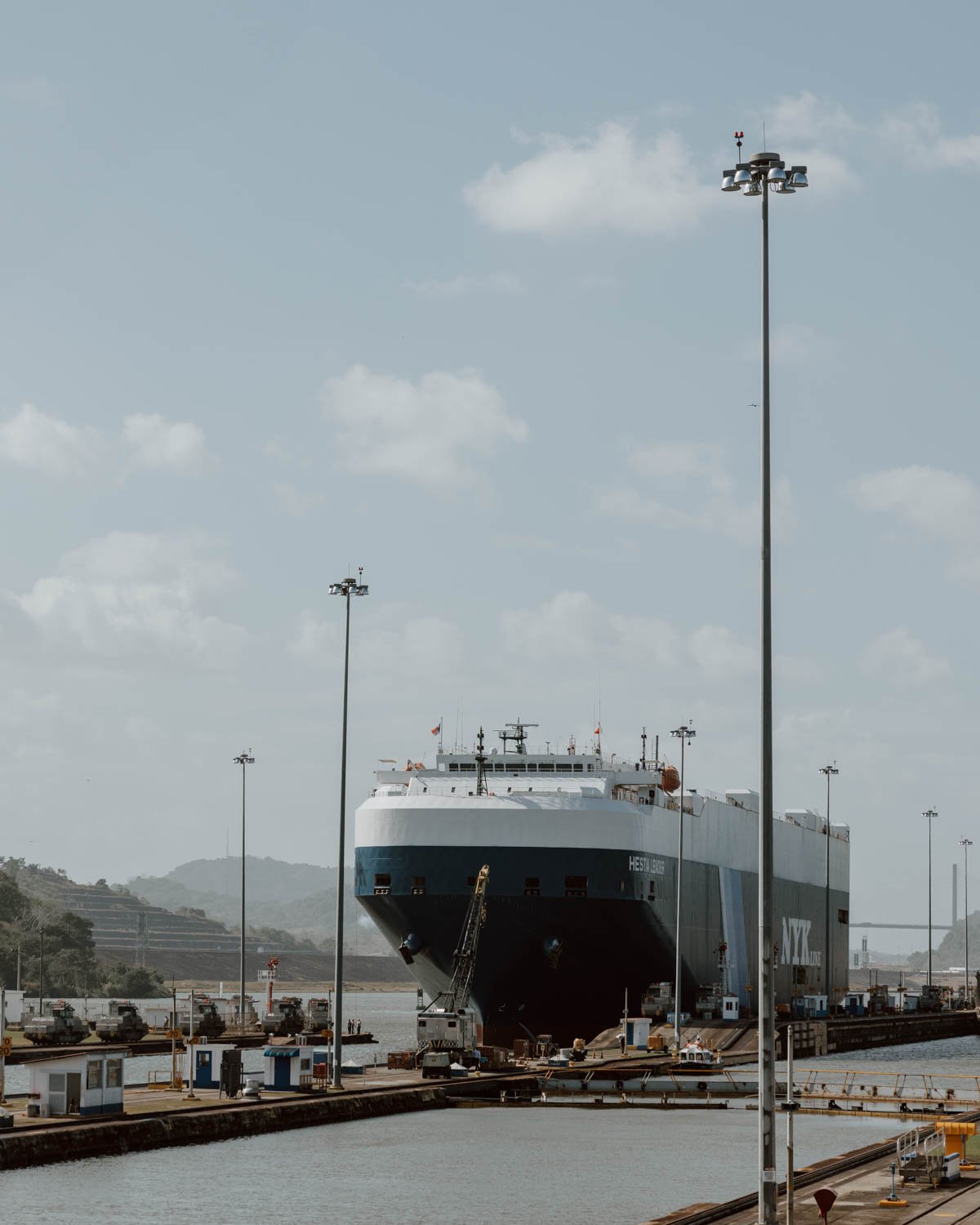
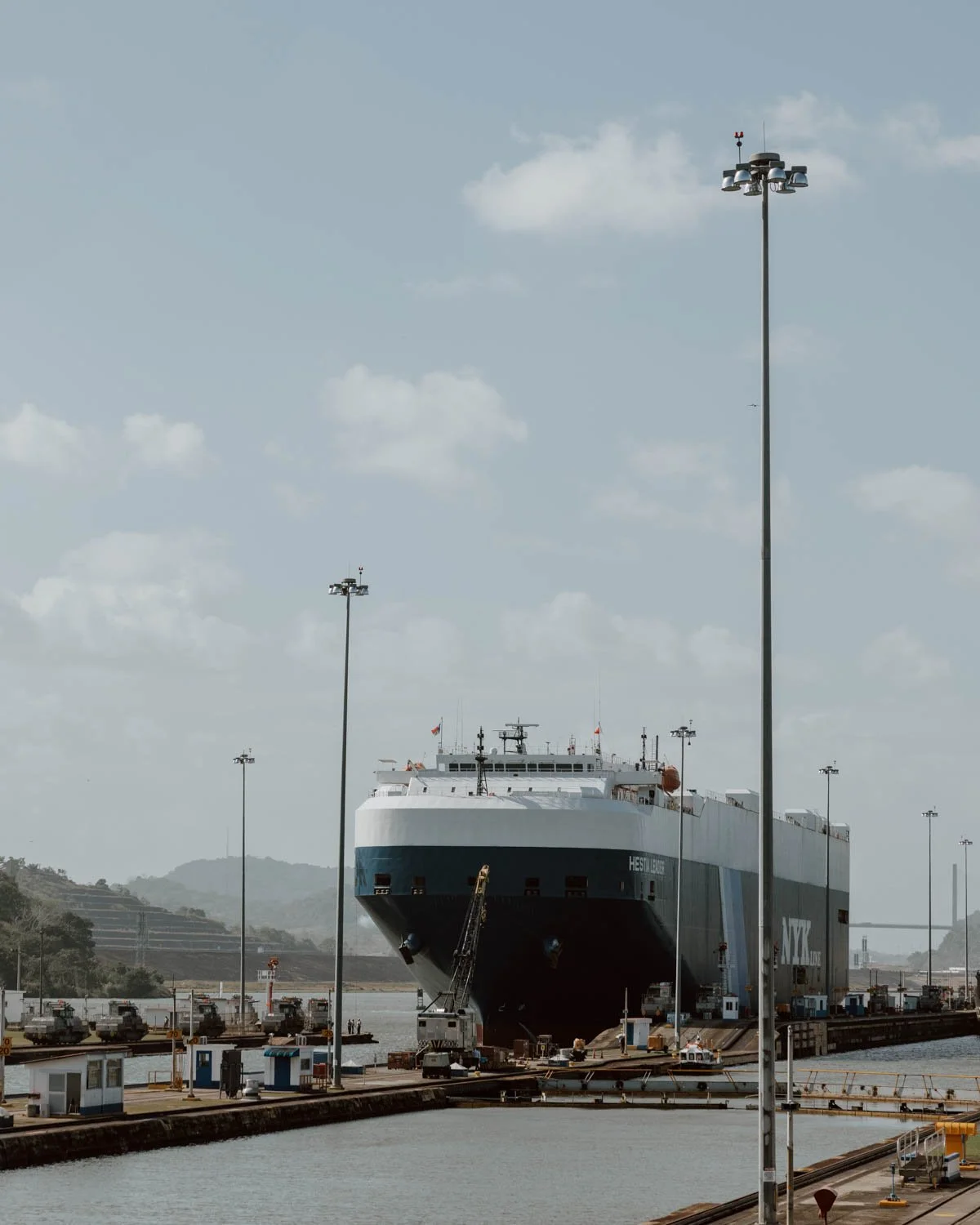
The narrow series of opening locks and rising levels requires careful, methodical navigation, so boats aren't constantly streaming or steaming through. When present, for non-practical people like us, they definitely allow a better understanding of the scale of the ships and their Lego-like container stacks, as well as the intricacies and incredibly tight margins involved for the passage of the metal behemoths.
Their process and progress are also glacial, with the time it takes for a single ship to cross much longer than most expect, which means that you are actually only able to see boats at the Miraflores Locks during two distinct daily slots.
Unless you have zero interest in the boats, there's no point in arriving outwith those windows, and planning around them is arguably the most important thing to know before your visit.
Thankfully, this information comes in the form of ‘The Panama Canal Transit Schedule’.
There's some old information for this circulating online but, at time of writing, the schedule is:
—
Morning | Boats until 9.05am, so you need to arrive just before 8am (guards don’t let cars through until 7.50am)
Afternoon | Boats from 1.40pm, so you have a few hours
—
The updated, daily transit schedule is available to view here on the official Panama Canal website, and we highly recommend confirming times before finalising your own plans. It doesn’t matter whether the ship is going north or south.
Now, the problem with the narrow crossing windows at Miraflores is obvious: every tour and most visitors end up arriving at once! This means, unless you’re visiting off-season, it’s always likely to be quite crowded on the observation decks.
The ebb and flow is quite predictable though, and on our visit it was packed at 3pm, but nearly empty by 5pm.
Travel Tip // In hindsight, the tactical approach for the afternoon would be to turn up and watch the movie first, before the transits start. The film adds a level of important understanding of what you're actually looking at, especially if you have a brain like ours where IKEA shelves getting put together feels like a miracle of construction. Once it’s done, you could then get out and grab prime position for viewing the first transit, before the majority of the crowds arrive.
For the morning, the tactical way is probably to flip it: head straight to the deck after opening, then watch the movie. That way, you may even be able to catch two boat crossings before 10am if the timings work out.
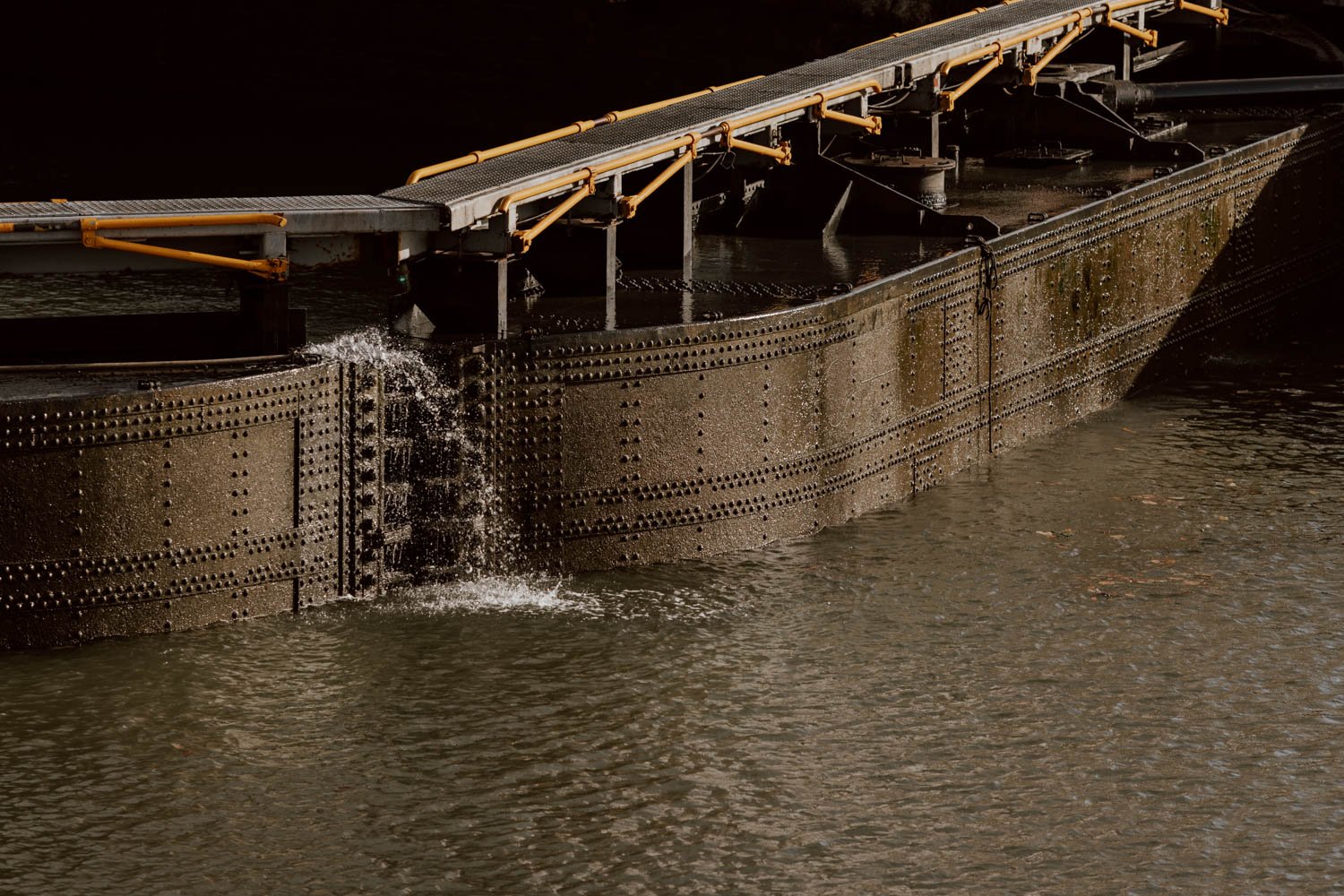
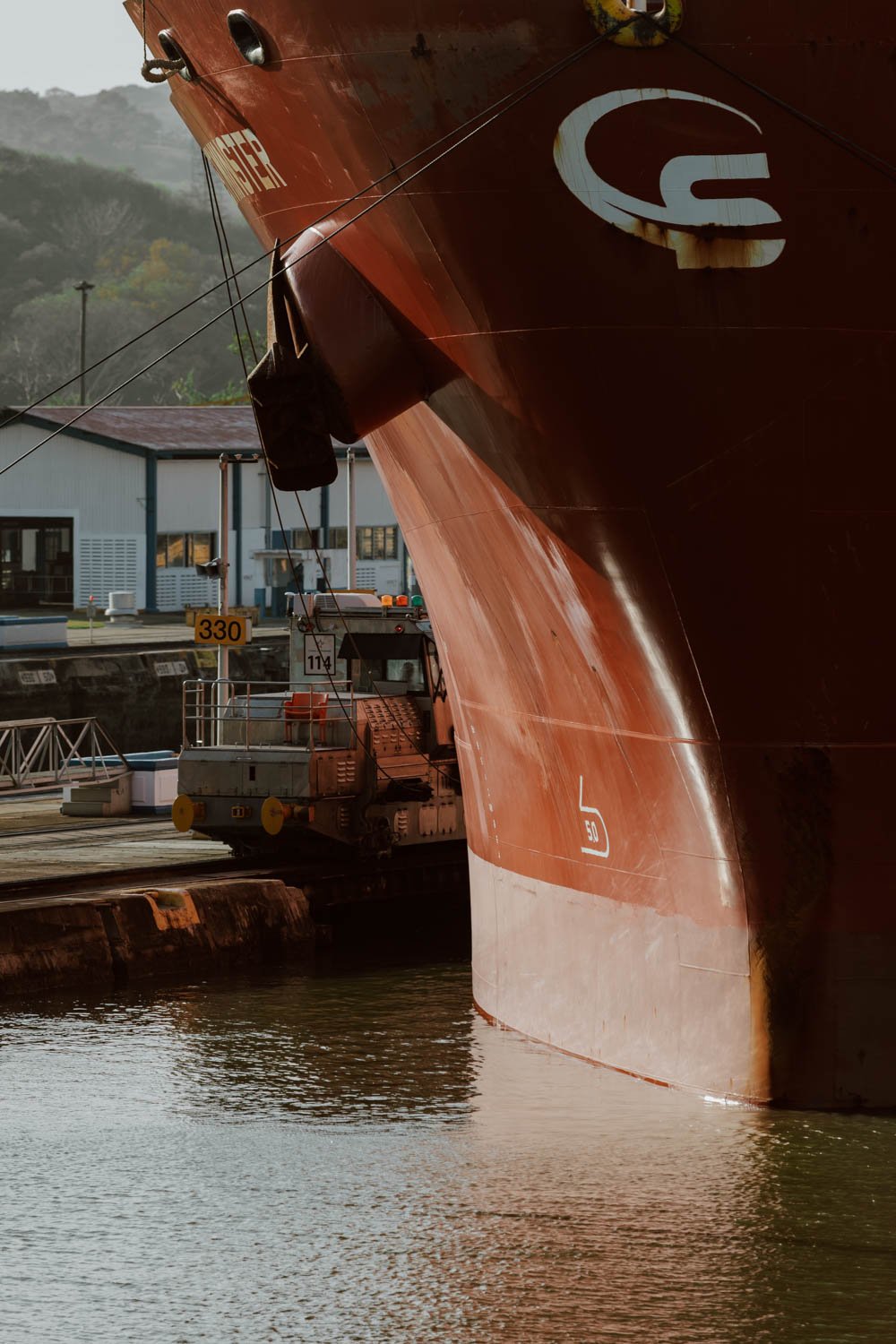
The Miraflores Locks Visitor Experience
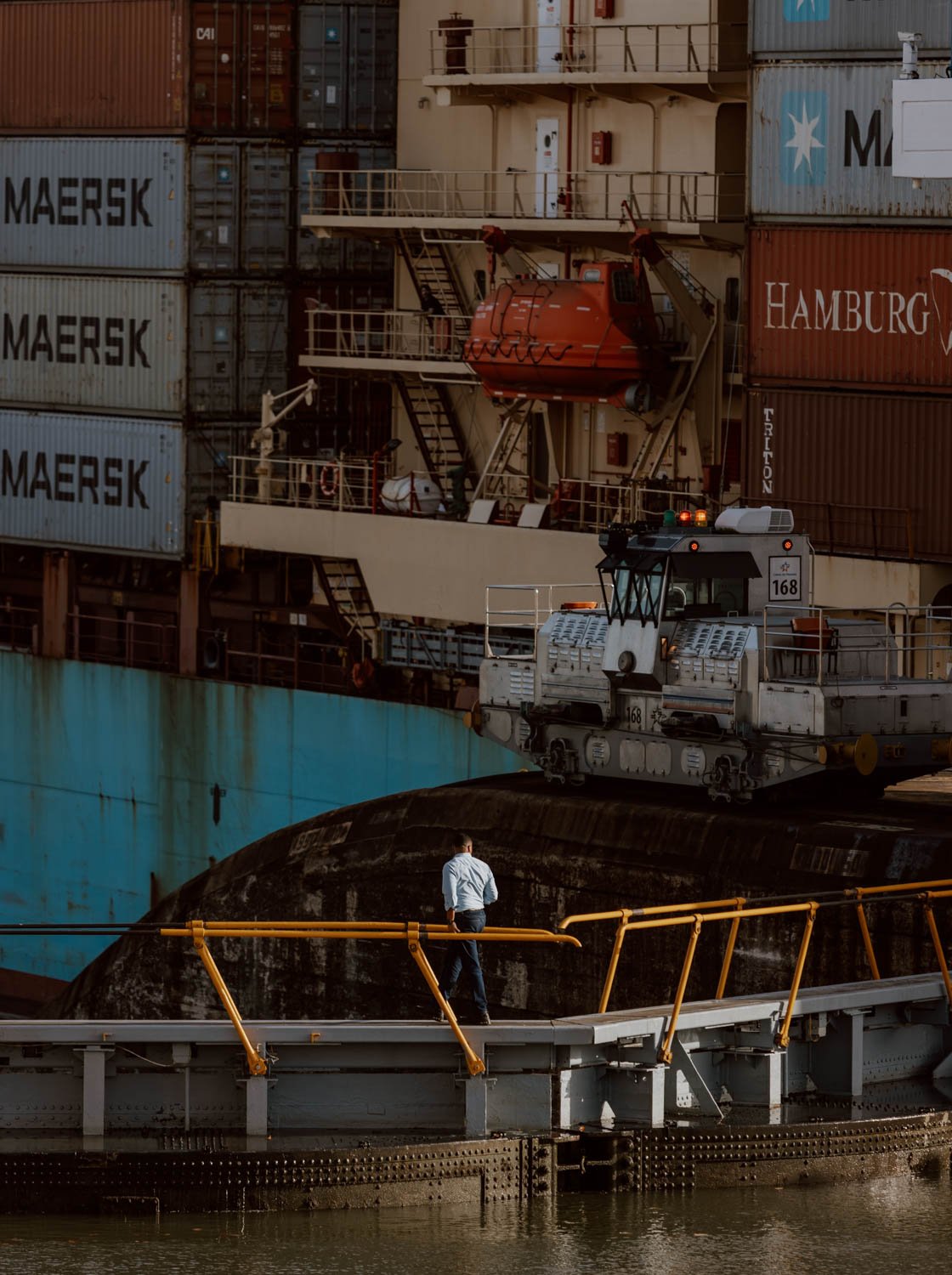
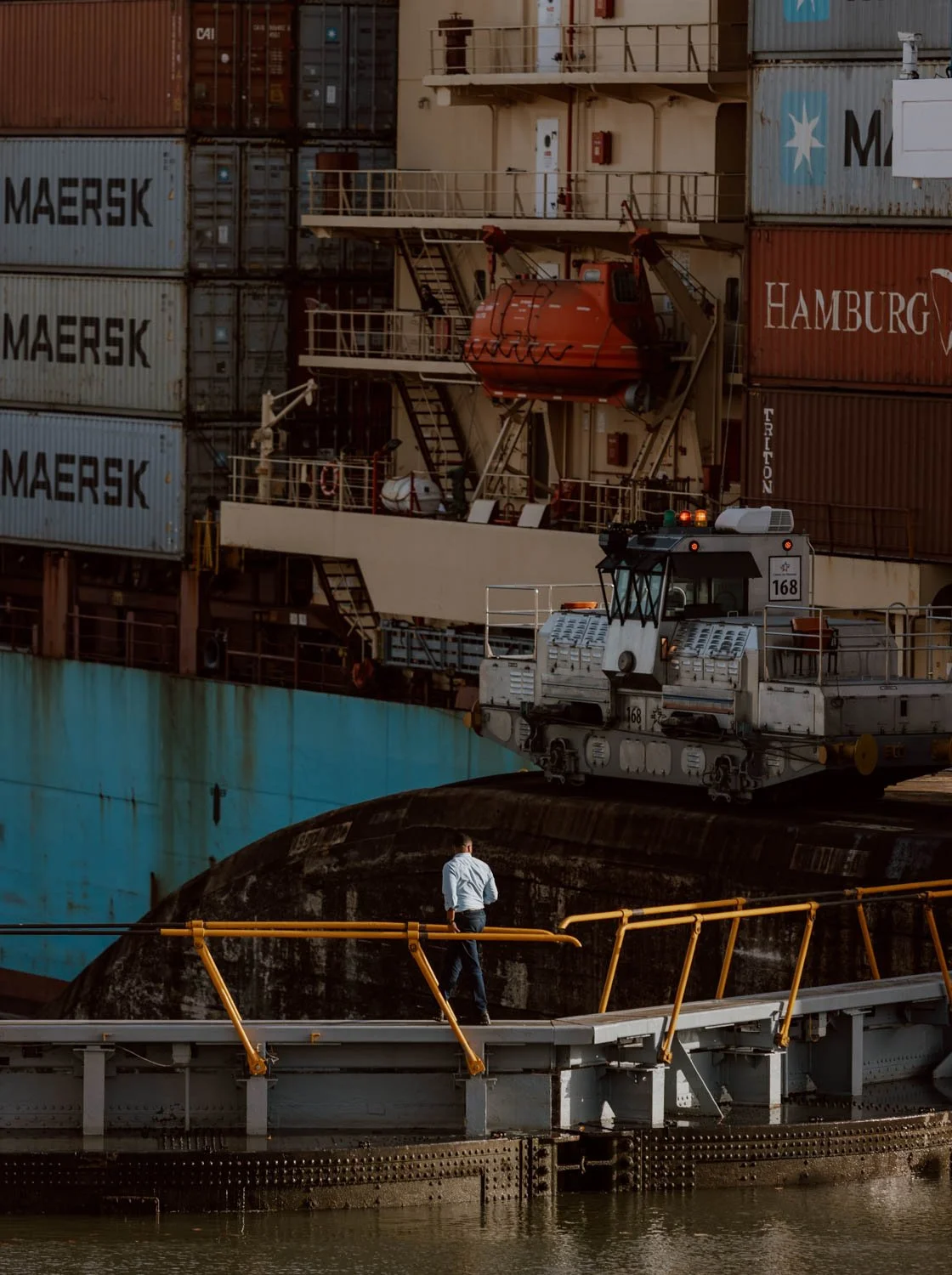
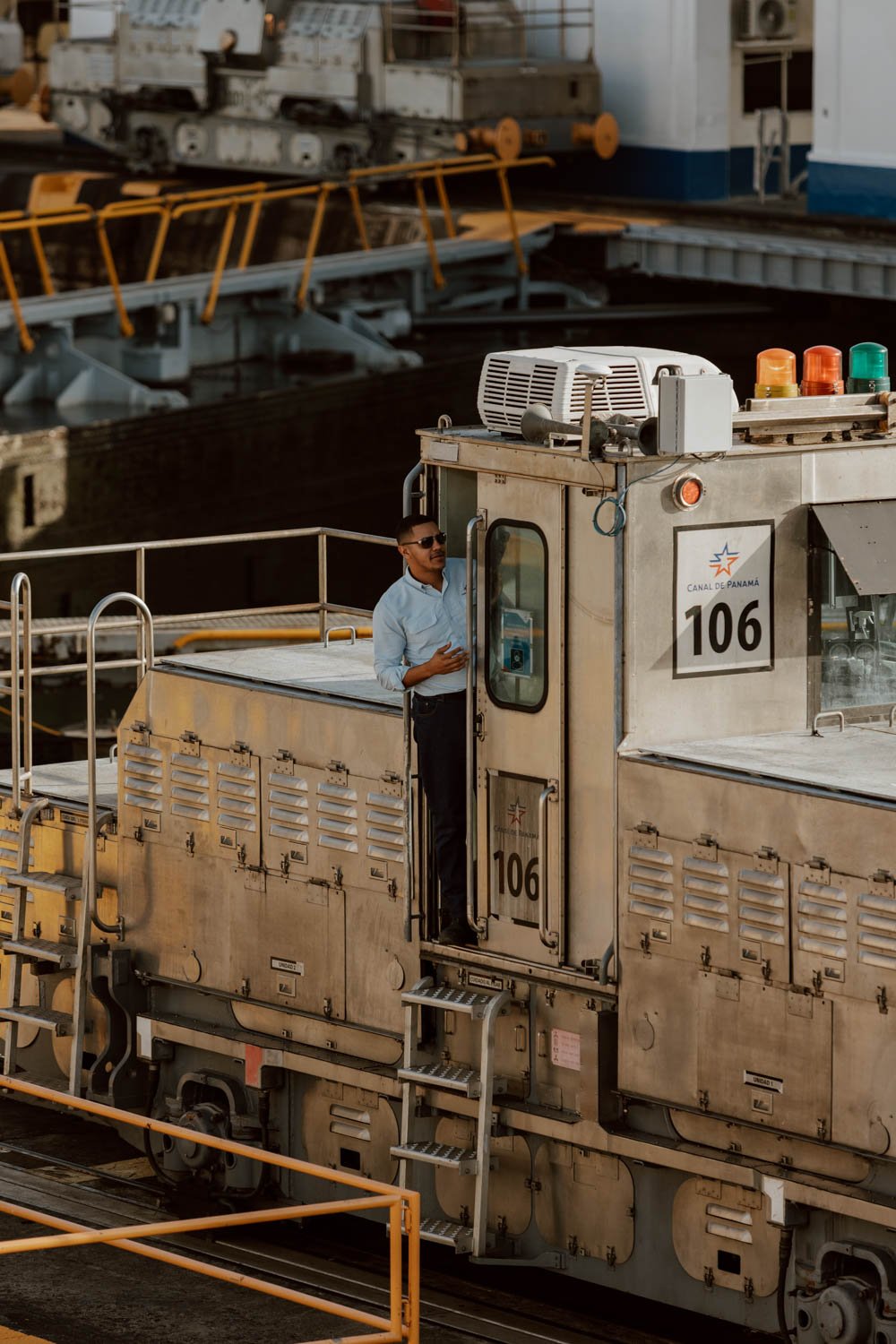
Aspects of the Canal as a mass tourist attraction are, frankly, bizarre: crowds jostling for position to take selfies in front of hulking container ships, and standing room only for a vessel carrying 1000+ Maersk shipping container carrying cars, tech, a whole raft of cheap goods from China.
So what will you actually see and what is there to do?
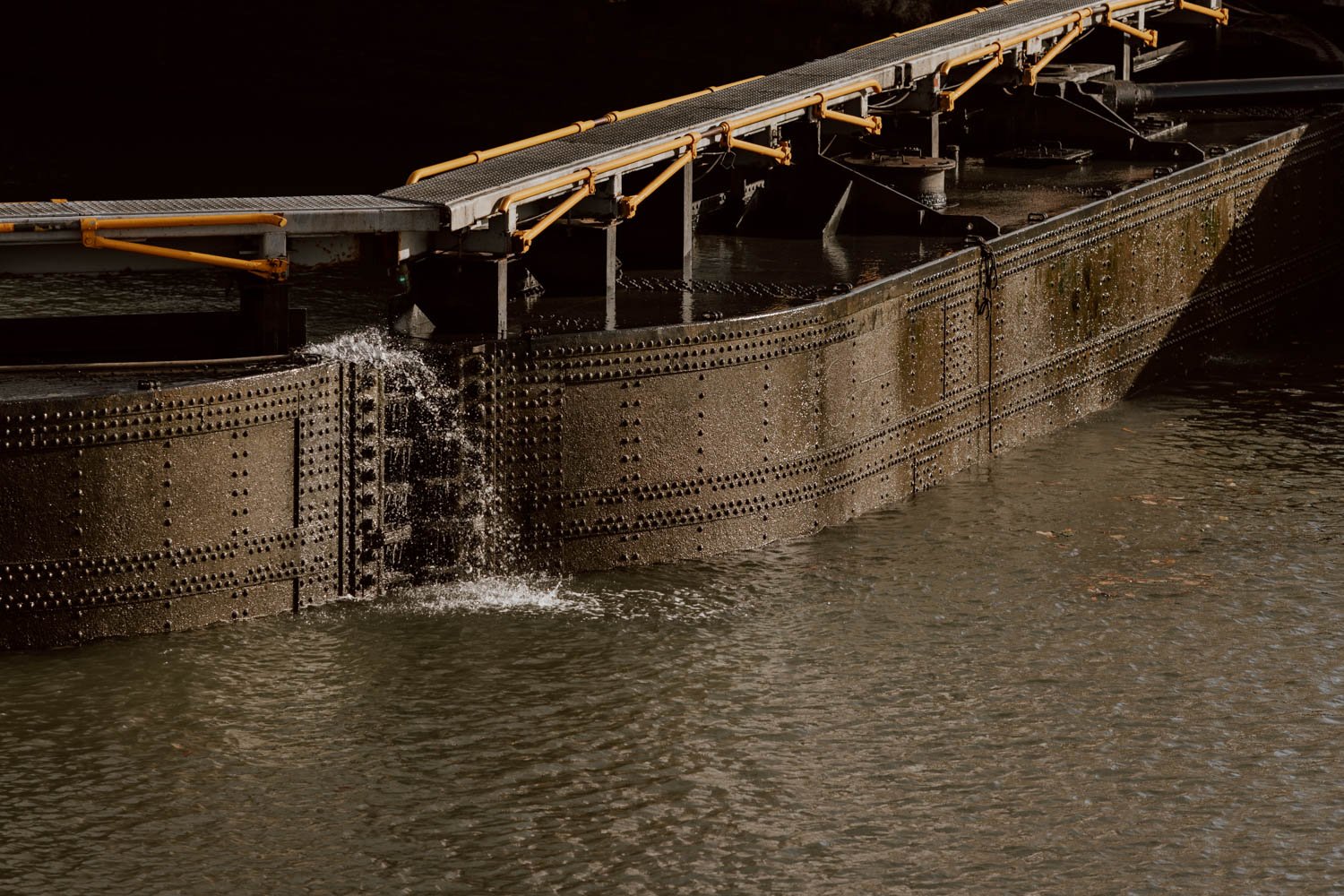
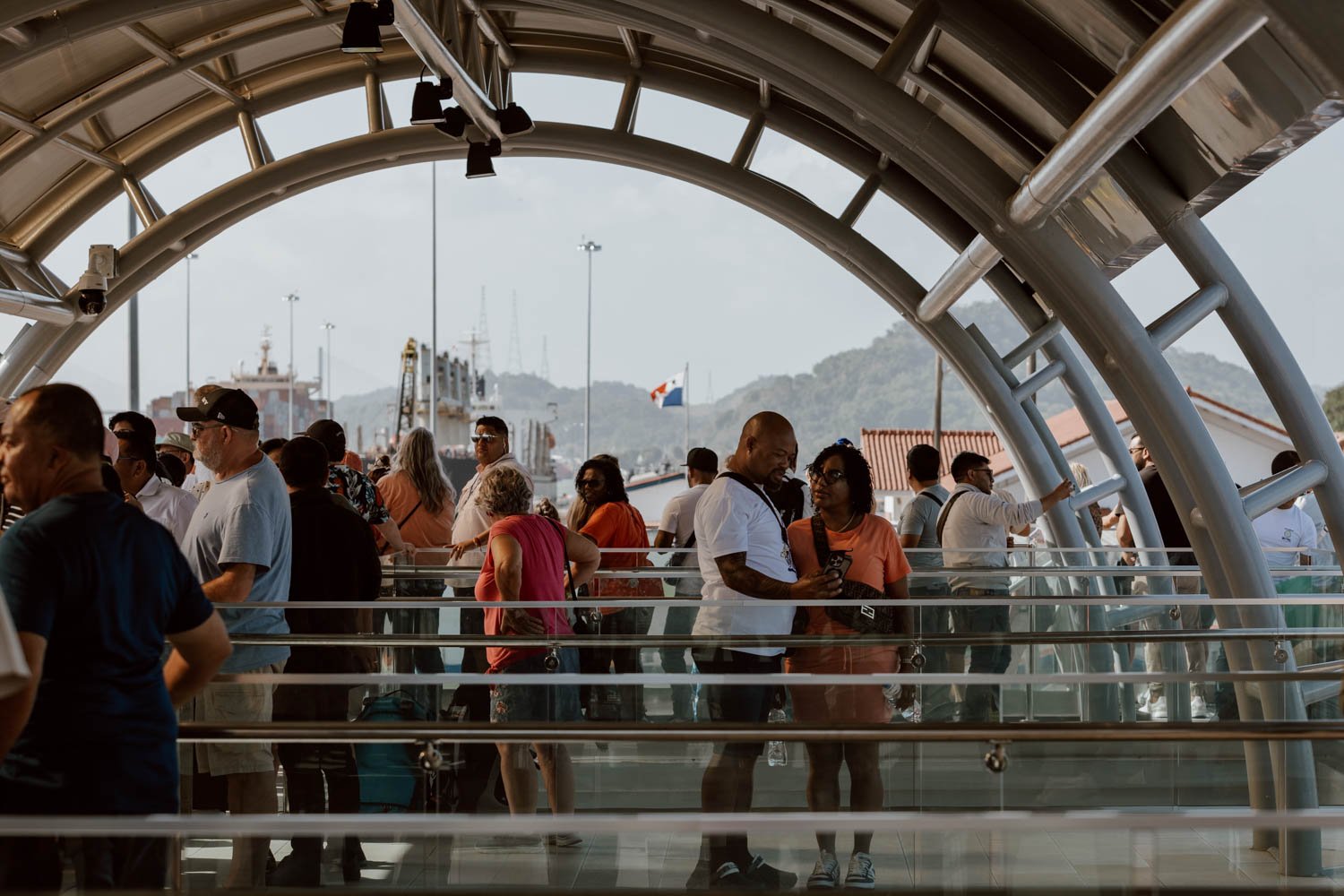
The outdoors open-sided observation deck is set over two levels and overlooks the locks. The wheel-chair accessible bleachers are on the bottom level, whilst it’s standing room only on the top. Both are under cover to protect you from the intense sunshine, but we think the view from the lower level is actually quite awful (and mostly through a chain-link fence).
The best vantage point is therefore definitely up on the top deck, but it can become really busy and overwhelming at times.
There’s a rotating series of commentators on the deck giving insights and titbits in English and Spanish, and it’s usually worth tuning in.
As mentioned, there’s also the new IMAX 3D cinema with the 45-minute Morgan Freeman narrated PR film and, sincerely, it’s worth including time for this in your visit. Not simply for the bizarre novelty and high production levels, but because it will really whet the appetite of anyone who has just arrived in Panama (especially if you’ve planned a good itinerary like ours). You can bring in popcorn and beers, and grab one to take up to the deck if you’re in the mood!
When we visited, screenings were: 8:45 a.m, 9:45 a.m, 11:00 a.m, 12:15 p.m, 1:30 p.m, 2:45 p.m, 4:00 p.m, 5:15 p.m.
Though there’s loads of seats in the cinema, it’s a good idea to join the queue 5-10 minutes beforehand to nab a good one.
There’s also the horribly named and branded Coffee Bean & Tea Leaf cafe, plus a large souvenir shop.
Now, the catch is that the Miraflores Locks isn’t actually the best place to understand the construction and complicated geo-politics that were so fundamental to the creation of the Panama Canal - and which continue to shape its future. There’s the commentary, the film and a few information boards, but that’s definitely not the main feature or purpose: for that, you actually have to go to an entirely separate place back in the city.
The Panama Canal Museum
Found in the historic neighbourhood of Panama City, this is the capital’s most important museum.
Personally, we think it’s overpriced at $15 USD entry for foreign adults, and a lot more work and curation could be done on the displays.
Where Miraflores is quite light on displays and information boards*, with the focus on the engineering ingenuity and commercial significance of the original and new Canal projects that united two oceans., the Panama Canal Museum is really in-depth about the people, the politics, the conflicts, the stories, and the societal consequences.
Given that Panama’s story is so indelibly linked with the Canal's creation and ownership - from its construction to the battles over control involving the United States, and more recently, Chinese interests - this human and political story is arguably just as essential for anyone wishing to fully understand the Canal’s impact.
And, for some, it’s going be a lot more engaging than watching big boats go up and down.
However, rather scandalously in our view, there's not a combined ticket for those who wish to visit both the Panama Canal Museum in Casco Viejo and the Miraflores Locks. This means the total cost for a foreign adult who wants to visit both is $32.22 (inc.tax), which is really just too much in our view.
Unfortunately, it does mean some travellers will have to pick and choose between them.
*parts of the Visitor Centre were being refurbished when we were there, so it may improve or change - do let us know in the comments if the Miraflores displays improve.


So, Is It Actually Worth Visiting The Panama Canal From Panama City?
For many, it’s always going to be an unmissable part of their itinerary: after all, visiting the homeland of the world’s most famous canal but not visiting it may strike some as a bit silly. This is particularly relevant for those travelling to Panama on a shorter, dedicated trip where budget isn’t an issue!
However, having gone there twice, two decades apart, we’d also fully understand if travellers on a strict budget or with very limited time in Panama City ultimately decided against going to the Miraflores Locks in order to put their time and money elsewhere on their Central American adventure.
Travel Tip // When we travel, we queue up podcasts that help us understand the place we’re in - and the standout on this trip was ‘The Rise and Fall of Manuel Noriega’ from The Real Dictators podcast. Not only did we gain a fascinating insight into life in Panama under Noriega’s rule, but also the development of The Panama Canal. Highly recommend giving it a listen!